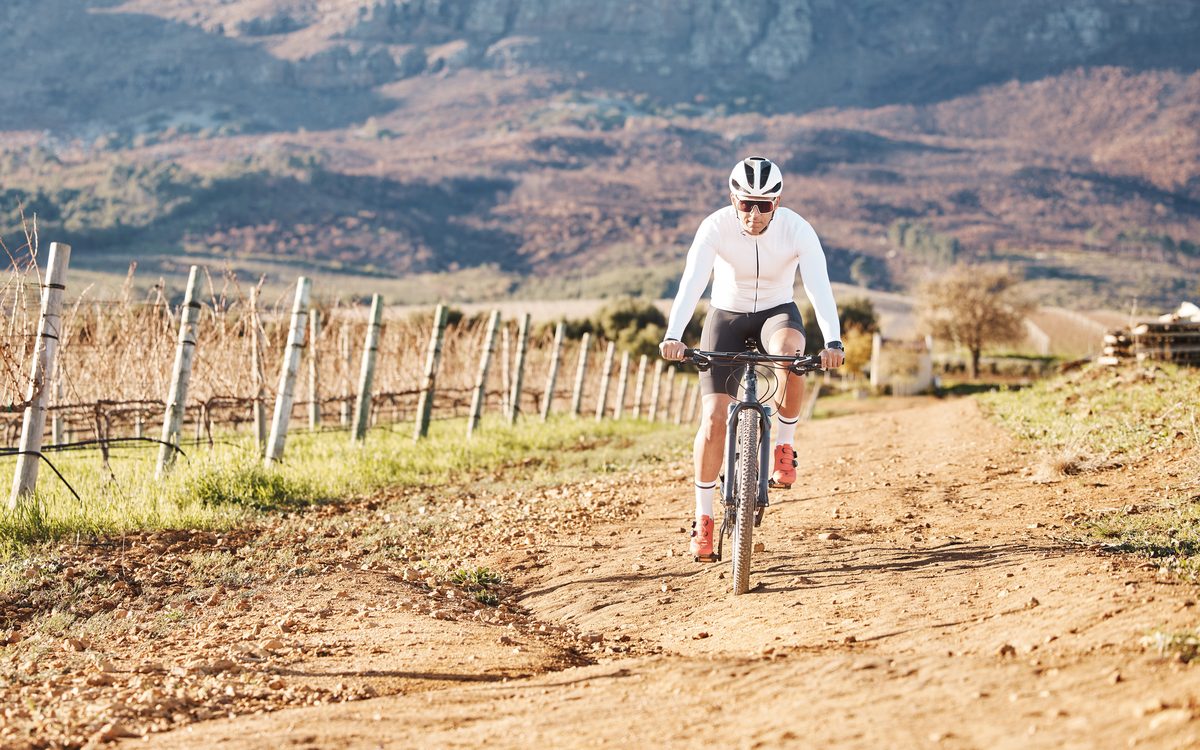
Four hours into a long gravel ride, the pace is not what separates riders; it is who is still pedaling smoothly. The rider who held back on the first climb is passing people on the last one. Gravel cycling training is the plan behind that: building the aerobic base to ride for hours, the strength to hold a bike steady on loose ground, and the habits of pacing and eating that long events demand.
Quick answer: Gravel is mostly an endurance sport, so most training is steady, easy-to-moderate riding with a smaller share of hard intervals and some strength work. Build weekly time gradually, practice your event fueling on long rides, and keep rest days. Treat any weekly plan here as a general example, not a prescription, and talk to a coach or doctor if you have health conditions or pain.
General information, not medical advice. Part of the gravel cycling hub; see also the cycling hub. Our rules and getting started page covers the events themselves.
What gravel asks of your body
Research on gravel specifically is thin. The UCI Sports Nutrition Project review (Whitfield, Mujika and Burke, 2026) states there is limited peer-reviewed research into the specific physiological and nutritional demands of gravel racing, so most guidance is borrowed from road and ultra-endurance cycling. What we can say from the course data is the shape of the effort: the 2026 UCI world championship courses run 89 to 140.7 kilometres, at least 80% unpaved, with up to 3,625 metres of climbing for elite men. That means hours of aerobic work with climbs and surges.
General gravel experience, not a sourced finding: loose surfaces and rough roads make you work harder for the same speed and ask more of the arms, shoulders, core and hands than smooth pavement does. Handling skill counts for as much as fitness on loose corners and descents.
A sensible weekly shape
There is no single right week. The structure below is common coaching practice, not a sourced prescription, so adjust it to your event, your time and your health.
| Day | Example focus |
|---|---|
| Mon | Rest or very easy spin; mobility. |
| Tue | Intervals or tempo efforts on a hill or road (the harder session). |
| Wed | Easy endurance ride or strength session. |
| Thu | Moderate ride with a few short efforts, or a skills session on gravel. |
| Fri | Rest or easy spin. |
| Sat | Long gravel ride, the key session; practice event fueling. |
| Sun | Second moderate ride or recovery ride, depending on fatigue. |
Seiler’s 2010 review of elite endurance athletes found a pattern of roughly 80% of sessions at low intensity and about 20% hard, which is the origin of the often-quoted “80/20” idea. Treat it as a description of how elites train, not a rule for a beginner. Many riders use power zones such as Coggan’s seven levels, in which functional threshold power is roughly the best power you can hold for about an hour (TrainingPeaks); a heart-rate or effort scale works just as well if you have no power meter.
Long rides, pacing and fatigue
The long ride is the heart of gravel training. Build its length gradually and rehearse your event: the bike, tires, bags, food and drinks. A 2026 study of 17 trained cyclists (Barsumyan and colleagues) who rode a standard 60-minute effort at 75% of functional threshold power each month found that cadence fell in the second half of the effort in line with cardiovascular drift, a sign of fatigue. Watching your own cadence late in a long ride is a simple, free way to notice when you are tiring. It is one small study, not a rule.
Pacing is where long events are won. Starting at a pace you cannot sustain is the most common mistake, a general coaching observation rather than a measured figure. Keep early climbs conversational, eat on a schedule rather than when you feel hungry, and save the hard effort for the final third.
Intervals
A 2026 Bayesian network meta-analysis (Li and colleagues) found that high-intensity interval training and sprint interval training were the most consistently supported methods for improving VO2max in trained athletes. For gravel riders that usually means one or two interval sessions a week in season: climbing repeats, tempo blocks and a few short hard efforts to practice surging out of corners. Keep them structured, and keep most other riding easy.
Strength, bone and skills
- Strength. A 2026 review (Llanos-Lagos, Ramirez-Campillo and Saez de Villarreal; 17 studies, 262 participants) found heavy strength training at 80% of one-rep max or more improved cycling efficiency, anaerobic power and performance, with no effect on VO2max and low evidence quality. A 2026 narrative review (de Pablos and colleagues) described 1 to 2 sessions a week at 60 to 85% of one-rep max using 3 to 5 compound lower-body movements. The CDC recommends at least 2 days a week of muscle-strengthening for adults.
- Bone health. A 2025 review (Florvag and colleagues) found athletes in low-impact sports such as cycling and swimming are at elevated risk of reduced bone mineral density, and that resistance training and impact work looked promising, with limited evidence (5 studies).
- Upper body and core. General practice for gravel: planks, rows and push-ups help you hold the bars over rough ground. Not a sourced figure.
- Handling skills. Practice cornering, braking and descending on gravel at easy pace. General practice.
Periodisation basics
Periodisation simply means organizing the year. A common pattern, described by many coaches rather than a single source, is an off-season or base phase of mostly easy riding and strength, a build phase with more intensity, a short peak before your key event and a recovery block afterward. Many riders use three harder weeks followed by an easier one. For young riders, the American Academy of Pediatrics (Brenner 2016) recommends 1 to 2 days off a week and time off during the year. If you want structure, USA Cycling lists coach certification levels at usacycling.org/coaches, and a certified coach can build a plan around your calendar. See our recovery page and nutrition page.
Gravel training FAQs
How many hours a week do I need to train for gravel?
It depends on the event and your history, and we found no sourced minimum. Beginners often build from what they ride now by a modest amount each week. A coach can set a number for your target.
Should I train indoors for gravel?
Indoor training is useful for structured intervals when the weather or time is short, but long rides outside also train bike handling, eating and drinking. Many riders mix both. This is general practice.
Do I need a power meter?
No. Power zones such as Coggan’s are one option, but heart rate or perceived effort can guide training too.
Is strength training worth it for gravel?
A 2026 review found heavy strength training improved cycling efficiency and performance, though the evidence quality was low. The CDC recommends at least two strength sessions a week for adults in general.
How do I avoid starting too fast?
Keep early climbs conversational and eat on a schedule. Practice that pacing on long training rides before race day.
Sources
- UCI Gravel World Series: 2026 world championship courses, Nannup
- Whitfield, Mujika and Burke 2026, nutrition for esports and gravel (UCI Sports Nutrition Project)
- Seiler 2010, what is best practice for training intensity and duration distribution in endurance athletes
- TrainingPeaks: power training levels
- Li et al. 2026, interval training network meta-analysis (PMID 42597392)
- Llanos-Lagos et al. 2026, heavy strength training and cycling performance
- de Pablos et al. 2026, resistance training for cyclists
- Florvag et al. 2025, bone density in low-impact sport athletes
- Barsumyan et al. 2026, cadence decline and fatigue in trained cyclists
- CDC: adult physical activity guidelines
- Brenner 2016, AAP: overuse injuries and burnout in young athletes
- USA Cycling: coaching
General information for education only, not medical advice. It does not replace a sports medicine doctor, physical therapist, athletic trainer or registered dietitian. See our editorial policy for how we write and update pages.