This article contains affiliate links: if you buy through them we may earn a commission, at no extra cost to you. Learn more.
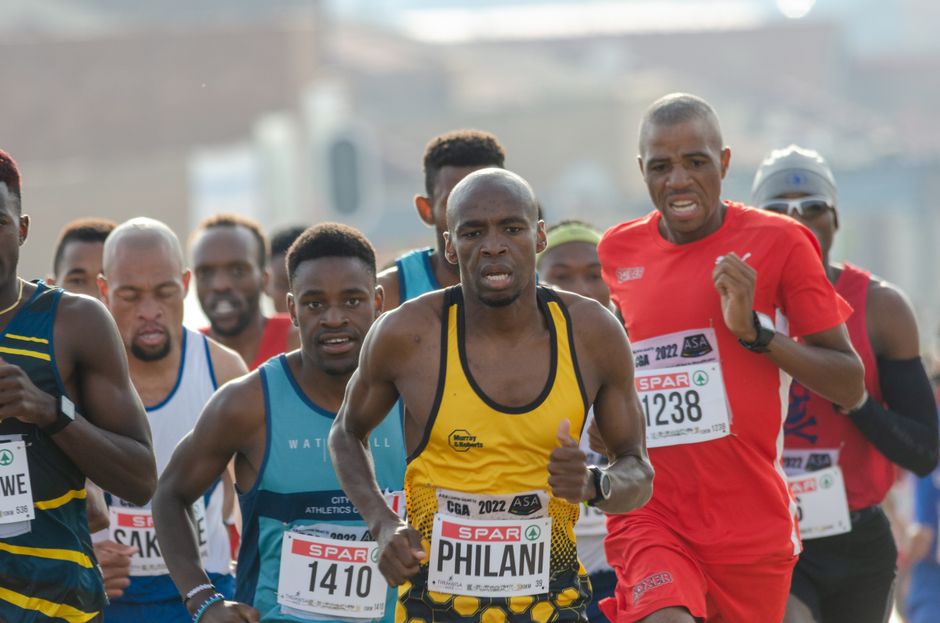
A headlamp bobbing down a dark street at 5:30 a.m. Two hundred kids in school colors charging off a cross country start line in October. A Saturday-morning 5K in the park, then coffee. A first marathoner crying at mile 26 on Boylston Street, and a trail runner at the top of a ridge with 60 miles still to go. Running is the simplest sport there is: shoes, a door and somewhere to go. It is also one of the most popular. In 2024–25, 433,298 US high school students ran cross country, according to the National Federation of State High School Associations (NFHS), and USA Track & Field (USATF) sanctions more than 8,000 events a year.
Running, page by page
- Rules: how the game works at every level
- Leagues & associations: pro, college, high school and youth
- Youth & high school: ages, safety and recruiting, for players and parents
- Injuries & sports health: prevention, concussion, when to see a pro
- Training & conditioning: before: off-season to in-season
- Game day: during: fueling, hydration, heat
- Recovery: after: games, tournaments, sleep
- Nutrition & supplements: what to eat, tested supplements
- Best wearables: trackers and watches for the sport
- Gear: the complete equipment list
Buying guide · Our Running buying guide compares the gear we'd pick, with prices and sizing:
This page is running for runners and the people who look after them: road, trail, cross country and ultra, from a child’s first fun run to the marathon majors. Sports health is the heart of it, because running is simple but not gentle: running injuries are common, and most come from doing too much too soon. Below: how the sport works, every level, the injuries runners get most, heat and heart safety, when to see a professional, and where to go next on our site.
Running at a glance
| Main forms | Road running (5K to marathon), cross country (team races over grass and trails), trail and mountain running, and ultrarunning (anything longer than a marathon). Track distance events are covered in track and field. |
|---|---|
| Classic distances | 5K (3.1 miles), 10K (6.2 miles), half marathon (13.1 miles) and marathon (42.195 km, 26.2 miles). Ultras run from 50K to 100 miles and beyond. |
| Governing bodies | World Athletics worldwide (214 member federations); USATF in the US; the Road Runners Club of America (RRCA) for clubs; NFHS for high school; NCAA, NAIA and NJCAA for college. |
| Biggest events | The Abbott World Marathon Majors (Tokyo, Boston, London, Sydney, Berlin, Chicago, New York, with Cape Town joining in 2027), the Olympic marathon, World Athletics championships, the NCAA cross country championships and Western States 100. |
| Main physical demands | Aerobic endurance and repeated impact: every stride loads the feet, shins, knees and hips. |
| Most common injuries | Achilles tendinopathy, shin splints (medial tibial stress syndrome), runner’s knee (patellofemoral pain), plantar fasciitis, IT band syndrome, ankle sprains and bone stress injuries. |
How running works
Road races are timed from the gun or from your chip crossing the start mat, and you’re placed by finish time, overall and in age groups. A qualifying time counts only on a certified course: the Boston Marathon accepts marathons certified by USATF, AIMS or a national governing body. Race-day rules come from USATF plus each race’s own policies: wear your bib on the front, don’t cut the course, and follow the race’s rules on headphones, strollers and pacers. Our running race rules and etiquette page explains them.
Cross country is a team sport. In US high school and college meets, a team runs up to seven athletes and the first five finishers score their place (1st place = 1 point). Lowest total wins, and the sixth and seventh runners can push opponents back. High school races are usually 5,000 meters; the NCAA Division I championship is 10K for men and 6K for women.
Trail and ultra races add climbing, rough footing, aid stations far apart and often mandatory gear. Western States, the world’s oldest 100-mile trail race, covers 100.2 miles from Olympic Valley to Auburn, California, climbing more than 18,000 feet. Trail etiquette (yield, stay on the trail, pack out your trash) matters as much as the race rules.
Running at every level
Kids and youth
Kids start with dashes and fun runs. The RRCA’s youth guidelines suggest dashes of a few yards up to 400 meters for 5 and under, fun runs of ½ to 1 mile (with walking) from about 5, a 5K from about 8–12, and 10K to half marathon from about 13–15; longer distances should wait until after puberty. The American Academy of Pediatrics says children and teens shouldn’t be encouraged to run marathons. Programs such as Girls on the Run (grades 3–8, ending in a celebratory 5K) and junior parkrun (a free 2K for ages 4–14 where it exists) keep it fun. More on our youth running page.
High school
Cross country is one of the biggest school sports: 241,565 boys and 191,733 girls ran it in 2024–25 (NFHS), usually in the fall. Many of the same athletes run track in the spring. Each state association sets its own season, distances and championships under the NFHS rules.
College
The NCAA runs cross country championships in Divisions I, II and III. As of the 2026 season, the Division I championships are on November 21 in Terre Haute, Indiana, after nine regional meets. The NAIA and NJCAA have their own championships, and many colleges have club running teams for everyone else.
Pro, Olympic and the marathon majors
There’s no pro league in running; elite runners are sponsored athletes who race road and track circuits, the World Athletics championships and the Olympics, where the marathon is the classic road event. For everyday runners the dream races are the Abbott World Marathon Majors. Sydney became the seventh Major in 2025, and Cape Town passed its final assessment in 2026 and joins as the eighth on May 23, 2027. Boston is the one you qualify for: for 2027, men 18–34 need 2:55:00 and women 3:25:00, and the cut-off was 5:17 faster than the standard. The full picture is on our running organizations and marathon majors page.
Adult and recreational
This is where most runners live: local clubs (the RRCA, founded in 1958, is the national umbrella), Saturday parkruns (free, timed 5Ks at more than 2,000 locations in 23 countries, about 100 of them in the US), charity 5Ks, half marathons and, for many, one big marathon. If you’re new, our first marathon training guide walks through an 18-week plan, and recovery for runners over 50 covers the masters years.
Sports health for runners
Running injuries are mostly overuse injuries, not accidents, and that’s good news: much of the risk is in your training plan. The American Medical Society for Sports Medicine (AMSSM) says about 90% of sports injuries are non-surgical. This section is general information, not medical advice. If you’re hurt, see a professional.
The most common running injuries
A 2021 systematic review of running injuries found an average injury incidence of about 40% in the studies it pooled. The knee, ankle and lower leg were hurt most often. Among new injuries the top five were:
- Achilles tendinopathy (10.3% of new injuries): pain and stiffness in the tendon above the heel, often worst in the morning.
- Medial tibial stress syndrome, or shin splints (9.4%): pain along the inner edge of the shinbone.
- Patellofemoral pain, or runner’s knee (6.3%), the most common injury when researchers counted everyone currently injured (16.7%). Our knee brace for running guide covers supports.
- Plantar fasciitis (6.1%): heel pain with the first steps of the day.
- Ankle sprains (5.8%), more so on trails. IT band syndrome, pain on the outside of the knee, is also common.
New runners get hurt more. A meta-analysis found about 17.8 injuries per 1,000 hours of running in novice runners versus 7.7 in recreational runners. The lesson is to build up slowly. For young runners the AAP suggests raising weekly mileage by no more than 10%. Our running injuries page goes deeper, and running form tips covers cadence and form.
Bone stress injuries and fueling enough
A stress fracture starts as bone pain that gets worse with running and may hurt to press on. It needs a doctor, not a pain-through mindset. One big risk factor is eating too little for the training you do. The International Olympic Committee calls it Relative Energy Deficiency in Sport (REDs), and its 2023 consensus says it affects both female and male athletes. Missed periods are a warning sign: the AAP advises female athletes to track their periods and see a doctor if they start missing them. A sports dietitian can help.
Heat, hydration and race-day heart safety
Heat is the race-day danger runners underestimate. The National Athletic Trainers’ Association (NATA) recommends getting used to the heat over 7–14 days, and for exertional heat stroke, fast cold-water immersion by trained medical staff. Call 911 for confusion, collapse or a runner who stops making sense. On fluids, the sports-nutrition position statement from the American College of Sports Medicine and two dietitians’ groups suggests about 0.4–0.8 liters an hour during exercise, adjusted to your sweat rate, and not drinking so much that you gain weight.
Cardiac arrest during races is rare. A 2025 study of US marathons and half marathons found 176 cardiac arrests among 29.3 million finishers from 2010 to 2023, and fewer of them were fatal than in the decade before (34% vs 71%). Bystander CPR made the biggest difference in an earlier study. If you have heart disease, chest pain or a family history of sudden death, see a doctor before you train for a long race. Learn CPR, too.
Falls, cars and head knocks
On the road, run facing traffic, no more than two abreast, and wear reflective gear or a lighted vest in the dark, as the RRCA advises. On trails, falls happen. If a runner hits their head and seems dazed, confused or has a headache, dizziness or balance problems, the CDC’s HEADS UP advice applies: stop for the day and get checked by a healthcare provider before running again. Call 911 for a worsening headache, repeated vomiting, seizures or growing drowsiness.
When to see a doctor, physical therapist or athletic trainer
See a professional for pain that changes the way you run, pain that’s worse each run, bone pain you can point to with one finger, swelling, or anything that hasn’t settled after a week or two of easier running. A sports medicine physician manages most running injuries without surgery. A physical therapist guides rehab, strength work and the return to running, and many offer gait analysis. Schools with an athletic trainer should send cross country runners there first.
Training for running
Most training plans mix three things: lots of easy running, one or two harder sessions a week (tempo runs, intervals or hills) and a long run, with rest days in between. Add two short strength sessions a week for the hips, calves and core. Our VO2 max training guide covers intervals, and how to train for your first marathon lays out a full plan. Our running training page brings it together for 5K to ultra, and race day covers fueling, pacing and the start line.
A GPS watch makes pacing easier. Our best Garmin for runners guide compares the Forerunner range, and the best running wearables page looks wider. On long runs, fuel and fluids matter: see energy gels, electrolytes and our running nutrition page.
Recovery after runs
Recovery is where the training sticks. Sleep comes first: the CDC recommends 7 or more hours for adults, 8–10 for teens. Then eat and drink after hard runs and long runs. Many runners use a foam roller or massage gun for tight calves, compression boots after a long run and soft recovery shoes around the house. They’re comfort tools, not treatment. Our recovery for runners article has the full after-run routine, and the running recovery page covers race weeks and recovery runs.
Gear for running
- Shoes that fit: the American Academy of Orthopaedic Surgeons (AAOS) suggests trying shoes on at the end of the day, in your running socks, with at least ½ inch between your longest toe and the tip. Pick the pair that feels comfortable.
- Socks: synthetic running socks instead of cotton help keep feet dry.
- Visibility: reflective gear or a lighted vest before dawn and after dusk.
- Hydration: a handheld bottle, belt or vest for runs over an hour (see our best running hydration vest guide).
Four picks we’d put in any runner’s kit: the Garmin Forerunner 570 (about $550), a GPS watch with Garmin Coach plans; the Nathan VaporAir Lite 4L vest with a 2-liter bladder for long runs (about $130 list); the noxgear Tracer2 light-up vest for dark mornings (about $55 on sale at noxgear); and the OOFOS OOahh Slide for after. Prices change often; these are what we saw at the maker or a major retailer in October 2026. The full list is on our running gear page.
Garmin Forerunner 570
- GPS, AMOLED, 42 or 47 mm
- Garmin Coach run plans
- About $550
Nathan VaporAir Lite 4L
- 2 L bladder included
- 7 pockets
- About $130 list
noxgear Tracer2 Light-Up Vest
- LED fiber optics + reflective
- Up to 20 h, USB-C
- 7 oz, IP67
OOFOS OOahh Slide
- OOfoam slide
- APMA Seal of Acceptance
- Machine washable
For more after the run, browse Recovery & Regeneration and running.
Running FAQs
What is the most common running injury?
In a 2021 review of running injury studies, Achilles tendinopathy and shin splints were the most common new injuries, and runner’s knee (patellofemoral pain) was the most common among runners currently injured. Most are overuse injuries linked to adding mileage or speed too fast.
How far is a marathon?
42.195 kilometers, or 26.2 miles. A half marathon is half that, 13.1 miles. Anything longer than a marathon is an ultramarathon, commonly 50K, 50 miles, 100K or 100 miles.
What time do I need to qualify for the Boston Marathon?
For 2027, from 2:55:00 for men 18–34 and 3:25:00 for women and non-binary runners 18–34, with more time for each older age group, on a certified course. Meeting the standard isn’t a guarantee: for 2027 accepted runners had to be 5:17 faster.
How fast can I increase my mileage?
Slowly. The AAP’s advice for young runners is no more than about 10% more per week, and many adult plans add a lighter “step-back” week every few weeks. New runners get hurt more than experienced ones, so be patient in the first year.
How often should I replace running shoes?
The AAP’s running page says about every 6 months or 300–500 miles. AAOS offers a rule of thumb of 75,000 divided by your weight in pounds, about 500 miles for a 150-pound runner. Replace them sooner if the cushioning feels flat or new aches appear.
Is it safe to run with headphones?
On your own, keep the volume low enough to hear traffic, and skip them on quiet trails and in the dark, the RRCA advises. In races, USATF lets race directors decide, but not for athletes competing for championships, awards or prize money. Check each race’s rules.
Running gives back what you put in, as long as you build up slowly, sleep, eat enough and listen to pain. Keep exploring: our recovery for runners guide, energy gels for long runs, Garmin watches for pacing, and the other sports on our sports hub.