This article contains affiliate links: if you buy through them we may earn a commission, at no extra cost to you. Read our affiliate disclosure.
Tashkent, 6 October 2024: Brazil beat Argentina 2-1 to win a record sixth FIFA Futsal World Cup, in the first final ever played between two South American teams. The game they played is fast, small and loud, with five players a side on a hard indoor floor and a ball built not to bounce much. Futsal is the five-a-side indoor form of soccer, played under its own set of FIFA laws.
Futsal guides: what do you need?
New to futsal? Start with the first card. Everything here is general education, not medical advice.
History & Origins of Futsal
Futsal is widely traced to Montevideo, Uruguay, where in 1930 the physical education teacher Juan Carlos Ceriani created an indoor game for YMCA gyms that mixed soccer rules with ideas from basketball, water polo, hockey and handball. His rulebook was published in 1933. In 1956 in São Paulo, Brazil, new rules adapted the game for adults, and these “Brazilian Indoor Football Rules” spread across South America (history summary; secondary source, see our notes). The name comes from the Portuguese futebol de salão and Spanish fútbol sala, both meaning “indoor football.”
For decades two bodies shaped the game. The South American Futsal Confederation was formed in 1965 and the international federation FIFUSA in 1971, which held the first world championship in São Paulo in 1982. FIFA then began running its own tournament, and the first FIFA Futsal World Cup was played in the Netherlands in 1989. Origin stories differ in detail (who first used the name, and when), so we list only the widely repeated milestones. Women’s futsal gained its own FIFA World Cup in the Philippines in 2025.
- 1930: Juan Carlos Ceriani creates indoor football in Montevideo; rules published 1933.
- 1956: Brazilian indoor football rules written in São Paulo.
- 1965 and 1971: South American Futsal Confederation and FIFUSA are founded.
- 1982: First FIFUSA world championship, in São Paulo.
- 1989: First FIFA futsal World Cup, in the Netherlands; Brazil win.
- 1996: FIFA uses the name “futsal” for its World Cup in Spain.
- 2018: Futsal is played at the Youth Olympic Games in Buenos Aires.
- December 2022: FIFA announces a women’s futsal World Cup.
- December 2025: Brazil win the first FIFA Futsal Women’s World Cup in Manila.
Legends of the Sport
Athletes from different eras, not ranked. Juan Carlos Ceriani, above, is the game’s creator, not an athlete in this list.
- Falcão (Brazil): helped Brazil win the World Cup in 2008 and 2012 and is the tournament’s all-time top scorer with 48 goals; named best player in the world four times between 2004 and 2012 (secondary sources).
- Ricardinho (Portugal): captained Portugal to the 2018 European title and the 2021 World Cup, and won the 2021 Golden Ball (secondary sources).
- Dyego (Brazil): won the adidas Golden Ball at the 2024 World Cup (FIFA).
- Emilly (Brazil): scored the opening goal of the first Women’s World Cup final and won the Golden Boot with seven goals (PFF).
Official results and records
We only list champions and records here after checking them on the official source. For the latest results, go to:
How we keep this current: we re-check facts after each major championship and update this page. Spot an error? See our editorial policy.
This page is for players, parents and coaches: how futsal differs from outdoor soccer, who plays it, and how to stay healthy on a hard court. It is a sibling of our soccer section, and many of the same health and recovery pointers apply.
Futsal at a glance
| What it is | Five-a-side indoor soccer, one of the five being the goalkeeper, played with a smaller, low-bounce ball on a hard court. |
|---|---|
| How it is won | The team that scores more goals wins. A match is two equal periods of 20 minutes of playing time, and the clock stops when the ball is out of play. |
| Participants | Up to five players per team on the court, with unlimited substitutions. Youth, women’s, men’s and recreational play all exist. |
| Court | For non-international matches 25 to 42 m long and 16 to 25 m wide; for international matches 38 to 42 m by 20 to 25 m. |
| Ball | 62 to 64 cm around, 400 to 440 g, built to bounce only 50 to 65 cm when dropped from 2 m. |
| Governing body | FIFA writes the Futsal Laws of the Game. In the US, U.S. Soccer, US Youth Futsal and US Youth Soccer run competitions. |
| Season | Varies by league and facility. |
How futsal works
If you know soccer, futsal will feel familiar and different at the same time. The most important differences, from the FIFA Futsal Laws of the Game 2025/26:
- Five players and rolling substitutes. An unlimited number of substitutions can be made at any time, whether the ball is in play or not, through your own team’s substitution zone on the touchline. Up to nine substitutes may be used in a match in an official competition.
- No offside. The Laws state plainly that there is no offside in futsal.
- Kick-ins, not throw-ins. When the ball crosses the touchline it is kicked back into play from the line, with opponents at least 5 m away.
- Four seconds. Kick-ins, goal clearances, corner kicks and free kicks must be taken within four seconds of the team being ready, or the other team gets the ball.
- Accumulated fouls. Fouls are counted for each team in each period. From the sixth accumulated foul, the other team gets a direct free kick that the defending wall cannot block.
- Timeouts. Each team gets one one-minute timeout per period.
- The ceiling. In indoor halls, the Laws deal with the ball touching the ceiling, which is a restart from the touchline.
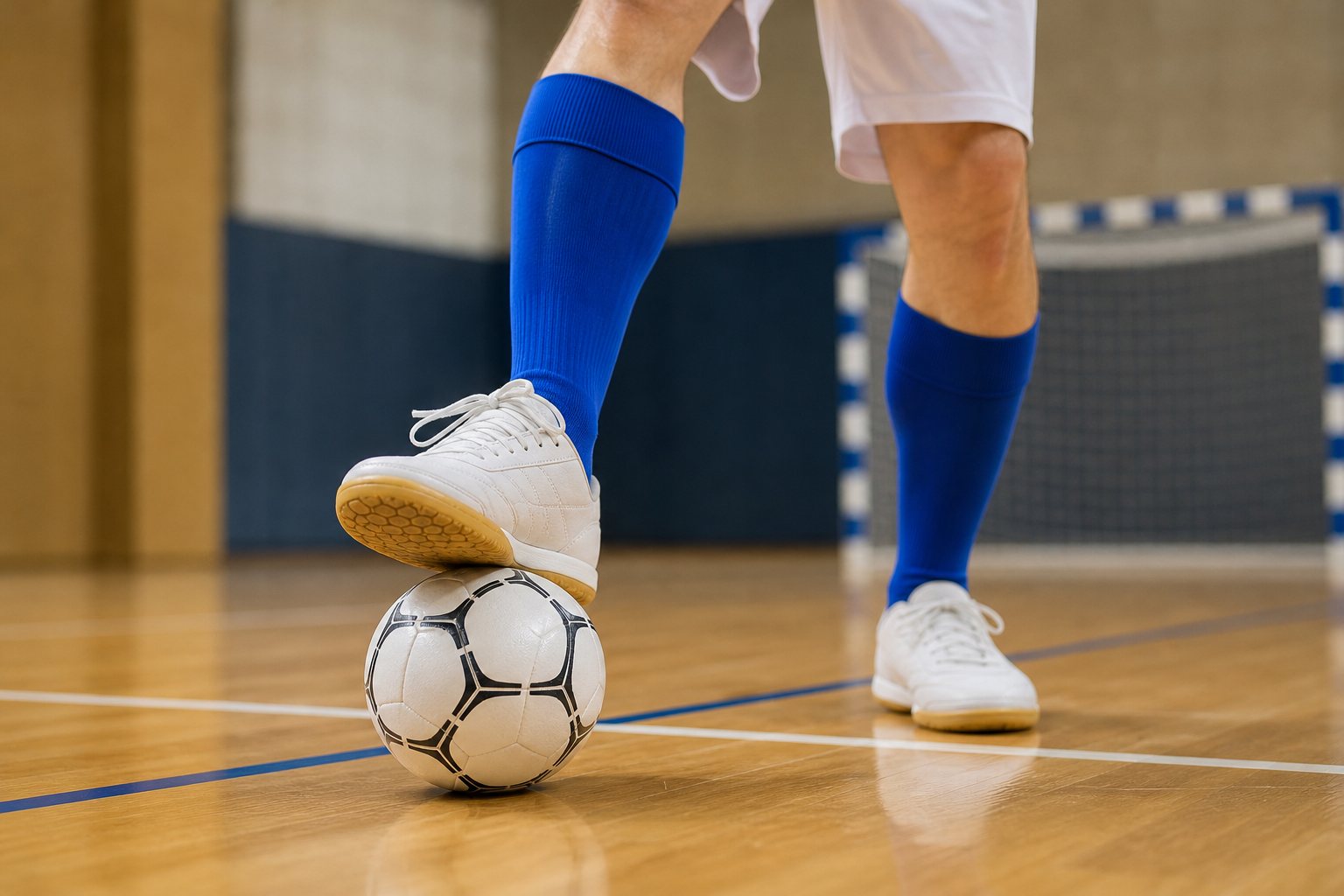
The ball is made to bounce only 50 to 65 cm, so it stays low on the floor, which rewards close control and quick short passes.
Who plays futsal, and at what level
Youth and recreational. In the US, US Youth Futsal says its national championship series has run since 1994 and calls it the highest level of futsal in the country; teams usually qualify through regional championships. US Youth Soccer has held its own Futsal National Championships since 2022, for boys and girls ages 13 to 17 (13u to 17u), played under the FIFA Futsal Laws as modified by US Youth Soccer. Adult leagues are common at indoor facilities.
School and college. We did not confirm NCAA or NFHS futsal programs; most American players join club or league teams. Ask your club or conference about local options.
Elite and international. The FIFA Futsal World Cup 2024 in Uzbekistan was the tenth edition, with 24 teams from all six confederations. Ukraine took bronze, its best finish, and France, New Zealand, Tajikistan and Afghanistan made their World Cup debuts. FIFA also held its first Futsal Women’s World Cup in Manila, where Brazil beat Portugal 3-0 in the final on 7 December 2025.
Olympic and Paralympic status. Futsal has not been part of the Olympic Games programme that we could confirm. It featured, with men’s and women’s tournaments, at the Youth Olympic Games in Buenos Aires in 2018, replacing the 11-a-side football used at the first two Youth Games. Futsal is not a Paralympic sport; the related Paralympic game is blind football. Check the official programme for the current Games.
Physical demands
Our sources do not give match-by-match running figures for futsal, so we only describe what the rules imply. Players work in short shifts because substitutions are unlimited and the court is small. That means repeated accelerations, sudden stops, turns on a hard floor and quick one- or two-touch passing, with little time to rest while you are on court. Leg strength, ankle and knee control, and the ability to repeat sprints all matter. The 2026 research on Spanish under-19 players, below, shows where those demands show up in injuries.
Health and safety for futsal
This section is general information, not medical advice. If you are hurt, see a sports medicine doctor, physical therapist or athletic trainer.
Injury patterns
A 2026 study followed 164 male under-19 players in Spain’s top youth futsal league through a full season. There were 111 injuries affecting 79 players (48% of the group), an overall rate of 4.96 injuries per 1,000 hours of exposure, with a far higher rate in matches than in training. Of the injuries, 80.1% were in the lower limbs, mostly the ankle (23.4%) and knee (20.7%); muscle and tendon injuries (36.9%) and ligament injuries (36.0%) were the most common types. The authors called for strength, neuromuscular control and load management.
The American Academy of Orthopaedic Surgeons (AAOS) says ankle sprains are most common in ball sports, and that a sprain should be checked if you cannot put weight on the ankle or if there is marked swelling. For the knee, AAOS describes pivoting, cutting and jumping with a straight leg as common ways ACL tears happen; a sudden “pop,” swelling or a knee that gives way needs a professional.
Head injuries
A video study of FIFA tournaments counted potential head injuries (a player staying down for more than five seconds or asking for medical attention for the head or neck). After adjusting for time, futsal had 122.3 per 1,000 match-hours, against 76.4 in outdoor football. Direct contact with an opponent was the main cause (76.2%), and 16.7% were unintentional ball-to-head impacts. The authors suggested drills on safe blocking in futsal.
The CDC’s HEADS UP program says to recognize concussion signs (headache, dizziness, confusion, balance problems), remove the player from the game that day, and let a health care provider decide when to return. Call 911 for danger signs such as repeated vomiting, a seizure or a worsening headache.
Prevention programs
FIFA 11+ is a free warm-up of about 20 minutes, built by FIFA’s medical research centre, meant to be used at least twice a week. A 2026 systematic review of exercise programs in futsal found only two studies that measured injuries directly; one reported lower injury rates after the FIFA 11+, the other a non-significant difference. The reviewers rated the certainty of the injury evidence as very low, so treat warm-ups as a sensible habit, not a guarantee.
Training, recovery and nutrition pointers
Futsal training combines small-sided games with footwork, short sprints, strength for the legs and core, and landing and cutting technique. Start with our soccer training page, which applies to futsal’s fitness base, then add quick-feet work on a hard surface that is gentle on your shoes and joints. Build volume gradually, especially if you play indoors on top of an outdoor season.
For food, see soccer nutrition and supplements; the sports nutrition position of the American College of Sports Medicine, the Academy of Nutrition and Dietetics and Dietitians of Canada recommends a familiar, carbohydrate-rich pre-exercise meal 1 to 4 hours before. For recovery, sleep comes first (the CDC recommends 8 to 10 hours for teens and 7 or more for adults); then see soccer recovery and our recovery tools guide. Foam rollers and massage guns are comfort tools, not treatment.
Gear for futsal
- Shin guards: compulsory under the Futsal Laws. They must be made of a suitable material, of an appropriate size to give reasonable protection, and covered by your socks. Players are responsible for size and suitability.
- Indoor shoes: flat rubber-soled indoor shoes (labelled IC or IN on many soccer shoes) suit gyms and indoor courts. Check what your venue requires. See our soccer gear page.
- The ball: a futsal ball has a 62 to 64 cm circumference, weighs 400 to 440 g and bounces only 50 to 65 cm when dropped from 2 m. Your league may specify the size and the FIFA quality mark.
- Ankle support: some players wear a brace. It is not a treatment; ask a sports medicine doctor, physical therapist or athletic trainer if you need one. See our ankle brace guide.
Three picks for a futsal bag: Vizari Malaga shin guards, hard-shell guards with hook-and-loop straps in kids’ to adult sizes; the ASO EVO ankle stabilizer, a low-profile lace-up support; and the OOFOS OOahh Slide from our recovery shoes guide. Product details come from retail listings; we have not tested them.
Vizari Malaga Shin Guards
- Hard shell
- Hook-and-loop straps
- Kids 4-6 to adult sizes

ASO EVO Ankle Stabilizer
- Lace-up with figure-8 straps
- Fits left or right foot
- Low profile, fits in court shoes
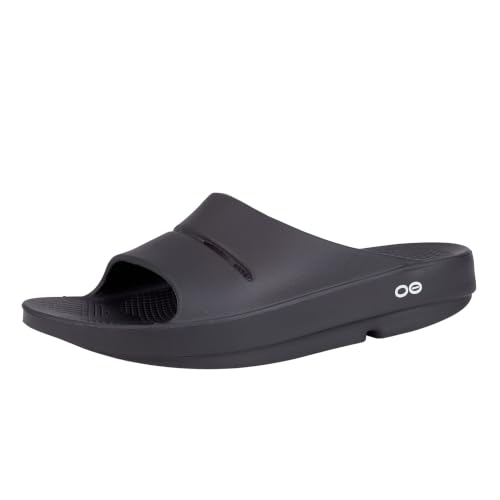
OOFOS OOahh Slide
- OOfoam slide
- APMA Seal of Acceptance
- Machine washable
$59.95 at Amazon, as of Nov 17, 2026 01:07 UTC
Check price on AmazonRelated sports and disciplines
Futsal is part of the soccer family. Its Paralympic cousin is blind football. Other indoor team sports with similar quick footwork are handball and basketball. See our soccer injuries page for more on knees, ankles and heat.
Futsal FAQs
What is the difference between futsal and indoor soccer?
Futsal is governed by FIFA’s Futsal Laws: five players, a low-bounce ball, a marked hard court, kick-ins and no offside. Other indoor soccer formats vary by venue and may use boards, larger teams or different balls. Ask your facility which rules it uses.
How long is a futsal game?
Two periods of 20 minutes of playing time, with the clock stopped when the ball is out. Competition rules can shorten the periods, so youth and recreational games are often shorter.
Is futsal an Olympic sport?
Not at the senior Olympic Games, as far as we could confirm. Futsal was played at the 2018 Youth Olympic Games in Buenos Aires. Check the official programme for the current Games.
Does futsal help you get better at soccer?
It gives players many touches in a small space, which many coaches value for control and quick decisions. We did not find a study in our sources proving it improves outdoor results, so think of it as extra practice, not a shortcut.
Do you need shin guards for futsal?
Yes. Shin guards are compulsory equipment under the Futsal Laws of the Game, and they must be covered by socks. Choose a size that fits and stays put.
What injuries are common in futsal?
In a 2026 study of Spanish under-19 players, four out of five injuries were in the legs, led by ankle (23.4%) and knee (20.7%), and rates were much higher in matches than in training. See a sports medicine doctor, physical therapist or athletic trainer for pain that does not settle.
Sources
- FIFA Futsal Laws of the Game 2025/26
- FIFA: Brazil win sixth Futsal World Cup in Uzbekistan
- Philippine Football Federation: final of the first FIFA Futsal Women’s World Cup
- US Youth Futsal: Nationals
- US Youth Soccer Futsal National Championship
- Olympics.com: futsal at the Youth Olympic Games
- Epidemiology of injuries in male under-19 futsal players in Spain (2026)
- Potential head injuries in football, futsal and beach soccer (2026)
- Exercise-based programmes and injury incidence in futsal players: systematic review (2026)
- AAOS OrthoInfo: Sprained Ankle
- AAOS OrthoInfo: ACL Injuries
- CDC HEADS UP: Signs and Symptoms of Concussion
- CDC: About Sleep
- ACSM, Academy of Nutrition and Dietetics, Dietitians of Canada: Nutrition and Athletic Performance (2016)
Futsal rewards touch, speed and good habits on a hard floor. Keep exploring the soccer hub, the sports hub and our recovery tools guide.