
This article contains affiliate links: if you buy through them we may earn a commission, at no extra cost to you. Read our affiliate disclosure.
A November Sunday in a muddy park: cowbells, a beer tent, and a field of riders in the middle of a lap, jumping off their bikes at a plank barrier, shouldering them up a steep bank, and hopping back on without losing a pedal stroke. At the world championships in Hulst, the Netherlands, in February 2026, Mathieu van der Poel won a record eighth elite title on a slippery course. Cyclocross (also spelled cyclo-cross, “CX” or “cross”) is bike racing on short off-road circuits with obstacles that make riders dismount and run.
Cyclocross guides: what do you need?
New to cyclocross? Start with the first card. Everything here is general education, not medical advice.
History & Origins of Cyclocross
Cyclocross grew out of European road racing in the early 1900s, and its origin story is disputed. One popular account says road racers raced each other to the next town by cutting across fields and hopping fences, a contest nicknamed a steeplechase. Another credits the Frenchman Daniel Gousseau with inspiring the first cross races and organizing a French national championship in 1902. Neither tale comes from an official record, so we treat them as stories, not settled fact.
What is better documented is the spread. National championships followed in Belgium (1910), Switzerland (1912), Luxembourg (1923), Spain (1929) and Italy (1930), and the first international race was held in Paris in 1924. The UCI began regulating the sport in the 1940s, and the first world championship took place in Paris in 1950. Belgium, the Netherlands and France became the sport’s strongholds. In the United States, the first national championships were held on October 20, 1963, in Palos Park, Illinois, and the sport has grown since the mid-1990s. Cyclocross is a UCI discipline but is not an Olympic or Paralympic sport. In this section we cite secondary summaries for the early history, because official UCI history pages were not available to us.
- 1902: Daniel Gousseau is credited in some accounts with organizing a French national championship (disputed, secondary source).
- 1910 to 1930: National championships begin in Belgium (1910), Switzerland (1912), Luxembourg (1923), Spain (1929) and Italy (1930).
- 1924: First international cross race, in Paris.
- 1940s: The UCI begins to regulate the sport.
- 1950: First world championship, in Paris.
- 1963: First US national championships, October 20, Palos Park, Illinois.
- Mid-1990s: Growth of the sport in the United States.
- 2026: Mathieu van der Poel wins a record eighth elite world title in Hulst, the Netherlands.
Legends of the Sport
Athletes from different eras, not ranked.
- Octave Lapize (France): won the 1910 Tour de France and, according to accounts, credited cross training for it, which helped spread the sport across Europe.
- Marianne Vos (Netherlands): won the 2022 elite women’s world title and also took silver in the Paris 2024 Olympic road race.
- Mathieu van der Poel (Netherlands): eight elite men’s world titles through 2026, a record.
- Tom Pidcock (Great Britain): the 2022 elite men’s world champion.
- Wout van Aert (Belgium): elite men’s world silver medallist in 2023 and 2025.
- Fem van Empel (Netherlands): elite women’s world champion three years running, 2023 to 2025.
- Lucinda Brand (Netherlands): won the 2026 elite women’s world title, her second.
Official results and records
We only list champions and records here after checking them on the official source. For the latest results, go to:
How we keep this current: we re-check facts after each major championship and update this page. Spot an error? See our editorial policy.
It is one of the UCI’s eight disciplines but not an Olympic one. This page explains how a cross race works, how to try one, and what to know about mud, cold and crashes. For the whole sport, see our cycling hub.
Cyclocross at a glance
| What it is | Timed races of repeated laps on a short mixed-surface course of grass, mud, sand and pavement, with barriers, steep banks and stairs. |
|---|---|
| How it is won | Races end at a time limit, not a set lap count: a senior race is about an hour, and 30 and 45 minutes are common for other categories. |
| Participants and levels | Categories 5 to 1 in the US, juniors, and elite and under-23 riders at the top. |
| Where it is played | Parks and fields. Strongest in Belgium, the Netherlands and France, and growing in the US since the mid-1990s. |
| Governing bodies | UCI worldwide; USA Cycling in the United States. |
| Season | September to February in the northern hemisphere; roughly May to August in the southern. |
How a cyclocross race works
Courses are laps of about 2.5 to 3.5 kilometres (1.5 to 2 miles), and about 90% of the course is rideable. UCI courses must be at least 3 metres wide. Under UCI rules, barriers can be no higher than 40 centimetres, and only short runs of them are allowed (USA Cycling’s rules, for example, allow a section of two barriers). Riders dismount, carry the bike over the obstacle and remount, so a clean dismount and remount saves seconds every lap. Steep banks, sand pits and stairs add run-ups. Cyclocross bikes look like road bikes with knobby tires and extra tire clearance, and use disc or cantilever brakes.
Who races cross, and at what level
Beginners and club racers. USA Cycling’s categories run from Category 5 (novice) up to Category 1 for road, track and cyclocross, with points earned in races. Juniors are grouped in two-year age bands. A first race is mostly about learning to dismount. See youth cycling and race day.
Elite level. The first world championship was held in Paris in 1950, and the event is traditionally held in late January or early February. The first US national championships took place on 20 October 1963 in Palos Park, Illinois. Belgium hosts the Superprestige and Cyclo-cross Trophy series. See cycling leagues and associations.
Olympics and Paralympics. Cyclocross is not an Olympic or Paralympic sport. The UCI lists road, track, mountain bike, BMX racing and BMX freestyle as its five Olympic disciplines and road and track as its two Paralympic ones. The UCI has campaigned to add cyclocross to the Winter Games, with a snow-course “proof of concept” World Cup race at Val di Sole, Italy. Press reports say the IOC ruled it out for the 2030 Winter Olympics in May 2026, citing the snow-and-ice rule, with later Games still open. Check the official programme for the current Games.
Physical demands
A cross race is an hour of repeated hard efforts: accelerations out of corners, sprints on the flats, running up steps with a bike on the shoulder. It rewards riders with a strong aerobic engine, short-burst power and bike-handling skill in mud, sand and wet grass. Running and carrying use muscles that road riders may not train, so strength in the legs, hips and shoulders helps, as do hip and ankle mobility.
Health and safety in cross
This section is general information, not medical advice. If you are hurt, see a sports medicine doctor, physical therapist or athletic trainer.
Here the research is thin. A 2025 systematic review of injuries across all competitive cycling disciplines (Fallon and colleagues, 44 studies) found no studies for cyclocross or gravel. So no injury rate can be given for cross, and we would rather say so than guess. What the review found for other disciplines is that lacerations, abrasions and fractures were the most common injury types, and upper-limb injuries were common in road and track. Cross includes the same kinds of falls, plus mud and slick roots, and Wikipedia notes that a faulty dismount or remount may cause a crash.
- Helmet: wear a bike helmet that meets the CPSC standard (all those sold in the US since 1999 do) and replace it after a crash, as the CPSC advises. USA Cycling requires helmets at its permitted events.
- Course check: walk or pre-ride the course in practice. Mud and wet grass change from lap to lap, and the barrier and bank are easiest to learn at a walk.
- Concussion: follow the CDC HEADS UP steps: recognize the signs (headache, dizziness, confusion), remove the rider, and have a healthcare provider decide when to return. Call 911 for danger signs such as repeated vomiting, a seizure, or one pupil larger than the other.
- Cold and wet: a long wait in cold, damp clothes can chill you before and after a race. Pack dry layers for after the finish. This is general guidance, not a sourced figure.
For more, read cycling injuries.
Training, recovery and nutrition pointers
Cross riders often practice dismounts, remounts and carrying until they are automatic; ride intervals, and add running or strength work in the off-season. Afterward, change out of wet clothes, eat and drink, and sleep: the CDC recommends at least 7 hours for adults and 8 to 10 for teens. See our training, recovery and nutrition and supplements pages.
Gear for cross
You can start on a cross bike or a gravel bike with knobby tires; check the event’s rules. The helmet is the one item to buy first. A Giro Register MIPS is an everyday adult helmet (the maker describes MIPS as a rotational-impact liner). A chest-strap monitor like the Polar H10 shows how hard you are going in hard interval blocks. After a muddy race, some riders reach for a Hypervolt Go 3 percussion massager for tight legs. That is about comfort, not treatment; see our massage gun guide and cycling gear.

Giro Register MIPS Helmet
- MIPS rotational liner (maker)
- Universal adult fit (54-61 cm)
- Meets CPSC standard
$39.99 at Amazon, as of Nov 17, 2026 01:07 UTC
Check price on Amazon
Polar H10 Heart Rate Sensor
- Chest strap
- Bluetooth and ANT+
- Works with many watches and apps
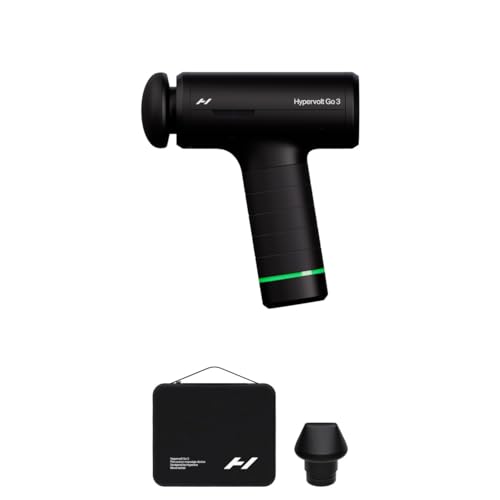
Hypervolt Go 3
- Portable percussion massager
- Comfort tool, not treatment
- Travel size
$149.00 at Amazon, as of Nov 17, 2026 01:07 UTC
Check price on AmazonRelated sports and disciplines
Parent: cycling. Siblings: road cycling, track cycling and gravel cycling. Neighbors: mountain biking, BMX and running, since cross asks for some of each.
Cyclocross FAQs
Is cyclocross an Olympic sport?
No. The UCI lists five Olympic disciplines, and cyclocross is not one. The UCI has pushed for it to join the Winter Games; press reports say the IOC declined for 2030. Check the official programme for the current Games.
How long is a cyclocross race?
It is timed, not measured in distance. Senior races run about an hour, and 30 and 45 minutes are common for other categories.
Can I race cross on a mountain bike or gravel bike?
Many local races welcome them in beginner categories, but rules vary by event, so check with the promoter. UCI events have equipment rules of their own.
How high are the barriers?
UCI rules cap them at 40 centimetres, with no more than two in a row.
Sources
- UCI: about the UCI and its disciplines
- Wikipedia: Cyclo-cross (course, barriers, history, Winter Olympics effort)
- USA Cycling: first-time racer guide
- CX Magazine: 2026 UCI Cyclocross World Championships, Hulst
- Cyclingnews: IOC and cyclo-cross at the 2030 Winter Olympics
- Fallon et al. 2025, injury and illness across competitive cycling disciplines
- CPSC: which helmet for which activity
- CDC HEADS UP: signs and symptoms
More on cycling: the rules, our recovery tools guide, and every sport on our sports hub.