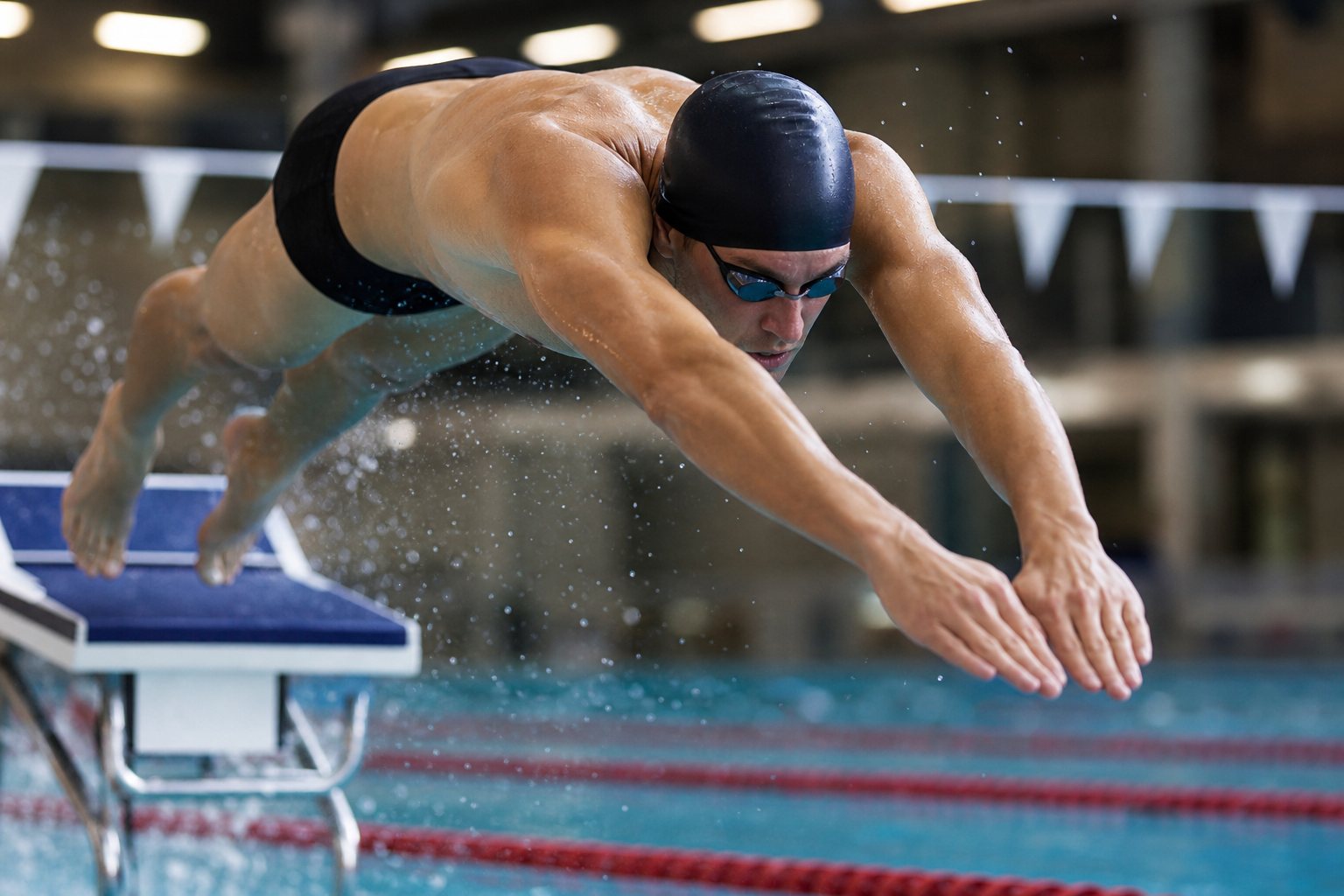
Behind the blocks, a swimmer shakes out her arms and looks at the water. On the 10 m platform, a diver stands with his toes over the edge and the crowd noise fades to nothing. In the pool, a goalie waits for a penalty shot. Mental training in aquatic sports is the set of skills, such as focus, routines, imagery and handling pressure, that help athletes perform and enjoy their sport. It is different from mental health care, which is covered in its own section below.
Quick answer: Useful mental skills for aquatic athletes include a simple pre-race or pre-dive routine, realistic goals, short imagery, controlled breathing and a plan for mistakes. The research is mixed on how much psychological techniques improve performance, so treat them as tools to practice, not guarantees. Anxiety, depression, disordered eating and burnout are health matters: talk to a qualified professional, and in the US call or text 988 in a crisis.
What the research says about mental skills
A 2024 systematic review and meta-analysis of psychological interventions to enhance athletic performance (Reinebo et al., PMID 37812334) found that the effect on actual performance is unclear, and that the effects were not stable after sensitivity analyses. An Exercise and Sports Science Australia position statement on performance under pressure (Schweickle et al., 2026, PMID 42271117) synthesized work on the sources of pressure athletes face, how they respond, strategies to support performance, and how to evaluate them. In 147 trained youth swimmers, pre-competition self-confidence and perceived fatigue were examined as predictors of satisfaction after racing (Lopez-Hernandez et al., 2026, PMID 42111596). The honest summary: these skills are worth learning because they are part of good coaching, not because any study proves a medal.
Confidence
Confidence usually grows from preparation: sets completed, dives landed, passes made. Keep a short log of what went well each session so that your confidence has evidence behind it. Compare yourself with last month’s self, not with the lane next door. Confidence is not the absence of nerves; many athletes feel nervous and perform well.
Focus and routines
Focus means choosing what to attend to in the next few seconds. A routine is a short, repeatable sequence, such as breathing out, a cue word and a look at the target, that gets you ready. Diver routines have been studied: a 2020 study of 14 elite Chinese divers and their coaches described pre-performance routines (Yao and Xu, PMID 32116970). Swimmers can use a fixed pre-race sequence behind the blocks; water polo players can use a consistent penalty or free-throw routine; artistic swimmers rehearse counts and entries. These examples are common coaching practice; the studies above do not test them all.
Visualization and imagery
Imagery means rehearsing a skill in the mind, from the performer’s view or from the outside. A 2002 experiment on springboard divers compared visualizing and performing dives (Reed, PMID 12661849). Keep imagery short and specific, one race or dive at a time, ideally close to how it will feel on deck. Imagery supports practice; it does not replace it.
Goal setting and motivation
- Process goals (a clean breakout, an even tempo, a straight entry) are within your control.
- Outcome goals (a time, a place) are useful for direction but depend on others.
- Long-term motivation survives better when the sport is also fun. Chlorine and 5 a.m. alarms are easier when you like your teammates.
These distinctions are general coaching and sport-psychology practice rather than findings from a single source on this page.
Handling pressure and setbacks
Pressure is normal; the ESSA statement treats it as something to understand and manage, not eliminate. Practical, coach-style tools: practice under mock-meet conditions, use a breathing reset (a slow breath out), have a cue word, and define in advance what you will do after a false start, a missed dive or a bad quarter (a three-step reset: breathe, cue, next action). After a poor performance, review facts first, then feelings. Athletes in aquatic sports often face cut-off times and selection, so a bad day can feel high-stakes; a coach, parent or sport psychologist can help keep it in proportion.
Tactics, decisions and teamwork
Water polo is a team sport with fast decisions: shot or pass, press or drop, 28-second possession clock. Communication and trust matter there. Relay swimmers and synchro divers also depend on partners. Artistic swimmers in duets and teams must match one another in timing and expression. Talk to teammates about roles and cues before pressure hits. For competition-day logistics, see our swimming game day, diving game day and water polo game day pages.
Youth
Young athletes benefit from skills framed as fun and learning. For divers, a 2024 review on early specialization in competitive diving noted pressures including body image and parental expectations (Lenz and Provance, PMID 39499006). Parents can help by praising effort, keeping car rides pressure-free and not coaching from the pool deck. If a child dreads practice, takes less joy in the sport or seems stressed, check in with a coach, doctor or counselor.
Mental performance is not mental health
Mental skills coaching and mental health care are different things. The IOC consensus statement on mental health in elite athletes (2026 update; Reardon et al., PMID 42580854) says mental health symptoms and disorders are common among elite athletes, can have sport-related causes, can affect performance, and that routine screening with validated instruments and treatment are recommended. Anxiety that will not settle, low mood, loss of interest, disordered eating, panic or burnout need a qualified professional such as a doctor, psychologist or counselor, not just a better routine. In the US, you can call or text 988, the Suicide and Crisis Lifeline, any time; outside the US, contact local emergency or crisis services. Eating concerns: see our nutrition page. Related pages: swimming, diving, water polo and artistic swimming.
Frequently asked questions
How do I calm pre-race nerves?
Some arousal is normal. A practiced routine, slow breathing out and a cue word are common tools. If anxiety is constant or overwhelming, talk to a doctor or counselor.
Does visualization really work?
Research on psychological techniques is mixed. Imagery is a low-risk practice tool for rehearsing skills, but it supports training rather than replacing it.
How can I get over a fear of a dive?
Tell your coach. Coaches commonly use smaller steps, lead-up drills and progressions; we found no diving-specific trial on fear treatment, so this is coaching practice. Persistent fear that spreads to daily life merits a conversation with a professional.
How should parents support a young swimmer?
Praise effort, keep post-race talk calm, avoid coaching from the deck and watch for loss of joy or signs of stress; ask a coach, doctor or counselor if you are worried.
When is it more than nerves?
If worry, low mood, disordered eating or exhaustion lasts or interferes with school, sleep or daily life, see a qualified professional. In the US, call or text 988 in a crisis.
Sources
- Reinebo et al., psychological interventions and performance (meta-analysis)
- Schweickle et al., ESSA position statement: performance under pressure, 2026
- Lopez-Hernandez et al., self-confidence and perceived fatigue in youth swimmers, 2026
- Yao and Xu, pre-performance routines in elite divers, 2020
- Reed, visualizing and performing springboard dives, 2002
- Lenz and Provance, early specialization in competitive diving, 2024
- Reardon et al., IOC consensus statement on mental health in elite athletes, 2026
- Reardon et al., IOC consensus statement on mental health in elite athletes, 2019
- 988 Suicide and Crisis Lifeline
General information for education only, not medical advice. It does not replace a visit with a doctor, physical therapist or athletic trainer. See how we write and check our pages in our editorial policy.