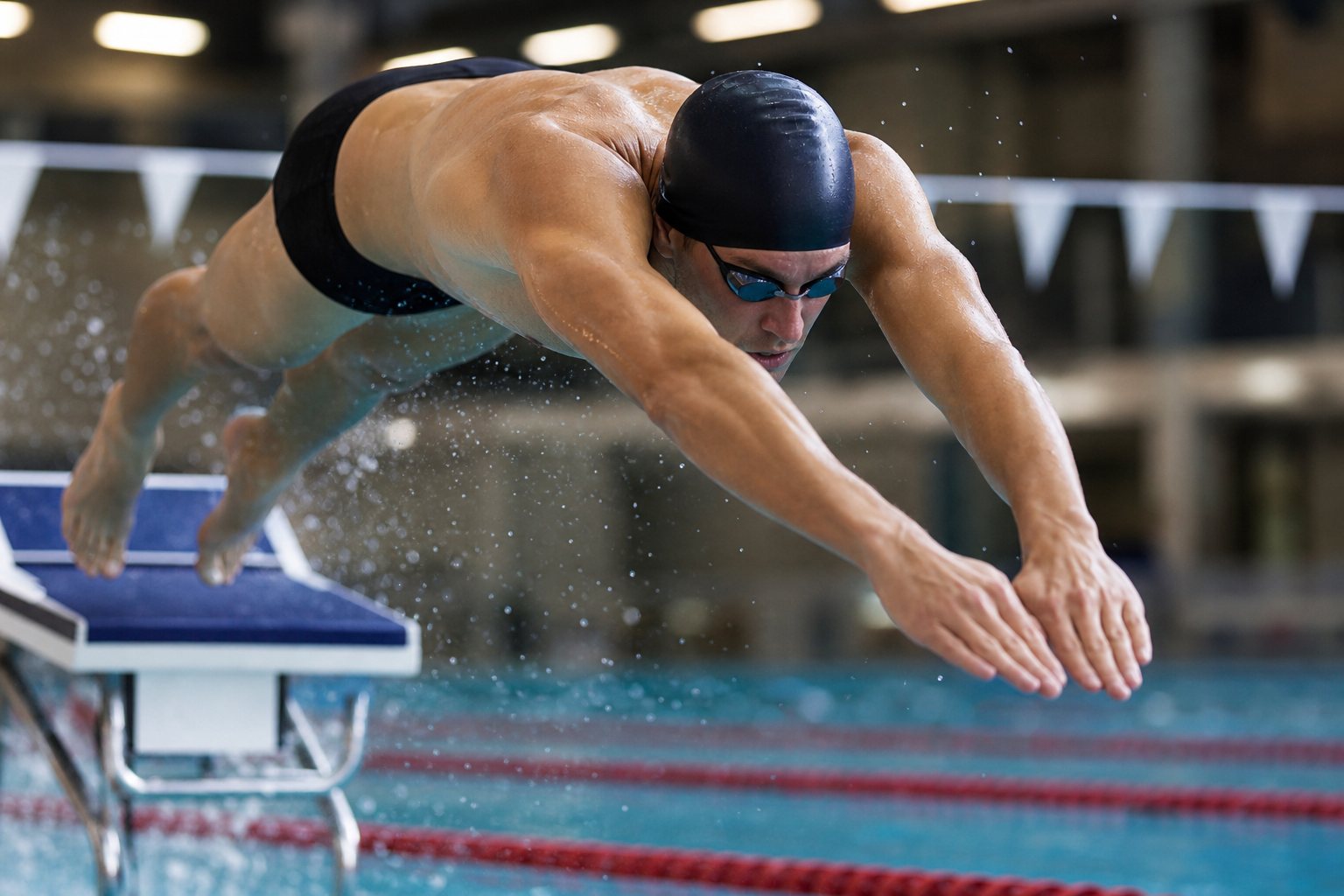
A parent stands at the edge of a community pool with a nine-year-old who says she wants to “do all of it”: race, dive off the board, play the game with the ball and the funny caps, and maybe do the dancing-in-water thing she saw on TV. All of that is real, and it is all under one roof. Aquatic sports (also called water sports or the aquatics family) are the disciplines governed worldwide by World Aquatics: swimming, diving, artistic swimming, water polo, open water swimming and high diving. This page explains how each works in plain words, the skills they share, and how a beginner can actually start.
Quick answer: Every aquatic sport starts with water confidence: floating, breathing out under water and moving without panic. After that, pick a doorway: a swim club or masters group for swimming, a diving club, a water polo program, or an artistic swimming club. Ask for a trial session. Formal swimming lessons come first for anyone who cannot swim yet; the CDC recommends them for drowning prevention. See a doctor before starting if you have a heart, lung or ear condition.
The aquatic sports in plain words
| Swimming | Racing in freestyle, backstroke, breaststroke, butterfly or all four (individual medley). Our swimming rules page covers strokes and disqualifications. |
|---|---|
| Diving | Springboard (3 m) and platform (10 m) dives, individual and synchronized, scored on execution and difficulty. See diving rules. |
| Artistic swimming | Choreographed routines to music, judged on synchronization, execution, difficulty and expression. See artistic swimming rules. |
| Water polo | Two teams of seven try to throw the ball into the other goal; four 8-minute quarters and a 28-second possession clock. See water polo rules. |
| Open water swimming | Distance races, 10 km at the Olympics, in lakes, rivers or sea. See the open water hub. |
| High diving | Dives from 27 m (men) and 20 m (women) platforms, a World Aquatics discipline. |
The event details above come from World Aquatics and the LA28 event pages (listed under Sources). For the current Olympic or Paralympic programme, check the official site for the Games you care about; this page does not try to track every edition. Para swimming has its own page: para swimming.
Skills every aquatic athlete builds first
The four disciplines look different, but the first steps overlap. This list is general coaching practice rather than a quote from one rulebook, so ask a certified coach how your program teaches it.
- Water comfort and breathing. Blowing bubbles, putting the face in, and breathing out steadily under water. Rhythmic breathing is the base of every stroke, and breath-holding games are better done with a coach on deck (see the injury prevention page for hypoxic blackout).
- Floating and body position. A long, flat body floats and swims easily. Swimmers, divers and artistic swimmers all work on streamlines and body lines.
- Kicking. Flutter kick for freestyle and backstroke, whip kick for breaststroke, dolphin kick for butterfly, and the eggbeater kick that water polo players and artistic swimmers use to stay high in deep water.
- Safe entries and exits. Sitting, sliding and stepping in first, and feet-first entries into water of unknown depth. Head-first dives belong in water that is known to be deep enough, supervised by a coach.
- Treading water. A beginner skill that is also a safety skill, and a base for water polo and artistic swimming.
How a beginner starts
The routes below are the ones the national organizations themselves point people to. All of them change over time, so use the finder on each site rather than a printed list.
- Adults who swim or want to learn: U.S. Masters Swimming says “Masters” simply means age 18 and up, that it supports more than 1,200 clubs and workout groups, and that many offer introductory programs for adults. It has a club finder by zip code and USMS-certified adult learn-to-swim instructors.
- Children and teens who swim: US swim clubs are listed through USA Swimming, and many YMCAs and park-and-recreation departments run lessons and summer teams. Ask for a trial session and for the coach’s background-check and SafeSport status.
- Diving: USA Diving’s site has a Find a Club directory and a Diving 101 page. Many diving clubs share a pool with a swim team.
- Water polo: USA Water Polo’s site lists a club search and beginner options named “Try Water Polo For Free” and “Splashball,” with others for older youth and college-bound players. Check each page for ages and sign-up steps.
- Artistic swimming: U.S. Artistic Swimming has a club finder and, according to its membership page, offers a trial membership (check its current season terms). Our artistic swimming page goes into detail.
Levels: from learn-to-swim to elite
Age-group clubs come first, then school teams. In 2024-25 the NFHS counted 138,303 girls and 119,102 boys in high school swimming and diving, and water polo has a smaller but real high school base concentrated in California. The NCAA runs combined swimming and diving championships and a separate water polo championship. Adults can join masters programs, where competition is optional. Whatever the level, a good first-year program focuses on skills, fun and safety, not volume.
Where the rules live
Each sport has its own rulebook. World Aquatics publishes its Constitution and Competition Regulations on its rules page, and sport rules sit within the sport sections of its site. In the US, high school play follows NFHS rules and college play follows NCAA rule books; clubs usually follow the national federation. If you are new, you do not need the full rulebook. A coach or club will tell you what matters at your level, and our sport pages give the plain-language version: swimming, diving, water polo and artistic swimming.
Before the first practice
Bring a suit you can move in, a pair of goggles that seal without pressing hard (see the gear page), a towel, and water to drink. Tell the coach about asthma, ear problems, past concussions or anything else that matters. Shower before getting in; the CDC explains that the red eyes and stinging people blame on “chlorine” are largely caused by chloramines, which form when chlorine reacts with sweat, urine and body products. For how to train once you are in, see aquatic training.
Frequently asked questions
Which aquatic sport is best for a beginner?
Swimming is the usual starting point because it builds water skills the other sports need. Many divers, water polo players and artistic swimmers also start in a swim program. Try a trial session in each that interests you.
Do I need to be a strong swimmer before trying water polo or diving?
You need basic water safety and comfort. Water polo programs expect players to be able to swim and tread water, and diving programs have their own entry steps. Ask the club what a trial class requires.
Can adults start an aquatic sport?
Yes. U.S. Masters Swimming welcomes adults 18 and up, with competition optional, and many clubs offer adult learn-to-swim. Ask local clubs about adult diving or water polo.
Are aquatic sports in the Olympics?
World Aquatics lists swimming, water polo, diving, artistic swimming and marathon swimming as Olympic sports. Check the official programme for the current Games for exact events.
How do I find a club near me?
Use the club finders on the USMS, USA Diving, USA Water Polo and U.S. Artistic Swimming sites, or ask your local pool, YMCA or park department.
Sources
- World Aquatics: About
- World Aquatics: Rules and regulations
- LA28: swimming, diving, artistic swimming, water polo, open water
- U.S. Masters Swimming: What is USMS
- USA Diving
- USA Water Polo
- NFHS participation 2024-25
- CDC: drowning prevention
- CDC: preventing eye irritation from pool chemicals
- World Aquatics: high diving
General information for education only, not medical advice. It does not replace a visit with a doctor, physical therapist or athletic trainer. See how we write and check our pages in our editorial policy.