This article contains affiliate links: if you buy through them we may earn a commission, at no extra cost to you. Read our affiliate disclosure.
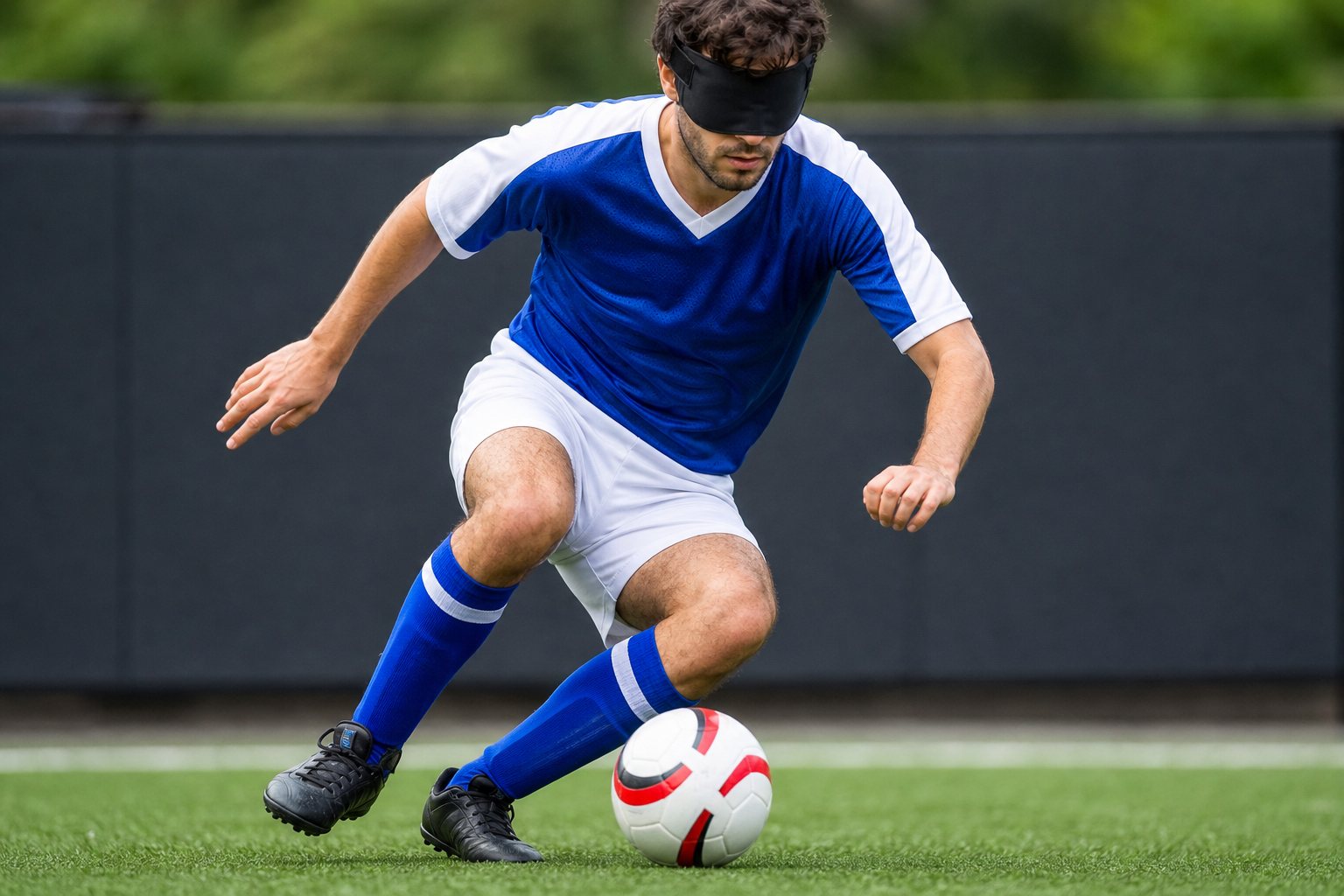
A player kneels on the pitch before kick-off and checks the eyeshades one more time: patches in place, shades snug, nothing that will shift in the first collision. The ball rattles as a teammate rolls it past. Blind football gear is short and specialized: a noise ball, eye patches and eyeshades, a pitch with kickboards, and then ordinary football kit such as shin guards and shoes. This page explains what each piece is for, how to check fit and condition, and what is a published standard versus a maker claim. The sport overview is in our blind football hub.
Quick answer: The International Blind Sports Federation (IBSA) requires a ball with bells or another sound system, and eye patches and eyeshades for outfield players. A club or program usually supplies these, so check with them before buying. Players usually bring their own shin guards, shoes that suit the surface and comfortable kit. Check fit, wear and condition before every session, and ask your league what it requires.
The specialized equipment
IBSA’s football overview lists the essentials:
- The ball. It must have bells or another sound system so players can hear it move along the ground or through the air. We did not find a published product standard for the ball, so treat maker descriptions as claims, and use the ball your league specifies.
- Eye patches and eyeshades. All outfield players wear them (the shades are also called blindfolds), so everyone is equally unsighted. Paralympic.org describes them as blackout eye masks. The goalkeeper, who is sighted or partially sighted, does not wear them.
- The pitch. IBSA gives 40 m by 20 m with kickboards around it, and USABA says the surface should be solid, smooth, flat and non-abrasive. Goals are 3.66 m wide and 2.14 m high.
These are usually supplied by the club, school or federation. We could not confirm a specific eyeshade or noise-ball product that meets IBSA’s rules, so we do not feature one. Ask your club or USABA where to buy.
Fit and care of eyeshades
Eyeshades matter for fair play, and for comfort and safety. Some practical checks that most coaches would agree with: the shades should stay in place when you turn your head quickly; pads and straps should not press on the eyes, nose or ears in a painful way; skin should be clean and free of irritation; and the equipment should be cleaned between users as your program directs. Ask your coach or a doctor if you have skin or eye problems. Do not put anything near the eyes that has not been designed for the purpose. Eyeshades are competition equipment, not protective gear, so they do not replace careful contact habits; see injury prevention.
Shin guards
Shin guards are standard football protection. The IFAB Laws of the Game list shin guards among the compulsory equipment in football, and require that they be made of suitable material, be of appropriate size and be covered by the socks. In US school and college soccer, the NFHS and NCAA rules summaries require guards that meet the NOCSAE standard (ND090), with a seal. We did not find a blind-football rule for shin guards or confirm what each league requires, so ask yours.
What to check: the guard covers the shin from just below the knee to above the ankle, does not slide, and is comfortable under the sock. Replace guards that are cracked or have lost their padding. A maker’s description such as “hard shell” tells you about the design, not about certification. Look for the NOCSAE seal if your league needs it.
Shoes and surface
USABA says blind football is played on a solid, smooth, flat surface, so flat-soled shoes made for indoor or turf play are the common choice. We did not find an official shoe standard. Check that the shoe grips the surface without catching, that laces are tied firmly and that the fit is snug without squeezing. Wear socks that cover the guards. After a few months of weekly play, check soles for wear.
Clothing, bag and small items
Wear comfortable, breathable kit that is allowed by your league. A well-organized bag also helps: use the same pockets for the same things so you can find them without help. Keep a water bottle, a small towel and a snack in a known place.
After the game
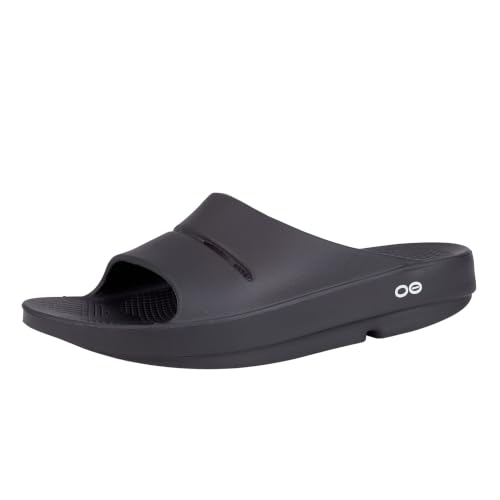
Many players like easy footwear after a session. This is comfort, not treatment, and no footwear prevents injury.
Vizari Malaga Shin Guards
- Hard shell
- Hook-and-loop straps
- Kids 4-6 to adult sizes
OOFOS OOahh Slide
- OOfoam slide
- APMA Seal of Acceptance
- Machine washable
$59.95 at Amazon, as of Nov 17, 2026 01:07 UTC
Check price on AmazonThe Vizari guards are listed by Amazon as hard-shell guards with elastic hook-and-loop straps in sizes from kids to adult. We have not confirmed that they carry a NOCSAE seal, so check this if your league requires one. The OOFOS slide has the American Podiatric Medical Association (APMA) Seal of Acceptance, according to the maker.
Inspecting equipment
Before every session: check the ball for damage and that the bells or sound system still work; check eyeshades and straps for wear; check the kickboards and goals for loose parts; check shin guards for cracks. Put any damaged item aside and tell the coach.
Blind football gear FAQs
What equipment do I need to start?
Usually very little: your club provides the noise ball and eyeshades. Bring shin guards, suitable shoes and water.
Can I use a normal football?
No. IBSA requires a ball with bells or another sound system. A normal ball makes no sound that players can follow.
Are eyeshades a protective item?
No. IBSA requires them so that all outfield players are equally unsighted. They are not a substitute for safe play.
Do I need a helmet?
Not as standard, from the official pages we read. See injury prevention for the headgear discussion.
Which shin guards should I buy?
Ones that fit well and meet your league’s rules, such as the NOCSAE standard where required. Ask your coach.
Sources
- IBSA: football overview
- Paralympic.org: blind football
- USABA: blind soccer
- IFAB Laws of the Game: the players equipment
- NFHS 2024-25 soccer rules comparison guide
- NOCSAE: soccer standards
- Amazon: Vizari Malaga Soccer Shin Guards
- Amazon: OOFOS OOahh Slide
General information for education only, not medical advice. It does not replace a visit with a doctor, physical therapist or athletic trainer. See how we write and check our pages in our editorial policy.