This article contains affiliate links: if you buy through them we may earn a commission, at no extra cost to you. Read our affiliate disclosure.
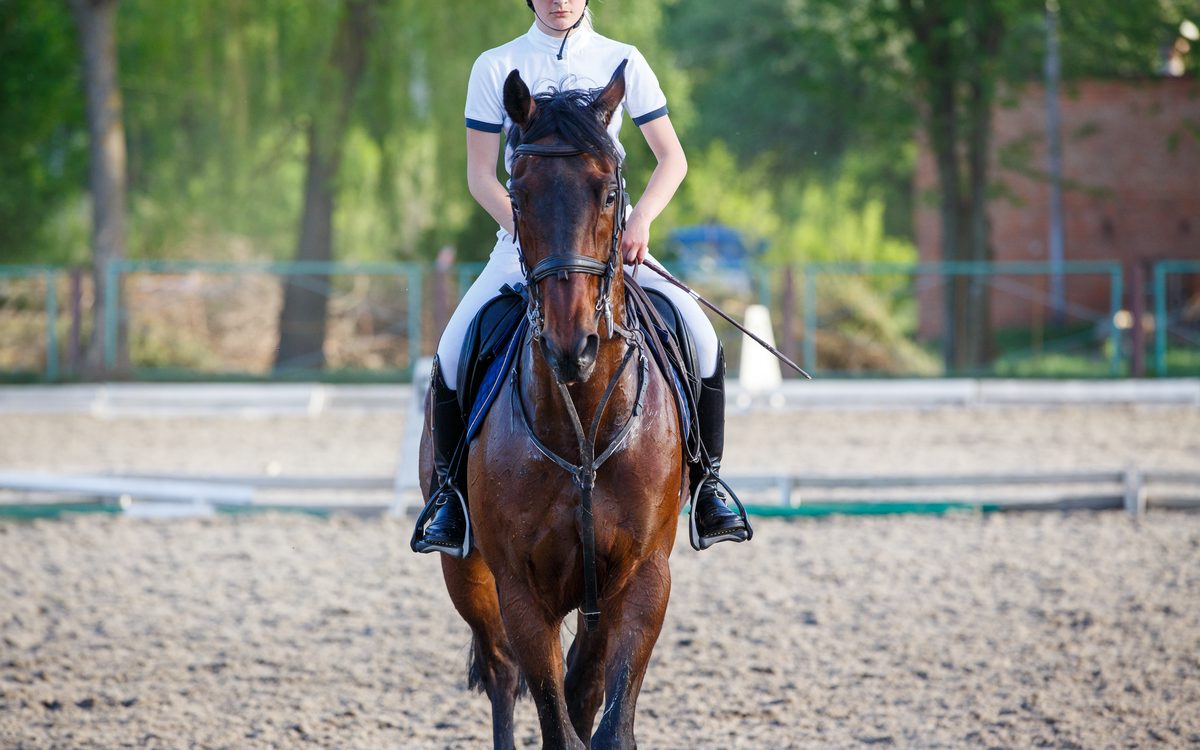
The first thing a coach checks on a new dressage rider is not the seat. It is the helmet: does it sit level, does the harness hold, and is it the kind a show will accept? Dressage gear is simpler than in most sports, and it is mostly about three things: a certified helmet that fits, footwear and clothing that let you sit and move correctly, and a saddle that suits both of you. This page explains what matters, the difference between verified standards and maker claims, how to inspect what you own, and where the rules apply. Dress and tack rules change during the year, so read the current rulebook before buying for competition.
Quick answer: Spend first on a certified, correctly fitted helmet; rules require protective headgear for anyone mounted at licensed dressage competitions. Then boots with a distinguishable heel, gloves for grip, and breeches you can ride in. Saddle fit matters for both rider and horse. Competition clothing is set by the USEF rule book and attire booklet, so check it before buying anything for a show.
Our picks
These are starter items, not a complete list, and each fits a specific need. We checked the Amazon listings for their stated features, but we cannot confirm fit for your head or foot; see the fit notes below.

Troxel Spirit Riding Helmet
- ASTM/SEI certified (maker)
- DialFit adjustment
- Removable washable liner
$78.99 at Amazon, as of Nov 17, 2026 01:07 UTC
Check price on Amazon
Ovation Deluxe Schooler Helmet
- ASTM F1163-15 + SEI (listing)
- Removable washable liner
- YKK adjuster

SSG Digital Riding Gloves
- Digital grip palm
- Grips when wet
- Machine washable

TuffRider Ladies Starter Low-Rise Knee Patch Breeches
- Cotton/spandex
- Knee patches for grip
- Velcro ankle closures
$29.99 at Amazon, as of Nov 17, 2026 01:07 UTC
Check price on Amazon
Ariat Heritage IV Zip Paddock Boot (women's)
- Full-grain leather
- Distinguishable heel
- Zip front
Helmet: standards, fit and replacement
- The rule (verified). Under the US Equestrian dressage rule (DR120), anyone mounted on the grounds, competing or not, must wear protective headgear from the time horses are admitted, and a rider without a helmet is stopped until it is in place.
- The standard (verified). US Equestrian’s list of accepted standards includes ASTM F1163 certified through the Safety Equipment Institute (SEI), and the helmet must be fitted by someone qualified. ASTM F1163 covers impact and retention tests. A 2023 rule change also added Snell as accepted.
- Maker claims (not independently verified here). Troxel says its helmets are ASTM/SEI certified, are designed for one impact, and should be replaced after an accident or every five years. The Ovation Schooler listing says ASTM F1163-15 and SEI. Check the label on the helmet itself, because listings change.
- Fit. A 2020 survey of 2,598 adult riders (Stanfill and colleagues) found poor fit was a reason given by 48.6% of those who did not always wear a helmet. Measure around the head about an inch above the eyebrows, as the Troxel Spirit listing advises; the helmet should sit level, not tip back, and the harness should be snug. A fitter at a tack shop can check it.
- MIPS or not. A 2025 survey of 357 collegiate riders (Gould and colleagues) found no difference in head injury between MIPS and non-MIPS helmets, and that 78% would not replace a helmet after every fall. A helmet may be damaged without visible signs (a 2019 study found 46% of head-injury cases had no helmet damage).
What a helmet can and cannot do, and what to do after a fall, are covered in dressage injury prevention. After a head impact with symptoms, stop riding and see a health care provider.
Boots
At US Equestrian licensed competitions, boots with a distinguishable heel are required under GR801, with some breed exceptions. A heel keeps the foot from sliding through the stirrup. For dressage competition, tall dress boots are the traditional choice; the USEF attire booklet lists what is allowed at each level, and a secondary report says paddock boots with half-chaps may be allowed through Fourth Level, so check the current rule before you buy. For schooling, a paddock boot with a smooth sole and a heel is a common choice. Break boots in before a show and check the stirrup fits (a boot too wide can catch).
Gloves
Gloves help with rein grip, particularly in wet weather, and USEF encourages conservative colors in dressage, according to one summary of its attire guidance. The SSG listing describes a digital grip pattern and smooth seams between fingers for multiple reins. Check that fingertips are not so thick you lose feel.
Breeches and clothing
White or light-colored breeches, a coat and a shirt with a tie or choker have been the traditional baseline, but the attire rules were updated in recent years to allow darker breeches and some accents, according to a 2025 Chronicle of the Horse report. Rules change; read the current USEF dressage attire booklet. For schooling, any breeches with knee patches or a full seat that let you swing your leg and avoid chafing work. Avoid seams that rub where you sit for hours.
Saddle fit
A saddle should fit the horse and the rider. A 2025 survey of 384 male riders (Tan and colleagues) found 57% reported groin or pelvic pain, and deep-seat saddles were associated with more pain across disciplines and in dressage. A 2026 survey of 134 Finnish riders (Karikoski and colleagues) studied rider and horse size proportions, and respondents’ average body-weight ratio was 12.9%. Ask a qualified saddle fitter, because a saddle that is wrong for the horse can affect the horse’s comfort, and see a doctor for rider pain that continues.
Whips, spurs and tack
Rules on whips, spurs, bits and nosebands are specific to the level and the rulebook, and the FEI is revising its dressage rules in 2026. We did not verify the current text, so read the USEF DR chapter and the FEI Dressage Rules and ask your coach before you buy.
Inspect your gear
General practice, not a rule:
- Look over the helmet for cracks, a loose liner or a frayed harness each month, and after any fall.
- Check girths, stirrup leathers and buckles for wear, since a broken leather mid-ride is an avoidable accident.
- Check that stirrups are the right size and that safety stirrups release as designed.
- Re-fit helmets and boots as children grow.
Dressage gear FAQs
What kind of helmet do I need for dressage?
One that meets a standard accepted by US Equestrian, such as ASTM F1163 certified through SEI, and that is fitted by someone qualified. It is required for anyone mounted at licensed dressage competitions.
How often should I replace my helmet?
Troxel says after an accident or every five years; other makers have their own guidance. Follow the maker’s instructions for your model.
Do I need tall boots to start?
Not for lessons. A paddock boot with a heel is common for schooling. For competition, check the USEF rules for your level.
Does a MIPS helmet protect better?
A 2025 survey of collegiate riders found no difference in head injury between MIPS and non-MIPS helmets. Certification and fit matter more.
What should I buy first?
A fitted, certified helmet, then boots with a heel, and then the rest.
Sources
- US Equestrian, Dressage division (DR120); accepted helmet standards; GR801; dressage attire and equipment booklet
- ASTM F1163; Troxel, helmet certifications
- Stanfill AG et al. Helmet use in equestrian athletes, Concussion 2020; Gould S et al. Equestrian helmet type and head injury, Clin J Sport Med 2025; Connor TA et al. Do equestrian helmets prevent concussion? Sports Med Open 2019
- Tan J et al., groin and pelvis pain in male riders, J Equine Vet Sci 2025 (Europe PMC); Karikoski NP et al. Rider and horse size proportions, 2026
- Chronicle of the Horse, 2025 dressage attire rule report (secondary); product details from the Amazon listings (see sources file)
General information for education only, not medical advice. It does not replace a visit with a doctor, physical therapist or athletic trainer. See how we write and check our pages in our editorial policy.