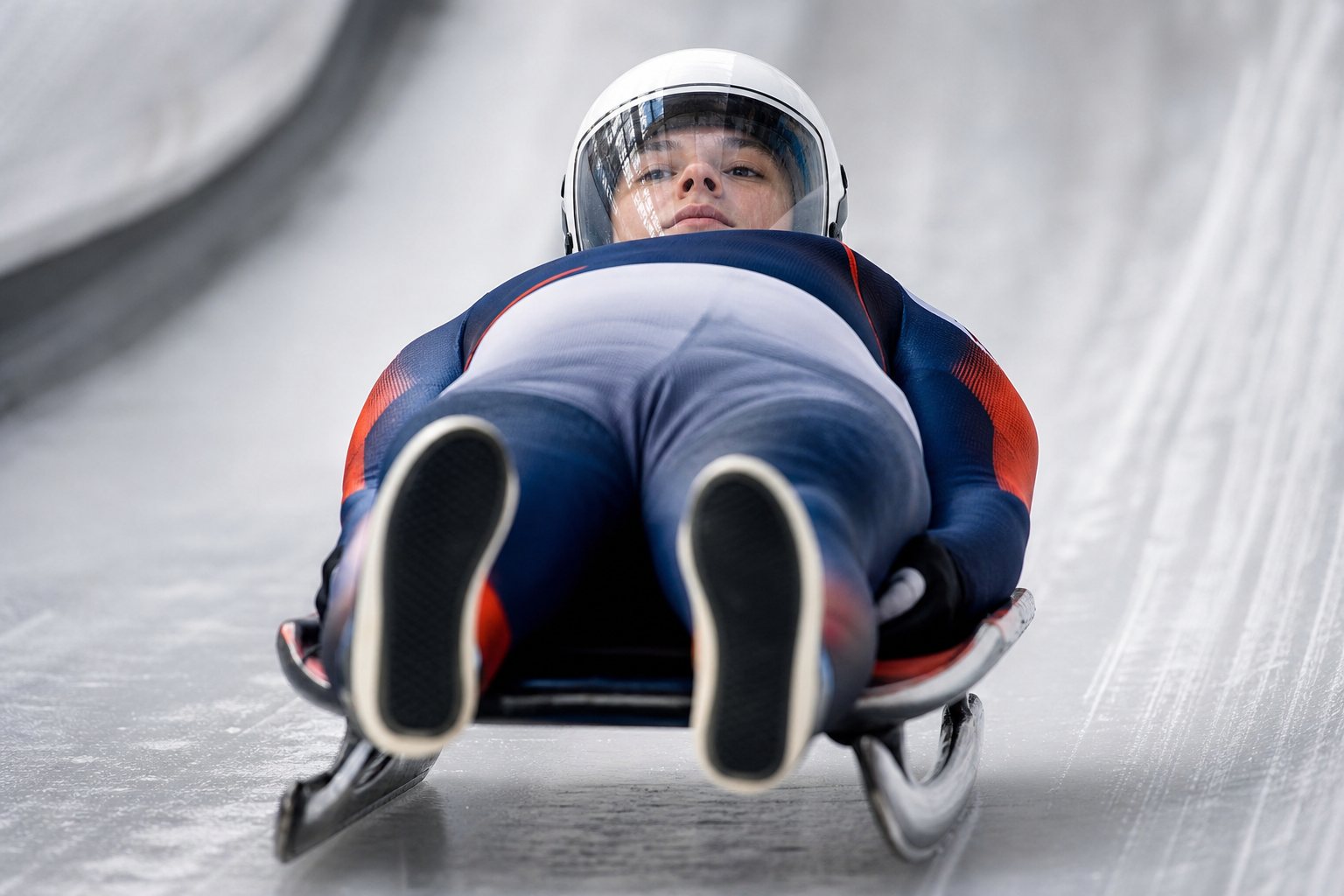
A teenage slider climbs out of the car at a cold track before dawn with a granola bar in one hand and a water bottle in the other. Training starts in forty minutes and will run through lunch. Luge nutrition is about having enough energy for strength sessions, starts and long days at the track, staying hydrated in the cold, and avoiding risky shortcuts such as unproven supplements. This page keeps to what authoritative sources say, and it says plainly where luge-specific research does not exist.
Quick answer: We found no published luge-specific nutrition studies, so the guidance here comes from general sports nutrition positions. Eat enough for the training done, drink to stay hydrated, and treat supplements with caution: the International Olympic Committee says only a few, such as caffeine and creatine, have good evidence, and some products carry a risk of banned substances. See a doctor or registered dietitian, especially for young athletes, weight concerns or any supplement.
General information, not medical advice. Related pages: training, recovery and the luge hub.
Fuel for training and track days
The American College of Sports Medicine, the Academy of Nutrition and Dietetics and Dietitians of Canada joint position (Thomas and colleagues, 2016) says athletes should eat to match their energy needs, and that the amount and timing of carbohydrate, protein and fluid should fit the type of training. Luge training mixes strength work, short explosive starts and many hours of waiting and learning at the track, so needs differ from one day to the next. A practical rule is to plan regular meals and snacks around the sessions rather than relying on one big meal; a registered dietitian can set amounts for a particular athlete, which we do not attempt here.
A 2026 review of endurance training in winter sports places sliding sports in a group where aerobic fitness mainly supports recovery and training tolerance, which is another reason fueling for repeated sessions matters more than any single pre-race meal.
Hydration in the cold
The American College of Sports Medicine’s position stand on exercise and fluid replacement (2007) says the goal during exercise is to avoid excessive dehydration, defined there as more than 2% of body weight lost to water deficit, and that sweat rates differ a lot between people, so individual plans are recommended. Cold air and layered clothing can hide thirst and sweat, and long waits at a start house are easy to forget about. Bringing a bottle to the track is a simple habit. The CDC’s winter weather guidance covers staying warm and dry; warm drinks are a comfort, though not a substitute for medical care if signs of hypothermia appear.
Energy availability and RED-S
Relative Energy Deficiency in Sport (REDs) happens when an athlete does not take in enough energy for the load of training and daily life. The 2023 International Olympic Committee consensus statement (Mountjoy and colleagues) describes effects on bone, hormones, metabolism, the immune system and mental health, in both female and male athletes, whether the low energy is intentional or not. A companion prevention paper (Torstveit and colleagues, 2023) advises coaches and programs to de-emphasise weight and leanness, particularly for young athletes. We found no study of REDs or eating disorders in luge athletes, and luge is not a weight-class sport in the sources we read, but athletes in any sport can under-eat during growth, long training blocks or school stress. Illness was the most common health problem in the 2024 study of 40 elite luge athletes (41.9%), a reminder that being under-fueled and run down are health matters to bring to a doctor or dietitian, not only training issues.
- Signs worth a conversation with a doctor or dietitian: unplanned weight loss, missed or absent periods, repeated illness or injury, constant tiredness, preoccupation with food or weight.
- Eating disorders are health conditions, treatable with professional care. In the US the 988 Suicide and Crisis Lifeline is available by call or text for a crisis, and ANAD’s helpline is a source of information and support.
Supplements: be strict
The International Olympic Committee’s 2018 consensus statement on dietary supplements (Maughan and colleagues) says nutrition makes a small but valuable contribution, supplements a minor contribution, and that only a few products, including caffeine, creatine, specific buffering agents and nitrate, have good evidence of performance benefit. It also warns that some supplements can harm health or lead to an anti-doping violation through inadvertent ingestion of prohibited substances, and that a nutritional assessment and expert advice should come first. Sports with drug testing apply strict liability: the athlete is responsible for what is in their body.
- Look for third-party testing for sport, such as NSF Certified for Sport or Informed Sport, and understand that testing lowers risk but cannot remove it.
- Skip fat burners, weight-loss products, “proprietary blends” and anything that promises a big jump in performance.
- Stimulants and caffeine. Check the label, and check with a doctor if you have a heart condition, sensitivity or are pregnant.
- Young athletes. The American Academy of Pediatrics has issued guidance on performance-enhancing substances in youth (2016), and a 2011 report on energy drinks; talk with a pediatrician before any supplement or energy drink.
- If you compete in tested events, check with your federation or national anti-doping agency (in the US, USADA) before taking anything.
We do not show supplement product cards on this page. If you want to compare products for general use, our site’s supplement guides apply the third-party testing standard above.
Sleep, illness and nutrition at the track
Travel days, hotel food and long waits make healthy habits harder. The 2024 luge study found illness was the largest health burden, so packing familiar snacks, drinking fluids and sleeping enough support the immune system in ordinary ways; ask the team doctor about vaccines and travel health. The 2025 Winter Youth Olympic Games study found respiratory illness was the most common illness among Team USA’s 101 athletes (6%).
Luge FAQs
What should a luge athlete eat?
We found no luge-specific guidance. General sports nutrition positions say to match energy intake to training and to time carbohydrate, protein and fluid around sessions. A registered dietitian can tailor it.
Do luge athletes need to make a weight?
Not in the sources we read: luge has no weight classes. FIL says sled weight rules vary by age group and discipline; check the current regulations.
Do supplements help luge performance?
The IOC says only a few supplements have good evidence, and none are luge-specific. Some products can contain banned substances, so get expert advice and prefer third-party tested products.
Is creatine safe for teens?
The American Academy of Pediatrics has advised caution about performance-enhancing substances in young athletes. Ask a pediatrician before taking any.
How much water should I drink at the track?
The ACSM says individual needs vary with sweat rate; the goal is to avoid losing more than 2% of body weight to dehydration. A doctor or dietitian can help.
Sources
- Thomas and colleagues: ACSM, AND, DC position on nutrition and athletic performance (2016)
- ACSM position stand: exercise and fluid replacement (2007)
- Mountjoy and colleagues: IOC consensus statement on REDs (2023)
- Torstveit and colleagues: prevention of REDs (2023)
- Maughan and colleagues: IOC consensus statement on dietary supplements (2018)
- AAP: use of performance-enhancing substances (2016)
- Endurance training in Olympic winter sports (2026)
- Tomaselli and colleagues: health problems in elite luge athletes (2024)
- Team USA athletes at the 2024 Winter Youth Olympic Games (2025)
- CDC: preventing hypothermia
- 988 Suicide and Crisis Lifeline
- ANAD eating disorders helpline
- USADA: U.S. Anti-Doping Agency
General information for education only, not medical advice. It does not replace a visit with a doctor, physical therapist or athletic trainer. See how we write and check our pages in our editorial policy.