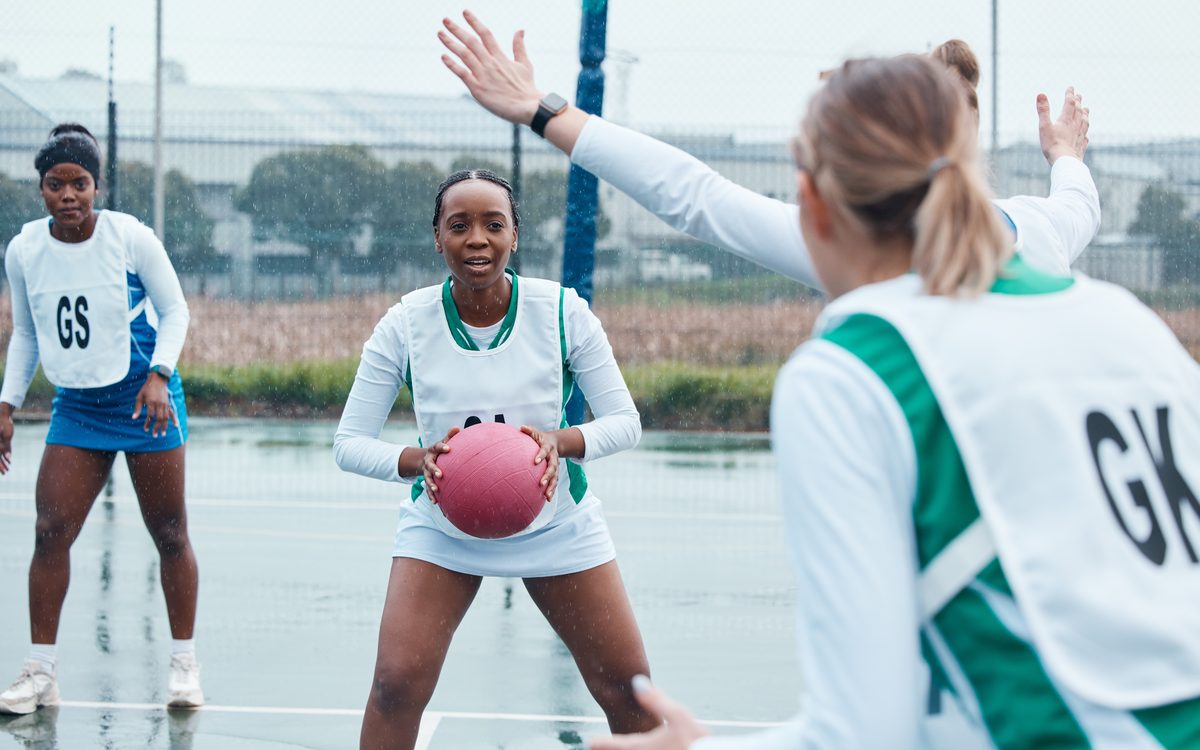
The bag for a Saturday netball tournament often tells the story of the day: a water bottle, a banana, a muesli bar, something that has been in there since Thursday. Netball nutrition is the eating and drinking that fuels a game of repeated sprints and jumps, and athlete health is the wider question of whether a player is eating enough, sleeping enough and feeling well. This page covers both, plus a careful look at supplements.
Quick answer: Eat regular meals with carbohydrate, some protein and familiar foods, have a pre-game meal 1 to 4 hours before play, and drink fluids through the day. Most netballers do not need supplements; if you use one, choose a third-party tested product and check with a doctor or dietitian. Watch for signs of eating too little for the training you do, such as missed periods, stress injuries or constant tiredness. Caffeinated energy drinks and creatine are not recommended for under-18s by the American Academy of Pediatrics.
General information, not medical advice or a personal diet plan; a registered dietitian can build one. Recovery habits are on our recovery page and load on the training page. For the whole sport see the netball hub.
How much fuel does netball use?
A small 2024 study of 13 Netball Super League players measured energy use over 14 days with doubly labelled water. The average was 13.46 megajoules a day (about 3,200 calories), match days used about 2.85 megajoules more than training days, and average water turnover was 4.1 litres a day. That is a handful of elite women, so it shows what a professional schedule can demand and is not a target for you. A 2021 scoping review of netball science (Whitehead and colleagues, Sports Medicine) found only 3 of 150 studies about nutrition, so much of the advice below comes from general sports nutrition positions.
Everyday eating
The joint position of the American College of Sports Medicine, the Academy of Nutrition and Dietetics and Dietitians of Canada (2016) is the main reference here. In plain terms: meals built around carbohydrate foods, with protein and fruits and vegetables, timed around training. Needs rise on heavy training days and fall on rest days. Protein is generally in the range of about 1.2 to 2.0 grams per kilogram of body weight a day across the day for athletes, from food first. Young players are still growing, which raises energy and calcium needs; a dietitian can help.
Game day
The same position recommends a pre-exercise meal that is higher in carbohydrate, moderate in protein, low in fat and fibre, made of familiar foods, about 1 to 4 hours before play. Do not try something new on game day. Between quarters, a few mouthfuls of fluid and a small easy snack are common; netball breaks are short, so keep it light. For tournament weekends with several games, eat between games as well as after. After play, the position suggests refuelling with carbohydrate soon, with about 0.25 to 0.3 grams of protein per kilogram in the first couple of hours, and replacing fluid lost over time. Our recovery page links this to sleep and rest.
Hydration
Drink water through the day. After exercise, the position suggests drinking about 125% to 150% of the fluid lost, over time. Netball is often played in warm indoor halls or hot outdoor courts, but we found no netball-specific hydration data, so apply common sense: start games hydrated, carry a bottle and drink to thirst and urine colour. Some players add electrolytes for hot halls or long tournament days; see our electrolyte powder guide.
Eating enough: energy availability and RED-S
Low energy availability means not eating enough for the training done, whether deliberately or by accident. The 2023 International Olympic Committee consensus on Relative Energy Deficiency in Sport (REDs; Mountjoy and colleagues) links it to bone, hormone, immune and mental-health effects in female and male athletes. It lists missed or stopped periods and stress fractures among the signs, so a doctor should look at them. Its prevention paper urges coaches to de-emphasise weight and leanness, especially for young athletes.
Netball has its own evidence here. A 2023 interview study at one Super League club (O’Donnell and colleagues, PLoS One; 13 players, 4 coaches, 4 medical professionals) found that awareness of RED-S was generally inadequate among athletes and coaches, and that appearance pressures from within and outside the team were linked to restricting food. The suggestions from participants included education, a team of professionals and support from the governing body. It is one club, but the lesson travels: no comments on bodies, no weigh-ins at practice, and fuel the work. Eating disorders and disordered eating are health conditions for a doctor or dietitian, and the National Institute of Mental Health lists signs and treatment.
Supplements: a cautious guide
The IOC’s 2018 consensus statement on dietary supplements for high-performance athletes and the ACSM position agree on the order: food first, and supplements only for a specific reason. For most netballers, a sensible diet covers it. Points to know:
- Contamination and banned substances. One widely cited study found undeclared prohormones in about 15% of 634 supplements from 13 countries. Under anti-doping “strict liability” rules, a positive test is the athlete’s responsibility. Third-party programmes such as NSF Certified for Sport and Informed Sport test for banned substances. They lower the risk and do not remove it. Elite and national-level netballers can be tested; ask your association about its anti-doping rules.
- Young players. The American Academy of Pediatrics says caffeinated energy drinks have no place in children’s and teens’ diets and advises against creatine for athletes under 18.
- Caffeine. People respond differently, and it is not for everyone (sensitivity, heart conditions, pregnancy). Check with a doctor.
- Iron and vitamin D. Have levels checked first; routine iron supplementation without a deficiency can do more harm than good, according to the UEFA expert group statement on football nutrition.
- Weight-loss and “fat burner” products. No place in netball, at any age.
We do not recommend products or doses here; use the label and your clinician.
Heat and uniform cautions
Netball has no weight classes, so cutting weight is not part of the sport’s rules; any pressure to lose weight is a red flag, not a requirement. We found no netball-specific heat guidance, so follow general advice: wear clothing you can move and breathe in, and see a doctor if you feel unwell in the heat. World Netball publishes uniform guidelines, which we cover on the gear page.
Netball nutrition: FAQs
What should a netball player eat before a game?
The ACSM, Academy of Nutrition and Dietetics and Dietitians of Canada position says a meal high in carbohydrate, moderate in protein and low in fat and fibre, made of familiar foods, 1 to 4 hours before.
Do netball players need supplements?
Most do not. If you use one, pick a product tested by a third-party programme and talk to a doctor or dietitian first.
Is creatine safe for teenage netball players?
The American Academy of Pediatrics advises against creatine for athletes under 18.
What is RED-S and does it affect netball players?
It is the IOC’s name for health and performance problems from not eating enough for the training you do. A 2023 study at a Super League club found awareness of it was generally inadequate among athletes and coaches.
How much water should I drink during netball?
No netball-specific figure was found. Start hydrated, drink through the day, and replace lost fluid afterwards; a dietitian or doctor can advise for hot conditions.
Sources
- Daily energy expenditure and water turnover in female netball players, 2024
- Whitehead et al., netball scoping review, 2021
- ACSM, Academy of Nutrition and Dietetics, Dietitians of Canada: Nutrition and Athletic Performance, 2016
- Mountjoy et al., IOC consensus statement on REDs, 2023
- Torstveit et al., REDs prevention, 2023
- O’Donnell et al., RED-S perspectives at a Super League netball club, 2023
- NIMH: Eating Disorders
- IOC consensus statement: dietary supplements and the high-performance athlete, 2018
- AAP: Sports drinks and energy drinks for children and adolescents, 2011
- AAP: Use of performance-enhancing substances, 2016
- UEFA expert group statement on nutrition in elite football, 2021
General information for education only, not medical advice. It does not replace a visit with a doctor, physical therapist or athletic trainer. See how we write and check our pages in our editorial policy.