This article contains affiliate links: if you buy through them we may earn a commission, at no extra cost to you. Read our affiliate disclosure.
Cape Town, 2023: England walked into a Netball World Cup final for the first time in the tournament’s history, and Australia beat them 61-45. It was one more chapter in a game that is quick, tactical and played in sharp bursts of passing, where nobody is allowed to run with the ball. Netball is a seven-a-side court sport in which teams pass the ball up the court and score by shooting through a high ring, and a 2021 research review estimated that more than 20 million people play it worldwide.
Netball guides: what do you need?
New to netball? Start with the first card. Everything here is general education, not medical advice.
History & Origins of Netball
Netball grew out of early women’s basketball. World Netball’s history page says basketball was invented by James Naismith in 1891, and that in 1895 a New Orleans sports teacher, Clara Baer, misread his court diagram and introduced zones that restricted where players could go; these zone rules were adopted into women’s basketball in 1899. The same page records netball being first played in England in 1895, at Madame Ostenburg’s College (World Netball).
Rules were standardised in 1960, when England, Australia, New Zealand, South Africa and the West Indies met in Sri Lanka and formed the federation now called World Netball. The first World Championships followed in 1963, and the sport has since grown into a Commonwealth Games sport and an IOC-recognised sport.
- 1895: netball first played in England; zone rules introduced in the United States by Clara Baer (World Netball).
- 1960: the international federation is formed in Sri Lanka and formal rules are set.
- 1963: first World Championships, Eastbourne, England.
- 1988: first youth world tournament, Canberra (under 21).
- 1995: recognised by the International Olympic Committee.
- 1998: netball joins the Commonwealth Games in Kuala Lumpur; Australia wins gold.
- 2009: Fast Net, a shorter format, launches; it later becomes FAST5.
- 2022: first men’s FAST5 Netball World Series event.
- 2023: first tournament under the name Netball World Cup, Cape Town.
Recent Champions
Scope: this covers the two most recent Netball World Cups and Commonwealth Games netball tournaments as listed on World Netball’s history page, not every international or league title.
| Competition | Year | Host | Winner |
|---|---|---|---|
| Netball World Cup | 2023 | Cape Town, South Africa | Australia |
| Netball World Cup | 2019 | Liverpool, England | New Zealand |
| Commonwealth Games | 2022 | Birmingham, England | Australia |
| Commonwealth Games | 2018 | Gold Coast, Australia | England |
Source: World Netball history page, read 2026-11-13. Results verified through 2026-11-13 against that page; later 2026 events were not checked, so we make no claim about current champions.
Notable Athletes of Netball
Two Australian players whose achievements are stated on the Sport Australia Hall of Fame, listed in no ranking order. We left out others we could not confirm on an official page.
- Sharelle McMahon (Australia): 118 Tests, two Netball World Cup titles and four Commonwealth Games appearances (two gold, two silver); inducted into the Sport Australia Hall of Fame in 2016 (SAHOF).
- Laura Geitz (Australia): won World Cup gold in 2011 and 2015, captained Australia to Commonwealth Games gold in 2014, and was inducted into the Sport Australia Hall of Fame in 2025 (SAHOF).
Official results and records
How we keep this current: we re-check results after each major championship and update the date above. Spot an error? See our editorial policy.
This page is for players, parents and coaches new to the game or coming back to it: how netball works, who plays it, and how to look after your ankles and knees, which are where most of the injuries land. Then training, recovery and gear.
Netball at a glance
| What it is | A seven-a-side passing and shooting game on a hard court. Players may not run with the ball and are limited to certain areas of the court by position. |
|---|---|
| How it is won | Goals are scored from inside the goal circle, and only by two positions, the goal shooter and the goal attack. The team with more goals at the end wins. |
| Court and ball | 30.5 m (100 ft) long and 15.25 m (50 ft) wide. The goal post is 3.05 m (10 ft) high with a ring 380 mm across and no backboard. The ball measures 690 to 710 mm around and weighs 400 to 450 g (World Netball). |
| Game length | Four 15-minute quarters, with short breaks between them. |
| Levels | School and community play, clubs, national leagues, and international competition including the Netball World Cup. |
| Governing body | World Netball internationally; in the US, USA Netball and Netball America. |
| Season | Varies by country and league. Australia’s Suncorp Super Netball ran from 14 March to 4 July in 2026. |
How netball works
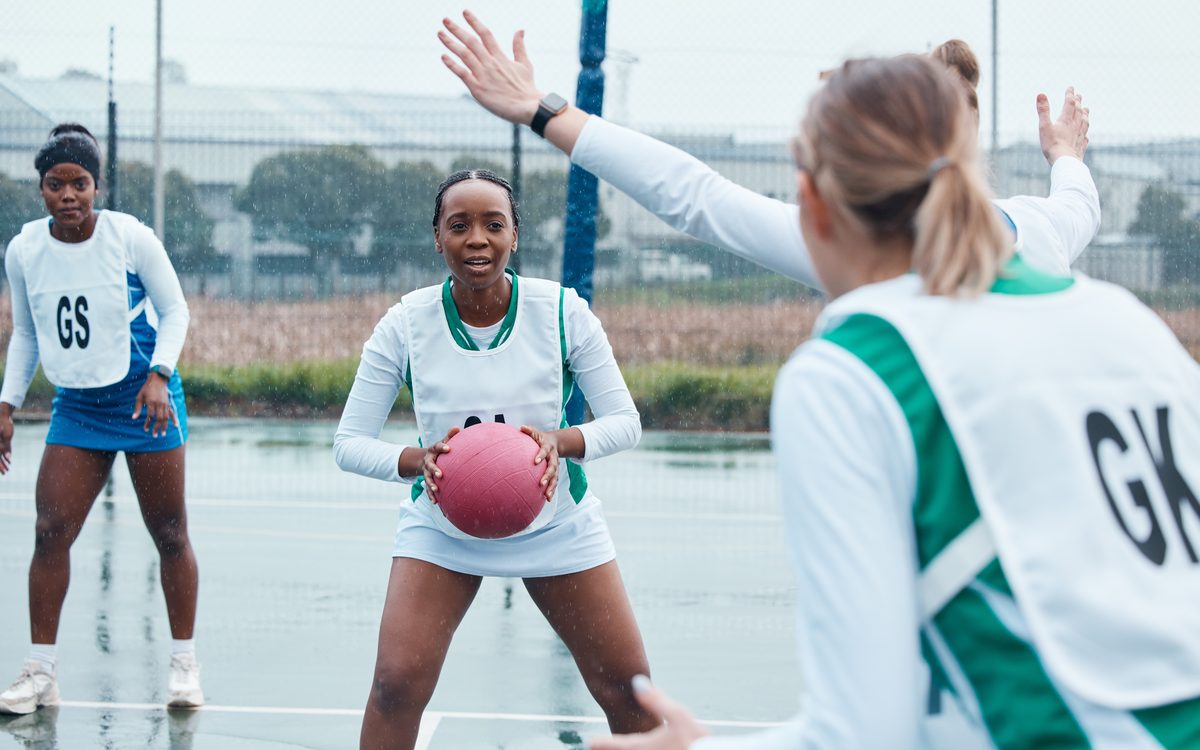
Each team has seven players, and each wears a bib with the initials of a position: goal shooter (GS), goal attack (GA), wing attack (WA), centre (C), wing defence (WD), goal defence (GD) and goal keeper (GK). The court is divided into thirds, and each position can only go in certain areas. The goal shooter, for example, stays in the attacking third, while the centre can go almost anywhere except the two goal circles. A player in the wrong area is “offside.”
Play starts each quarter, and restarts after every goal, with a centre pass. The two centre players start in their own centre third and the pass has to be caught or touched in that third. From then on the rules of movement shape everything you see:
- Footwork. Once a player catches the ball and lifts the landing foot, that foot can’t touch the ground again before the ball is passed. Pivoting is allowed; running with the ball is not.
- Three seconds. A player may hold the ball for less than three seconds, so the ball moves fast.
- Distance. A defender has to stand at least 0.9 m (3 ft) from the player with the ball, and the same distance from a shooter’s landing foot, so a defender wins the ball by timing, reach and jumping rather than by getting in the way.
- Contact. Contact is only allowed if it does not impede an opponent or the play. Contact that gets in the way is penalised.
World Netball’s updated rules, in force for international matches from 1 January 2024, focus on player safety and game management, with changes to contact, advantage, foul play and “playing the ball.” Your national association sets its own start date, so always check the rule book your league uses.
Other formats
World Netball also runs Fast5, a five-a-side version in which each shot can score one, two or three goal points. Beginners and younger players often start on modified versions run by their national association, and many recreational leagues play social or mixed games; ask your league what rules it follows.
Who plays netball, and at what level
Youth and school. Netball is strongest in Australia and New Zealand: a systematic review of netball injury studies found that 74% of the studies came from Australia or New Zealand, which tells you where most of the research, and much of the play, is. In the US it is a small, community-level sport, with USA Netball and Netball America as the main organisations. Check their sites for clubs near you.
Club and national leagues. The best-known professional league is Australia’s Suncorp Super Netball, whose tenth season in 2026 had eight teams. England, New Zealand and other countries run their own leagues.
International. The Netball World Cup was won by Australia in Cape Town in 2023 and returns in Sydney in 2027. Netball is also part of the Commonwealth Games programme, with a 12-team tournament at Glasgow 2026.
Olympic and Paralympic status. World Netball is recognised by the International Olympic Committee, but that does not put the sport on the Olympic programme, and netball has never been an Olympic sport. World Netball has said it is working with Netball Australia to make the case for Brisbane 2032, and the two organisations met Brisbane 2032 leaders in March 2025. Treat that as a stated aim, not a decision. We did not find netball on the Paralympic programme. Check the official programme for the current Games.
Physical demands
Netball asks for short sprints, sharp changes of direction, jumping and landing, and a lot of stopping on one foot, because the footwork rule makes every catch a controlled landing. Because players are limited to areas, the roles feel different: a goal keeper spends the game jumping and reaching around the circle, while a centre covers most of the court. It is an intermittent game, with bursts of effort and short recoveries across 60 minutes.
One small study measured how much energy 13 players from a Netball Super League squad used over 14 days, with a method called doubly labelled water. Their average was 13.46 megajoules a day (about 3,200 calories), and match days used about 2.85 megajoules more than training days. Average water turnover was 4.1 litres a day. That is a very small group of elite women, so treat it as a picture of what a pro schedule can demand, not as a target for you; a registered dietitian can build a plan for your size, age and schedule.
Health and safety for netball
This section is general information, not medical advice. If you are hurt, see a sports medicine doctor, physical therapist or athletic trainer.
Ankles and knees
A 2021 systematic review of netball injury research (46 studies) found that injuries to the ankle and knee were the most common, though the share varied widely between studies: ankle 13% to 84% and knee 8% to 50% of injuries. The main circumstances of injury were landings, collisions and falls. Children had more upper-limb injuries such as fractures, while adults had more ankle and knee sprains and strains. The reviewers also noted that studies defined “injury” in very different ways and that few used health professionals to record injuries, so the numbers are rough guides.
The American Academy of Orthopaedic Surgeons (AAOS) says ankle sprains are most common in sports that involve jumping and quick changes of direction, and that a sprain needs checking if you can’t put weight on the ankle, or if there is marked swelling or the joint looks out of shape. For the knee, AAOS describes pivoting, cutting and landing with a straight leg as the way many ACL tears happen. A sudden “pop,” swelling or a knee that gives way needs a professional, not another quarter.
Netball Australia, with the Australian Institute of Sport, built the KNEE Program as an on-court warm-up aimed at movement efficiency and injury prevention, with a junior version for 11 to 14 year olds. We did not find independent trial results for the programme itself, so we describe it as a sensible warm-up routine from the sport’s own association, not a proven way to prevent injuries. Ask your coach or association whether they use it, or ask a physical therapist to teach you landing technique.
Head injuries
Collisions and falls can cause concussion. The CDC’s HEADS UP program says to recognize the signs (headache, dizziness, confusion, trouble with balance) and remove the player from the game that day. A health care provider decides when a player may return. Call 911 for danger signs such as repeated vomiting, a seizure, or worsening headache.
Training, recovery and nutrition pointers
Build the habits the game demands. Practise landing softly on one foot and on two, work on hip and calf strength, and do change-of-direction drills at a speed you can control. Warm up properly before every game, and spend part of that warm-up on the landing and balance work a coach or physical therapist recommends. Speed and agility tools are in our speed training equipment guide.
On game day, the American College of Sports Medicine, the Academy of Nutrition and Dietetics and Dietitians of Canada recommend a pre-exercise meal that is high in carbohydrate, moderate in protein, low in fat and fiber, made of familiar foods, about 1 to 4 hours before. Drink water through the day. For hot indoor halls or tournament weekends, some players add electrolytes (see our electrolyte powder guide); supplements are optional and a doctor or dietitian can tell you whether they make sense for you.
Sleep matters most. The CDC, citing the American Academy of Sleep Medicine, recommends 9 to 12 hours for children 6 to 12, 8 to 10 for teens and at least 7 for adults. A foam roller or massage gun may make sore calves and quads feel better, and soft recovery shoes help after hours on a hard court. These are comfort tools, not treatment. See our recovery tools guide.
Gear for netball
- Court shoes: World Netball’s rules require non-spiked sports footwear. Look for indoor court shoes with good grip and ankle support, sized with room to move, and replace them when the tread wears smooth.
- Ball: official size is 690 to 710 mm around and 400 to 450 g. Clubs and schools usually supply match balls; check which size your league uses for juniors.
- Ankle support: some players wear a lace-up brace or tape. A brace is not a diagnosis or a fix; ask a sports medicine doctor, physical therapist or athletic trainer if you need one, and for how to use it. See our ankle brace guide.
- Uniform: a bib with your position initials, and a team dress or top. World Netball also publishes uniform guidelines, including an approved example with headgear. Check your league’s rules before you buy anything extra.
Three picks for a netball bag: the McDavid 195 and the ASO EVO, two lace-up ankle braces with figure-8 straps, and the OOFOS OOahh Slide from our recovery shoes guide for after the game. Product details come from the makers; we have not tested them.

McDavid 195 Ankle Brace
- Lace-up with figure-8 straps
- No hard parts
- Fits either foot

ASO EVO Ankle Stabilizer
- Lace-up with figure-8 straps
- Fits left or right foot
- Low profile, fits in court shoes
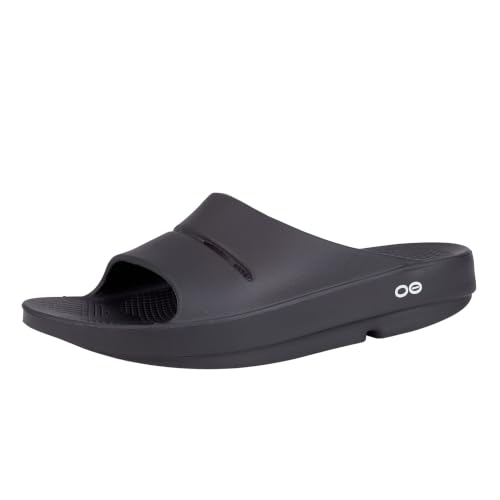
OOFOS OOahh Slide
- OOfoam slide
- APMA Seal of Acceptance
- Machine washable
$59.95 at Amazon, as of Nov 17, 2026 01:07 UTC
Check price on AmazonRelated sports
Netball shares its passing, jumping and landing demands with basketball, handball and volleyball, and its ground-based speed with field hockey. See all of them on the sports hub.
Netball FAQs
Can you run with the ball in netball?
No. Once you catch the ball, the landing foot has to stay put until you pass, and you can hold the ball for less than three seconds. You can pivot on the grounded foot to find a pass.
Is netball a contact sport?
Not in the way basketball or rugby are. Contact is only allowed when it doesn’t impede an opponent or the play, and defenders must keep their distance. Collisions and falls still happen, so injuries do too.
How long is a netball game?
Four 15-minute quarters, 60 minutes of play, plus breaks. Social and junior games are often shorter, so check your league.
Is netball an Olympic sport?
No. World Netball is recognised by the IOC, but recognition doesn’t mean automatic inclusion. The federation says it is working toward Brisbane 2032, which is a goal, not a decision. Check the official programme for the current Games.
What are the most common netball injuries?
Ankle and knee injuries, most often from landing, collisions and falls, according to a 2021 systematic review. Children have more upper-limb injuries such as fractures. Anything that doesn’t settle needs a sports medicine doctor, physical therapist or athletic trainer.
Where can I play netball in the US?
Start with USA Netball and Netball America, which list clubs and programs. Availability varies a lot by city, so look for community clubs, university groups and expatriate leagues near you.
Sources
- World Netball: Facilities and Equipment
- World Netball: The Rules of Netball (2024 changes)
- World Netball: Olympic position
- Rules of netball (summary of positions, footwork and timings)
- Downs et al., Injuries in Netball: A Systematic Review (2021)
- Daily energy expenditure and water turnover in female netball players (2024)
- Netball Australia: KNEE Program
- World Netball: Commonwealth Games
- AAOS OrthoInfo: Sprained Ankle
- AAOS OrthoInfo: ACL Injuries
- CDC HEADS UP: Signs and Symptoms of Concussion
- CDC: About Sleep
- ACSM, Academy of Nutrition and Dietetics, Dietitians of Canada: Nutrition and Athletic Performance (2016)
Netball rewards good footwork and good habits. Keep exploring the sports hub, our recovery tools guide and the ankle brace guide.