This article contains affiliate links: if you buy through them we may earn a commission, at no extra cost to you. Read our affiliate disclosure.
The workshop of a racing-chair maker holds a frame clamped to a bench while the athlete sits in it, arms out, as the fitter adjusts the seat position by a few millimetres. Para athletics gear ranges from fitted racing wheelchairs, throwing frames and running prostheses to everyday items like spikes and a water bottle. Most of the equipment that matters most is custom, so this page explains what to check and who to ask, not what to buy.
Quick answer: Custom equipment, such as a racing chair, throwing frame or running prosthesis, should be fitted by a specialist maker, prosthetist or coach who knows your class; we do not recommend models. Standard items, such as spikes for ambulant athletes, are matters of fit and event, and maker claims are not independent tests. Check equipment before every session, and see a clinician or prosthetist if pain, skin problems or a change in feel appear.
Racing wheelchairs
Under World Para Athletics rules, wheelchairs count as sports equipment, and racing chairs are lightweight and aerodynamic according to Paralympic.org’s Paris 2024 introduction. Wheelchair racing debuted at the Paralympics in Tokyo 1964. A racing chair is not an everyday chair: it is built to fit one athlete, and the seat position, the angle of the wheels and the reach to the push rims affect comfort and shoulder load. The University of Kentucky review on wheelchair racers links shoulder problems to muscle imbalance and weakness, which is another reason to get fit and strength work looked at by professionals. Rules about equipment dimensions are in the World Para Athletics rulebook; check them before buying or modifying anything for competition.
Prostheses, frames and tethers
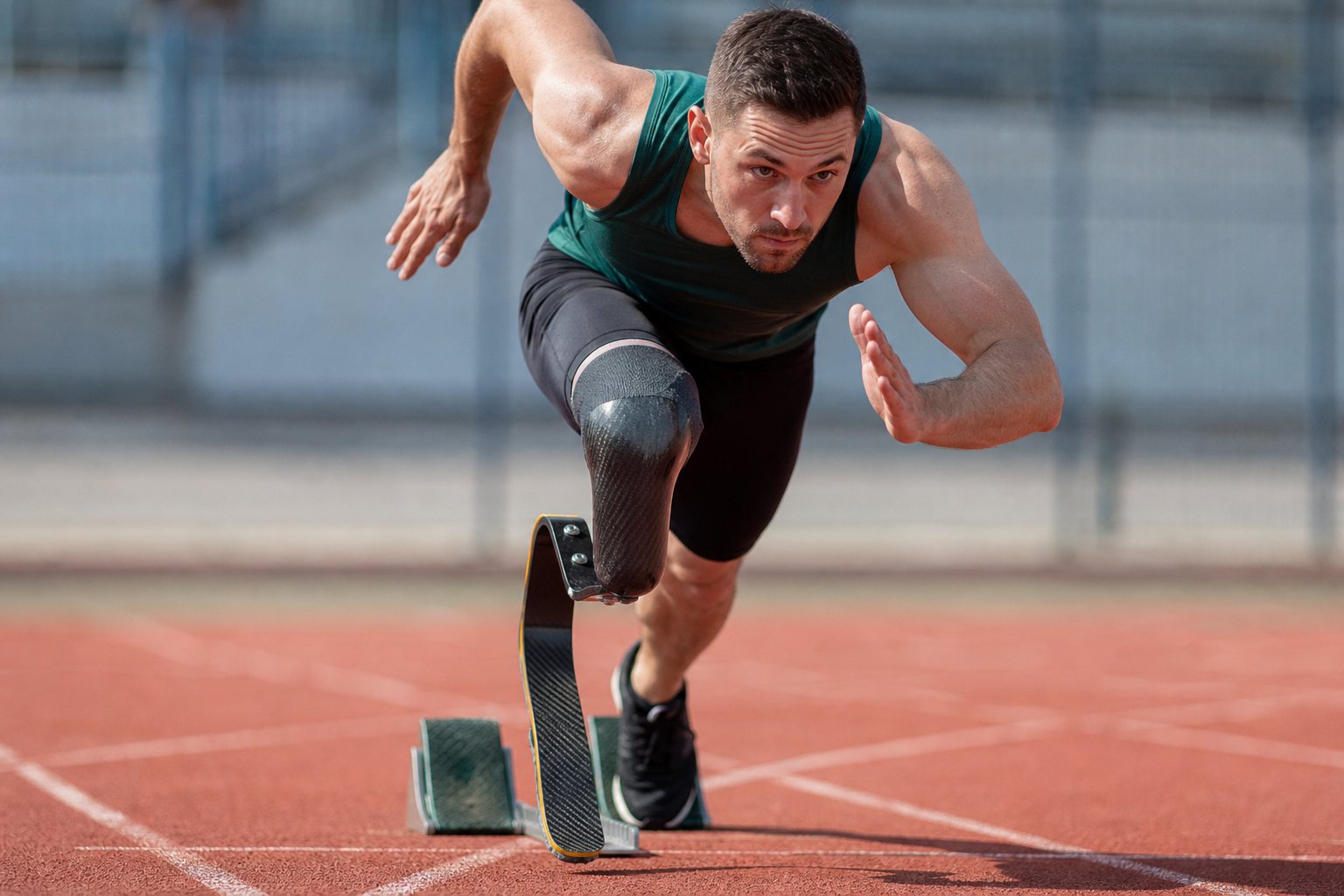
Paralympic.org says leg prostheses are required in track events and optional in field events. Running prostheses, throwing frames and other aids are fitted by prosthetists and specialist makers, and should be re-checked as your body, training and equipment change. Seated throwers use a throwing frame or chair set up for the class; ask your coach about the rules for your class. Athletes with a vision impairment may run with a guide linked by a rope tether, and a caller or acoustic device can mark take-off or target in jumps and throws (Paralympic.org). Inspect the tether, loops and any signal device before sessions.
Standards versus maker claims
We did not find an independent safety standard for racing wheelchairs, throwing frames or running prostheses that we could cite, so there is no certification to look for. What you can rely on is the fit work of a qualified fitter, the rulebook for your event, and your own coach and clinician. Product pages carry maker claims about weight, stiffness and comfort; treat them as the maker’s statements. World Athletics publishes technical rules on athletic shoes (C2.1A); we did not read them for this page, so check them if you plan to compete at a level where they apply.
Spikes and shoes for ambulant athletes
For athletes who run, jump or throw standing, standard athletics footwear applies. Sprinters on foot use spikes with a stiff plate and replaceable pins; check your facility’s maximum spike length before you buy pins. Jumpers often use a spike with extra midfoot and heel cushioning, and throwers use a flat, grippy throwing shoe. Fit matters more than the brand: shoes should hold the foot without pressure points, and athletes who use a prosthesis or have a leg length difference should talk with a prosthetist or clinician about footwear. The three picks below are general athletics products that suit many ambulant athletes. They are not a substitute for advice from your coach or prosthetist, and they are not designed for racing chairs or seated throwing.
Trying before buying
Custom equipment is a large commitment, so try before you commit. A club, school or adaptive-sports organization may lend a racing chair or throwing frame for a few sessions, and USATF Para points newcomers to its Athlete Handbook and its “How Do I Become a Paralympian?” document. Ask a coach who works with your class what to look for, borrow first if you can, and have a fitter check any second-hand equipment. We did not find a published list of loan programs, so ask locally. Our rules and getting started page explains the first steps.
Inspection checklist
- Before every session: check chair wheels, push rims, brakes and straps; prosthetic sockets, liners and pylons; tethers and loops; shoe laces, soles and spikes.
- After sessions: look at your skin where equipment presses and note any soreness in your training log.
- When something feels different: stop and have it looked at by your fitter, prosthetist or coach.
- Several times a year: review fit, as body and training change.
For hot meets, our nutrition page covers drink planning. Recovery items are on our recovery page, and the track and field hub has more on standard athletics gear.

Nike Rival Sprint Track and Field Spikes
- 3/4-length plate
- Six replaceable spikes
- Rubber at the heel

Nike Rival Jump Track and Field Jumping Spikes
- Diagonal midfoot strap
- Six forefoot spikes
- Lightweight plate

adidas Throwstar Track Throwing Shoes
- Throwing shoe
- Textile lining
- Synthetic outsole
$44.89 at Amazon, as of Nov 17, 2026 01:07 UTC
Check price on AmazonFrequently asked questions
Are racing wheelchairs the same as everyday chairs?
No. They are lightweight, aerodynamic and fitted to one athlete, and under World Para Athletics rules they count as sports equipment.
Do I have to use a prosthesis to compete?
Paralympic.org says leg prostheses are required in track events and optional in field events. Check the rulebook for your class.
Can I buy a racing chair or prosthesis online?
Fitted equipment should be set up by a specialist maker, prosthetist or coach who knows your class. Ask them before you buy anything.
What do I check before a session?
Wheels, rims, straps, sockets, tethers and shoes, and your skin afterwards. Anything that feels different should be looked at by a fitter or clinician.
Are the products on this page for wheelchair racers?
No. They are standard athletics shoes for ambulant athletes. We do not recommend racing chairs, frames or prostheses.
Sources
- Paralympic.org: Paris 2024 introduction to Para athletics
- Paralympic.org: history of Para athletics
- University of Kentucky: shoulder function and rehabilitation for the wheelchair racing athlete
- USATF Para: about Para track and field
- World Athletics: athletic shoe regulations (technical rule C2.1A), linked from our track and field sources; not read for this page
- Amazon: Nike Rival Sprint
- Amazon: Nike Rival Jump
- Amazon: adidas Throwstar
General information for education only, not medical advice. It does not replace a visit with a doctor, physical therapist or athletic trainer who knows Para sport. See how we write and check our pages in our editorial policy. Back to the Para athletics hub or the sports hub.