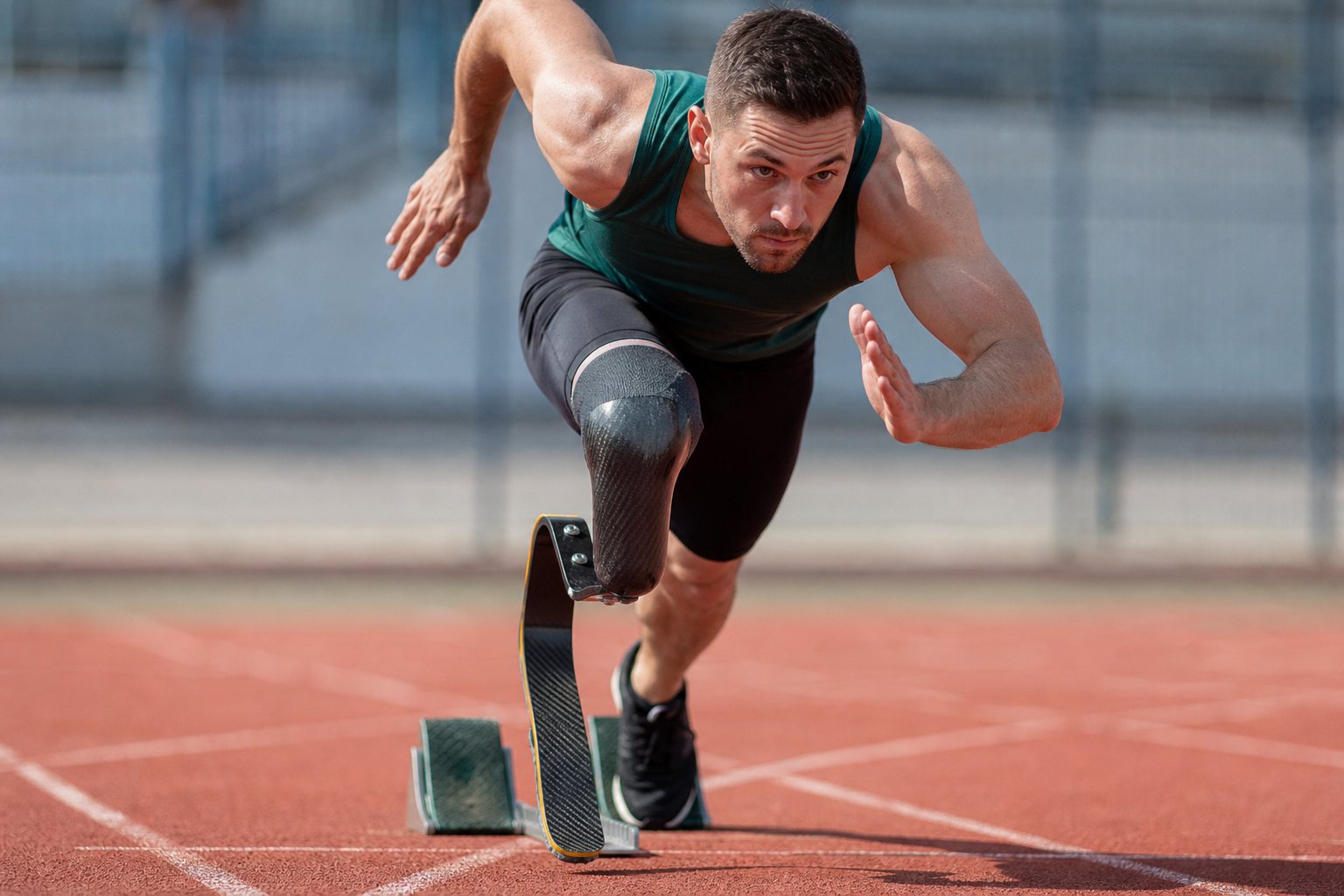
A wheelchair marathoner at a hot early-season race tapes a bottle to the frame, a sprinter on a prosthetic leg eats a banana in the call room, and a thrower who has “heard about creatine” asks the team doctor. Para athletics nutrition is fuel, fluids and, for some athletes, supplements, planned around an event, an impairment and a training load. It is also health: eating enough, staying hydrated and staying within the anti-doping rules.
Quick answer: Eat enough to fuel training, drink regularly, and plan for heat. Most athletes do not need supplements, and the evidence for Para athletes is thin: reviews say the research on specific needs is limited and call for more. If you consider a supplement, talk to a doctor or sports dietitian first, choose products tested by a third party for sport, and check every ingredient against the WADA Prohibited List and your federation’s rules.
Fuel for the event
Needs differ by event, body size, impairment and training load. A 2025 review in Frontiers in Nutrition on Paralympic athletes (56 studies of adults) covers energy, macronutrients, micronutrients, supplements and fluids, and stresses that knowledge about para-athletes’ specific needs is limited. The ACSM, Academy of Nutrition and Dietetics and Dietitians of Canada joint position stand (2016) is the general sports nutrition reference for athletes, and says needs are individual. Some impairments change energy use, body composition or digestion, so a registered dietitian who knows sport and your impairment is the best guide. We cannot give targets here.
Hydration and heat
Heat is a recognised risk for some athletes. At the 2015 Para Athletics World Championships, temperatures regularly exceeded cancellation guidelines (Grobler and colleagues, 2019), and 57 percent of 107 Paralympians surveyed around Tokyo 2020 had earlier had heat-stress symptoms, with 9 percent diagnosed with exertional heat illness (Alkemade and colleagues, 2023). Practical points: drink regularly through the day, carry fluids where you can reach them (a bottle on the chair or a drink station for throwers), use shade and cooling, and acclimatise. Heat is a recognised risk for athletes with some impairments, so ask your clinician about your own plan. Fluid amounts depend on the person, and we do not give numbers. See our injuries page on heat illness.
Relative energy deficiency (RED-S) awareness
The IOC consensus statement (Mountjoy and colleagues, 2023) describes Relative Energy Deficiency in Sport (REDs) as the result of low energy availability: not enough fuel for the body’s needs, which can affect health and performance. It applies to athletes of all genders. Para athletes in weight-sensitive or endurance events are not exempt, though we found no Para athletics prevalence study. Signs that deserve a conversation with a doctor include repeated injuries, frequent illness, unexplained fatigue, loss of menstrual periods, and a growing fear of food. Weight and body-composition talk can be harmful, so coaches should keep it health-based and refer to a qualified professional. Young athletes should not diet to make a class or an event.
Supplements: what the guidance says
The IOC consensus statement on dietary supplements (2018) concludes that only a few supplements, such as caffeine, creatine, some buffering agents and nitrate, have good evidence of benefit for performance, and that any supplement intended to improve performance should be tried in training before competition. A systematic review of supplementation in para-athletes (Nutrients, 2021) covered caffeine, creatine, fish oil, nitrates, vitamin D and buffers, and the broader reviews say the evidence base for Para athletes is limited, with most guidance borrowed from athletes without disabilities. Supplements are not a substitute for food, sleep or training.
- Ask first. A sports doctor or dietitian can tell you whether you have a reason to take anything, including with your medicines and impairment.
- Choose third-party tested products. Programs such as NSF Certified for Sport and Informed Sport test for banned substances. Testing lowers the risk of contamination; it does not remove it.
- Check the rules. Anti-doping applies to Para athletes. Check each ingredient against the WADA Prohibited List and your federation or national anti-doping organization before you use it. You are responsible for what you take.
- Read the label. We do not give doses. Follow the label and your clinician, and be wary of “proprietary blends” that hide amounts.
- Avoid stimulant extras and anything that promises a miracle. Caffeine is not for everyone, for example if you have a heart condition or are pregnant; ask a doctor.
Boosting is not a supplement
For athletes with a high spinal cord injury, USADA warns that “boosting”, deliberately causing autonomic dysreflexia to raise blood pressure, can cause seizures, heart attack or brain bleeding, and the IPC prohibits it. It does not belong in any training or nutrition plan.
Weight and class cautions
Para athletics sport classes are not weight classes, so weight-cutting is not part of the sport as it is in combat sports. Do not change weight to try to compete in a different class; classification is based on how the impairment affects the event, according to Paralympic.org, not on body weight. If body weight is an issue for health or equipment fit, talk to a dietitian and your coach. Our recovery page has the food-after-training basics.
Frequently asked questions
Do Para athletes need supplements?
Most do not. The IOC says only a few supplements have good evidence, and reviews say the evidence for Para athletes is limited. Ask a doctor or sports dietitian before starting anything.
How do I know a supplement is safe for sport?
No product is guaranteed. Third-party programs such as NSF Certified for Sport and Informed Sport test for banned substances, and you should still check ingredients against the WADA Prohibited List.
What is REDs?
Relative Energy Deficiency in Sport: low energy availability that can affect health and performance. See a doctor if you suspect it.
How much should I drink?
It depends on you, the weather and your impairment. Drink regularly and ask a clinician or dietitian about a plan for your event.
Is boosting allowed?
No. The IPC prohibits it, and USADA warns it can be dangerous.
Sources
- Frontiers in Nutrition 2025: tailored nutrition strategies for Paralympic athletes
- Nutrients 2021: dietary supplementation for para-athletes, a systematic review
- IOC consensus statement: dietary supplements and the high-performance athlete (2018)
- Mountjoy et al. 2023, IOC consensus statement on Relative Energy Deficiency in Sport (REDs), BJSM
- ACSM/AND/DC joint position stand: nutrition and athletic performance (2016)
- WADA: Prohibited List
- NSF Certified for Sport
- Informed Sport
- USADA: What is boosting and why is it dangerous?
- Grobler et al. 2019, illness and heat at a Para athletics World Championships (PubMed)
- Alkemade et al. 2023, heat and Paralympians, Tokyo 2020 (PubMed)
- Paralympic.org: Para athletics classification explained
General information for education only, not medical advice. It does not replace a visit with a doctor, physical therapist or athletic trainer who knows Para sport. See how we write and check our pages in our editorial policy. Back to the Para athletics hub or the sports hub.