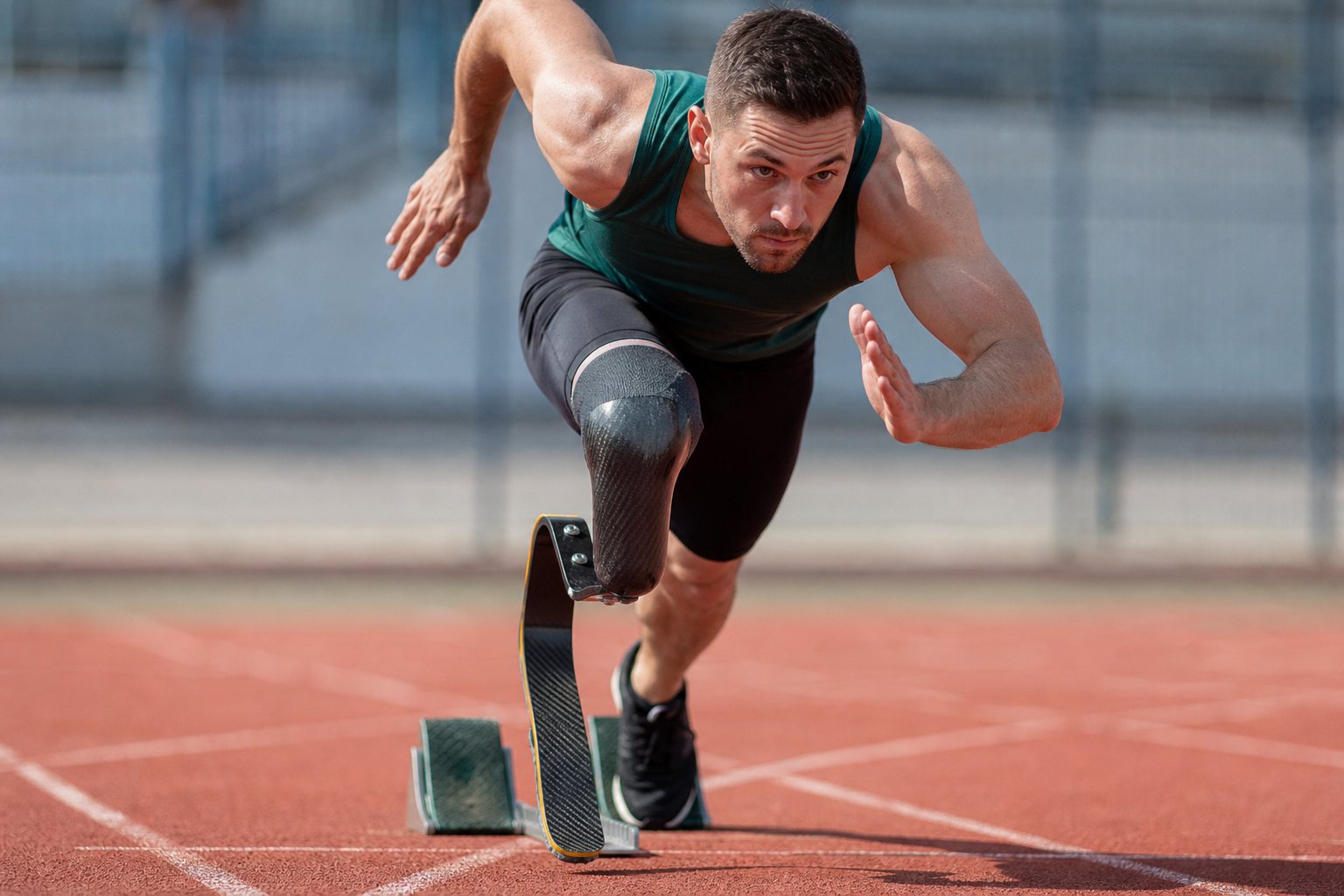
At the Stade de France the same afternoon holds a T54 wheelchair sprint, an F46 javelin and a guided T12 run, and each athlete trained for it in a different way. Para athletics training is the planning of strength, speed, endurance and skill work around one athlete’s event, impairment and equipment. There is no single plan, and this page gives the framework a coach and an athlete can adapt, not a program.
Quick answer: Train for your event first and your impairment second: a wheelchair marathoner, a seated thrower and an ambulant sprinter need very different work. A sensible week mixes skill and speed sessions, strength and conditioning, easy aerobic work and rest days. Build load gradually, and see a coach, a sports medicine doctor or a physical therapist who knows Para sport before changing your program.
What the events ask of the body
Para athletics covers every athletics event, so the demands vary. Sprints and jumps ask for explosive power and technique. Distance events and the marathon ask for endurance, pacing and economy of movement. Throws need power through the trunk and arms, from standing or from a seated frame. For wheelchair racers the push stroke loads the shoulders, arms and trunk repeatedly. Our injuries page shows where that load tends to catch athletes out.
We did not find a published energy-system breakdown or published training volumes for Para athletics events, so we give none. Coaches rely on the same principles used in track and field, adapted to the athlete.
A sensible weekly shape
There is no official Para athletics weekly template. A common pattern in athletics coaching, which a coach should adjust, is to separate the hard days and the easy days:
- Skill and speed days: starts, technique drills, short fast work for sprinters and jumpers; pushing technique and steering for chair racers; approaches and release for throwers.
- Strength and conditioning: two sessions is a common pattern, and a coach should set it. Include trunk, shoulder-blade and rotator cuff work for athletes who push or throw.
- Aerobic days: easy, conversational work, for chair racers on the track, road or a roller or ergometer set up for the chair.
- Rest or very light days: the American Academy of Pediatrics (Brenner, 2016) advises young athletes to take one to two days off a week from the main sport.
Those day counts are examples of structure, not a prescription. The weekly shape for a masters athlete or a recreational athlete will look different.
Strength and conditioning
A review of shoulder complaints in wheelchair athletes (PubMed 29161335) found shoulder problems were common, with reported prevalence from 16 to 76 percent across studies, and suggested balanced strength training may lower the risk, though the quality of the studies was low and the preventive measures were not well defined. A University of Kentucky review of shoulder function in wheelchair racers links shoulder impingement and rotator cuff problems to muscle imbalance and weakness. For a seated thrower or racer, that argues for pulling as well as pushing work. For an ambulant athlete, a coach may include single-leg strength, calf and hamstring work and plyometrics, introduced gradually.
Adaptive equipment matters in the weight room. Seated athletes may need benches, straps or machines that work with the chair, and some classes will need adjusted ranges of movement. A coach or physical therapist who knows your impairment should set these up.
Periodisation basics
Periodisation means organizing the year into phases: a general preparation phase with more volume and strength work, a specific phase closer to the event with more event-style work, a competition phase with sharper, shorter sessions and recovery, and a break. Many Para athletes also plan around classification dates and the competition calendar. World Para Athletics lists the Paralympic Games, World Championships, regional games and a Grand Prix series, so an elite athlete’s year is built around those dates. For most club athletes the main point is simpler: do not go from nothing to hard every day, and have an easy week now and then.
Load and heat
The Jayanthi study of young athletes (2015) found that those who trained more hours a week than their age in years had about twice the odds of a serious overuse injury. It was not a Para study, so use it as a prompt to track hours, not as a limit. Heat is a bigger planning issue for some athletes: a 2023 survey of 107 Paralympians around Tokyo 2020 (Alkemade and colleagues) found 57 percent had earlier had heat-stress symptoms. Hot-day sessions should be shorter, shaded and well supplied with fluid, and your clinician can advise on how your impairment affects temperature control. See our nutrition page.
Working with a coach and classification
A coach who knows your class matters more than any general plan. The IPC says classification groups athletes so that impairment effect is similar within a class; it does not tell you how to train. Training for the skills test in classification is not something we found guidance on, and coaches should follow classifier instructions. For competition choices see the rules page.
Frequently asked questions
How many days a week should I train?
There is no official number for Para athletics. The AAP suggests one to two days off a week for young athletes, and coaches build the other days around the athlete. Ask a coach who knows your event.
Do wheelchair racers need strength training?
Many coaches include it. A review of shoulder complaints in wheelchair athletes suggested balanced strength training may lower the risk, but the evidence quality was low.
Should I train differently for the heat?
Many athletes need to. A survey of Paralympians around Tokyo 2020 found more than half had had heat-stress symptoms before. Ask your clinician about your own temperature control.
Can I use the same program as a non-disabled athlete?
Principles carry over, but the details do not. Equipment, ranges of motion and your impairment change the plan, so get a coach and clinician who know Para sport.
What is periodisation?
Planning the year in phases, from general preparation to competition and a break, so load builds gradually and peaks when it matters.
Sources
- Paralympic.org: history of Para athletics
- Paralympic.org: Paris 2024 introduction to Para athletics
- Paralympic.org: Para athletics classification explained
- PubMed: shoulder complaints in wheelchair athletes, review (PMID 29161335)
- University of Kentucky: shoulder function and rehabilitation implications for the wheelchair racing athlete
- AAP, Brenner 2016, sports specialization and intensive training (PubMed)
- Jayanthi et al. 2015, sports specialization and overuse injury (PubMed)
- Alkemade et al. 2023, heat and Paralympians, Tokyo 2020 (PubMed)
General information for education only, not medical advice. It does not replace a visit with a doctor, physical therapist or athletic trainer who knows Para sport. See how we write and check our pages in our editorial policy. Back to the Para athletics hub or the sports hub.