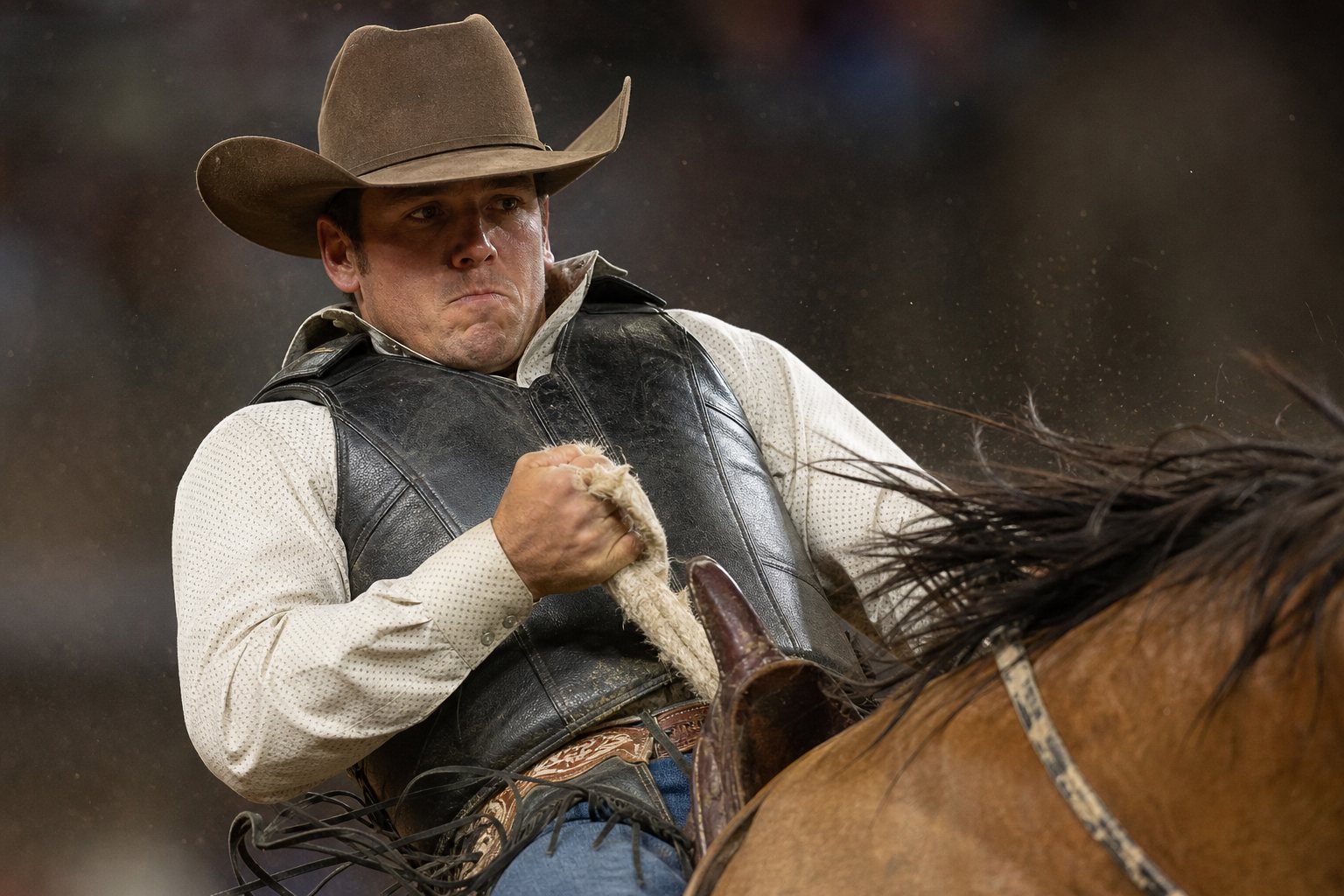
A Saturday in July: a gravel arena, a morning drive on gas-station coffee, a noon barrel run in direct sun, a night performance and a drive home. Rodeo nutrition is the food, fluid and supplement choices around that kind of schedule. Almost no published research looks at it in rodeo athletes, so most of this page comes from general sports nutrition and sports medicine sources and says so.
Quick answer: No rodeo-specific nutrition studies turned up in our search. General sports nutrition applies: eat regularly, fuel the work, drink to stay hydrated, and be careful in heat. Supplements are a minor part of nutrition, according to the IOC consensus statement; some products are contaminated or contain banned substances, so choose third-party-tested products (NSF Certified for Sport or Informed Sport) and talk to a doctor or registered dietitian first. If you restrict food, lose weight quickly or feel run down, see a doctor or sports dietitian.
Eating for an unpredictable schedule
Rodeo does not have weight classes, and the one study that measured body composition (Oranchuk and colleagues, 2023, 43 male athletes) found bull riders leaner than bullfighters, with no statement that leaner is better. So there is no sport reason to push body weight down. What helps is steady fuel. The 2016 joint position of the American College of Sports Medicine, the Academy of Nutrition and Dietetics and Dietitians of Canada gives ranges such as 3 to 5 grams of carbohydrate per kilogram a day for light or skill-based training and 1.2 to 2.0 grams of protein per kilogram a day for athletes, adjusted to the individual (as recorded in our sibling sources; individual needs vary). A registered sports dietitian can turn that into groceries you can carry in a truck.
- Pack ahead. General practice: a cooler with fruit, yogurt, sandwiches, nuts and water beats fast food by default.
- Eat something before riding or roping that you have tried before, and have food available after, within an hour or two for most athletes.
- Do not skip meals to “make weight” for the saddle. It is a common idea with no rodeo evidence behind it.
Hydration and heat
Many rodeos are outdoors in summer. The National Athletic Trainers’ Association position statement on exertional heat illness (2015) says exertional heat stroke remains one of the leading causes of sudden death in sport, and gives best-practice recommendations for prevention, recognition and treatment. Heavy clothing, long sleeves and boots add to the load, and so does waiting in the sun. General practice: drink regularly across the day, start events well hydrated, take shade and breaks when you can, and learn the warning signs of heat illness (severe headache, confusion, dizziness, vomiting, collapse). Confusion or collapse in heat is an emergency: call emergency services. For sun on skin, the CDC sun safety guidance recommends shade, protective clothing, a wide-brimmed hat, sunglasses and sunscreen.
Relative energy deficiency (RED-S) awareness
The IOC 2023 consensus statement (Mountjoy and colleagues, British Journal of Sports Medicine) describes Relative Energy Deficiency in Sport, or REDs, as a syndrome of impaired physiological and psychological function that comes from low energy availability: not eating enough for what the body is doing. It affects male and female athletes. We found no REDs data in rodeo, but it applies to anyone who under-eats during heavy training or travel, including teenage athletes. Warning signs include frequent illness or injury, stress fractures, constant fatigue, missed periods, mood changes and a preoccupation with food or weight. See a doctor or sports dietitian; do not diet your way out of it.
Supplements: keep it cautious
The IOC consensus statement on dietary supplements (Maughan and colleagues, 2018) says nutrition usually makes a small but valuable contribution to performance, supplements can make a minor contribution, and some can harm health, performance or a sporting career. Some products are mislabeled or contaminated with substances banned in sport. Our guidelines:
- If you compete in a drug-tested association, check its rules first; we could not confirm what each rodeo association tests for.
- Prefer products carrying an independent sport certification (NSF Certified for Sport or Informed Sport). The US Anti-Doping Agency’s Supplement Connect page explains how to reduce risk.
- Skip stimulant-heavy pre-workouts, “fat burners” and anything promising to boost performance dramatically. Energy drinks are not advised for children and adolescents by the American Academy of Pediatrics.
- Ask your doctor, especially about heart conditions, pregnancy, medicines, or if you are under 18.
- We make no dose recommendations. Follow the label and your clinician.
Related: recovery, training, horseback riding nutrition.
Rodeo nutrition FAQs
What should a rodeo athlete eat before an event?
Something familiar and easy to digest, eaten early enough to feel settled. General sports nutrition guidance, not a rodeo-specific protocol; a sports dietitian can personalize it.
How much water should I drink at a summer rodeo?
No rodeo-specific number exists. Drink regularly through the day, start hydrated, seek shade and know the signs of heat illness. See a clinician for questions about your own needs.
Do I need supplements for rodeo?
Probably not. The IOC says supplements make a minor contribution. If you use them, pick third-party-tested products and ask a doctor or registered dietitian.
Is it OK to cut weight to ride better?
There is no weight class in rodeo and no evidence that being lighter helps; under-eating can cause REDs. Talk to a doctor or sports dietitian before changing weight.
Are energy drinks safe?
Caffeine affects people differently, and the AAP advises against energy drinks for children and teens. Adults with heart conditions should ask a doctor first.
Sources
- Meyers MC, Laurent CM. Part I. Sports Med 2010
- Oranchuk DJ et al. J Strength Cond Res 2023
- ACSM/AND/DC nutrition and athletic performance joint position 2016
- NATA position statement: exertional heat illnesses 2015
- CDC: sun safety
- IOC consensus statement: REDs 2023 (Mountjoy et al.)
- IOC consensus statement: dietary supplements and the high-performance athlete 2018
- USADA Supplement Connect
General information for education only, not medical advice. It cannot replace a sports medicine doctor, physical therapist or athletic trainer who knows you. Read how we work in our editorial policy.