This article contains affiliate links: if you buy through them we may earn a commission, at no extra cost to you. Read our affiliate disclosure.
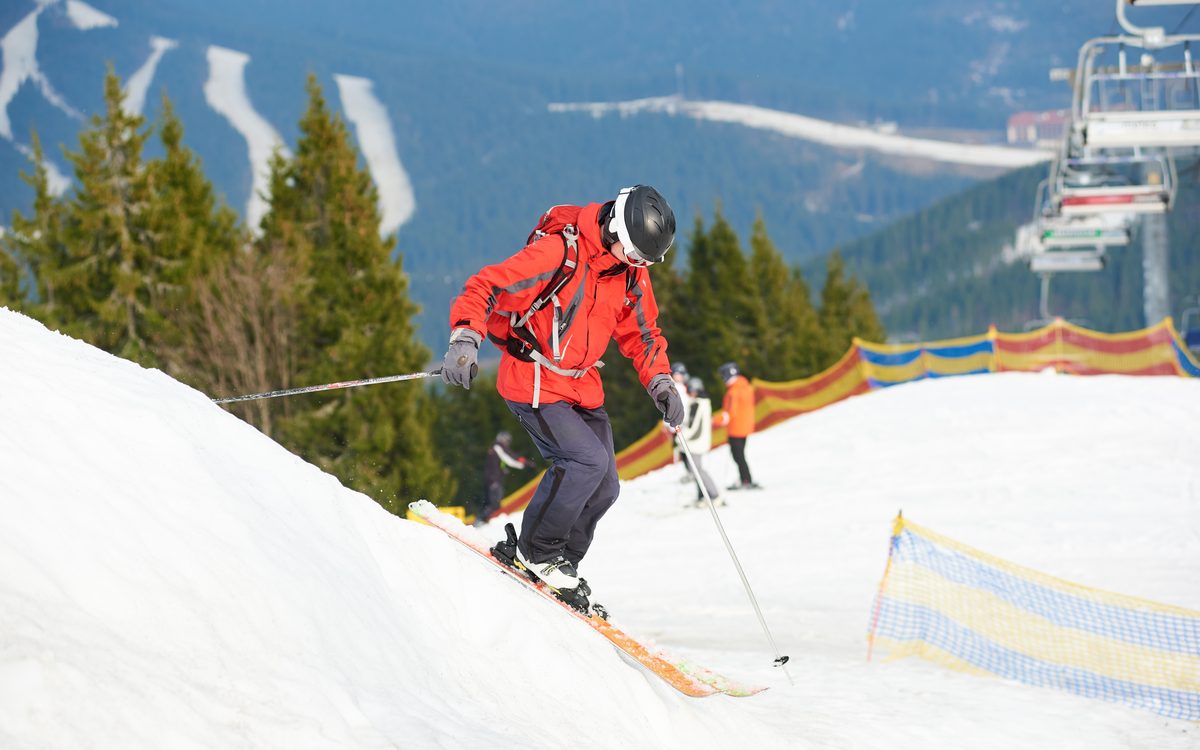
The boot shop on a Friday before the first training camp: a racer sits on the bench with one boot buckled, wiggling her toes, while the fitter presses a thumb on the front of the shell. Gear is half of what keeps an alpine skier comfortable, safe and in control. Alpine skiing gear here means the equipment that matters most: helmet, goggles, boots, skis and bindings, clothing, and the added protection racers wear. We separate published standards from maker claims, and the product picks are a short starting list, not our tests. For the wider skiing picture, see our ski gear page and the alpine skiing hub.
Quick answer: Spend the effort in this order: boots that fit (a bootfitter), a ski helmet that carries ASTM F2040 or EN 1077 and fits snugly, goggles matched to the light, bindings set by a ski shop (never by you), then skis and layers. A 12-study analysis found about 35% lower odds of head injury with helmets, though no helmet makes a fast fall safe. Racers also follow FIS equipment rules, so check them before buying race gear. Product picks below show maker specifications, not our tests.
General information, not medical advice. Our injury prevention page covers how gear fits into lowering risk.
Helmet: the standard, the fit, the limits
- Standard (verified): ASTM F2040 is the U.S. standard for helmets used in recreational snow sports such as skiing and snowboarding; ASTM says it reduces the risk of some head injuries at slower speeds and that protection is limited. EN 1077 is a European standard that many helmets also carry.
- Evidence: a 12-study meta-analysis (Russell and colleagues, CMAJ, 2010) found about 35% lower odds of head injury for helmet wearers with no increase in neck injury. The NSAA reports 91% helmet use among skiers and snowboarders in 2024-25.
- Fit: a ski-specific helmet, not a bike helmet (AAOS). A retailer fitting guide (evo) says to measure about an inch above the eyebrows and ears, make it snug so the skin moves with the helmet, leave no gap with the goggles, and replace it after a hard impact.
- Racing: FIS has its own helmet specification for speed and giant slalom events (a maker help page cites FIS RH 2013). The FIS rule text was not read for this page, so confirm which helmet your event requires.
Goggles and sun
The WHO notes fresh snow can reflect up to 80% of ultraviolet radiation, so eye protection matters even in flat light. A retailer guide (evo) explains that lens tint is described by visible light transmission, with low percentages for bright sun and high percentages for flat light, and says nearly all modern goggles block UV; check the label. Choose a frame that fits your helmet without a gap, and carry a second lens or a clear one if you race in changing light.
Boots, skis and bindings
- Boots: a bootfitter is worth the time. Retailer guidance (evo) says the shell should fit snugly with roughly 15 to 22 mm of room behind the heel in a shell fit, and that beginners often start in an indicated size or slightly longer while experts go smaller. Try them with thin socks and walk around.
- Bindings: AAOS says boots and bindings should be set, adjusted and tested by a ski shop following ASTM standards, matched to your height, weight and ability. A retailer guide (evo) agrees the setting is done by a certified technician and warns that too loose or too tight both carry risks. The AAP says to have a child’s bindings adjusted at least yearly.
- Skis: choose by event and level. FIS sets minimum ski lengths and turn radii by event, from 218 cm and a 50 m radius in men’s downhill to 165 cm in slalom (NBC Olympics explainer). For recreational sizing, retailer advice is a length between chin and top of the head, depending on style.
Race protection
NBC’s equipment explainer notes slalom helmets add a chin guard and slalom racers often pad arms, knees and shins. A trade report on the 2025-26 FIS safety changes (SkiRacing.com, secondary) describes airbag back protectors in elite speed events and cut-resistant undergarments. These rules apply to FIS competition; for club racing, follow the event organiser and the rules for your age class. Back protectors and other padding are optional for most recreational skiers, and a pad does not make a crash safe.
Clothing and small items
A retailer guide (evo) advises no cotton, a synthetic or wool base layer, a puffy mid layer and a wind- and water-resistant shell, with thin moisture-wicking ski socks. The AAP lists fingers, toes, ears and noses as the first places for frostbite, so gloves or mittens and a neck gaiter matter. Warm, dry boots at the start of the day help, and boot dryers are a common household fix for damp liners.
Product picks
These are maker specifications, not our tests, and we do not list prices.

Smith Mission MIPS Helmet
- ASTM F2040 + EN 1077 (maker)
- MIPS liner, dial fit
- 14 adjustable vents

Smith Squad Goggles (ChromaPop)
- Cylindrical ChromaPop lens
- Anti-fog coating
- Pairs with Smith helmets
$107.93 at Amazon, as of Nov 17, 2026 01:07 UTC
Check price on Amazon
Smith Glide Jr. MIPS Youth Helmet
- ASTM F2040, CE EN 1077 (maker)
- Mips, dial fit
- Widest Smith youth size range

Giro Rev Youth Snow Goggles
- Youth medium frame
- Matches Giro youth helmets

Smartwool Merino Thermal Base Layer Crew
- 100% merino, midweight
- Slim fit, flatlock seams
$93.75 at Amazon, as of Nov 17, 2026 01:07 UTC
Check price on AmazonAlways check fit and the standard on the label. Maker claims describe the product, not how it performs in a crash.
Frequently asked questions
Which helmet standard should I look for?
ASTM F2040 or EN 1077 on the label. ASTM says the standard helps with some head injuries at slower speeds and that protection is limited. Racers should also check FIS rules for their event.
Can I adjust my own bindings?
No. AAOS says a ski shop should set, adjust and test them to ASTM standards, using your height, weight and ability.
How do I know my ski boots fit?
Use a bootfitter. Retailer guidance says snug with roughly 15 to 22 mm of room behind the heel in a shell fit, no painful pressure points, and test with thin socks.
Do I need a back protector or airbag?
FIS has airbag back protectors in some elite speed events (trade report). For recreational skiing they are optional and no substitute for skiing within your limits.
When should I replace a helmet?
After a hard impact, and when the retailer or maker guidance says it is too old; evo suggests a range of about 3 to 5 years.
Sources
- ASTM F2040: helmets for recreational snow sports
- Russell et al., helmet use and head injury, CMAJ 2010
- NSAA: 2024/25 fatality fact sheet (helmet use)
- AAOS OrthoInfo: Skiing injury prevention
- AAP HealthyChildren: Winter safety
- WHO: UV radiation
- NBC Olympics: Alpine skiing equipment
- SkiRacing.com: FIS 2025-26 safety changes (secondary)
- Sweet Protection: FIS RH 2013 (maker help page)
- evo: Ski helmet size and fit (retailer)
- evo: Ski boot size chart (retailer)
- evo: Bindings and DIN (retailer)
- evo: How to choose skis (retailer)
- evo: Goggles lens, size and fit (retailer)
- evo: What to wear skiing (retailer)
General information for education only, not medical advice. It does not replace a visit with a doctor, physical therapist or athletic trainer. See how we write and check our pages in our editorial policy.