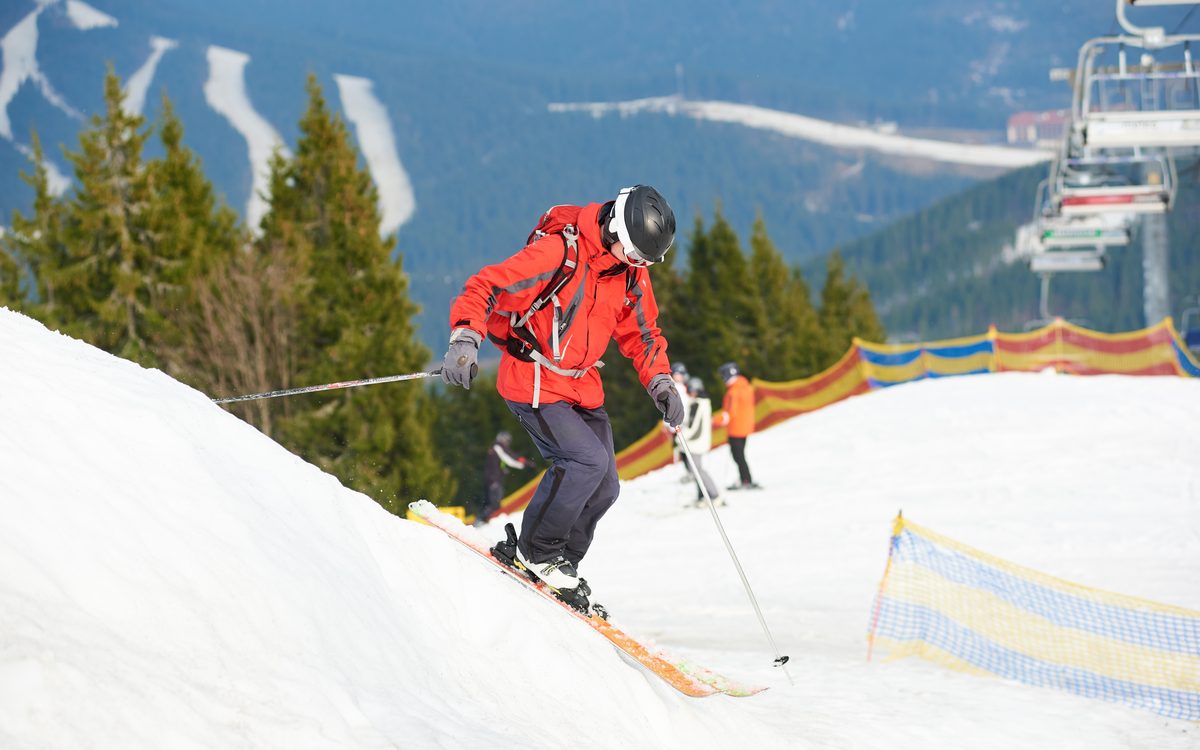
Late afternoon on the last run of a long training day, the snow is chopped up, the light is going flat, and a racer’s legs are tired. She is a half second slow getting her weight onto the outside ski, and the ski slides. Alpine skiing injury prevention is the set of habits around that moment: a proper warm-up, fit equipment, a training load that grows slowly, leg and trunk strength, and good judgment about conditions and fatigue. It lowers the odds. It cannot promise anything.
Quick answer: The best-supported steps are a sport-specific warm-up (a 2025 FIS consensus statement), leg, trunk and neuromuscular training (a Swedish ski high school study saw ACL injuries fall from 8.1% to 3.9%, though it was not a randomized trial), a helmet that fits, bindings set by a ski shop, and stopping when tired or when visibility is poor. Evidence in snow sports is limited, so treat these as sensible habits, not guarantees. See a sports medicine doctor, physical therapist or athletic trainer for pain that persists, and call emergency services after a head injury with danger signs.
General information, not medical advice. This page is about lowering risk. What each injury looks like, and the surveillance numbers, are on our alpine skiing injuries page. For the sport overview start at the alpine skiing hub.
Warm up before the first run
In 2025 the International Ski and Snowboard Federation published a consensus statement on warm-up and cool-down for competitive alpine and freestyle skiers and snowboarders (Spoerri and colleagues, BMJ Open Sport & Exercise Medicine). The authors say evidence in snow sports is limited and practices differ between countries, so the statement is expert guidance built from voting rounds, not proof. It covers physical and psychological warm-up and cool-down. For recreational skiers, the American Academy of Orthopaedic Surgeons (AAOS) suggests a warm-up of three to five minutes, such as jumping jacks or jogging in place, before the first run, and getting fit before the season. A cold, late start is a reason to begin earlier, not to hurry.
Technique, tactics and the slip-catch
A video analysis of 20 ACL injuries in World Cup alpine skiing (Bere and colleagues, American Journal of Sports Medicine, 2011) found the most common pattern, in 10 cases, was the slip-catch: the skier loses pressure on the outside ski, the inside edge catches the snow, and the knee twists. The same group’s analysis of what led up to those injuries (British Journal of Sports Medicine, 2011), judged by ten experts, pointed to skier technique, skier strategy and snow and visibility conditions as the main contributors, with skier errors the most common. This is about elite racers and only 20 cases, but the practical lesson is shared by coaches: practise staying balanced and keeping pressure on the outside ski, and ski the line you can control rather than a line that needs everything to go right.
Progressive load and rest
- Build volume gradually. In the 2021 youth study of 91 elite racers, training volume and intensity did not significantly predict injury but higher intensity and volume were linked to more illness. Illness and injury are both reasons to ease up.
- Plan rest. See our recovery page. Ski days after travel, bad sleep or illness are the days to cut back.
- Respect the end of the day. AAOS notes many ski injuries happen at the end of the day, and advises stopping when tired and skiing with a partner.
Strength, balance and neuromuscular training
A study of Swedish alpine ski high school students (Westin and colleagues, Frontiers in Sports and Active Living, 2020) compared 431 students before a prevention program with 305 who followed it for two seasons. The program focused on core stability and neuromuscular control. ACL injuries were 12 (3.9%) in the program group against 35 (8.1%) in the earlier group. It was not randomized, the groups were from different years and the confidence interval was wide at the edge of zero, so it points to a likely benefit rather than proving one. Our training page describes the sort of strength and landing work a coach may use.
Snow, weather and the course
- Conditions: bumpy, aggressive snow and reduced visibility were among the contributors in the ACL video study. Slow down or stop in flat light and poor snow.
- Cold: the American Academy of Pediatrics lists fingers, toes, ears and noses as the first places for frostbite. Take breaks to warm up.
- Sun: the World Health Organization notes fresh snow can reflect up to 80% of UV radiation, so goggles and sun protection matter on bright days.
- Altitude: arrive a day or two early when you can and ease in; consult a doctor about altitude illness.
- Course and rules: follow marked courses, slow zones and ski patrol instructions.
Protective equipment and fit
A meta-analysis of 12 studies (Russell and colleagues, Canadian Medical Association Journal, 2010) found helmet wearers had about 35% lower odds of head injury, with no increase in neck injury. Look for a ski helmet labeled ASTM F2040 or a European standard such as EN 1077, where ASTM says protection is limited and helps mostly at slower speeds, so a helmet does not make a fast fall safe. AAOS says a ski shop should set, adjust and test boots and bindings to ASTM standards, so do not adjust them yourself. The FIS has also changed racing equipment rules in recent seasons, including airbag back protectors in elite speed events for 2025-26, according to a trade report (SkiRacing.com, secondary). A 2016 study (Haaland and colleagues, British Journal of Sports Medicine) found lower injury rates in World Cup racers after new ski regulations in 2012, but the authors caution about limited statistical power and sex differences. More detail is on our gear page.
Young racers
A 2023 study of 85 youth skiers (Sports Health) found those without recent overuse back complaints had about 12.8% larger L5 lumbar multifidus muscle than symptomatic skiers, with size linked to maturation and trunk stability. The talent-development review notes low back pain was the most common overuse complaint at the adolescent level and knee pain in younger racers. A 2020 study of 89 racers aged 10 to 14 linked injury risk to growth and maturity, so coaches adjust load during growth spurts. See our youth skiing page.
What prevention cannot do
Even World Cup teams with every resource have injuries. A clinical review in Sports Health (2019) concluded that injury rates in alpine racing have not clearly fallen despite prevention efforts. A ski can still catch an edge on a bad day. The goal is a lower chance, and a quick, correct response when something goes wrong.
When to see a professional
See a sports medicine doctor, physical therapist or athletic trainer for pain that stays in one place, swelling, a knee that feels unstable, or pain that changes how you ski. After a head impact, the CDC’s HEADS UP program says remove the athlete from play and have a healthcare provider evaluate; call 911 for danger signs such as repeated vomiting, a seizure or unequal pupils.
Frequently asked questions
Does a warm-up prevent ski injuries?
Evidence in snow sports is limited, which the authors of the 2025 FIS consensus say plainly. Warm-ups are widely recommended and unlikely to hurt, but no study proves they prevent a specific injury.
Are helmets worth it for racers and recreational skiers?
A 12-study analysis found about 35% lower odds of head injury with a helmet and no rise in neck injury. A helmet reduces risk and does not remove it.
Can I set my own binding release settings?
No. AAOS says boots and bindings should be set, adjusted and tested by a ski shop to ASTM standards. A shop technician uses your height, weight and ability.
Is strength training useful for preventing ACL injury in skiers?
One Swedish ski high school study found fewer ACL injuries after a core stability and neuromuscular program, but it was not randomized. Many coaches use similar work.
When should a young racer stop for the day?
When tired, in poor visibility, or in pain. AAOS notes injuries often come late in the day, so stopping is a safety decision, not weakness.
Sources
- Spoerri et al., FIS consensus statement on warm-up and cool-down, BMJ Open Sport Exerc Med 2025
- Bere et al., mechanisms of ACL injury in World Cup alpine skiing, Am J Sports Med 2011
- Bere et al., events leading to ACL injury in World Cup alpine skiing, Br J Sports Med 2011
- Westin et al., prevention of ACL injuries in adolescent alpine skiers, Front Sports Act Living 2020
- Haaland et al., injury rate in FIS World Cup alpine skiing 2006-2015, Br J Sports Med 2016
- Russell et al., helmet use and head injury, CMAJ 2010
- Training load and injury/illness in elite youth ski racing, J Sport Health Sci 2021
- Lumbar multifidus in youth alpine skiers, Sports Health 2023
- Alpine ski racing injuries, Sports Health 2019
- Talent development in alpine ski racing, J Sports Sci 2019
- Maturity and injury risk in elite youth ski racers, IJERPH 2020
- AAOS OrthoInfo: Skiing injury prevention
- AAP HealthyChildren: Winter safety
- ASTM F2040 helmet standard
- WHO: UV radiation
- CDC HEADS UP: Response and signs and symptoms
- SkiRacing.com: FIS 2025-26 safety changes (secondary)
General information for education only, not medical advice. It does not replace a visit with a doctor, physical therapist or athletic trainer. See how we write and check our pages in our editorial policy.