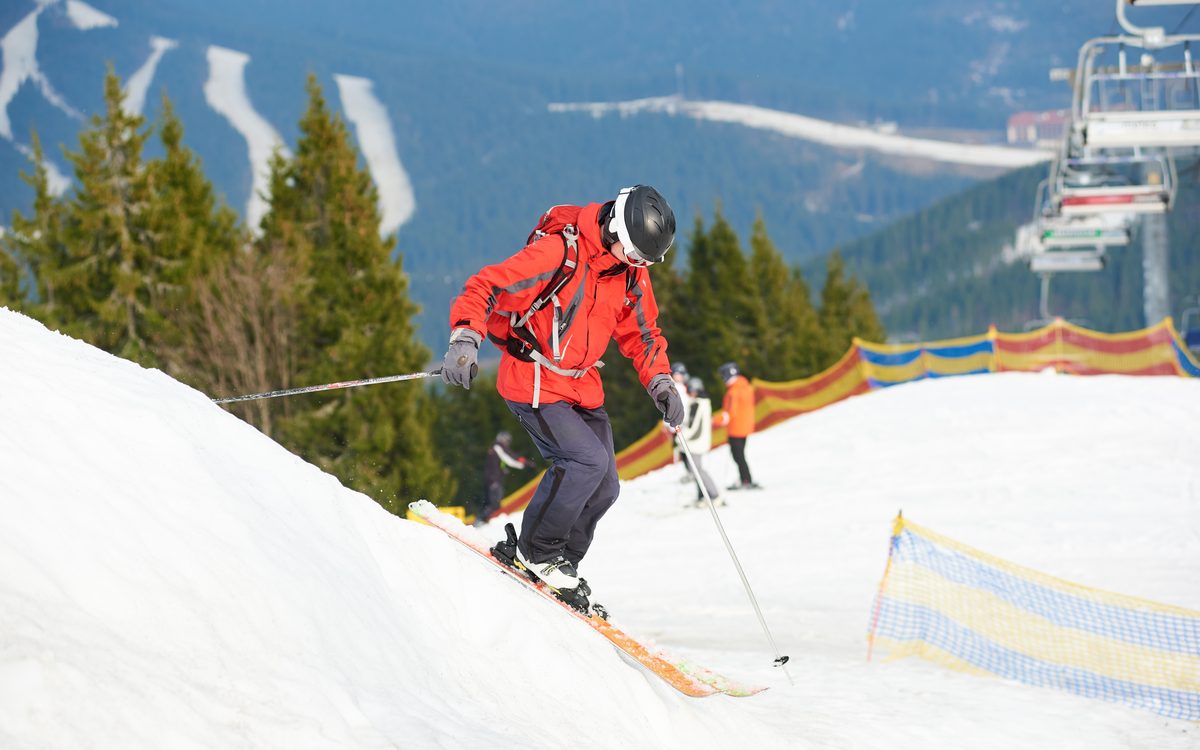
A Saturday race day starts at 7 a.m. in the cold, with inspection at 8, the first run at 9 and a second run after lunch. A racer’s pockets hold a banana, a bar and a bottle that is half frozen. Nutrition for alpine skiing is the plan behind that pocket: enough fuel for long training days, enough fluid even when you do not feel thirsty, enough energy to grow and recover, and a careful, honest approach to supplements. It is general information; a registered dietitian can build a plan for a specific athlete. See also the alpine skiing hub and our recovery page.
Quick answer: Eat enough overall, put carbohydrate and protein into meals around training, and keep fluids up in the cold. The joint position of the Academy of Nutrition and Dietetics, Dietitians of Canada and the American College of Sports Medicine (2016) says well-chosen nutrition can improve performance and recovery and refers athletes to a registered dietitian for a personal plan. Supplements play a minor role, and the IOC (2018) says only a few, such as caffeine and creatine, have strong evidence. Choose third-party-tested products, and check with a doctor or dietitian first, especially for young athletes.
General information, not medical advice. We do not give doses or diets for individuals.
Fuel for a day on the hill
Skiing is hard work. A 2026 study in the Journal of the International Society of Sports Nutrition measured the energy cost of recreational alpine skiing in young adults at about 7.8 METs, a vigorous intensity. Racers add gym sessions, cold-weather clothing and travel, so energy needs can be high, particularly in growing teenagers. The 2016 joint position statement describes the type, amount and timing of food, fluids and supplements for training and competition, and the general idea is the same across sports: regular meals and snacks with carbohydrate as the main fuel for hard efforts, protein spread across the day for repair, and fats and fruit and vegetables for the rest.
- Before: a familiar breakfast a few hours before the first run (general coaching practice). Try race-morning foods in training first.
- During: snacks that do not freeze or crumble, kept inside a jacket, plus a drink you will actually drink. This is general practical advice, not a sourced prescription.
- After: a meal with carbohydrate and protein soon after a hard day, and an early night.
Hydration in the cold
Cold air can blunt thirst, and layers and altitude can make it easy to forget to drink. We did not find an alpine-specific hydration study, so this is general guidance: carry a drink, sip at lift rides and breaks, and notice dark urine or headache as prompts. Warm drinks are a common practical choice. Heavy sweating under race suits and in heated lodges counts too.
Energy availability and RED-S
Alpine skiing has no weight classes, but body-weight talk can still creep in, especially around power-to-weight and young racers. The IOC’s 2023 consensus statement on Relative Energy Deficiency in Sport (REDs; Mountjoy and colleagues, British Journal of Sports Medicine) describes health and performance problems linked to low energy availability in both female and male athletes. It also gives guidelines on body composition assessment aimed at preventing REDs. Coaches and parents should avoid weigh-ins and body comments, and a racer who loses weight, loses a period, gets sick often, or has repeated injuries and low energy should see a doctor or sports dietitian. Our mental training page distinguishes mental health from mental performance and covers eating concerns.
Supplements: what the sources say
The IOC’s 2018 consensus statement on dietary supplements and the high-performance athlete (Maughan and colleagues, British Journal of Sports Medicine) is the reference point. It says nutrition contributes modestly to elite performance, supplements play a minor supporting role, and a full nutritional assessment should come before any supplement decision. Only a few, including caffeine, creatine, some buffering agents and nitrate, have strong evidence. Some supplements can harm health, performance or careers through anti-doping violations, and accidental ingestion of prohibited substances is a known risk. Responses vary between people, and anything new should be tried in training, never first on race day.
- Third-party testing. Where a product is used at all, look for certification by a third-party program for sport such as NSF Certified for Sport or Informed Sport, and say plainly when a product is not certified. Certification lowers contamination risk but does not remove it.
- Banned substances. Athletes in sanctioned competition are subject to anti-doping rules. Check ingredients against the current World Anti-Doping Agency list and your national anti-doping organisation.
- Stimulants. Caffeine is not for everyone (sensitivity, heart conditions, pregnancy). Check with a doctor before using it, especially for teenagers.
- Children and teens. Supplements are for athletes under medical and dietitian advice, not a first step.
A 2024 crossover study of 10 male alpine skiers at moderate to high altitude (Current Developments in Nutrition) found beetroot juice improved some jump and wall-sit tests and reduced perceived exertion, but its 1.74% shorter slalom time was not statistically significant. It is a very small study in men and does not show a race benefit. We mention it as an example of how early the evidence in this sport is.
Heat, weight and other cautions
Weight-class cutting does not apply, and heat is rarely the issue on snow, though sun and warm spring conditions plus heavy clothing can overheat a racer. The more common cautions are under-eating in a long training block, skipping meals while travelling, and relying on supplements to make up for meals. Altitude changes appetite and fluid needs; ask a doctor about altitude illness.
Frequently asked questions
What should a ski racer eat on race day?
Familiar foods that you have tried in training: a carbohydrate-based breakfast a few hours before the start and snacks you can eat on the hill. This is general practice, and a sports dietitian can tailor it.
Do alpine skiers need supplements?
Usually not. The IOC says food comes first and a nutrition assessment should come before supplements. Only a few supplements have strong evidence.
What is RED-S?
Relative energy deficiency in sport is a set of health and performance problems linked to low energy availability, described in the IOC’s 2023 consensus statement. It can affect male and female athletes.
How do I know a supplement is safe for sport?
You cannot be sure. Third-party certification for sport (such as NSF Certified for Sport or Informed Sport) lowers risk, and a doctor or dietitian and your anti-doping organisation can advise.
Is caffeine okay for teen racers?
Check with a doctor. Caffeine has some evidence for performance, but it is not suitable for everyone and sensitivity varies.
Sources
- Thomas, Erdman and Burke, Nutrition and athletic performance (Academy of Nutrition and Dietetics, Dietitians of Canada, ACSM position), Med Sci Sports Exerc 2016
- Maughan et al., IOC consensus statement: dietary supplements and the high-performance athlete, Br J Sports Med 2018
- Mountjoy et al., IOC consensus statement on Relative Energy Deficiency in Sport (REDs), Br J Sports Med 2023
- Energy cost of alpine skiing, snowboarding and cross-country skiing, J Int Soc Sports Nutr 2026
- Beetroot juice in alpine skiers, Curr Dev Nutr 2024
- World Anti-Doping Agency: Prohibited List
- AAP HealthyChildren: Winter safety
General information for education only, not medical advice. It does not replace a visit with a doctor, physical therapist or athletic trainer. See how we write and check our pages in our editorial policy.