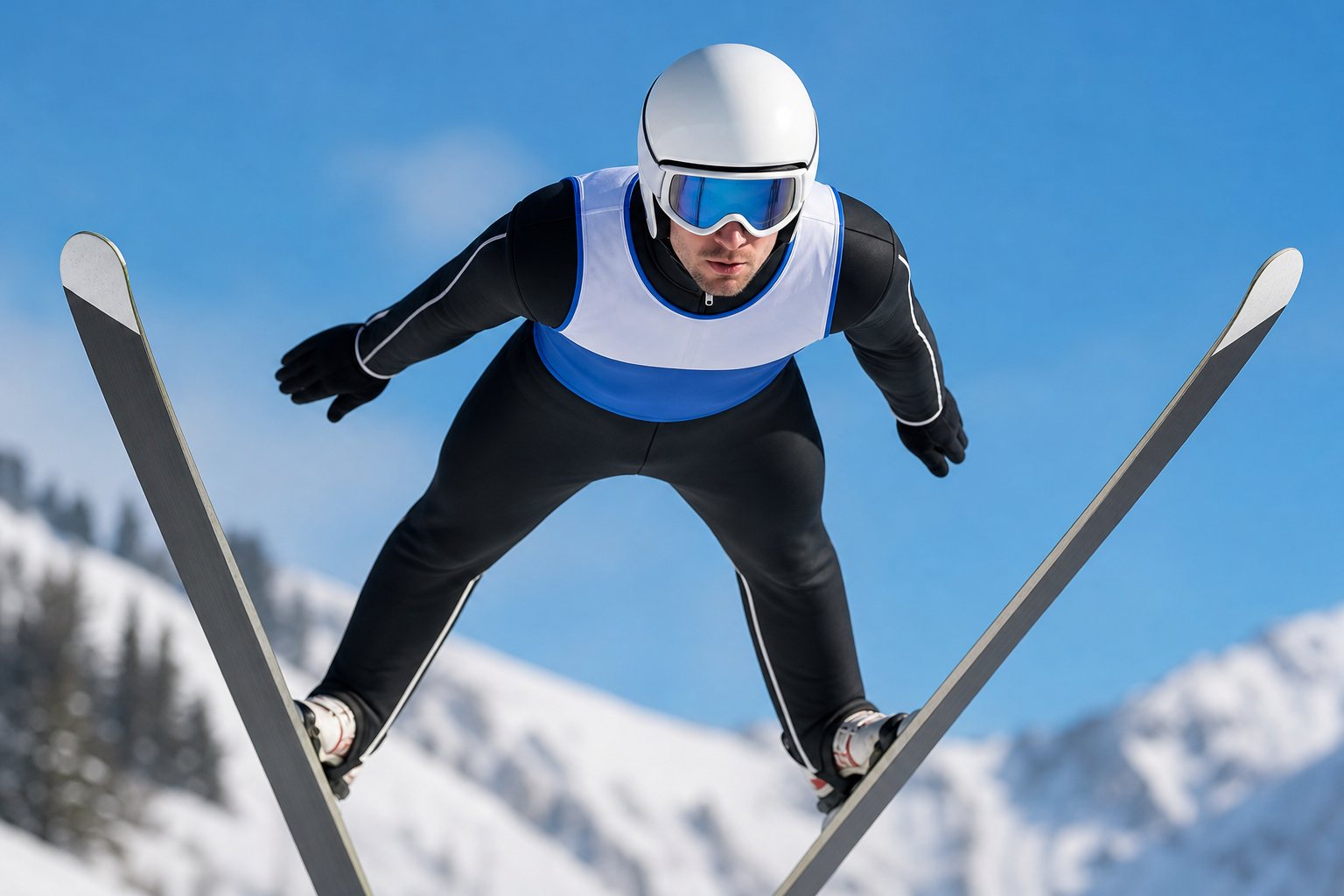
Back at the club hut after a training day: cold fingers around a hot drink, legs buzzing from a morning of take-off drills, and the temptation to scroll until midnight. Recovery for ski jumpers is everything that lets the body absorb the work: sleep, enough food, easy days, mobility, and honest attention to what is soreness and what is injury. It is the area where marketing runs well ahead of science, so this page says plainly where evidence is thin.
Quick answer: Sleep and load management have the strongest support. For most gadgets and treatments, such as massage, foam rollers, compression and cold water, evidence is mixed or small; a 2018 review found massage the most effective for soreness, while a 2015 trial found cold water after strength training blunted gains. Normal muscle soreness fades in a day or two, but pain in one spot, swelling or pain that changes how you jump is a reason to see a sports medicine doctor, physical therapist or athletic trainer.
Sleep first
The CDC recommends at least 7 hours of sleep for adults and 8 to 10 hours for teens aged 13 to 17. The 2021 expert consensus on sleep and the athlete (Walsh and colleagues, British Journal of Sports Medicine) says elite athletes are particularly prone to short or poor sleep, and that an individual approach is better than one-size-fits-all targets. Early starts for winter hill sessions, travel and pre-competition nerves all cut into sleep, so protecting a regular bedtime is a recovery tool in its own right.
Load management
A 2018 consensus statement on recovery and performance in sport (Kellmann and colleagues) treats recovery as part of training, with stress and recovery balanced over time. In practical terms, this is general coaching practice: easy days after hard ones, a full rest day each week, a lighter week every few weeks, and a gradual return after illness or time off. Talk to your coach before changing the load. Our training page shows a sample weekly shape.
Mobility and flexibility
Hip, ankle and back mobility help the crouch of the in-run and a controlled landing. The evidence for stretching as a recovery tool is limited; a foam rolling meta-analysis (Wiewelhove and colleagues, 2019, 21 studies) found small effects, with rolling better supported as a warm-up (about 4.0% better flexibility) than as a recovery tool. The authors reported reduced muscle pain after post-exercise rolling (about 6.0%), but the effects were generally small. A short routine you will actually do beats a long one you skip.
Recovery methods: what the evidence says
- Massage. A systematic review of 99 studies (Dupuy and colleagues, 2018) found massage the most effective of several techniques for soreness and fatigue.
- Active recovery, compression, immersion and contrast water therapy. The same review found these reduced delayed-onset muscle soreness, with effect sizes that varied widely.
- Cold water immersion. In a 12-week study of 21 men (Roberts and colleagues, 2015), cold water immersion after strength training led to smaller gains in strength and muscle mass than active recovery, and the authors said regular use should be reconsidered. Athletes in the power phase of training may want to ask a coach before making it a habit.
- Foam rollers and massage guns. Small effects at best, as above. A massage gun is a comfort item, not a treatment.
Check with a doctor before using heat, cold, electrical stimulation or compression if you have a heart condition, are pregnant, have a pacemaker or poor circulation. These are consumer products, not treatment.
Soreness versus injury
Muscle soreness is usually spread through a muscle, shows up a day after unfamiliar work and eases with movement. Warning signs of something else include sharp or one-spot pain, swelling, a joint that gives way, numbness, and pain at rest or at night. If in doubt, stop and see a professional, and remember the injuries page lists the head-injury danger signs.
Cold, travel and long days
Jumpers wait in the cold between rounds. General practice is to change out of wet layers quickly, eat and drink soon after sessions and warm up properly again before a jump after a long wait. See nutrition and athlete health and the skiing hub.
Ski jumping FAQs
How much sleep does a teen jumper need?
The CDC says 8 to 10 hours for ages 13 to 17.
Are cold baths good for recovery?
A 2015 trial found cold water immersion after strength training blunted strength and muscle gains, so the benefit is unclear. Ask your coach or doctor.
Do massage guns work?
We found no ski-jumping data. A 2018 review found massage helped soreness; a gun is a convenience, not a cure.
How do I tell soreness from an injury?
Soreness is broad and fades within a day or two; sharp, localised pain, swelling or giving way is a reason to see a professional.
Should I stretch after jumping?
Evidence for stretching as recovery is limited; easy movement and mobility work are widely used. Follow your coach’s routine.
Sources
- CDC, about sleep (recommended hours)
- Walsh et al., sleep and the athlete, expert consensus, Br J Sports Med 2021
- Kellmann et al., recovery and performance in sport, consensus statement, 2018
- Dupuy et al., post-exercise recovery techniques, systematic review, Front Physiol 2018
- Wiewelhove et al., foam rolling meta-analysis, Front Physiol 2019
- Roberts et al., cold water immersion and strength training adaptations, J Physiol 2015
- CDC HEADS UP, concussion signs and symptoms
General information for education only, not medical advice. It does not replace a visit with a sports medicine doctor, physical therapist or athletic trainer. See how we write and check our pages in our editorial policy.