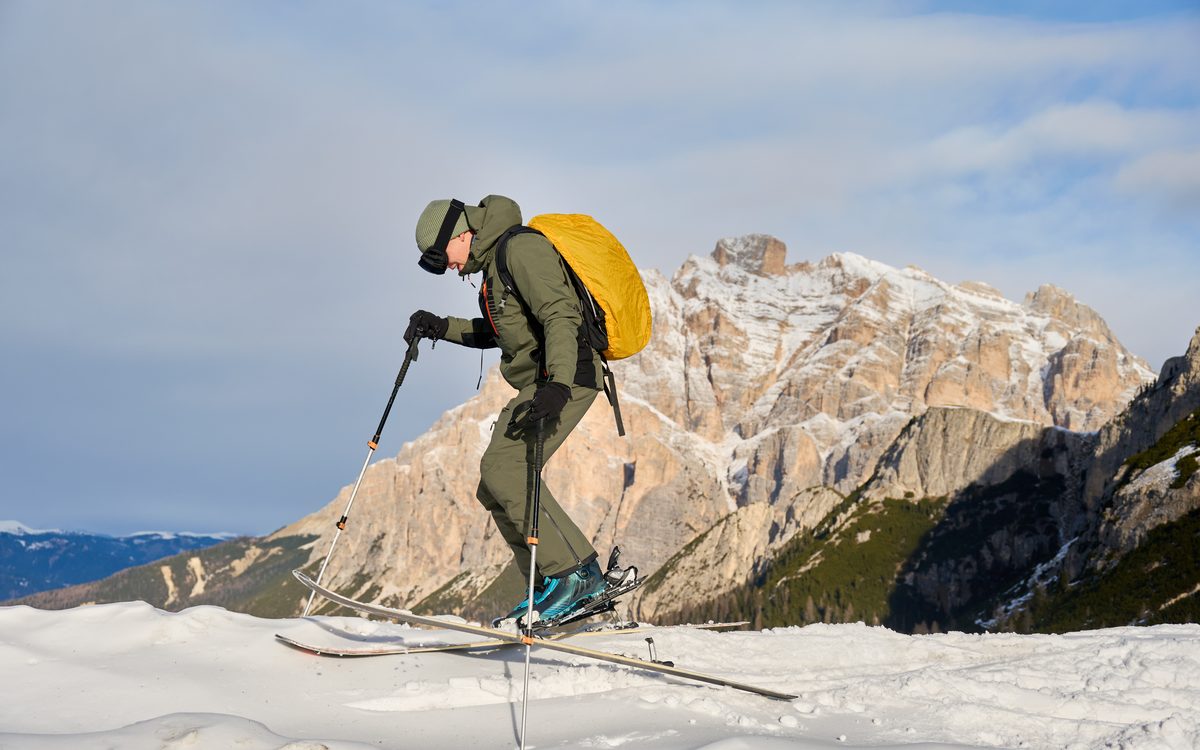
Hour three of a long uphill day. Your heel has been rubbing for a while, the sun has dropped behind the ridge and the wind is picking up, but the summit is close and the descent is the fun part. That is the moment skimo injuries tend to begin. Ski mountaineering injury prevention is the set of habits, a warm-up, boots that fit, a sensible training load, protective gear, cold and altitude planning, and honest limits on terrain, that aim to lower the chance of getting hurt. They lower the odds. They cannot promise anything.
Quick answer: The best-documented skimo problems are knee injuries on the descent and skin lesions from stiff boots on the climb, according to a 2026 survey of 196 racers (Schöffl and colleagues). Sensible steps are a short warm-up, boots that fit and hot spots taped early, ski-control practice before racing, gradual increases in training, and a helmet. Avalanche risk is a separate matter: it is managed by forecasts, gear and formal avalanche education, not by a web page. See a sports medicine doctor, physical therapist or athletic trainer if pain stays in one spot or changes how you move, and call emergency services after a head injury with danger signs.
General information, not medical advice and not avalanche training. What each injury looks like is on our skimo injuries guide, so we do not repeat it here. For the sport overview, see the ski mountaineering hub.
Warm-up
We did not find a published injury-prevention warm-up tested in skimo racers. The American Academy of Orthopaedic Surgeons (OrthoInfo) advises skiers to warm up for three to five minutes with jumping jacks, running or walking in place before they start. Many racers climb easily first, then add short bursts before a race. That is common practice, not a tested program. Cold muscles on a cold morning are a reason to begin earlier.
Technique and ski control
In the Schöffl study, 90.3% of the acute injuries happened on the descent, and the authors say they resemble alpine skiing injuries. The knee, usually the ligaments and joint capsule, was injured most often. Skimo racers descend on tired legs after hard climbing, so practicing descents when you are fatigued, in conditions you can handle, makes sense as coaching practice. Ski lessons help skiers who come from climbing or running backgrounds. Ettlinger and colleagues (1995, American Journal of Sports Medicine) reported fewer serious knee sprains after an alpine ACL-awareness training program, but that was in alpine skiers, not skimo racers.
Progressive training load
The same study found overuse injuries (40.7% of the 59 injuries) and 90.9% of them happened on the ascent. Ramping volume up too quickly is a common coaching concern. A widely used rule of thumb is to raise weekly volume by about 10%; we did not find a skimo study that tests it. See our training page and recovery page.
Strength and conditioning
A 2009 review in Sports Health (Johnson, Ettlinger and Shealy) found no convincing evidence that conditioning of any type reduces alpine skiing injuries, though it can improve endurance and enjoyment. A Swedish comparison in ski high-school students (Westin and colleagues) reported 3.9% injured with a core-stability and neuromuscular program versus 8.1% without, but that is one study of alpine skiers. Strength work is worthwhile for performance, and may help, but nobody can promise it prevents injury.
Boots, skin and feet
In the 2026 study, most overuse injuries on the ascent were skin lesions and ulcers linked to full-carbon racing boots. Practical steps are boot fitting by a qualified boot fitter, breaking in new boots on short outings, thin snug socks without folds, and taping or covering hot spots at the first sign of rubbing. Those steps are common-sense practice rather than tested protocols. Stop and treat a hot spot before it becomes a wound, and see a clinician for broken skin that gets red, hot or painful. See our gear page.
Cold, altitude and weather
- Cold and sweat. Climbing warms you; the descent chills you. The CDC’s hypothermia and frostbite pages list warning signs. In a 2026 study of 13 elite skimo athletes at 2,600 m (Dünnwald and colleagues), skin temperature fell on all measured sites, especially hands, and about half the athletes’ core temperatures fell. Carry layers you can add quickly.
- Altitude. The CDC Yellow Book advises gradual ascent and describes symptoms such as headache, nausea and dizziness. Stop and descend if they appear.
- Breathing. The same skimo study reported exercise-triggered asthma in 16.5% of World Cup athletes versus 2.7% of recreational ones. If cold air makes you wheeze or cough, talk to a doctor.
Helmets and protective gear
NBC Olympics lists a helmet not worn correctly as a disqualification offence in Olympic skimo. A CMAJ meta-analysis of alpine skiers and snowboarders (Russell and colleagues, 2010) found helmets associated with fewer head injuries, but it covers alpine skiing, not skimo. Check your event’s rules for which helmet standard it accepts, since we could not confirm one standard that applies everywhere. See the CDC HEADS UP guidance: if you suspect a concussion, stop, and a healthcare provider decides when to return. Helmets do not remove the risk of a concussion. Replace a helmet after a significant impact.
Avalanche terrain: what this page cannot do
Races use controlled courses, but recreational touring does not. Avalanche.org says avalanches kill 25 to 30 people a year in the US, and its three steps are get the forecast, get the gear (beacon, shovel and probe) and get the training. It calls avalanche education a life-long process. A 2026 Utah study of 489 people involved in human-triggered avalanches (Petelinsek and colleagues) found advanced and expert users made up most of them, so experience does not remove the risk. Take a formal avalanche course from a recognized provider, read the local forecast every time, and travel with partners who have trained too.
What prevention cannot do
Falls, equipment failures and weather happen to well-prepared people. Prevention changes odds, not outcomes.
When to see a professional
See a sports medicine doctor, physical therapist or athletic trainer for pain that persists, swelling, a joint that feels unstable, or a blister or sore that is not healing. Call emergency services for a head injury with danger signs, for signs of severe hypothermia, or for any avalanche accident.
Frequently asked questions
What is the most common skimo injury?
In a 2026 survey of 196 racers (Schöffl and colleagues), the knee was injured most often, and 90.3% of acute injuries happened on the descent. Skin lesions from boots were the main overuse problem on the ascent.
Do I need a helmet to race?
Olympic rules treat a helmet not worn correctly as a disqualification offence, and most events require one. Check your race’s rules for the accepted standard.
How do I avoid blisters from skimo boots?
Get a proper fit, break boots in gradually, wear snug socks and tape hot spots early. These are common practice, not tested protocols.
Does avalanche gear make me safe?
No. A beacon, shovel and probe help in a rescue, but avalanche.org’s steps also include getting the forecast and the training. Take a formal course.
Can strength training prevent skiing injuries?
It helps performance and may help resilience, but a 2009 review found no convincing evidence that conditioning prevents alpine skiing injuries.
Sources
- Schöffl et al., Ski Mountaineering as a Competitive Sport (2026)
- Dünnwald et al., thermoregulation of elite ski mountaineers (2026)
- Petelinsek et al., post-avalanche accident reports, Wilderness Environ Med (2026)
- Avalanche.org: avalanche education
- AAOS OrthoInfo: Skiing Injury Prevention
- Johnson, Ettlinger and Shealy, update on injury prevention in alpine skiing (2009)
- Ettlinger et al., ACL injury awareness training (1995)
- Westin et al., injury prevention in ski high-school students
- Russell et al., helmet use and head injuries in skiers and snowboarders (CMAJ 2010)
- NBC Olympics: official rules for Olympic ski mountaineering
- CDC HEADS UP: signs and symptoms
- CDC: preventing hypothermia and frostbite
- CDC Yellow Book: high-altitude travel and altitude illness
General information for education only, not medical advice. It does not replace a visit with a doctor, physical therapist or athletic trainer, and it is not avalanche training. See how we write and check our pages in our editorial policy.