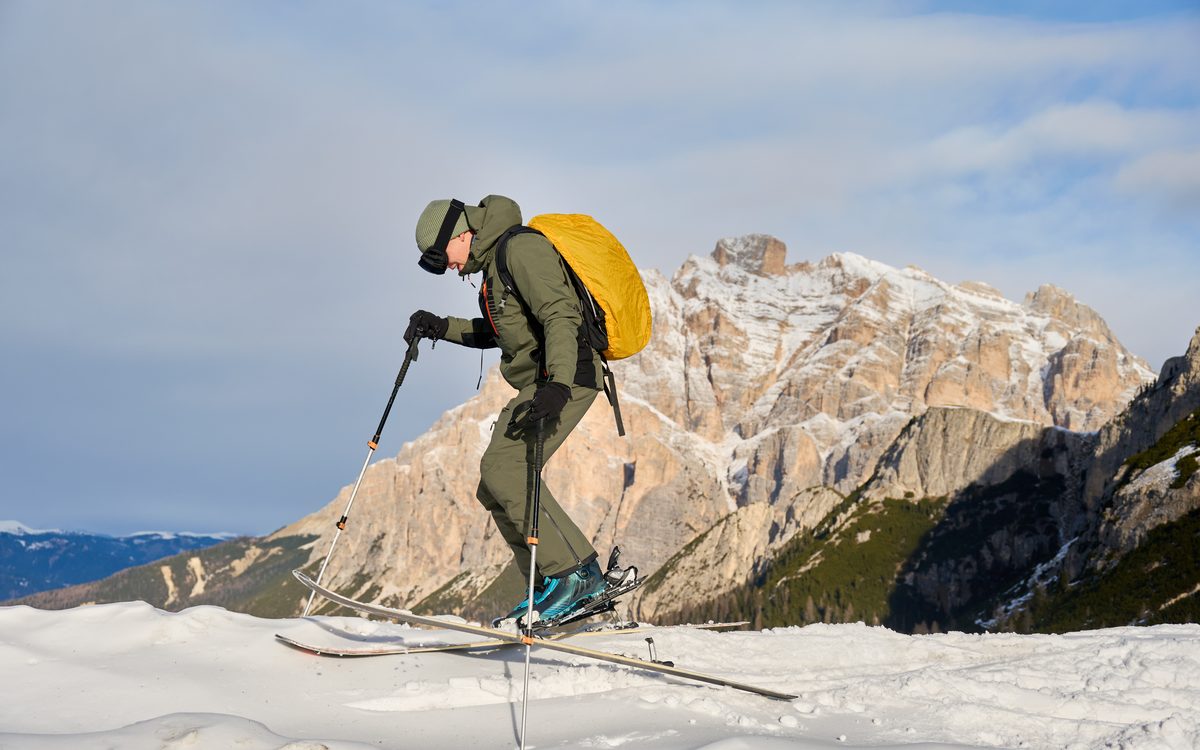
A skier catches an edge on the final turn of a tired-legs descent and feels the knee twist before she is down. Another racer finishes a block of climbing with a raw, blistered heel she ignored for two weeks. Both are the kind of problem the first injury survey of competitive skimo describes. Skimo injuries fall into two broad groups: sudden injuries, mostly on the descent, and overuse or skin problems that build on the climb. This page covers what the research found, how rehabilitation generally works, and when to get help. See the ski mountaineering hub for the sport itself.
Quick answer: In a 2026 questionnaire study of 196 skimo racers, 59 injuries were reported by 43 people (21.9%): 59.3% acute and 40.7% chronic. The knee was injured most often, 90.3% of the acute injuries happened on the descent and 90.9% of overuse injuries on the ascent. This page cannot diagnose anything or say when you can return to sport. See a sports medicine doctor, physical therapist or athletic trainer for a new injury, and call emergency services after a head injury with danger signs.
What the surveillance data shows
The Schöffl study (Sportverletz Sportschaden, 2026) is, according to its authors, the first injury data from competitive skimo. It surveyed 196 racers: 85 World Cup athletes and 111 recreational. Fifty-nine injuries were reported by 43 people (21.9%). The knee was injured most often, usually the ligaments and joint capsule. Of the acute injuries, 90.3% happened on the descent and the authors say they resemble alpine skiing injuries. Of the overuse injuries, 90.9% happened on the ascent, and most were skin lesions and ulcers caused by full-carbon racing boots. This was a questionnaire, so it relies on what people remembered and chose to report.
Beyond injury, the same study reported exercise-triggered asthma in 16.5% of World Cup athletes versus 2.7% of recreational athletes, frequent colds and respiratory infections linked to heavy training, and signs of low energy availability in female World Cup racers (anorexia athletica in 17.9% of women and 5.3% of men). We cover eating and energy on our nutrition page.
Knee injuries on the descent
Because the injured knees in the study were mostly ligament and capsule injuries on the way down, alpine skiing research is the closest guide. A 2025 review of risk factors in alpine ACL injuries (Bhatt and colleagues, Arthroscopy) discusses the role of binding non-release, which is a gear matter. Signs worth a professional look include a pop at the time of a fall, quick swelling, a knee that gives way or cannot take weight. Only a clinician can tell you what is injured. Rehabilitation after a knee ligament injury is usually guided by a physical therapist and surgeon, with criteria-based progress rather than a calendar date.
Skin lesions and blisters
The ascent problems in the study were mostly skin lesions caused by stiff carbon boots. First steps used by many athletes are to stop and cover a hot spot early, but if the skin opens, reddens, swells or becomes painful, a clinician should look at it, especially if you have diabetes or poor circulation. Our prevention page covers fit and padding, and the gear page has options.
Head injuries and concussion
Descending fast brings fall risk. The CDC HEADS UP approach is recognize and remove: if you suspect a concussion after a fall, stop and get evaluated by a healthcare provider, who decides about return. Call 911 for danger signs such as repeated vomiting, a worsening headache, seizure or loss of consciousness. Do not ski down alone if you feel confused or dizzy.
Cold and altitude problems
Hypothermia and frostbite are real risks on high, windy courses. The CDC lists warning signs such as shivering, slurred speech, numbness and waxy skin. In the 2026 thermoregulation study of 13 elite skimo athletes (Dünnwald and colleagues), skin temperature dropped on all sites, especially the hands. Altitude illness symptoms (headache, nausea, dizziness) are described in the CDC Yellow Book, and the advice is to stop and descend. These are medical issues, not training issues.
General principles of rehabilitation
These are general principles, not a treatment plan. Rehabilitation usually starts with protecting the injured area, then restoring motion, strength and control step by step, and finishing with sport-specific work. Many injuries respond to a graded program under a physical therapist or athletic trainer. Recovery times vary widely with the injury and the person, so we do not give one. Do not rush back: coming back before an injury is ready is a common reason for setbacks. A 2026 FIS consensus statement exists on return-to-performance in alpine skiing (Spörri and colleagues); it addresses alpine skiers, and we did not read it beyond the abstract, so we do not summarize it here.
When to see a professional
- Pain that lasts more than a few days, or pain at rest or at night.
- Swelling, a joint that feels loose or locks.
- Numbness, tingling or color change in hands and feet that does not go away after warming.
- A blister or sore that is not healing or looks infected.
- A new cough or wheeze with exercise in cold air.
- Any head injury with danger signs: call emergency services.
Our recovery page covers sleep, load and mobility, and the general skiing injuries guide covers alpine injury patterns.
Frequently asked questions
What injuries are most common in skimo?
In the 2026 survey of 196 racers, the knee was injured most often (usually ligaments and joint capsule), and skin lesions from stiff boots were the main overuse problem on the ascent.
Is skimo safer than alpine skiing?
We found no study that compares them. The first skimo injury data is a single survey, so the real rate is unknown.
How long does a knee ligament injury take to heal?
It depends on the injury and the person. A surgeon or physical therapist can advise; we do not give a universal time.
Can I keep training with a blister?
Treat it early. If the skin is broken or looks infected, see a clinician, and rest the area.
When can I return after a concussion?
Only a healthcare provider can decide. The CDC advises not returning the same day.
Sources
- Schöffl et al., Ski Mountaineering as a Competitive Sport (2026)
- Bhatt et al., risk factors for alpine ACL injury, Arthroscopy 2025
- Spörri et al., FIS consensus on return-to-performance (2026)
- Dünnwald et al., thermoregulation of elite ski mountaineers (2026)
- CDC HEADS UP: signs and symptoms
- CDC: preventing hypothermia and frostbite
- CDC Yellow Book: high-altitude travel and altitude illness
General information for education only, not medical advice. It does not replace a visit with a doctor, physical therapist or athletic trainer, and it is not avalanche training. See how we write and check our pages in our editorial policy.