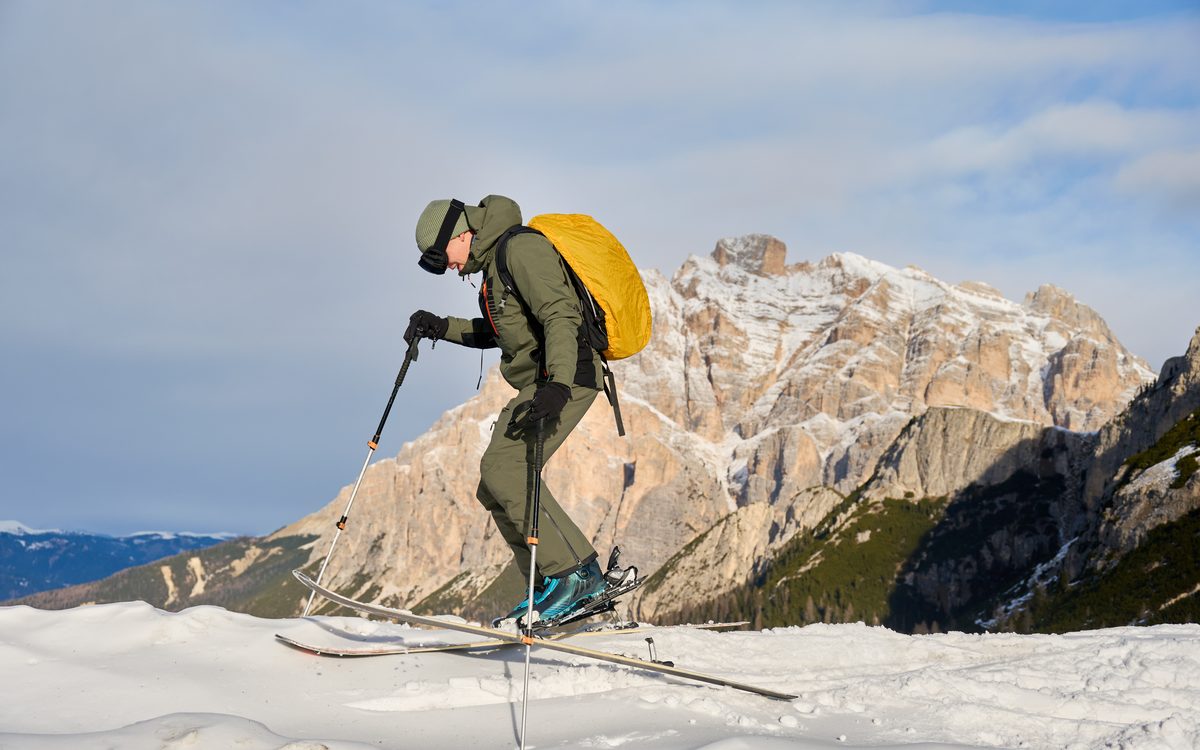
Halfway up a long climb the water in your pack tube has frozen solid, your gel has turned to cement and your hands are too cold to open a wrapper. Fuel and fluid in the cold are their own skill. Skimo nutrition and athlete health means eating and drinking enough to support hard training in cold, high places, watching for the signs of under-fuelling, and being careful with supplements. This page is general information; for a personal plan, ask a registered dietitian who works with endurance athletes. For the sport overview, see the ski mountaineering hub.
Quick answer: Skimo is a long, hard endurance sport, so eat enough carbohydrate and protein across the day, drink regularly, and keep food and drink from freezing. A 2026 survey of skimo racers found signs of low energy availability in female World Cup athletes, so under-fuelling is a real concern. Supplements are optional, and the IOC says many are unnecessary and some carry contamination risks. Talk to a doctor or registered dietitian, especially if you are young, have a medical condition or compete under anti-doping rules.
Fuel for climbing
The 2016 joint position of the American College of Sports Medicine, Academy of Nutrition and Dietetics and Dietitians of Canada gives daily carbohydrate ranges that scale with training load: 3 to 5 g per kg of body mass on light days, 5 to 7 g/kg for about an hour a day, and 6 to 10 g/kg for 1 to 3 hours a day. For stop-and-start exercise lasting 1 to 2.5 hours it suggests 30 to 60 g of carbohydrate per hour. Protein of 1.2 to 2.0 g/kg a day is the same document’s range for athletes. These are ranges for planning with a professional, not a prescription. Easy-to-eat carbohydrates such as bars, chews or sandwiches cut into small pieces are practical on a climb, a point of general practice. Keep them in an inside pocket so they stay soft.
Drink in the cold
Cold air feels like it needs less water, but you still sweat under layers and breathe dry air hard. The NATA fluid replacement statement (McDermott and colleagues, 2017) advises that athletes should not gain body mass during exercise, meaning drinking to replace losses, not to overdrink. Insulated tubes or a bottle inside your jacket keep liquid from freezing, and warm drinks can be welcome. Our electrolyte powder guide compares drink mixes. Sodium is a product choice, not a medical need for everyone; ask a doctor if you have blood-pressure or kidney concerns.
Altitude and appetite
The CDC Yellow Book lists loss of appetite among the symptoms of acute mountain sickness and notes that about 25% of people sleeping above 2,450 m in Colorado develop it. Headache with nausea or dizziness is a reason to stop and descend. Alcohol is best avoided for the first 48 hours at altitude. If you often lose appetite on high trips, plan foods you enjoy and ask a doctor about altitude advice before a camp.
Low energy availability and RED-S
The 2023 IOC consensus statement on Relative Energy Deficiency in Sport (REDs; Mountjoy and colleagues) describes what can happen when athletes do not take in enough energy for training and health, with effects across bone, hormones, immunity and mood. The 2026 skimo survey (Schöffl and colleagues) found anorexia athletica in 17.9% of female and 5.3% of male World Cup racers, plus frequent colds and respiratory infections linked to heavy training. A 2026 review of Olympic snow sports (Zoppirolli and colleagues) says research on energy availability is still underdeveloped. Warning signs include constant fatigue, repeated illness, stress injuries, missing or irregular periods, and fear around food. Skimo values low body weight for climbing speed, which makes this a real risk. If you notice these signs, or someone you coach does, see a doctor or sports dietitian. Our injuries page and mental training page touch on related health matters.
Supplements: be careful
The IOC consensus statement on dietary supplements (Maughan, Burke and colleagues, 2018) says that supplements should be used with care, that a food-first approach is usually enough, and that products can contain substances not on the label. A UEFA expert-group statement (Collins and colleagues, 2021) reported that about 15% of 634 supplements from 13 countries had undeclared prohormones, and that third-party testing programs reduce risk but do not remove it. If you compete under anti-doping rules, you are responsible for what you take (strict liability), so check with your federation or anti-doping agency. Third-party certification such as NSF Certified for Sport or Informed Sport is a useful filter, not a guarantee. We do not give doses here. Examples with stronger evidence in the consensus statements include caffeine and creatine for some goals, and the UEFA statement warns that routine iron supplementation can do more harm than good, so check iron levels with a doctor before supplementing. The AAP advises against creatine for under-18s and says energy drinks have no place in children’s diets.
Weight and heat cautions
Skimo has no weight classes, but light gear and a lean build are valued. Do not cut calories to climb faster without professional guidance, especially in teenagers. Skimo is mostly a cold sport, but spring touring in sun can mean sweat and heat. Drink, vent layers and rest.
Frequently asked questions
What should I eat on a long skimo day?
Easy-to-carry carbohydrates, some salty food and fluid you can drink without it freezing. A dietitian can tailor amounts to you.
How do I stop my hydration from freezing?
Insulate the tube, blow back the water after sipping, or carry a bottle inside your jacket. These are common practices.
Is under-eating a problem in skimo?
It can be. A 2026 survey found signs of low energy availability in female World Cup racers. See a doctor or sports dietitian if you notice warning signs.
Are supplements necessary?
Usually not. The IOC says to be careful, and third-party testing reduces but does not remove contamination risk.
Do I need electrolytes?
It depends on sweat, duration and diet. Salty food does a similar job for many people. Ask a doctor if you have a medical condition.
Sources
- ACSM, Academy of Nutrition and Dietetics and Dietitians of Canada: nutrition and athletic performance (2016)
- NATA position statement: fluid replacement for athletes (McDermott et al., 2017)
- CDC Yellow Book: high-altitude travel and altitude illness
- IOC consensus statement on Relative Energy Deficiency in Sport (REDs), 2023
- Schöffl et al., Ski Mountaineering as a Competitive Sport (2026)
- Zoppirolli et al., Olympic Snow Sports (2026)
- IOC consensus statement on dietary supplements and the high-performance athlete (2018)
- UEFA expert group statement on nutrition in elite football (Collins et al., 2021)
General information for education only, not medical advice. It does not replace a visit with a doctor, physical therapist or athletic trainer, and it is not avalanche training. See how we write and check our pages in our editorial policy.