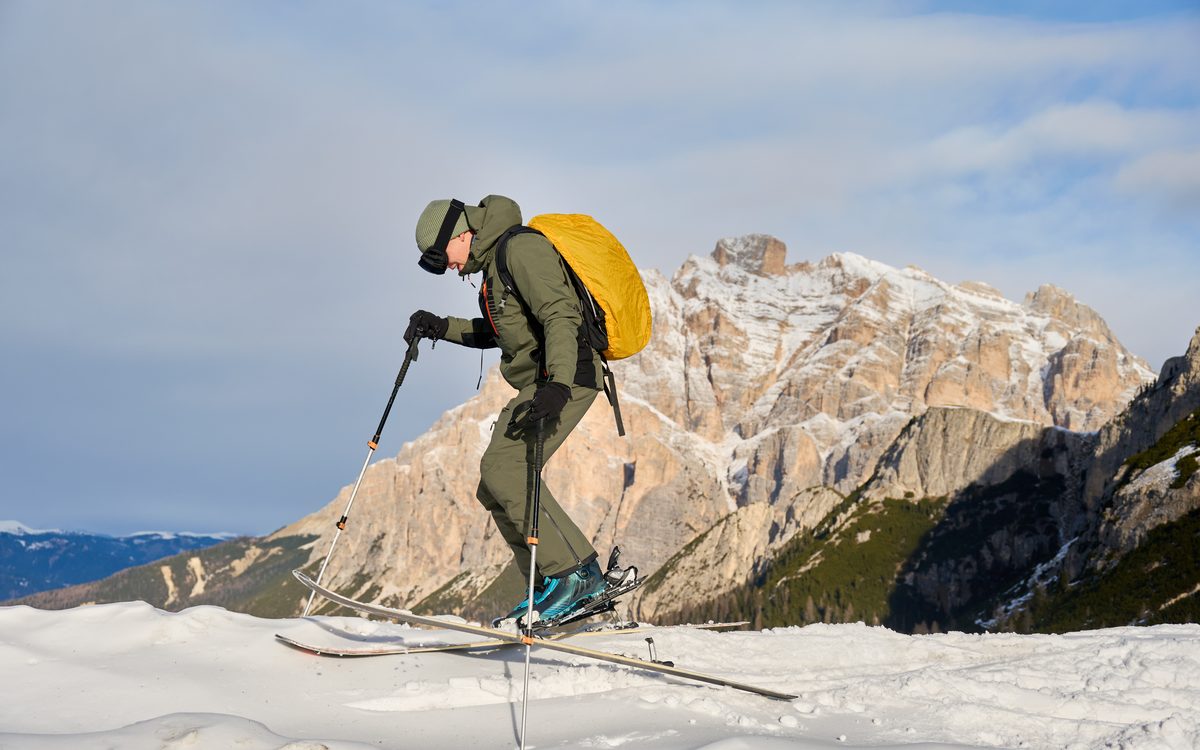
Two minutes into a sprint your legs are burning, your breathing is ragged and the transition box is coming up. This is where races are won or lost: not in the lungs, but in whether your hands still know the routine. Skimo mental training is the set of skills, goal setting, focus, imagery, routines and handling pressure, that help you perform what you have trained. Skimo adds a second layer in the mountains: deciding what risk is worth taking. See the ski mountaineering hub for the sport overview.
Quick answer: Practice transitions until they are automatic, use a short pre-race routine, and keep goals within your control. Researchers studying the Olympic sprint (Mottet and colleagues, 2026) noted skimo is not only about physiological capacity but also about fast, error-free gear changes under maximal effort, which is a skill you can rehearse. Mental skills support performance but do not guarantee it. Anxiety, low mood, disordered eating or burnout are health matters for a qualified professional; in the US, call or text 988 in a crisis.
Most sport-psychology research is not skimo-specific. Where we use general sport-psychology ideas, we label them as general coaching practice.
Confidence and focus
Confidence comes mostly from evidence: reps, fitness numbers, rehearsed transitions and past races. Focus is a short list. Many coaches suggest one cue per phase, for example smooth rhythm on the climb, calm hands in the transition, light feet on the descent (general coaching practice). When you drift, a simple reset such as a breath and the cue helps. Our training page covers the physical side.
Goals and motivation
Goals you control work better than goals you do not: clean transitions, a steady first climb, finishing in a strong state. Rankings depend on others. Skimo has a wide range of people, from recreational racers to World Cup athletes, and most enjoy the climb and the views as much as results. Remember why you started.
Imagery and visualization
Imagery means mentally rehearsing a skill. A 2025 study (Volgemute and colleagues, Frontiers in Psychology) followed 500 athletes and nine alpine skiers over six months on guided imagery; we read only the abstract and do not claim an effect size. In skimo, imagery fits transitions: picture the exact order, then do it for real. Spending three to five minutes before a race is a common practice, not a tested protocol.
A pre-race routine
- Know the course, the transition zone layout and the start procedure. The rules summary at NBC Olympics notes that gear changes happen in the marked zone, so rehearse inside the rules.
- Pack and check gear the night before (see our gear page).
- Warm up the same way every time.
- Pick one focus for the first climb.
- Have a plan for a dropped pole, a skin that will not stick or a missed step: stay calm, fix it, move on.
Handling pressure and setbacks
The Sport and Exercise Science Australia position statement on performance under pressure (Schweickle and colleagues, 2026) is a resource for coaches and athletes; we have not summarized its recommendations here. A practical, general approach is to treat nerves as energy, keep your routine and focus on the next task. After a mistake, note one thing to change and let the rest go. Racers who fell in a descent can use stepped confidence-building: ski familiar terrain, then raise difficulty gradually (coaching practice).
Risk decisions in the mountains
Outside the race course, mental skills become safety skills. A 2026 survey of 4,792 backcountry skiers and snowboarders (Shonnard and colleagues) found that confidence in assessing avalanche terrain correlated with willingness to take risks, level of training and experience, and that over 30% of people without level 1 avalanche training expressed confidence in appraising complex terrain. A 2026 Utah study of 489 people involved in human-triggered avalanches (Petelinsek and colleagues) found that advanced and expert users made up most of them, which suggests experience and confidence do not remove risk. The practical message is humility: take formal avalanche education, check the forecast, and use a checklist and partners to challenge your decisions. Avalanche.org lists the steps: get the forecast, get the gear and get the training.
Race-day preparation
Our hub covers the rules and start procedure in skills, rules and getting started. Arrive early, check the course, know the mandatory gear list and sleep well the night before (see our recovery page).
Mental health is not the same as mental performance
Mental skills help you compete. They are not treatment. Anxiety that will not settle, low mood, loss of interest, disordered eating, unusual fatigue or burnout are health matters to take to a doctor, therapist or other qualified professional. A 2026 IOC consensus statement on mental health in elite athletes (Reardon and colleagues) is available for coaches and clinicians. In the US, the 988 Suicide and Crisis Lifeline is available by call or text to 988. If you are outside the US, contact your local emergency or crisis service.
Frequently asked questions
How do I stay calm before a race?
Use a routine you repeat every time, controlled breathing and a single focus cue. These are general coaching practice. If nerves are overwhelming, talk to a professional.
Does visualization really help?
Many athletes use it for rehearsing skills like transitions. Evidence in skimo specifically is lacking, and it does not guarantee performance.
How do I recover confidence after a fall?
Return to familiar terrain, build difficulty in steps and keep goals small. If fear persists, a sport psychologist can help. See a doctor first if you hit your head.
Why do experienced skiers still get caught in avalanches?
A 2026 Utah study found advanced and expert users made up most of those involved in human-triggered avalanches, so experience does not remove risk. Training, forecasts and partner checks help.
Where do I get help for anxiety or burnout?
From a doctor, therapist or qualified sport psychologist. In the US you can call or text 988 in a crisis.
Sources
- Mottet et al., sprint performance determinants (2026)
- Shonnard et al., risk acceptance and confidence assessing avalanche terrain, Wilderness Environ Med (2026)
- Petelinsek et al., post-avalanche accident reports (2026)
- Avalanche.org: avalanche education
- Volgemute et al., guided imagery in athletes, Front Psychol (2025)
- Schweickle et al., ESSA position statement: performance under pressure, Sports Med (2026)
- Reardon et al., IOC consensus statement on mental health in elite athletes (2026)
- 988 Suicide and Crisis Lifeline
- NBC Olympics: official rules for Olympic ski mountaineering
General information for education only, not medical advice. It does not replace a visit with a doctor, physical therapist or athletic trainer, and it is not avalanche training. See how we write and check our pages in our editorial policy.