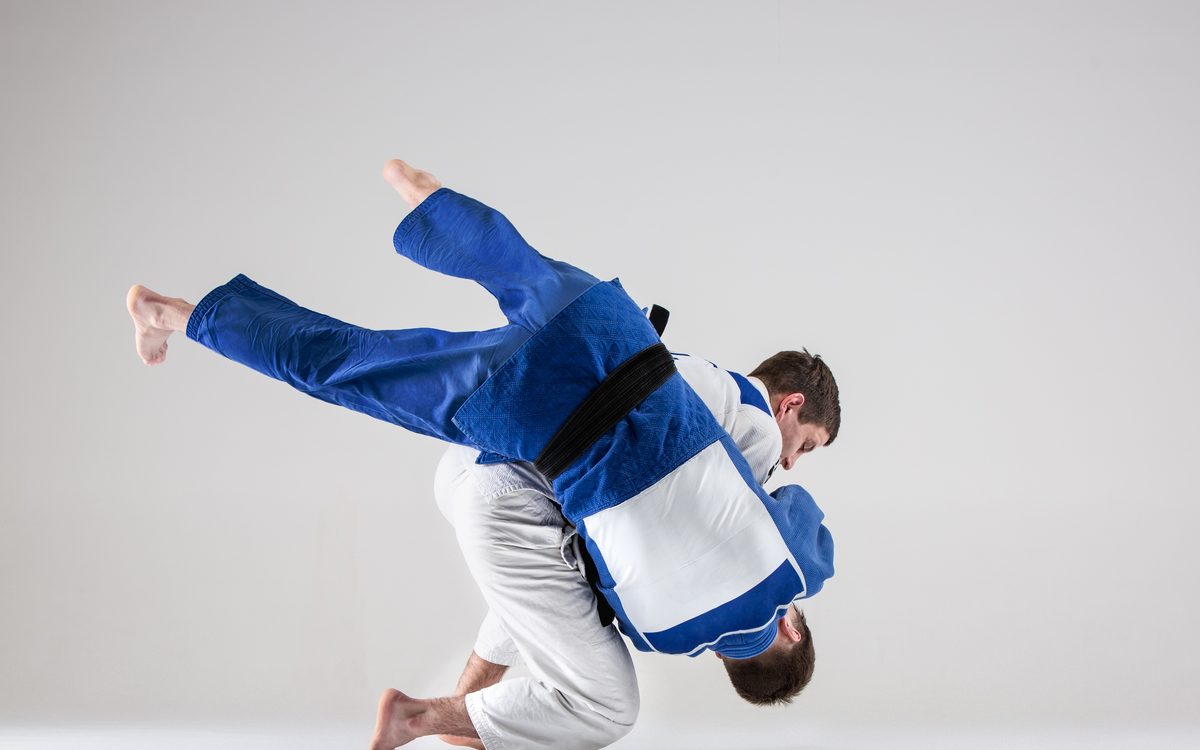
A new white belt is thrown for the first time, lands flat, and forgets to slap the mat. Nothing breaks, but the instructor stops the class and spends five minutes on the one thing every judoka does thousands of times: falling. Judo injury prevention is the set of habits around a judoka, falling skill, a warm-up, rules that protect the neck and knees, a training load that rises slowly, clean mats and honest tapping, that aim to lower the chance of getting hurt. They lower the odds; they do not remove them.
Quick answer: The best-supported steps for judoka are learning to fall before learning to throw, tapping early and releasing at once, training with partners of suitable size and experience, raising training load gradually, and keeping skin and mats clean. A published judo warm-up program, IPPON, did not show a statistically significant drop in injuries in a trial, so no routine is a guarantee. See a sports medicine doctor, physical therapist or athletic trainer for pain that persists, and call emergency services after a head impact with danger signs.
This page is about lowering risk. What injuries look like, and what is known about how often they happen, is on our judo injuries guide, so we do not repeat it here. For the sport as a whole, start at the judo hub.
Warm-up: what the published program includes
Judo has its own research-based warm-up. The IPPON program was developed for judo (BMJ Open Sport and Exercise Medicine, 2020) and contains 36 exercises aimed at the shoulder, knee and ankle. In a randomized trial of 269 judoka aged 12 and over (British Journal of Sports Medicine, 2023), injuries occurred in 23% of the group using the program and 28% of the comparison group. That difference was not statistically significant (odds ratio 0.72, 95% confidence interval 0.37 to 1.39), although all trainers and 70% of athletes judged the program successful. The honest reading is that IPPON is a sensible, judo-specific warm-up whose injury benefit is not proven. Ask your coach whether your club uses it or something similar, and use dynamic movement before hard practice.
Falling skill (ukemi)
A systematic review of breakfall mechanics (International Journal of Environmental Research and Public Health, 2022) found that well-executed breakfalls keep forces below injury thresholds, while direct contact of the back of the head with the mat is far worse, that novices and experienced judoka differ, and, in one study, that fatigue was linked to poorer breakfall skill. A Japanese study of catastrophic judo injuries from 2003 to 2010 (Kamitani and colleagues, American Journal of Sports Medicine, 2013) found 72 catastrophic injuries, 30 of them head injuries, and 27 of those 30 happened in people under 20 who were being thrown. Beginners fall in judo more than they throw, so classes that teach falling first and throw softly early are following the evidence rather than going slow.
- Tuck the chin so the head does not hit the mat, and slap out with the arm rather than bracing on it.
- Keep practicing breakfalls at every level, especially when tired.
- Tell the instructor if a fall hurt your neck, head or arm, even if you feel able to carry on.
Technique, rules and tapping
Many of the rules of the International Judo Federation (IJF), as published by British Judo in 2025, are injury prevention written down. Diving head-first can end a contest in disqualification, grabbing legs with the hands is penalized, armlocks are allowed only on the elbow, slamming is banned, and in cadet contests a competitor may not use the head to throw or defend. The IJF also states that a cadet who loses consciousness during a choke cannot continue. The American Academy of Pediatrics (AAP) clinical report on youth martial arts notes that judo chokes can cause loss of consciousness and that joint locks hold the joint in full extension.
So, tap early: tap the mat or your partner when you cannot escape, and release instantly when your partner taps. Tapping to the position, not to the pain, is common coaching advice rather than a research finding. The AAP recommends qualified instructors who understand a child’s limits for age and maturity, and delaying competition and contact until a child has competence in the basics.
Partners, sparring and load
Pairing by size, age and experience, and agreeing an intensity before randori, are common coaching practices that we could not tie to a judo study, so treat them as sensible habits. On load, the International Olympic Committee consensus statement on training load (Soligard and colleagues, British Journal of Sports Medicine, 2016) says that rapid increases in training load raise risk and that athletes need planned recovery. The AAP report found some evidence that children training more than three hours a week had higher injury risk, with more study needed. We found no source giving a safe weekly training time for adults. See our training page and recovery page.
Shoulders, knees and fingers
The American Academy of Orthopaedic Surgeons (AAOS) describes shoulder separation as typically caused by a fall directly onto the shoulder, and elbow dislocation as typically caused by a fall on an outstretched hand. Both are mechanisms that judo falls can produce, which is why breakfall technique and strength work for the shoulder girdle and trunk are part of prevention. Gripping also makes fingers vulnerable: AAOS describes “jersey finger”, a tendon pulled off the bone when a finger is caught in a jacket, as something that does not heal on its own because of the gap. A practical habit is keeping fingernails and toenails short, which the IJF rules require, and letting go of a grip that is being twisted rather than fighting it. Strength work for the shoulder, hip and trunk is described on our training page.
Mats, skin and hygiene
Skin infections such as ringworm and staph spread through contact and shared surfaces. The National Athletic Trainers’ Association (NATA) position statement on skin diseases advises showering after every practice, not sharing towels, bar soap or gear, laundering practice clothing after use, and having a clinician clear a lesion before returning. Mat sports have their own pattern: a 2022 review in the Italian Journal of Dermatology and Venereology covers tinea in wrestlers and judoka. Cover and report any suspicious spot, and keep your gi clean.
Protective equipment and its limits
Judo is practiced in a gi without helmets or pads. The IJF rules allow soft knee pads with no metal or rigid parts; those who use a mouthguard should ask their club first. The AAP found no evidence that headgear or mouthguards reduce concussion, noted that headgear can give a false sense of security, and said mouthguards do reduce dental injury in boxing. A mouthguard is for teeth and not a promise about the brain. For choices, see our judo gear page.
Weight classes
Rapid weight cutting is a risk factor for health, covered in nutrition and athlete health. Competing in a weight class that fits your natural size is part of prevention too.
What prevention cannot do, and when to see a professional
Nothing here prevents every injury. Training with tired muscles, a bad fall or an accident can happen to anyone. See a sports medicine doctor, physical therapist or athletic trainer if pain stays in one spot, shows at rest or at night, a joint feels unstable, a finger will not straighten, or you want a plan after an injury. After any head impact, use CDC HEADS UP: recognize the signs, remove the person from practice, and let a healthcare provider decide when to return; call 911 for danger signs such as repeated vomiting, a seizure, a worsening headache or loss of consciousness.
Frequently asked questions
Does a warm-up prevent judo injuries?
A warm-up is sensible, but the evidence is limited. In the IPPON trial of 269 judoka, injuries were 23% with the program and 28% without, a difference that was not statistically significant. Use it as good practice, not a guarantee.
Should kids wear a mouthguard for judo?
Ask the club. The AAP says mouthguards reduce dental injury (shown in boxing) but there is no evidence they reduce concussion. They are for teeth.
How do I protect my neck in judo?
Learn to tuck the chin when falling, avoid head-first dives and rules-banned actions, tap early, and train with a qualified instructor. Neck pain after a fall, or numbness or weakness in the arms or legs, needs urgent medical care.
Can I prevent ringworm from the mat?
You can lower the risk: shower after practice, do not share towels or gear, wash your gi, and report skin spots. NATA also advises that mats be disinfected on a schedule with an EPA-registered product, which is the club’s job.
Is judo safe for beginners?
Judo has real injury risk, and being thrown is built in. Learning breakfalls first, qualified instruction and gradual progress help. A sports medicine doctor can say whether it suits you.
Sources
- IPPON judo warm-up program development (PMID 33033621)
- IPPON randomized trial, Br J Sports Med 2023 (PMID 36717214)
- Breakfall biomechanics systematic review (PMID 35409940)
- Kamitani et al., catastrophic judo injuries in Japan (PMID 23765041)
- AAP: Youth Participation and Injury Risk in Martial Arts
- British Judo Contest Rules based on IJF rules (2025)
- IJF Sport and Organisation Rules (Jan 2025)
- IOC consensus on load (PMID 27535989)
- AAOS OrthoInfo: Shoulder Separation
- AAOS OrthoInfo: Elbow Dislocation
- AAOS OrthoInfo: Flexor Tendon Injuries
- NATA position statement: skin diseases
- Tinea in wrestlers and judokas (PMID 33913669)
- CDC HEADS UP
General information for education only, not medical advice. It does not replace a sports medicine doctor, physical therapist or athletic trainer who knows you. See how we work in our editorial policy, and return to the judo hub.