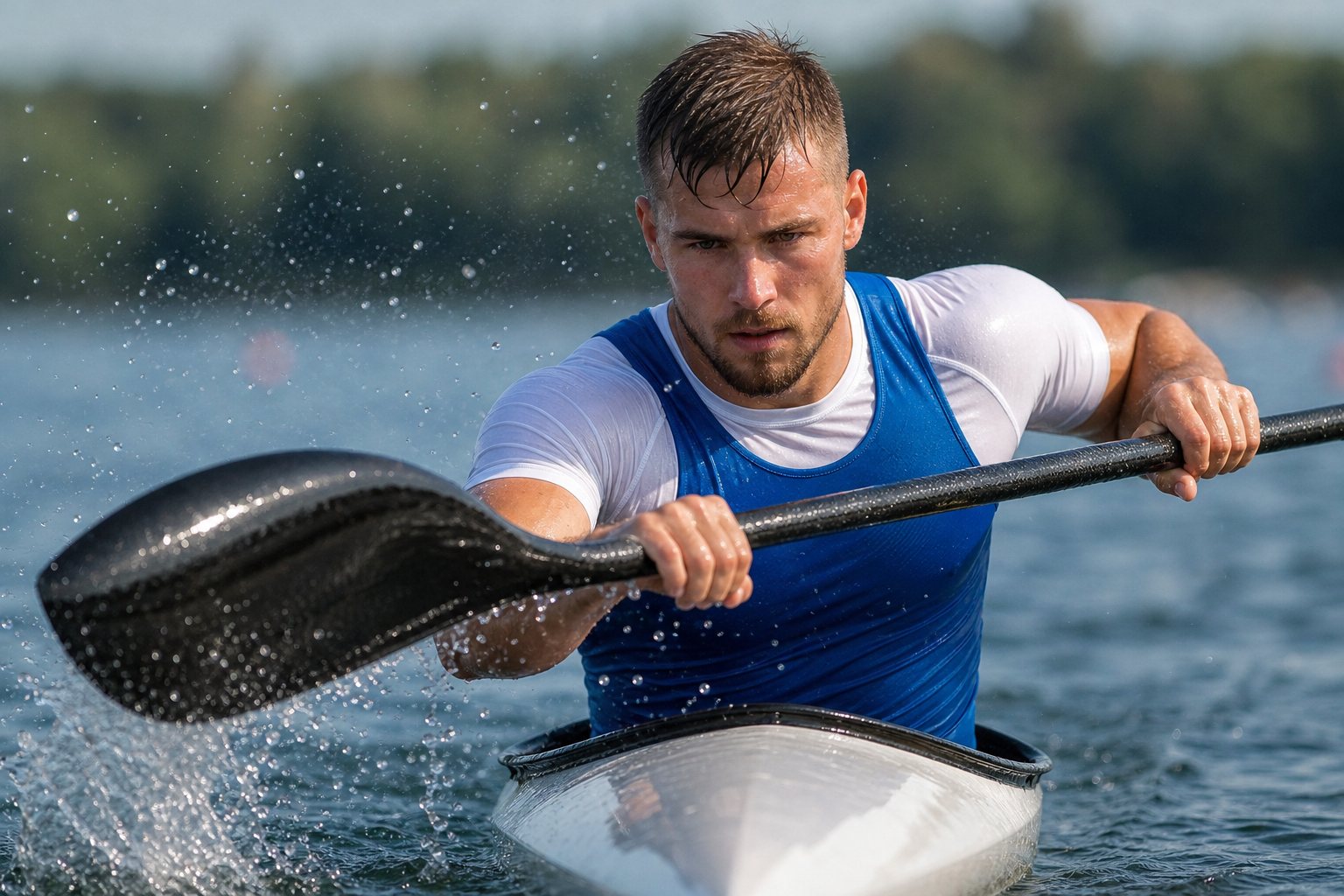
It is a cool morning at the dock, the water looks glassy, and a paddler is deciding whether to skip the warm-up because the session is only short sprints. Ten minutes later a shoulder that was never loosened is working at full effort. Para canoe injury prevention is the set of habits around a paddler, a proper warm-up, a boat and seat that fit, a gradual build in training load, a life jacket and a rescue plan, skin care and honest reporting of pain, that aim to lower the chance of getting hurt. They lower the odds. They cannot promise anything.
Quick answer: The best-supported steps are steady increases in training load, warming up and strength work for the shoulders and trunk, a fitted seat, a life jacket and a plan for capsizing, dressing for the water temperature, and checking skin and heat tolerance with your clinician. The evidence for Para sports is thin: a 2024 review found only 3 of 64 studies tested prevention measures (Sports Health). See a sports medicine doctor, physical therapist or athletic trainer if pain stays in one spot, shows up at rest or changes your stroke. Call emergency services after a head injury with danger signs or in a cold-water emergency.
General information, not medical advice. This page is about lowering risk. What injuries look like is on our Para canoe injuries guide, so we do not repeat it here. For the rules, see rules, and for the sport as a whole the Para canoe hub.
Warm up and load the shoulders
We did not find a published injury-prevention warm-up program tested in Para canoe, so there is no named routine to point to. The shoulder is the common thread in paddling injury research: an adolescent flat-water study of 140 Chinese athletes (Gao and colleagues 2025, Frontiers in Public Health) found the shoulder and lower back were the most injured sites. In a survey of 61 wheelchair rugby athletes (Rider and colleagues 2026, Assistive Technology), shoulder pain scores were lower in athletes who warmed up more often (r = -0.53) and who did more shoulder strength training (r = -0.34). These are correlations in a different sport, not proof, but they fit the common-sense advice to warm up the shoulders, trunk and arms before sprints and to ask a physical therapist to adapt a routine to your body.
Technique and the position of the shoulder
A case series of 57 shoulder injuries in paddlers (Holland and colleagues 2018, Clinical Journal of Sport Medicine) found the most common mechanism was preventing, going through or rolling after a capsize (26% of injuries), when the paddle often puts the shoulder in an abducted and externally rotated position. The American Canoe Association’s beginner’s guide gives a rule of thumb for canoeists: keep your hands in front of your body, and when you place a blade behind you, turn to look at it, so your shoulders rotate into a safe position. That guide was written for open canoeing, so ask your coach how it applies to a kayak or va’a seat that limits trunk motion.
Training load that grows slowly
Two IOC consensus statements on load in sport (Soligard and colleagues 2016; Schwellnus and colleagues 2016, British Journal of Sports Medicine) link rapid changes in load, congested calendars and poorly managed load with higher risk of injury, illness and overtraining. The statements recommend planning and monitoring of load. A 2026 study of 61 Para athletes (Madaleno and colleagues, BMJ Open Sport and Exercise Medicine) found high weekly stress and fatigue went with higher odds of gradual-onset injury the next week, and that daily self-reports may help spot the pattern. In adolescent canoe sprint athletes (Cassel and colleagues 2025, Sportverletz Sportschaden), overuse injuries outnumbered traumatic injuries roughly eight to one, and across canoe sprint, handball and triathlon injury incidence rose with age and training hours. We found no Para canoe load numbers, so we offer none.
Strength and conditioning
A 2019 randomized trial of a six-month trunk program in 103 young kayak-canoe athletes (Kiss and colleagues) reported better trunk strength, flexibility and posture in the program group than controls. Trunk strength also relates to class: in a 2026 study of 32 seated para-athletes (Lund Ohlsson and colleagues), higher trunk-hip muscle test scores went with greater trunk strength. Neither study measured injuries in Para canoe. Our training page covers the building blocks.
Water, cold, heat and sun
- Cold water. The National Weather Service defines cold water as 70 degrees Fahrenheit or lower, and warns that within 10 minutes you can lose muscle control. It advises wearing cold-water protection gear for the water temperature, not the air temperature.
- Heat. The IOC consensus statement on events in the heat (Racinais and colleagues 2023) says exertional heat stroke is preventable with the proper risk mitigation and medical response, and covers acclimation, hydration and clothing. A Paralympic review (Griggs and colleagues 2020) notes that impairment and class can raise heat strain and that cooling methods can help some athletes. Heat stroke care for Paralympic athletes follows the IOC principles of early recognition and rapid cooling, with some changes for autonomic dysfunction and handling (Hosokawa and colleagues 2022).
- Sun. Long hours on open water mean UV. The American Academy of Dermatology describes how to apply sunscreen; ask your clinician if your impairment changes how you handle heat or sensation on your skin.
Boat, seat, skin and safety equipment
The ICF’s 2022 Paracanoe rules show what matters on the water: boats must stay buoyant when full of water, any strapping that connects the athlete to the boat must be quick-release and demonstrable, athletes may need to prove capsize and self-escape by video or at the event, and a personal flotation device meeting at least ISO 12402-5 (level 50) is required unless the athlete signs a swimming waiver. In the US, look for a US Coast Guard-approved life jacket that fits. The Fletcher review (2021, Sports) notes that seat and grip configuration are performance and comfort factors in sitting sports. Seats and long hours also matter for the skin: a 2026 scoping review (Parker and colleagues, Australian Occupational Therapy Journal) found only ten sources on preventing and managing pressure injuries in disability sport, a field the authors described as still developing. Ask an occupational therapist or doctor about cushioning, skin checks and how long you can sit. The gear page covers equipment choice.
What prevention cannot do
A 2024 systematic review of Para sports health problems (Sports Health) found injury rates from 0 to 91 per 1,000 athlete days depending on sport and impairment, and only three of 64 studies tested whether preventive measures work. Capsizes, falls and illness can still happen. Safe paddling lowers risk and prepares you to handle it.
When to see a professional
- Pain that stays in one spot, wakes you at night or changes your stroke.
- Numbness, tingling, new weakness or swelling, or a shoulder that feels unstable after a capsize.
- A red area or open sore on skin where you sit, or new trouble with heat or blood pressure if you have a spinal cord injury.
- Any head injury: CDC HEADS UP lists danger signs such as repeated vomiting, seizures, worsening headache or one pupil larger than the other that need emergency care.
Para canoe injury prevention FAQs
Is there a Para canoe injury-prevention program?
We did not find one. The 2024 Para sport review found only three studies on preventive measures overall. Use general principles with a coach and clinician.
How do I protect my shoulders?
Warm up, build strength with professional guidance, add load gradually and report pain early. A case series of paddlers found capsizes are a common cause of serious shoulder injuries, so learn capsize recovery under supervision.
Do I really need a life jacket?
The 2022 ICF rules require a PFD that meets at least ISO 12402-5 (level 50) unless an athlete signs a swimming waiver. For training, follow your club and the USCG guidance.
What should I wear in cold water?
Dress for the water temperature, not the air temperature (National Weather Service). Ask your club what it requires and how it handles rescue.
Does warming up prevent injury?
No Para canoe study shows that. A survey of wheelchair rugby athletes linked more frequent warm-ups with lower shoulder pain scores, which is a correlation. Warming up is still sensible practice.
Sources
- Sports-related health problems in para-sports: systematic review with quality assessment, Sports Health 2024 (PubMed)
- Gao et al. 2025, injuries in elite adolescent flat-water kayak and canoe athletes, Front Public Health (PubMed)
- Rider JV et al. 2026, shoulder pain in wheelchair rugby athletes, Assistive Technology (DOI)
- Holland et al. 2018, shoulder injuries in canoeing and kayaking, Clin J Sport Med (PubMed)
- American Canoe Association: Beginner’s Guide (PDF)
- IOC consensus statement on load in sport and risk of injury, 2016 (PubMed); and risk of illness, 2016 (PubMed)
- Madaleno F et al. 2026, stress, sleep, fatigue and soreness in Para athletes (DOI)
- Cassel M et al. 2025, adolescent elite athletes in canoe sprint, handball and triathlon (PubMed)
- Kiss RM et al. 2019, trunk prevention program, randomized trial (PubMed)
- Lund Ohlsson M et al. 2026, isometric trunk strength in seated para-athletes (DOI)
- National Weather Service: hazards of cold water activities
- IOC consensus statement on sport events in the heat, 2023 (PubMed)
- Griggs et al. 2020, heat-related issues for Paralympic athletes (PubMed)
- Hosokawa et al. 2022, exertional heat stroke management for Paralympic athletes (PubMed)
- American Academy of Dermatology: how to apply sunscreen
- ICF Paracanoe Competition Rules 2022 (PDF)
- US Coast Guard: how to choose the right life jacket
- Fletcher et al. 2021, biomechanics in Paralympic sport (PubMed)
- Parker C et al. 2026, pressure injury prevention in disability sport, scoping review (DOI)
- CDC HEADS UP: signs and symptoms
General information for education only, not medical advice. It does not replace a sports medicine doctor, physical therapist, athletic trainer or a classifier who knows your impairment. See our editorial policy for how we research and write.