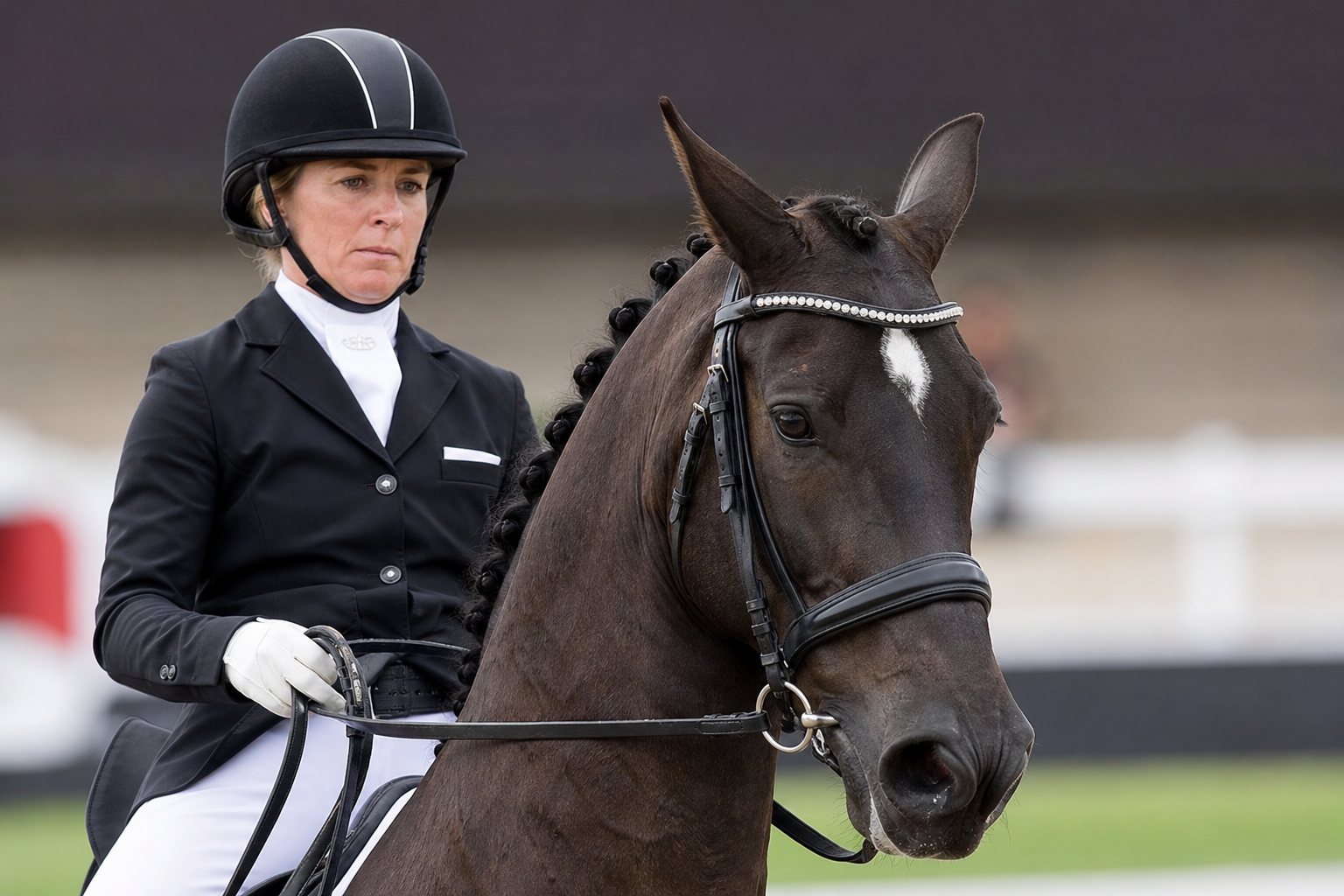
A show day can start at 5 a.m. with feeding horses and end at 7 p.m. with a drive home, and a rider’s own breakfast is often a granola bar eaten in the car. Nutrition for riders is about eating and drinking enough, at the right times, to support long days, balance and concentration, and to keep the body healthy over years. Para riders have extra things to think about, such as how an impairment changes energy needs, fluid balance and heat control. This page is general information; a registered dietitian who knows sport and your health history can personalise it. Recovery after riding is on our recovery page.
Quick answer: Eat regular meals with carbohydrate and protein, drink water through the day, and carry familiar snacks on show days. The rider-specific review by Best and colleagues (Nutrients, 2023) says riders are discouraged from missing meals and snacks. Supplements are optional, never replace food, and can carry anti-doping risk: choose third-party tested products and check with a doctor or dietitian first. See a doctor or dietitian if you have unplanned weight loss, missed periods, frequent illness or injury, or worry about food.
What the rider evidence says
Little nutrition research is about para dressage riders. The most useful source is a review of the physical demands of riding and nutrition recommendations for equestrian riders by Best and colleagues (Nutrients, 2023). It is about riders in general, and the authors say it is premature to comment on specific sports foods and supplements for equestrians and recommend a “food first approach, not a food only approach.” For para athletes, a study summary we found says no consensus nutrition statements exist, perhaps because needs vary with the nature of the impairment. Needs depend on body size, impairment, activity and medicines, so general ranges are a starting point.
Fuel for riding
The Best review gives daily carbohydrate ranges that scale with the riding load: 3 to 5 grams per kilogram of body weight on low days (recreational riding, lunging, active recovery), 5 to 7 g/kg for one or more horses in light to medium work, 7 to 10 g/kg for multiple horses in medium to heavy work or show jumping, and 10 g/kg or more for a full competitive load across several classes or days. Protein ranges from 1.2 to 2.2 g/kg a day in the review, spread across four to six meals or snacks of about 0.25 to 0.4 g/kg (25 to 40 g). Ask a dietitian whether those numbers suit you. Some people with a spinal cord injury or reduced activity may need different amounts, and we did not find a rider-specific para source.
Practical choices are plain: oats, bananas, toast, rice, yoghurt, eggs, nuts and sandwiches. Pack food that will not melt or spoil, and test new foods at home, not on show day. Nerves can reduce appetite, so small, frequent snacks usually work better than a big meal.
Hydration and heat
Hot arenas, dark show clothes and long days increase fluid needs. Sweating may be reduced or absent below a spinal cord lesion, which can raise body temperature faster. A 2021 systematic review of 32 studies in Frontiers in Physiology found that people with higher spinal cord lesions reached higher core and skin temperatures with a lower sweat rate and need special attention in temperate and hot conditions. Drinking water, using shade and cooling methods that your doctor agrees with are sensible. Do not rely on thirst alone, especially if your sensation is reduced. Electrolyte drinks may help in long, hot days; use the label and ask a clinician if you have high blood pressure or kidney disease.
Low energy availability and athlete health
Low energy availability (eating too little for the demands of training and daily life) can affect bone, hormones, immunity and mood. The Best review notes the historical pressure on riders to conform to an aesthetic and flags the potential for relative energy deficiency in sport (REDs) and disordered eating, and the IOC’s 2023 consensus statement describes REDs (Mountjoy and colleagues). Warning signs include constant tiredness, frequent illness or injury, missed periods, mood changes and anxiety around food. In a 2025 study of Paralympic basketball athletes, 57% had subclinical energy availability and 21.2% had low energy availability, according to the abstract, so this is not just a risk for riders without an impairment. If this sounds familiar, speak to a sports medicine doctor or dietitian, not a supplement shop.
The Best review also notes that female athletes have the highest risk of low iron and recommends at least annual monitoring, and that vitamin D depends on sunlight, which indoor training and covering clothing limit. Get blood tests and advice before taking either. Too much iron is harmful (NIH Office of Dietary Supplements).
Supplements: cautious basics
Food comes first. Supplements are optional and can affect health or testing. Our rules for supplement content follow these principles:
- Talk to a doctor or dietitian first, especially if you take medicines, have a spinal cord injury, are pregnant or have a heart, kidney or liver condition.
- Choose products that are third-party tested for sport, such as NSF Certified for Sport. USADA’s Supplement Connect says no supplement is risk-free and recommends this kind of certification.
- Follow the label. We do not give doses.
- Avoid stimulant-heavy or “proprietary blend” products; caffeine is not for everyone.
- Do not rely on products that promise to “boost” or “burn” anything.
The IOC consensus statement on dietary supplements (2018) and sport-nutrition position stands from ACSM and the ISSN are the standard references your dietitian will use. We do not recommend a particular product here.
Anti-doping awareness
The FEI is a WADA Code signatory, and its rules apply to riders at all levels of FEI competition, with in- and out-of-competition testing. Supplements can contain undeclared prohibited substances. If you take prescription medicine, ask your doctor about therapeutic use exemptions through your national anti-doping organisation. Para sport has its own rules too: inducing autonomic dysreflexia (“boosting”) is banned by the IPC, and it is a dangerous practice for people with spinal cord injury. Never do it.
Para equestrian nutrition FAQs
What should I eat before a show?
Choose familiar, easy-to-digest foods with carbohydrate, a little protein and not too much fat or fibre. Test them at home. A dietitian can tailor timing.
How much water should I drink?
There is no one number. Sip through the day and more in heat. If your impairment limits sweating or sensation, ask your doctor for a plan.
Do riders need supplements?
Not by default. The Best review says it is premature to recommend specific supplements for riders and favours a food-first approach.
What is RED-S?
Relative energy deficiency in sport: too little energy for training and health, which can affect bone, hormones and mood. See a sports medicine doctor or dietitian if you see the signs.
Are supplements safe for drug testing?
No supplement is risk-free. Third-party certification lowers risk but does not remove it.
Sources
- Best R, Williams JM, Pearce J., Nutrients 2023 (PubMed 38068833)
- IOC REDs consensus statement, Mountjoy et al. 2023 (PubMed 37752011)
- Subclinical energy availability in Paralympic basketball athletes (PubMed 40349068)
- Thermoregulatory responses in spinal cord injury, Front Physiol (PubMed 33868002)
- Electroceuticals for Paralympic athletes, Sports Med (PubMed 41082173)
- NIH ODS, Iron fact sheet
- USADA Supplement Connect
- FEI clean sport, human athlete anti-doping regulations
General information for education only, not medical or dietetic advice. Please see a sports medicine doctor or registered dietitian before changing your diet or taking supplements. How we write our pages is in our editorial policy. Next: recovery, mental training and the para equestrian hub.