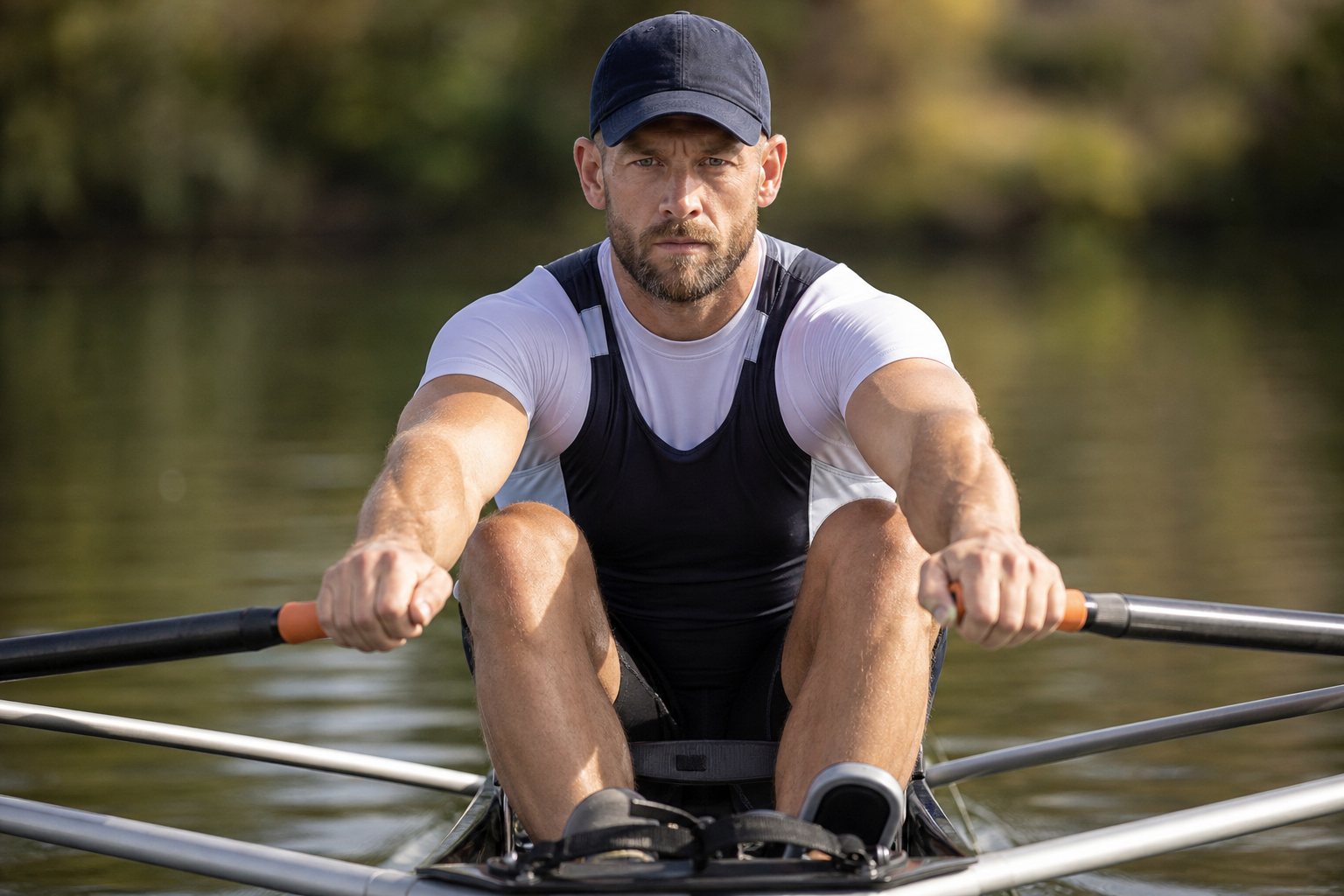
Quarter to six on a cold dock, the boat already on the water and a rower with a bottle in one hand and half a banana in the other, wondering whether that is enough for a ninety-minute row. Para rowing nutrition and athlete health is about eating and drinking enough to train, recover and stay healthy with an impairment that can change how the body uses energy, handles heat and sweats. It is also about what not to take: some supplements and practices are risky or banned.
Quick answer: Eat enough to cover training, drink before and during long sessions, and plan for heat if your impairment affects sweating. Research on Para athletes shows that under-fuelling and poor hydration are common in some Paralympic sports, so a registered dietitian who works with athletes is worth seeing. Supplements are optional, a few have good evidence, and any product should be third-party tested and checked against anti-doping rules. Seeing a doctor is the right step for unexplained fatigue, repeated illness or injury.
This page is general information, not medical or dietary advice. For how training is built see training, and for rest and sleep see recovery.
Fuelling training: what we know and do not know
Para rowing nutrition has barely been studied. The 2023 scoping review of Para-rowing found 17 studies and listed sports nutrition and doping among the overlooked topics. So the advice below draws on general sports nutrition and on research in other Paralympic sports. The joint position of the Academy of Nutrition and Dietetics, Dietitians of Canada and the American College of Sports Medicine says that well-chosen nutrition strategies improve performance and recovery, and that athletes should see a registered dietitian nutritionist for a personal plan.
Other Paralympic sports show what can go wrong. In a 2025 study of 32 Turkish male wheelchair basketball players, 81.8 percent had poor diet quality, average carbohydrate intake was 2.75 g per kg per day, 21.2 percent had low energy availability and a further 57.5 percent subclinical levels, with a negative energy balance on training days. That is a different sport, but it is a reminder that Para athletes can fall short. Energy needs depend on your body, impairment and training, so a dietitian should set targets; we do not give calorie numbers.
Hydration and heat
USRowing’s safety guidelines recommend drinking water before leaving the dock and often on the water, taking your own bottle in the boat, planning effort to the heat and humidity and avoiding mid-day rowing where possible. For athletes with spinal cord injury, a 2024 study of 15 elite athletes found sweating and temperature responses were impaired depending on the lesion, sweat rate was lower in tetraplegia, and six athletes were already dehydrated before exercise (urine specific gravity above 1.020) while five were dehydrated afterwards. A 2026 study of 66 elite Spanish wheelchair basketball players found hydration practices were suboptimal. The point for rowers: do not rely on thirst or sweat, plan fluids with your medical team, and know your heat-illness plan (see injury prevention). Do not self-restrict fluids to manage bladder routines without medical advice.
Low energy availability and RED-S
The IOC’s 2023 consensus statement describes Relative Energy Deficiency in Sport (REDs) as a syndrome of health and performance harm in female and male athletes who eat too little for what they burn. It notes that low carbohydrate availability, links with mental health and effects in males are better understood now, and it provides a clinical assessment tool for clinicians to use. Possible warning signs include persistent fatigue, repeated illness or injury, mood changes, and, in women, missed periods. Those signs have many causes; a doctor should assess them. Evidence for Para athletes is limited, which is a reason to ask for screening, not to assume you are safe. Mental health is covered on mental training.
Weight, boats and body composition
None of the five Paralympic Para rowing events listed on our rules page is split by body weight, so there is no weight-cutting target. Be wary of anyone who sets a body-weight goal for you: body composition measures can mislead with some impairments, and the IOC REDs statement includes guidance on safe body composition assessment. Any plan to change weight should come from a doctor or dietitian.
Supplements: be sceptical
The IOC’s 2018 consensus statement on dietary supplements says nutrition usually makes a small but valuable contribution to performance and supplements a minor one. Only a few, including caffeine, creatine, buffering agents and nitrate, have good evidence of benefit, and responses vary. Some can harm health or cause a doping violation through inadvertent contamination. It says a full nutritional assessment should come before any supplement decision, and that performance supplements should be trialled in training before racing.
- Third-party testing: prefer products with an NSF Certified for Sport or Informed Sport programme, and say plainly when a product is not certified. A label alone is not a guarantee; check the programme’s own database.
- Banned substances: Para rowing is a Paralympic sport under anti-doping rules. Check every product with your federation’s anti-doping contact or the official prohibited list.
- Caffeine: has good evidence in the IOC statement, but is not for everyone (sensitivity, heart conditions, pregnancy), and a 2026 meta-analysis found later-day caffeine linked with poorer sleep recovery. Follow the label and ask a doctor.
- Dose: we give no dosage advice beyond the product label; a sports dietitian can advise.
- Boosting: intentionally inducing autonomic dysreflexia to raise blood pressure is banned by the IPC, according to a 2026 review, and is a health risk. Never try it.
When to see a professional
See a doctor or sports dietitian if you are losing weight without trying, feel run down for weeks, get sick or injured often, have dizzy spells in training, or are worried about eating, food or body image. Those are health matters, not performance problems; see mental training for support options.
Para rowing nutrition and supplements FAQs
What should a Para rower eat before training?
Individual needs vary, so no single plan is sourced for Para rowing. Eating a meal or snack you tolerate before a long session and drinking beforehand is general practice; a registered dietitian can personalise it.
Do Para athletes need more fluid?
It depends on the impairment. Research on spinal cord injury found impaired sweating and many athletes already dehydrated before exercise, so plan hydration with your medical team.
What is RED-S?
Relative Energy Deficiency in Sport is a syndrome of health and performance problems from eating too little for training, described in the IOC’s 2023 consensus. A doctor assesses it.
Are supplements safe for Paralympic athletes?
Some have good evidence, but the IOC says only a few do and contamination can cause doping violations. Use third-party tested products, check anti-doping rules, and talk to a doctor or dietitian.
Is boosting allowed?
No. The IPC bans deliberately inducing autonomic dysreflexia, and it carries real health risks.
Sources
- Healthcare 2023: scoping review of Para-rowing (PMID 36981506)
- Academy of Nutrition and Dietetics, Dietitians of Canada and ACSM: nutrition and athletic performance (PMID 26920240)
- IOC consensus statement: dietary supplements and the high-performance athlete (PMID 29540367)
- IOC 2023 consensus statement on REDs (PMID 37752011)
- BMC Sports Sci Med Rehabil 2025: energy availability in Paralympic basketball athletes (PMID 40349068)
- PeerJ 2026: diet and hydration in elite wheelchair basketball players (PMID 42763669)
- Sweat in elite athletes with SCI, 2024 (PMID 38535744)
- USRowing Safety Guidelines (Dec 2022)
- Sports Medicine 2026: electroceuticals and boosting in Paralympic sport (PMID 41082173)
- Frontiers in Physiology 2026: caffeine and post-exercise recovery (PMID 42823978)
General information for education only, not medical advice, and not a substitute for care from a sports medicine doctor, physical therapist, athletic trainer or your classification and coaching team. See how we write and check our pages in our editorial policy.