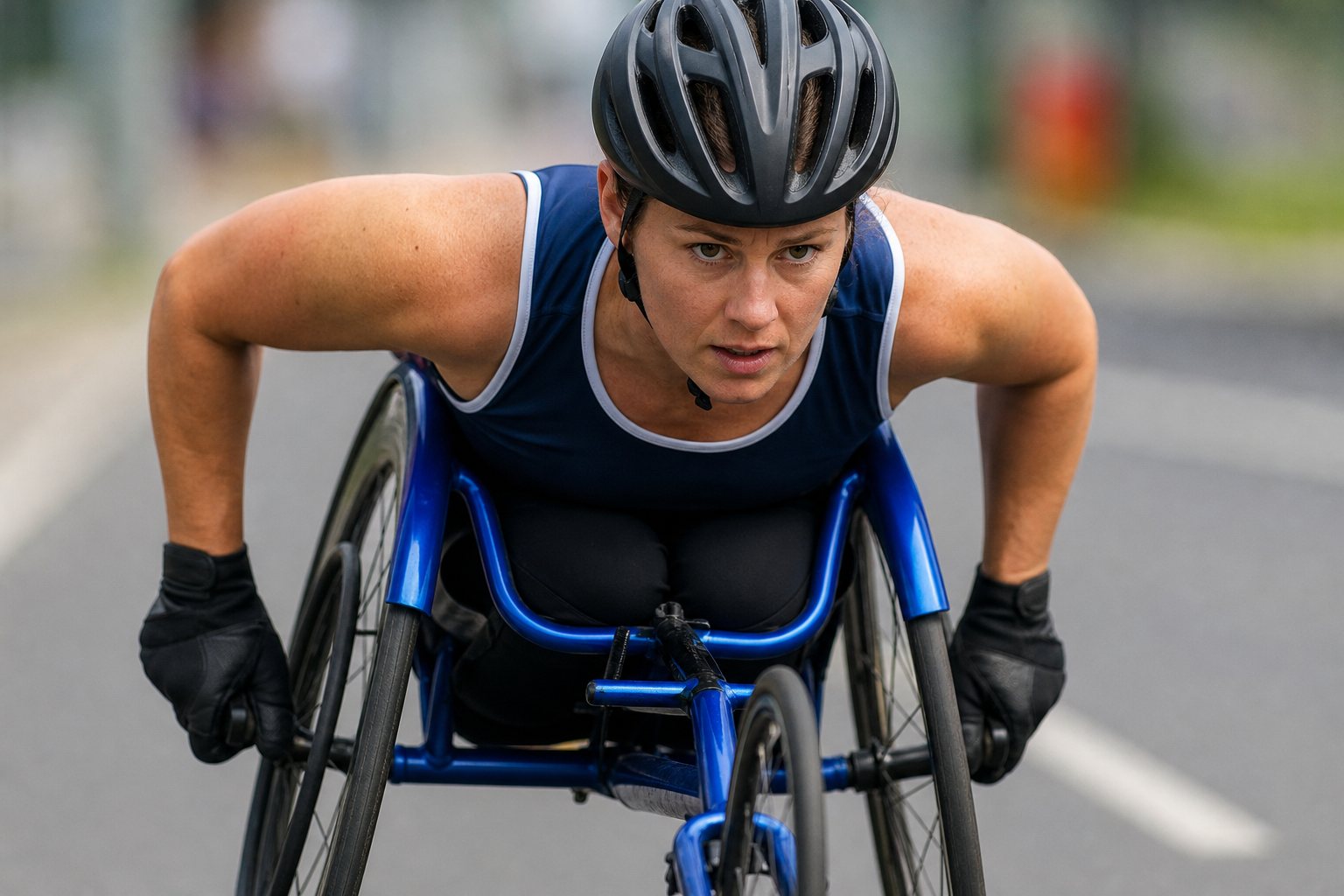
The finish-line photo is taken, the handcycle is back on the rack, and the real work of a race weekend starts: eating, drinking, checking skin, and getting to bed in an unfamiliar room. Recovery for Para triathletes is everything that lets training stick, including sleep, load management, mobility work and skin and equipment care. It is also the part of the sport with the least Para-specific research, so this page is honest about what is known, what is general practice, and where evidence is weak.
Quick answer: Sleep and a sensible training load are the best-supported recovery tools, and research on Para athletes shows sleep problems are common. Evidence for specific recovery gadgets and treatments in Para triathletes is limited, so treat them as optional extras. Soreness that fades in a day or two is usual after hard training; pain that stays in one place, shows up at rest, or comes with skin changes needs a professional. See a sports medicine doctor, physical therapist or athletic trainer, and take recovery plans that involve heat, cold or compression to your own doctor first.
General information, not medical advice. For injury detail see the injuries page; for the training plan, the training page. Back to the Para triathlon hub.
Sleep
Sleep research in Para athletes is small but consistent in one respect: problems are common. A narrative review by Roberts and colleagues (2021) around the Tokyo Paralympics says Paralympic athletes may be predisposed to a greater risk of poor sleep because of the complexities of some impairment types, and that research and evidence-based practice on elite Paralympic sleep are limited. In a survey of 52 Israeli Para athletes (Bachar and colleagues, 2022), 33 percent reported moderate to excessive daytime sleepiness and 46 percent did not train at times matching their chronotype. A Brazilian survey of 98 Paralympic athletes before Tokyo found sleep hygiene knowledge was low, with 57 percent correct answers. These are cross-sectional surveys from small samples, so they show a pattern and not a cause.
General sleep habits (not Para-specific) include a regular schedule, a dark and cool room, limiting caffeine late in the day, and winding down before bed. If pain, spasms, bladder or bowel routines, or a medical condition disturb your sleep, tell your doctor. A longitudinal study of athletes with disabilities around Tokyo (Urbanski and colleagues, 2025) linked poorer sleep to higher stress. When you travel for a race, a stable bedtime and morning light exposure are common practice, but we found no Para-triathlon study that tested a travel plan.
Load management
Recovery starts with training you can absorb. The one detailed example we found, a case report of a wheelchair triathlete with spinal cord injury, saw annual training load rise from 414 to 604 hours over two years, with camps the heaviest periods and physical stress noted; the authors conclude that careful prescription and monitoring are needed. In practice that means a rest day each week, a lighter week every few weeks, and listening to early warning signs such as unusual fatigue, mood changes, or nagging aches. These habits are general endurance practice.
Mobility and flexibility
We found no trial testing mobility programs in Para triathletes, so this is general practice. Many wheelchair athletes work on shoulder, chest and upper-back mobility and trunk control, and many standing athletes work on hips and the side opposite a prosthesis. Short, gentle sessions that do not provoke pain are a common approach. Ask a physical therapist who knows your impairment to choose movements, because range, tone and sensation vary widely between classes.
Heat, cooling and fluid after racing
The Gatorade Sports Science Institute (Goosey-Tolfrey and O’Brien, 2024) says athletes with spinal cord injury have impaired sweating below the injury, and may not feel heat in paralyzed limbs, so heat stress can go unnoticed. It describes pre-cooling (ice vests, ice slurry, cold water immersion) as more effective than cooling during exercise, and water spray with fans as a way to mimic sweating. Hydration is harder to judge because of reduced thirst and blunted thermal sensation, and some medicines, such as antispasmodics and diuretics, can affect sweating or fluid balance. After a hot race, cool down gradually, take in fluid in small amounts, and follow your own team doctor’s plan. See the nutrition page.
Recovery methods: what the evidence says
Massage guns, compression boots, cold plunges, saunas and similar tools are popular, but we found no Para-triathlon study that tests them, and evidence in the wider athlete population varies by method. Our approach: rely on sleep, food and load first, and treat gadgets as optional comforts. For athletes with spinal cord injury, reduced sensation can make hot or cold exposure and pressure from devices harder to judge, which is a general caution rather than a tested finding, so ask your doctor before trying one. For tools in general, see our recovery tools guide.
Skin, equipment and pressure
Recovery includes your skin. A 2026 scoping review of pressure injury prevention in disability sport found only ten sources, with little sport-specific evidence. General practice is to take a quick look at skin after long sessions, dry the seat and socket, change out of wet kit promptly, and tell a clinician about any red patch that does not fade or any broken skin. Clean and check equipment after racing, particularly wheelchair and handcycle parts that carry load.
Soreness or injury?
- Usually soreness: a dull, widespread ache in the muscles worked, easing over a day or two and improving with easy movement. This description is general sports practice.
- Possible injury: sharp or focal pain, pain at rest or at night, swelling, numbness or weakness, pain that changes how you move or push, or skin changes. Stop the activity and see a clinician.
- Emergency: head injury danger signs, chest pain or breathing difficulty, and, for athletes at risk of autonomic dysreflexia, sudden severe headache with flushing or very high blood pressure. Call emergency services.
For injury patterns and when to seek help, see Para triathlon injuries. Related: Para swimming and triathlon.
Para triathlon recovery FAQs
How much sleep do Para triathletes need?
We found no Para-triathlon sleep recommendation. Surveys show sleep problems are common in Para athletes, so ask your doctor or a sleep specialist if you are often sleepy or sleep badly.
Should I take a rest day after a race?
Many coaches schedule easier days after a major race. It is general practice, not a Para-specific finding. Follow your coach’s plan.
Do ice vests and cold baths help recovery?
Pre-cooling is described by the GSSI as more effective than cooling during exercise for managing heat strain in athletes with spinal cord injury. For recovery after exercise we found no Para-triathlon studies. Ask your doctor first, because sensation may be reduced.
Is soreness the same as an injury?
No. Soreness is a dull ache that fades within a day or two. Sharp or focal pain, pain at rest, or skin changes need a professional opinion.
Do recovery gadgets work for Para athletes?
Evidence is limited. Rely on sleep, food and sensible load first.
Sources
- Roberts et al., sleep in Paralympic athletes, J Sports Med Phys Fitness 2021
- Bachar et al., Sleep habits, quality and chronotype of Paralympic athletes (Eur J Adapt Phys Act 2022)
- Sleep and stress in athletes with disabilities around Tokyo 2020 (Urbanski et al., Sci Rep 2025)
- Knowledge about sleep hygiene of Paralympic athletes, Tokyo 2020 (Brazil)
- GSSI, Thermoregulatory challenges in para sport (SSE 259)
- Quittmann et al., wheelchair triathlete case report (2022)
- Pressure injury in disability sport: scoping review (2026)
- Autonomic dysreflexia following spinal cord injury (PubMed)
- CDC HEADS UP: respond to a concussion
General information for education only, not medical advice. It does not replace a visit with a doctor, physical therapist or athletic trainer. See how we write and check our pages in our editorial policy.