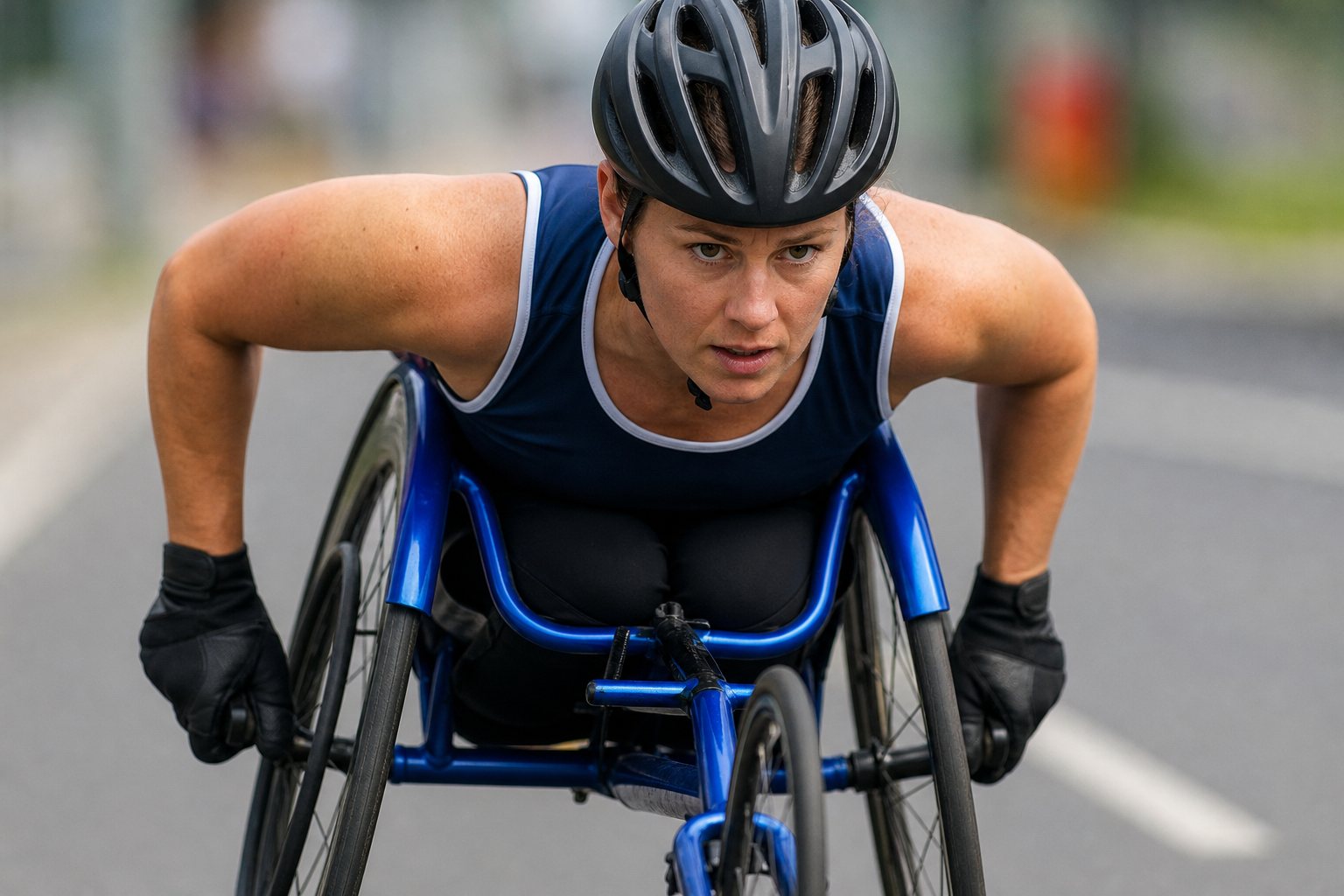
A PTWC athlete sits in the shade before a hot sprint race, sipping a bottle she has practised with, and she has already planned how much to drink because her thirst cues are not a reliable guide. Nutrition and athlete health for Para triathletes covers fuel, fluids, energy availability, supplements and anti-doping awareness. It is a topic where general sports nutrition rules apply, but impairments, medicines and heat strain change the details, and the published research for Para athletes is smaller than for able-bodied athletes.
Quick answer: Fuel the training you do, drink with a plan if thirst is not a reliable cue, and treat heat as a health risk, especially after spinal cord injury. Research on low energy availability in Para athletes is limited, and standard tools do not fit every impairment, so see a sports dietitian or doctor who knows Para athletes. Supplements are a small part of nutrition: the IOC says only a few have good evidence, and contamination can cause an anti-doping violation. Choose third-party tested products and check with your doctor and anti-doping organization first.
General information, not medical advice and not a diet plan. For how heat and training load fit together see the training page and the recovery page. Back to the Para triathlon hub. There are no weight classes in Para triathlon, so weight-class cutting is not a topic here.
Fuel for three sports
The race is a sprint-distance format, so for most athletes the focus is on eating enough through training and arriving at the start well fuelled and hydrated. The American College of Sports Medicine joint position on nutrition and athletic performance (2016) is the standard general reference. It covers adequate energy, carbohydrate, protein and fluid for athletes, but it is not Para-specific. A 2025 scoping review in Frontiers in Nutrition (Ghazzawi and colleagues, 56 studies) says energy needs vary with each athlete’s disability and sport, and it recommends close monitoring of micronutrient supplement intake. A narrative review of nutrition for Para cyclists (Flueck, 2021) is the closest sport-specific resource for handcyclists and tandem riders. Individual numbers are best set by a sports dietitian, because spinal cord injury, limb loss and neurological conditions change energy use.
Energy availability and RED-S
Relative energy deficiency in sport (RED-S, or REDs) is a state in which low energy availability affects health and performance. The IOC 2023 consensus statement (Mountjoy and colleagues) is the main reference for able-bodied athletes. For Para athletes, Jonvik, Vardardottir and Broad (2022) write that the incidence of low energy availability in Paralympic athletes is relatively unknown, that there are legitimate concerns they may be at even higher risk, and that assessment tools are hard to apply because data on exercise energy expenditure across impairments are lacking. They also note that for several RED-S signs it is hard to tell whether they stem from low energy availability or from the impairment and medical history. That uncertainty is a reason to see a clinician, not a reason to ignore the topic. Warning signs such as persistent fatigue, frequent illness or injury, missed periods, mood changes or an unhealthy focus on food or weight deserve a professional conversation. Mental health and eating concerns are also covered on the mental training page.
Hydration and heat
The Gatorade Sports Science Institute (Goosey-Tolfrey and O’Brien, 2024) says outdoor endurance events such as paratriathlon carry high heat-strain risk, and athletes with spinal cord injury may sweat less below the injury. It also notes that athletes with high-level quadriplegia may drink more during exercise but sweat less, risking weight gain or low blood sodium; thirst and thermal sensation can be blunted, so hydration status is harder to judge; and medicines such as antispasmodics and diuretics can affect sweating and fluid balance. Its practical advice includes frequent small sips and cool or cold fluids, and a 2020 review by Pritchett and colleagues concludes fluid and cooling plans should be individualized to the athlete and impairment. In a study of 28 Para triathletes in about 33 degrees C heat, athletes wearing wetsuits had higher core temperature during the swim. Build a plan with your team doctor and practise it in training. The IPC bans deliberately inducing autonomic dysreflexia (boosting), which is a safety issue as well as a rule.
Race-day fueling
General practice, not a Para-specific protocol: practise every drink, gel or bar in training so nothing is new on race day; know where you can take fluids on the bike (a handcycle may have bottle placement limits) and in the chair; and plan for what you can reach and open with your equipment. Gut problems and gastrointestinal illness are among the commonly reported illnesses in Para athletes (IPC), so keep race-week food simple and familiar. Neurogenic bowel and bladder routines may affect timing and choices; ask your doctor and dietitian.
Supplements: a small part of nutrition
The 2018 IOC consensus statement on dietary supplements (Maughan, Burke and colleagues) says nutrition makes a modest but potentially valuable contribution to elite performance and supplements add only a minor part; only a few products, including caffeine, creatine, specific buffering agents and nitrate, have good evidence; responses vary between individuals; a nutritional assessment should come first; products should be trialled in training; and unintentional intake of banned substances through supplements is a known risk. It strongly recommends expert advice before starting. We do not give doses: follow the label and your doctor.
- Choose third-party tested products: programs such as NSF Certified for Sport and Informed Sport test for banned substances. A maker saying “clean” is not a certification.
- Banned-substance awareness: USADA says Therapeutic Use Exemptions can be granted for medicines but not for dietary supplements, and it offers a Supplement Connect resource. Para athletes are subject to anti-doping rules, so check every product with your national anti-doping organization.
- Medicines: many Para athletes take prescribed medicines. Ask your doctor and anti-doping organization whether a TUE is needed.
- Check with a doctor if you have a heart condition, are pregnant, or take medication, because caffeine and some other products do not suit everyone.
- A 2025 review of Para athletes notes micronutrient supplementation should be monitored closely; do not start a multivitamin or iron without a clinician’s advice.
For anti-doping basics in the general sport, see our triathlon guide and the gear page for bottles and belts.
Para triathlon nutrition and health FAQs
Do Para triathletes have special nutrition needs?
Energy needs vary by impairment and sport, according to a 2025 scoping review. A sports dietitian who knows Para athletes can set individual targets.
Is RED-S a concern for Para athletes?
Probably, but the incidence is relatively unknown and the assessment tools are hard to apply, according to a 2022 narrative review. Talk to a clinician if you notice warning signs.
How should I hydrate with a spinal cord injury?
Frequent small sips and a plan with your medical team, according to the GSSI. Thirst and thermal sensation can be blunted, so do not rely on feeling thirsty.
Which supplements have good evidence?
The IOC says only a few, including caffeine, creatine, certain buffering agents and nitrate, and even those vary between people. Talk to a doctor or dietitian first.
How do I avoid an anti-doping violation from a supplement?
Choose third-party tested products, check ingredients with your anti-doping organization, and remember a TUE cannot be issued for a dietary supplement (USADA).
Sources
- Ghazzawi et al., Tailored nutrition strategies for Paralympic athletes, Front Nutr 2025
- Jonvik, Vardardottir, Broad, How do we assess energy availability and RED-S risk factors in Para athletes? (Nutrients 2022, PMID 35268044)
- Flueck, Nutritional considerations for Para-cycling athletes, Sports 2021
- GSSI, Thermoregulatory challenges in para sport (SSE 259)
- IOC consensus statement: dietary supplements and the high-performance athlete (2018)
- IOC consensus statement on Relative Energy Deficiency in Sport (REDs) 2023 (PMID 37752011)
- ACSM position stand: nutrition and athletic performance (2016)
- USADA: Therapeutic Use Exemptions and Supplement Connect
- IPC boosting ban (PMID 41082173)
- IPC: Injury and illness surveillance
General information for education only, not medical advice. It does not replace a visit with a doctor, physical therapist or athletic trainer. See how we write and check our pages in our editorial policy.