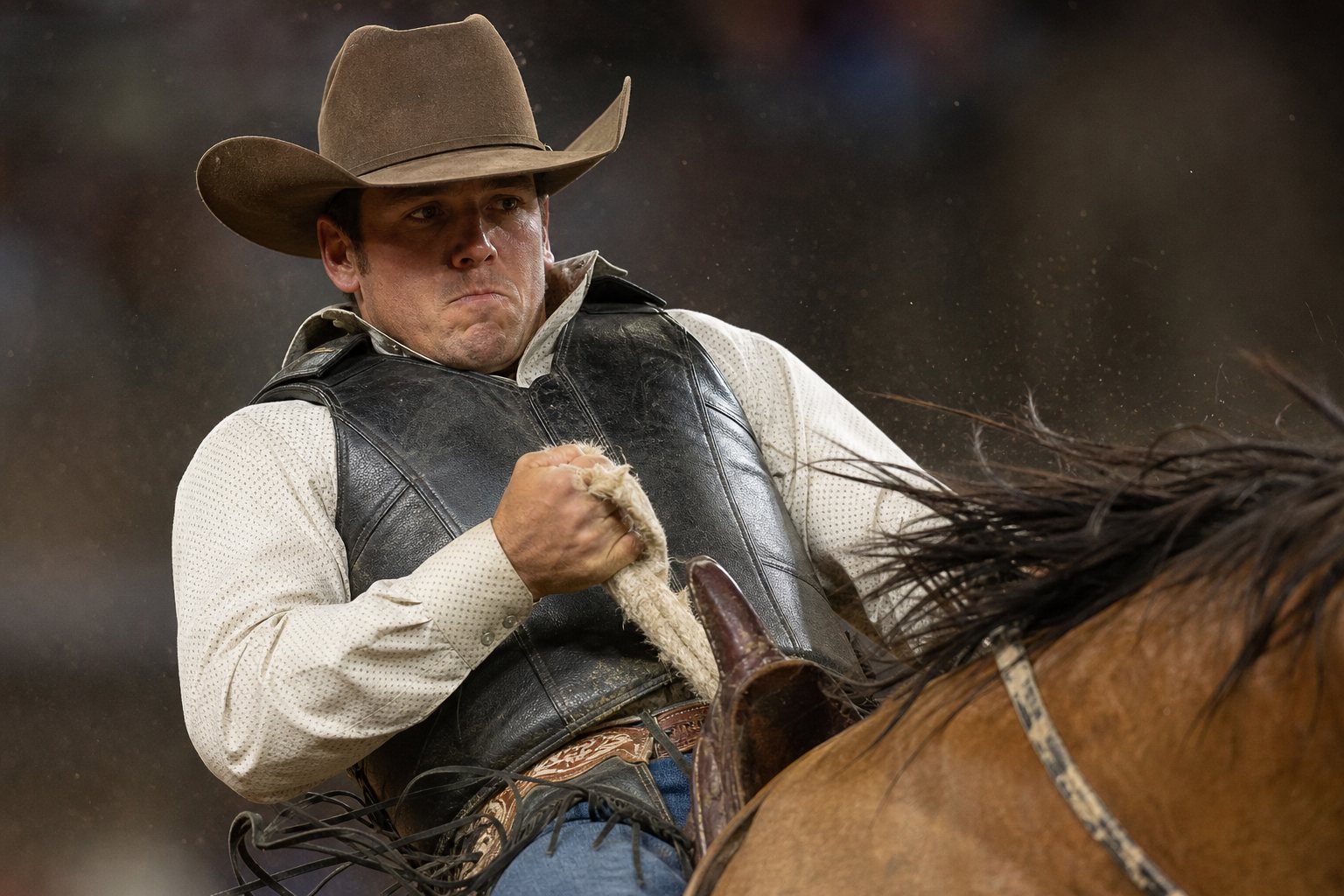
The ride ends at eight seconds, but the part that often hurts is what comes next: the dismount. A bull rider lets go, lands on one boot, and the arena dirt arrives fast. Rodeo injury prevention is the set of habits around that moment: a proper warm-up, sound technique, strength where the body takes the load, safe stock and chutes, sensible protective gear, and honest reporting of pain. These steps can lower risk. Nothing in rodeo can remove it.
Quick answer: Evidence is thin: no randomized trial of any rodeo prevention step exists in the reviews we read, so these are best-supported habits, not guarantees. A 2020 hip-injury study found athletes were most often hurt on the dismount and recommended padding, balance (proprioceptive) work and eccentric strength training. See a sports medicine doctor, physical therapist or athletic trainer if pain stays in one spot, wakes you at night or changes how you ride, and call emergency services after a head injury with danger signs.
General information, not medical advice. What each injury looks like is on our rodeo injuries guide, so we do not repeat it here.
Warm up like it counts
We found no published, tested warm-up program for rodeo athletes. General practice from team and youth sports (for example the American Academy of Pediatrics’ HealthyChildren.org advice) is to warm up with movement-based dynamic stretches and keep long static stretching for afterward. A reasonable rodeo version is five to ten minutes of easy movement, then hips, trunk and shoulders, then neck mobility and light jumps or lunges, then easy reps of your event. That is general coaching practice, not a rodeo study.
Technique and judgement
Meyers and Laurent (Sports Medicine, 2010) report that several studies link trauma in rodeo to poor technique, inexperience and poor judgement. Their review also says most injuries involve animal contact. Practical points: progress to bigger stock and harder events with a coach who is watching, choose rodeos and stock you are ready for, and treat the dismount as a skill to practice. In the Justin Sportsmedicine Team data (Sinclair Elder and Tincknell, Orthopaedic Journal of Sports Medicine, 2020), 36.1% of hip injuries happened during the dismount and 36.9% involved contact with the ground.
Strength, balance and load
- Strength where it counts. Oranchuk and colleagues (2023) tested 43 male rodeo athletes and suggested riders train hip and neck strength and rotational power. Whether that lowers injuries has not been tested.
- Balance and eccentric work. The 2020 hip study authors recommend padding, proprioceptive training and eccentric strength training as measures to reduce hip injuries.
- Rest. Meyers and Laurent warn about overtraining from overuse and minimal recovery. The American Academy of Pediatrics (Brenner, 2016) advises youth athletes 1 to 2 days off a week from their main sport and about 3 months a year away in blocks of a month.
- Fatigue. The same review lists fatigue, age and experience among factors in injury. Skip a hard ride when you are exhausted or sick.
Chutes, arenas and stock
The Sports Medicine review says guidelines requiring padding of chutes, gates or equipment essential to performance may avert trauma. In practice, check the chute latch, arena footing and the pickup riders before you ride, and ask the event medical staff where they are. At pro rodeos and WPRA events, the Justin Sportsmedicine Team provides free on-site care to members, per Justin Boots; amateur and youth rodeos may not have that, so ask your association.
Protective gear: what the evidence says
Rodeo protective equipment is gaining popularity but, per the 2010 review, “has not been thoroughly studied.” Here is what the sources say, without overstating it:
- A 10-year Kansas trauma-center series (Seifert and colleagues, 2022) could document gear in only nine of 70 patients; the authors call claims that vests reduce injury “largely unsupported” and say effectiveness remains controversial, while citing earlier research that helmets reduce head injury rates.
- A survey of 71 NIRA members (Miller and colleagues, 2023) found roughstock events and wearing protective equipment both associated with higher injury risk. The authors do not say gear causes injury; riders in the riskiest events may simply be the ones wearing it.
- PBR (a bull riding league) made vests mandatory in 1996 and full helmets for riders born on or after October 15, 1994 (search summaries of PBR pages). We found no single certification standard for rodeo vests or helmets.
Youth and amateur associations differ: some require helmet, mouthpiece and vest (a search summary of NHSRA ground rules), but we could not read the PDF, so check your association’s current rules. Gear details are on our rodeo gear page.
What prevention cannot do
The Box 2024 review (Orthopaedic Journal of Sports Medicine) of 23 studies and 2,105 athletes found injury rates between 4.2 and 19.1 per 1,000 competition exposures, and concussion in up to 15.3% of injuries across all events. Warm-ups, gear and strength work are sensible, but this level of animal contact means injuries will still happen. The aim is fewer, milder injuries and better care when one occurs.
When to see a professional
- Pain that stays in one spot, wakes you at night, swells, or changes how you ride or rope.
- Any head blow followed by headache, confusion, nausea, vision changes or loss of consciousness: stop and be evaluated (see CDC HEADS UP).
- Numbness, weakness, neck pain after a fall, or a deformed limb: emergency care.
Related: rodeo training, recovery and the rodeo hub.
Rodeo injury prevention FAQs
Does a protective vest prevent rodeo injuries?
The evidence is not settled. A trauma-center series called vest effectiveness controversial, and a college survey found gear associated with higher injury, which probably reflects who wears it. Follow your association’s rules and talk with an athletic trainer.
Should rodeo riders wear helmets?
Rules differ by association. PBR requires helmets for younger riders, and earlier research cited by a trauma-center study suggests helmets reduce head injury rates. We found no one rodeo helmet standard.
When do most rodeo injuries happen?
Per a 2022 college study (Watts and colleagues, Clinical Journal of Sport Medicine), the rate was 10.98 per 1,000 athlete exposures in competition and 3.09 in practice, yet 62.2% of the injuries reported were in practice.
How can I protect my hips and neck?
One study suggests hip and neck strength and rotational power for riders; another recommends padding, balance and eccentric work for hips. Ask a physical therapist to adapt it to you.
Is rodeo safe for kids?
It carries real injury risk. A US emergency-room analysis of ages 13 to 19 (Forrester 2021) estimated about 17,363 rodeo injuries from 2000 to 2019 and found fractures in 22.8% and concussions in 8.0% of cases. Coaching, age-appropriate events and required gear matter.
Sources
- Meyers MC, Laurent CM. The rodeo athlete: injuries, part II. Sports Med 2010
- Sinclair Elder AJ, Tincknell R. Hip injuries in professional rodeo. Orthop J Sports Med 2020
- Box MW et al. Characteristics of rodeo injuries and suggestions for prevention: systematic review. Orthop J Sports Med 2024
- Seifert CL et al. Rodeo trauma: outcome data from 10 years. Kans J Med 2022
- Miller JJ et al. Injury and exercise in collegiate rodeo athletes. S D Med 2023
- Watts M et al. Characteristics of injury in collegiate rodeo. Clin J Sport Med 2022
- Forrester MB. Rodeo-related injuries among adolescents. J Emerg Med 2021
- Oranchuk DJ et al. J Strength Cond Res 2023
- AAP Brenner 2016 (overuse in youth)
- PBR 101
- Justin Sportsmedicine Team
- CDC HEADS UP: signs and symptoms
General information for education only, not medical advice. It cannot replace a sports medicine doctor, physical therapist or athletic trainer who knows you. Read how we work in our editorial policy.