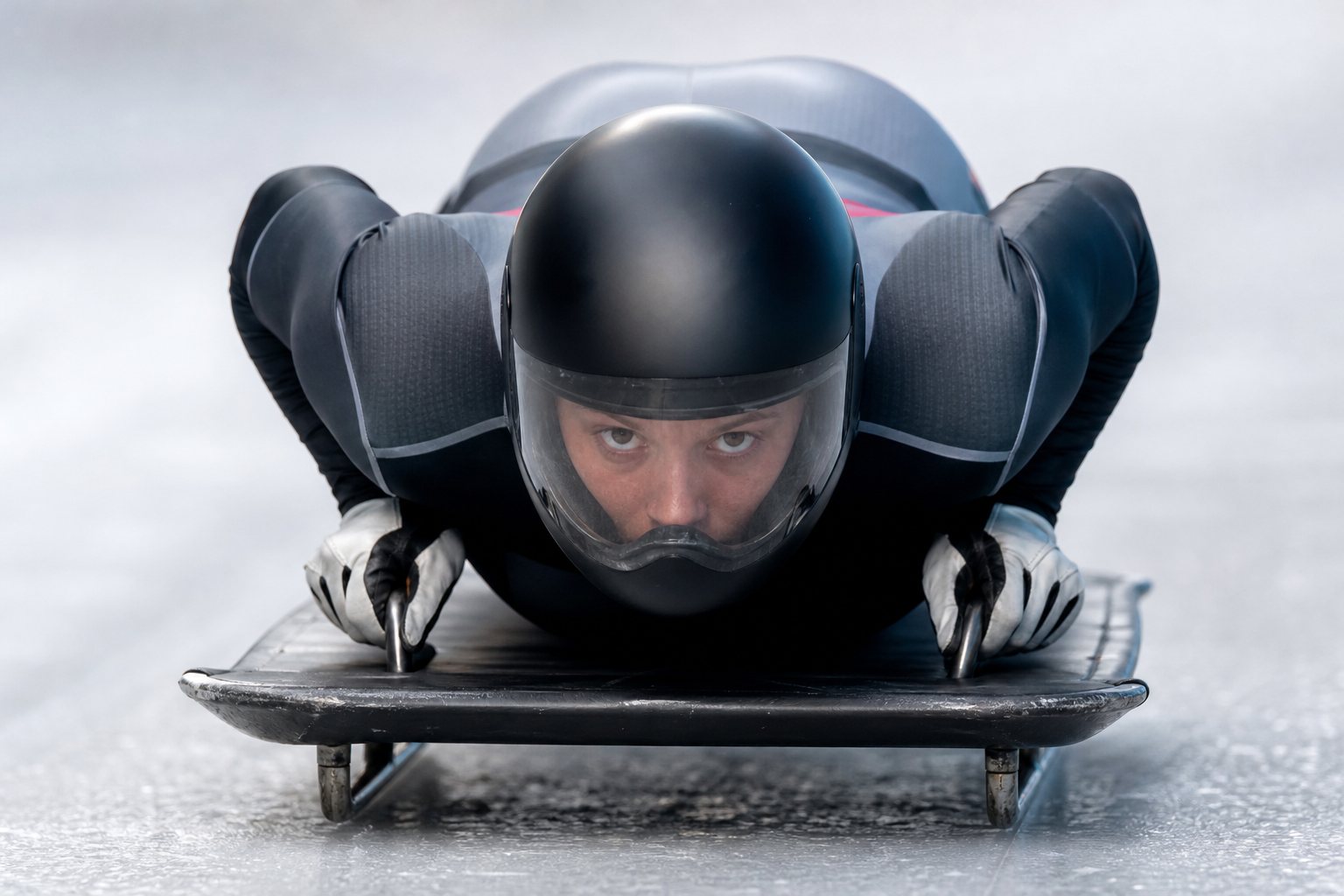
The hotel room is dark, and a skeleton athlete is staring at the ceiling the night before a race. The legs are heavy from a week of starts, the neck is stiff from rattling down the ice, and the alarm is set for an early track slot. Skeleton recovery is everything an athlete does between sessions so the next sprint, lift or run is good: sleep, sensible load, mobility, food and fluids, and honest attention to what soreness means. This page covers what the research supports and where it is thin. Recovery tools are comfort and convenience for most people, not treatment.
Quick answer: Sleep and load management are the best-supported parts of recovery. An expert consensus says there is no one-size sleep number but that habitually sleeping under 7 hours is common in elite athletes and linked to infection risk in the wider population. Foam rolling and massage may ease soreness a little, cold water has some evidence from small trials, and none replaces rest. Pain that is sharp, one-sided or lingers is not normal soreness; see a sports medicine doctor, physical therapist or athletic trainer.
General information, not medical advice. For training structure see skeleton training; for the injuries behind the warning signs see skeleton injuries. Hub: skeleton.
Sleep comes first
A 2021 expert consensus on sleep and the athlete, published in the British Journal of Sports Medicine, says elite athletes are especially prone to short sleep (under 7 hours a night) and poor sleep quality. It names sport-specific causes (training, travel and competition) and non-sport causes (stress and anxiety). It warns that a one-size-fits-all target such as 7 to 9 hours is unlikely to be ideal and recommends an individual approach based on perceived sleep needs. Studies in the wider population show that regularly sleeping under 7 hours raises the chance of respiratory infection, which matters because skeleton athletes were among the sports with the highest illness rates in the Vancouver 2010 and Sochi 2014 surveillance. The CDC suggests at least 7 hours for adults and 8 to 10 hours for teens.
Skeleton adds its own sleep problems: early track slots, travel across time zones on the World Cup circuit, and nerves the night before a run. Practical, general steps are a consistent schedule, a dark and cool room, limiting late caffeine and keeping screens away before bed; these are standard sleep-hygiene advice rather than skeleton-specific findings. One small study of eight Chinese Olympic bobsleigh athletes found a heart-rate-variability biofeedback session 35 minutes before sleep improved some sleep and mood measures for one night. That is a hint worth discussing with a sport psychologist, not a proven method.
Load management
Load management means planning hard and easy work so fatigue does not pile up. A 2025 clinical commentary on sliding athletes recommends an integrated team of medical, strength and performance staff to manage load. A 2025 overview of motor imagery describes imagery practice as one tool for counteracting excessive fatigue when high training loads and little recovery time collide, though it is a narrative overview, not a trial. In practice: keep the hard sprint days fresh, schedule easy days after heavy lifting and long travel, and tell your coach when you have lost sprint speed for several sessions. That can be a sign of accumulated fatigue (general coaching practice).
Mobility and flexibility
Skeleton asks the athlete to run flat out and then lie in a tight, head-up position, so the hips, hamstrings, calves, back and neck all get worked. Researchers measuring skeleton athletes’ physical tests included flexibility in a 24-week monitoring battery, though the study found sprint, jump and leg-press scores, not flexibility, predicted start speed. We found no skeleton-specific mobility protocol. General approaches include easy dynamic movement before sessions and gentle stretching after them. Any pain that stops you moving normally, especially in the neck or back, deserves a professional look rather than more stretching.
What the evidence says about recovery methods
- Foam rolling: a 2019 meta-analysis of 21 studies found pre-rolling gave a small gain in sprint performance (+0.7%) and flexibility (+4.0%), and post-rolling slightly reduced the drop in sprint performance and the perception of muscle pain. The effects were small, and the studies were not in skeleton athletes. Many athletes simply find it comfortable.
- Massage and compression: a 2018 meta-analysis of 99 studies found massage the most effective method for reducing soreness and perceived fatigue, and compression garments and water immersion also helped perceived fatigue. Evidence quality varies and these are comfort measures, not treatment.
- Cold-water immersion: a Cochrane review of 17 small, low-quality trials found some evidence that it reduces soreness compared with rest, and insufficient evidence on other outcomes. Temperature and timing varied widely.
- Massage guns and gadgets: we did not read trial evidence for these, so we make no performance claims. Some athletes use them for comfort.
- Sleep, food and rest days: the best-supported tools, and free.
See our recovery tools guide and massage gun guide if you want to compare products.
Soreness or injury?
Muscle soreness after new or hard work is usually dull, spread across the muscle, on both sides and eases over a few days. These signs point away from ordinary soreness: sharp or pinpoint pain, pain on one side only, swelling or bruising, a pop at the moment of an effort, pain that wakes you or worsens, numbness or tingling, or any headache, dizziness or fogginess after a run. The CDC says anyone with a possible concussion should stop for the day and see a healthcare provider, who decides about return. Call 911 for repeated vomiting, a seizure, confusion or a worsening headache.
Cold, travel and recovery between runs
In cold start houses, the CDC advises layers and knowing early signs of hypothermia and frostbite. Staying warm between runs lets you save energy for the sprint. Between two runs close together, one older study found the second 30-metre sprint was slower than the first after a standard warm-up, so some teams look at ways to stay primed. This is performance research, not recovery advice.
Skeleton recovery FAQs
How much sleep does a skeleton athlete need?
There is no single number. A 2021 expert consensus recommends an individual approach, notes that under 7 hours is common in elite athletes and warns that regularly sleeping under 7 hours is linked with more respiratory infections in the general population.
Does foam rolling help recovery?
A 2019 meta-analysis found small benefits: slightly less drop in sprint performance and less muscle pain afterwards. Effects were small and not specific to skeleton.
Is an ice bath worth it?
A Cochrane review found some evidence that cold-water immersion reduces soreness after exercise compared with rest, from small low-quality trials. It is optional, and people with heart or circulation conditions should ask a doctor first.
How do I know soreness from an injury?
Soreness is dull, widespread and eases. Sharp, one-sided, swollen, numb or worsening pain, or any head symptom after a run, needs a professional.
Can a massage gun replace rest?
No. Rest, sleep and easy days do the most work, and we found no skeleton-specific trials for massage guns.
Sources
- Sleep and the athlete: expert consensus 2021 (Br J Sports Med)
- CDC: sleep
- HRV biofeedback in Chinese bobsleigh athletes, IJSPP 2022
- Interdisciplinary management of the sliding athlete, 2025
- Motor imagery and load management, 2025
- Physical predictors of skeleton start performance, IJSPP 2017
- Foam rolling meta-analysis, Sports Med 2019
- Post-exercise recovery techniques meta-analysis, Front Physiol 2018
- Cold-water immersion for muscle soreness, Cochrane 2012
- Sports injuries and illnesses, Sochi 2014
- Sports injuries and illnesses, Vancouver 2010
- CDC HEADS UP: responding to a concussion
- CDC: preventing hypothermia and frostbite
General information for education only, not medical advice. It does not replace a sports medicine doctor, physical therapist, athletic trainer, licensed mental health professional or qualified coach. See our editorial policy for how we research and write.