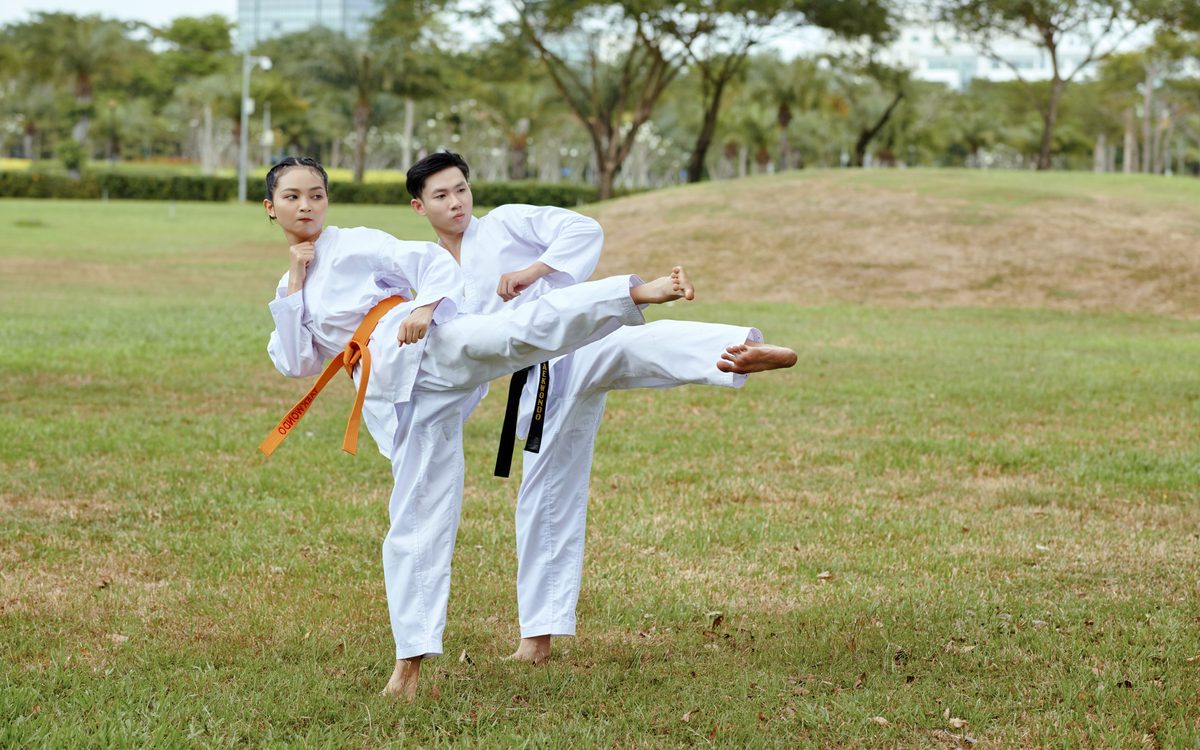
The final is tied at one round each. In the third, a fast turning kick lands on the foot of the athlete defending, there is a sharp crack, and the match is stopped while the doctor checks her. The tournament will go on without her. Taekwondo injuries are mostly bruises, sprains and fractures of the foot, ankle, knee, face and hand from the kicks and collisions that make the sport fast, and the question for athletes and parents is what the numbers say, what usually helps and when to stop and get a professional. This page is about what happens after an injury. For lowering risk beforehand, see our injury prevention page.
Quick answer: Surveillance studies find the most common taekwondo injuries are contusions (bruises), then sprains and ligament injuries, mostly in the lower limb, with the face and the hand also commonly hurt. Most injuries cost a few days, but a minority cause more than a week away. Head blows need a careful approach: recognize, remove from play, and have a healthcare provider decide when to return. Rehab is about protecting the area, restoring motion, rebuilding strength and returning step by step. See a sports medicine doctor, physical therapist or athletic trainer; this page does not diagnose or clear anyone to play.
How common are injuries, and where
Rates depend on who is counted and how, so compare figures with care. Here is what major studies report:
- 2017 World Taekwondo Championships (971 athletes): 13.5 injuries per 100 athletes. About 46.6 percent were to the lower extremity (knee 19.8 percent) and 24.4 percent to the face; contusions made up 33.6 percent.
- 2018 World Taekwondo Junior Championships (889 athletes, Jeong and colleagues, 2021): 7.5 injuries per 100 athletes. The most frequent were lower extremity injuries, mostly foot and toe, then head and trunk injuries, mostly face, and contusions were the most common type; three mild concussions caused no lost time.
- Rio 2016 Olympic Games (Soligard and colleagues, 2017): 24 percent of taekwondo athletes were injured during the Games, among the highest of all sports.
- Three Olympic Games (Lystad and colleagues, combat sports review): 7.7 injuries per 1,000 minutes of exposure in taekwondo, and 32.5 percent of injuries meant more than seven days away from competition or training.
- Korean elite athletes, 2016 season (Son and colleagues, 285 athletes): 6.31 injuries per 1,000 athlete-exposures overall, with foot and ankle the most common area, ligament sprain the most common type and contact with another athlete the most common cause.
- Elite athletes in Germany (Geßlein and colleagues, 82 athletes over five years): ankle and foot, and hand and wrist, were most affected, and fractures occurred mainly in the hand and wrist.
- Korean youth and college sparring athletes (Han and colleagues, 2023, 183 athletes): the finger was the most common injury location (17.3 percent of youth, 14.6 percent of college athletes) and contusion the most common type.
A 2025 systematic review of eight studies of high-performance taekwondo (García Blanco and colleagues) found lower-limb injuries, especially foot and knee, were most common, with contusions first and then sprains and ligament tears. Most injuries led to one to seven days of lost time, direct contact was the leading cause, and overuse was more frequent in training.
Forms and demonstration athletes
Sparring is not the only source. In a survey of 472 athletes (Jeong and colleagues, 2022), the ankle was the most injured area for sparring (54.0 percent) and demonstration (55.1 percent) athletes, while the pelvis was the most injured for poomsae athletes (36.4 percent), with sprains most common in poomsae and fractures most reported by sparring athletes. A survey of 263 sport-poomsae competitors (Koh and colleagues, 2017) found 65.8 percent had chronic overuse pain, most often in the lower body and knee, with more in women, athletes with prior injury and those who trained longer hours.
Concussion and head blows
Head kicks score the most, so concussion matters. A video analysis of World Taekwondo Championship matches from 2017 to 2019 found concussions at 3.21 per 1,000 games, most often from a roundhouse kick to the face when the athlete did not block. World Taekwondo’s competition rules call for a SCAT5 assessment within 30 minutes of a head injury and set mandatory suspensions of 30 days for seniors, 40 for juniors and 50 for cadets after significant head trauma, longer for repeat concussions. The AAP report says there is no evidence that headgear or mouthguards reduce concussion.
Outside elite events the key issue is reporting. In a 2025 survey of 98 Australian taekwondo athletes (Brown and colleagues), 21 percent said they returned to play the same day after a suspected concussion and over 20 percent admitted to hiding symptoms. The CDC HEADS UP approach is: recognize the signs (headache, dizziness, confusion, balance problems), remove the athlete from play, and have a healthcare provider decide when to return. Symptoms can show up hours or days later. Call emergency services for repeated vomiting, a seizure, worsening headache, unusual drowsiness or one pupil larger than the other. The 2022 Amsterdam consensus statement on concussion in sport is the source clinicians use for assessment and graduated return.
Rehabilitation principles
Rehab is the job of a clinician, and plans vary by injury and person. These general principles come from reputable sources, not a protocol to follow on your own. The American Academy of Orthopaedic Surgeons describes the common path for a sprained ankle: early rest, ice, compression and elevation, then gentle range-of-motion work, strengthening as pain and swelling settle and balance training to help prevent repeat sprains. It says return to sport is gradual, with straight-line activity before cutting and turning movements, and that stopping rehab early is the most common cause of chronic ankle instability. A very painful bruise that keeps swelling or limits movement may hide a fracture.
For a broken finger, toe, hand or other bone, treatment depends on the break and is decided by a doctor, which is one reason hand and wrist fractures from kicks and blocks should be looked at, not “walked off”. General practice also includes keeping fitness with training that does not load the injured area, and telling the coach exactly what hurts. No source gives one recovery time that fits everyone, so we do not give one.
When to see a professional
- Pain that gets worse, wakes you at night or does not ease after a few days.
- Swelling, deformity, numbness, or inability to put weight on a leg or grip with a hand.
- A joint that gives way, locks or feels unstable.
- Any head blow with symptoms. Do not play until a healthcare provider says so.
- Pain in a growing child or teen that changes how they kick or move.
Return to sparring only when a clinician clears you. For recovery habits between sessions, see our recovery page. For the sport as a whole, see the taekwondo hub and the martial arts hub.
Taekwondo injuries FAQs
What is the most common injury in taekwondo?
Contusions (bruises) are the most common type in several studies, mainly to the legs, face and hands, followed by sprains and ligament injuries. Foot, ankle and knee are the most common areas in elite studies.
How long does a taekwondo injury take to heal?
It depends on the injury and the person. A 2025 review found most injuries in elite athletes cost one to seven days, but a third of Olympic injuries in one study meant more than seven days. A clinician sets the plan.
Is taekwondo dangerous for kids?
The AAP says taekwondo injuries are mostly from kicks and that one study found about three times the injury risk of karate because of full contact. Qualified instructors, age-appropriate contact and a concussion policy matter.
Do I need to see a doctor for a toe or finger injury?
If it is swollen, deformed, numb or unusually painful, yes. Hand and wrist fractures are among those reported in elite athletes, and a doctor can tell a sprain from a break.
What should a taekwondo school do after a head blow?
Remove the athlete from class, watch for symptoms and arrange for a healthcare provider to assess, following CDC HEADS UP. Return is decided by a provider, not the coach.
Sources
- 2017 World Taekwondo Championships injury surveillance (PubMed 33657209)
- Jeong et al. 2021, injury and illness in World Taekwondo Junior Championships (PubMed 33671704)
- Soligard T et al. 2017, injury and illness, Rio 2016 Olympic Games (PubMed 28756389)
- Lystad RP et al., injuries in Olympic combat sports (PubMed 33219113)
- Son B et al. 2020, injuries in Korean elite taekwondo athletes (PubMed 32708739)
- Geßlein M et al. 2020, injury incidence in elite taekwondo (PubMed 31747701)
- Han MO et al. 2023, Korean youth and collegiate taekwondo sparring athletes (PubMed 37107809)
- García Blanco C et al. 2025, high-performance taekwondo injuries, systematic review (PubMed 41158919)
- Jeong et al. 2022, injuries by athlete type (PubMed 36157387); Koh et al. 2017, chronic overuse pain in poomsae (PubMed 27387495)
- Concussions in World Taekwondo Championship matches, video analysis (PubMed 36011947)
- Brown et al. 2025, concussion knowledge and behaviours, Australian taekwondo athletes (PubMed 41295792)
- Patricios J et al. 2023, Amsterdam consensus statement on concussion in sport (PubMed 37316210)
- CDC HEADS UP, signs and symptoms; response
- AAOS OrthoInfo, sprained ankle
- AAP clinical report, Youth Participation and Injury Risk in Martial Arts (2016)
- World Taekwondo, Competition Rules and Interpretation (in force 1 June 2026)
General information for education only, not medical advice. It does not replace a sports medicine doctor, physical therapist, athletic trainer, registered dietitian or qualified coach. See our editorial policy for how we research and write.