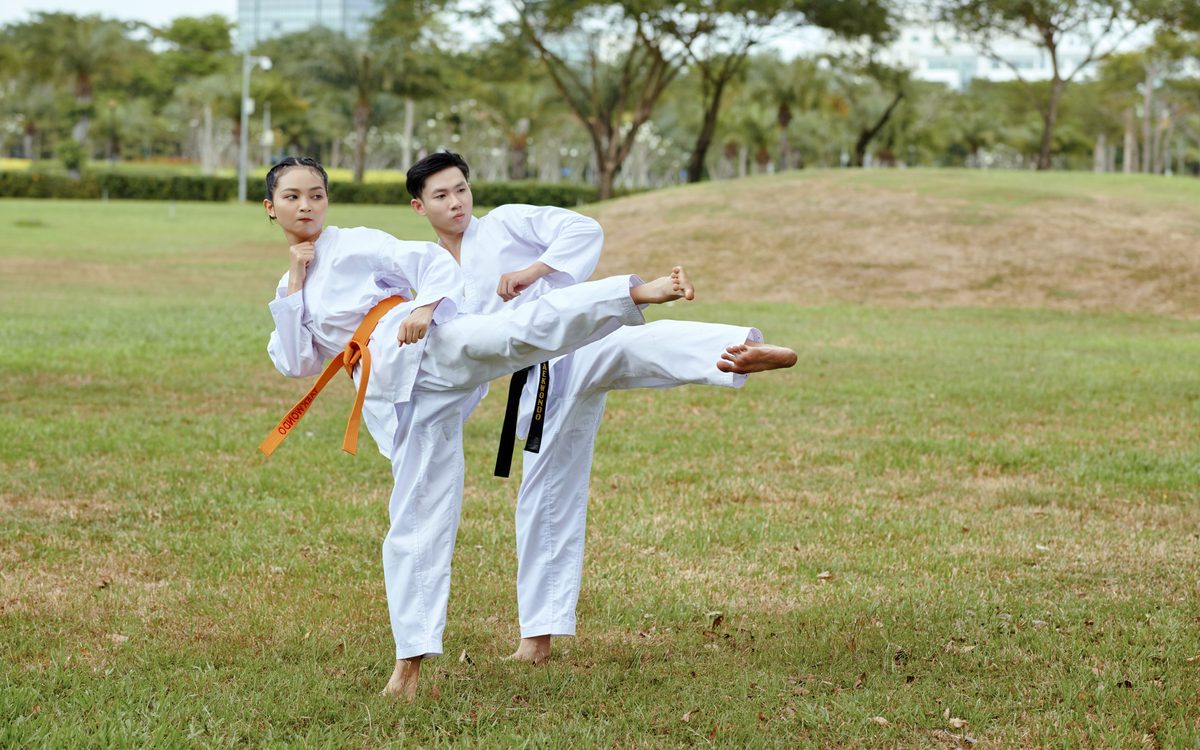
The tournament was yesterday and the legs feel like wet sand. A sparring athlete climbs the stairs one at a time, calves tight, hips stiff from a day of kicking, and has a class tonight. Taekwondo recovery is everything that helps the body and mind come back between sessions, matches and seasons: sleep, food and fluid, easy movement, a sensible training load and time off. Some recovery tools have good evidence, many have weak evidence, and the basics beat gadgets. This page covers sleep, load management, mobility, what the evidence says about recovery methods, and how to tell soreness from injury. See the taekwondo hub for the sport itself.
Quick answer: The best-supported recovery steps are the plain ones: enough sleep, enough food and fluid, a training load that rises gradually, and rest days. Massage may ease soreness and perceived fatigue, while evidence for cold-water immersion and compression is mixed or small, and cold immersion after strength training may blunt gains. Normal soreness fades in a day or two and eases with movement; pain that is sharp, stays in one spot, swells or follows a hard blow is a reason to see a sports medicine doctor, physical therapist or athletic trainer. General information, not medical advice.
What a taekwondo session asks of you
Sparring is a repeated-sprint effort with high-speed kicks and a lot of jumping and landing, so the legs bear most of the load. A review in Sports Medicine (Bridge and colleagues, 2014) says taekwondo athletes need moderate to high cardio-respiratory fitness to support the fight and to recover between consecutive matches, so aerobic fitness is itself part of recovery. We did not find a taekwondo study of how long muscle damage lasts. In simulated mixed martial arts sparring (Coswig and colleagues, 2016), a blood marker of muscle damage was higher 48 hours later than before, so a day or two before the next hard session is a reasonable rule of thumb. That is general guidance, from another combat sport.
Sleep
Sleep is the first recovery tool. The American Academy of Sleep Medicine recommends 9 to 12 hours for children aged 6 to 12 and 8 to 10 hours for teens, and the AASM and Sleep Research Society recommend at least 7 hours for adults; the CDC gives matching ranges. In a 2026 survey of 209 elite male Turkish taekwondo athletes (Özer and colleagues), poorer sleep quality went with more burnout, and enjoying the sport went with less. That is an association in one group, not proof that sleep causes burnout, but it fits the common sense that tired athletes struggle. A review of sleep hygiene in athletes (Nédélec and colleagues, 2015) supports simple steps such as a regular wake time and limiting screens before bed. Evening classes and early school or work mornings squeeze sleep, so plan for it.
Load management and rest days
Recovery happens in the schedule. The IOC consensus on load (Soligard and colleagues, 2016) says rapid rises in training load can raise injury risk, and recommends monitoring load. For young athletes, the AAP (Brenner, 2016) recommends one to two days off a week from a main sport. Its martial arts report notes some evidence of more injury in children training more than about three hours a week. A hard sparring day followed by a lighter technique day, and a lighter week every few weeks, is a common coaching pattern, which is general practice and not a published prescription. See our training page.
Mobility and flexibility
Kicking needs range at the hips and hamstrings, and the ACSM position stand recommends flexibility exercises on at least two days a week. Easy mobility after class, while muscles are warm, is a low-risk way to keep range, and gentle movement can ease stiffness. A review of cool-downs (Van Hooren and Peake, 2018) found they are largely ineffective for same-day or next-day performance and mostly do not reduce soreness, so treat a cool-down as a calm-down and a chance to stretch, not a repair. Avoid forcing stretches on a sore muscle.
Food, fluid and hygiene
After hard training, the ACSM, Academy of Nutrition and Dietetics and Dietitians of Canada position stand says to replace fluid at about 1.25 to 1.5 litres for each kilogram of body mass lost, and describes 0.25 to 0.3 grams of protein per kilogram after exercise. Weight-class athletes have extra recovery questions after the weigh-in, which is the day before competition under World Taekwondo and USA Taekwondo rules; see our nutrition page. A shower after class and clean uniforms are also recovery for the skin: the National Athletic Trainers’ Association position on skin diseases advises showering after every practice, not sharing towels or gear and washing clothing daily.
Recovery methods: what the evidence says
- Massage: A review of 99 studies (Dupuy and colleagues, 2018) found massage the most effective of the methods it compared for muscle soreness and perceived fatigue. A 2025 systematic review of 13 studies in taekwondo athletes (Mathunjwa and colleagues) reported benefits for recovery, flexibility and mood, though the studies were few and varied.
- Compression: A review (Brown and colleagues, 2017) found small benefits, mainly for strength recovery.
- Cold-water immersion: In a 12-week study (Roberts and colleagues, 2015), cold-water immersion after strength sessions led to smaller strength and muscle gains. Use it with care in training blocks, and not at all if a doctor has told you not to.
- Foam rollers and massage guns: These are comfort tools. We did not find a taekwondo study of either, and they are not treatment.
Check with a doctor before using heat, cold or electrical devices if you have a heart condition, are pregnant or have a pacemaker.
Tournament days
A tournament can mean several matches in a day or across a weekend, and we found no taekwondo study of the best way to recover between them. Common practice is to eat and drink what you have practised, keep warm, move gently between matches and rest in a calm spot. These are general suggestions, not a protocol. After a head blow, recovery is a medical matter: follow the CDC HEADS UP steps and do not return until a healthcare provider says so.
Soreness or injury?
Normal muscle soreness appears a day or so after hard or unfamiliar work, is spread over a muscle and eases with gentle movement. That is general sports medicine description, not a diagnosis. Warning signs are sharp or pinpoint pain, swelling, bruising after a hit, a joint that feels unstable, numbness, pain at rest or at night, or pain that changes your kick. See our injuries page and a sports medicine doctor, physical therapist or athletic trainer for these.
Taekwondo recovery FAQs
How much rest do taekwondo athletes need?
There is no single answer. The AAP recommends one to two days off a week from a main sport for young athletes, and many adults plan at least one rest day, adjusting for training load and how they feel.
Does stretching after class help recovery?
It helps maintain flexibility, which taekwondo needs, but it does not repair muscle. A review of cool-downs found little effect on next-day performance or soreness.
Are ice baths good after taekwondo?
Evidence is mixed. One study found cold-water immersion after strength training reduced gains over 12 weeks. If you use it, avoid doing so after every strength session.
Is a massage gun worth it?
It may feel good and ease tightness, but we found no taekwondo trial. It is a comfort tool, not a treatment, and should not be used on an injury.
How do I recover between matches at a tournament?
Keep warm, move gently, drink and eat what you have practised, and rest. There is no tested taekwondo protocol, so rehearse your routine in training.
When does soreness mean I should see a doctor?
If pain is sharp, stays in one spot, causes swelling or numbness, wakes you at night or lasts more than a few days, or follows a head blow, see a professional.
Sources
- Bridge CA et al. 2014, physical and physiological profiles of taekwondo athletes (PubMed 24549477)
- Coswig VS et al. 2016, simulated MMA sparring and muscle damage markers (PubMed 26817739)
- Özer et al. 2026, sleep quality, enjoyment and burnout in elite male taekwondo athletes (PubMed 41904524)
- AASM pediatric sleep duration consensus
- Watson NF et al. 2015, AASM and SRS consensus on adult sleep duration (PubMed 25979105)
- Nédélec M et al. 2015, sleep hygiene and recovery strategies in elite soccer players (PubMed 26275673)
- Soligard T et al. 2016, IOC consensus on load (PubMed 27535989)
- Brenner JS 2016, AAP, sports specialization and intensive training (PubMed 27573090)
- Garber CE et al. 2011, ACSM position stand (PubMed 21694556)
- Van Hooren B, Peake JM 2018, do we need a cool-down after exercise (PubMed 29663142)
- Thomas DT et al. 2016, ACSM, AND and DC position stand on nutrition and athletic performance (PubMed 26891166)
- NATA position statement on skin diseases
- Dupuy O et al. 2018, recovery methods review (PubMed 29755363)
- Mathunjwa et al. 2025, massage therapy in taekwondo practitioners, systematic review (PubMed 40427858)
- Brown F et al. 2017, compression garments and recovery (PubMed 28434152)
- Roberts LA et al. 2015, cold-water immersion and strength training adaptations (PubMed 26174323)
- AAP clinical report, Youth Participation and Injury Risk in Martial Arts (2016)
- CDC HEADS UP, response
General information for education only, not medical advice. It does not replace a sports medicine doctor, physical therapist, athletic trainer, registered dietitian or qualified coach. See our editorial policy for how we research and write.