This article contains affiliate links: if you buy through them we may earn a commission, at no extra cost to you. Read our affiliate disclosure.
A newcomer’s first look at a long track bag can be a surprise: skates with a blade that sits a little apart from the boot, soft blade covers, a snug suit and, for the pack events, a neck guard. Long track speed skating gear is simpler than it looks, because rules decide some of it and fit decides most of the rest. This guide covers clap skates and boots, blade care, race clothing, helmets and protection, and off-ice tools. We link to products where we found an honest fit, and we say plainly what the rules and the sellers do and do not tell you. For learning the sport first, see our rules and getting started page; for the whole sport see the speed skating hub. Product details can change; check the seller’s page before you buy. We do not list prices.
Quick answer: Start by borrowing. US Speedskating says many clubs lend skates and that long track is traditionally skated on clap skates. For racing, the ISU rules decide suits, helmets and protection, so check them before buying. Cut protection is required in team events and the mass start under ISU Communication 2636. A neck guard or cut-resistant item made for hockey is not the same as a tested race item, so check the label against your event.
Our picks
Some of these are skater-specific and others are borrowed from hockey and general fitness. Each is explained below.
Bont M3 Long Track Clap Ice Blade
- Spring clap mechanism
- 58 Rockwell steel
- Not pre-sharpened

Bauer NLP21 Cut Resistant Neck Guard
- Cut-resistant
- Youth 10-14 in, senior 13.5-17 in

Shock Doctor Hockey Neck Guard
- Cut-resistant aramid fiber core
- Pre-curved
$17.00 at Amazon, as of Nov 17, 2026 02:07 UTC
Check price on Amazon
SPRI Slide Board
- 71 x 20 in, 4 lb
- Booties and bag included
$45.28 at Amazon, as of Nov 17, 2026 02:07 UTC
Check price on Amazon
Clap skates and boots
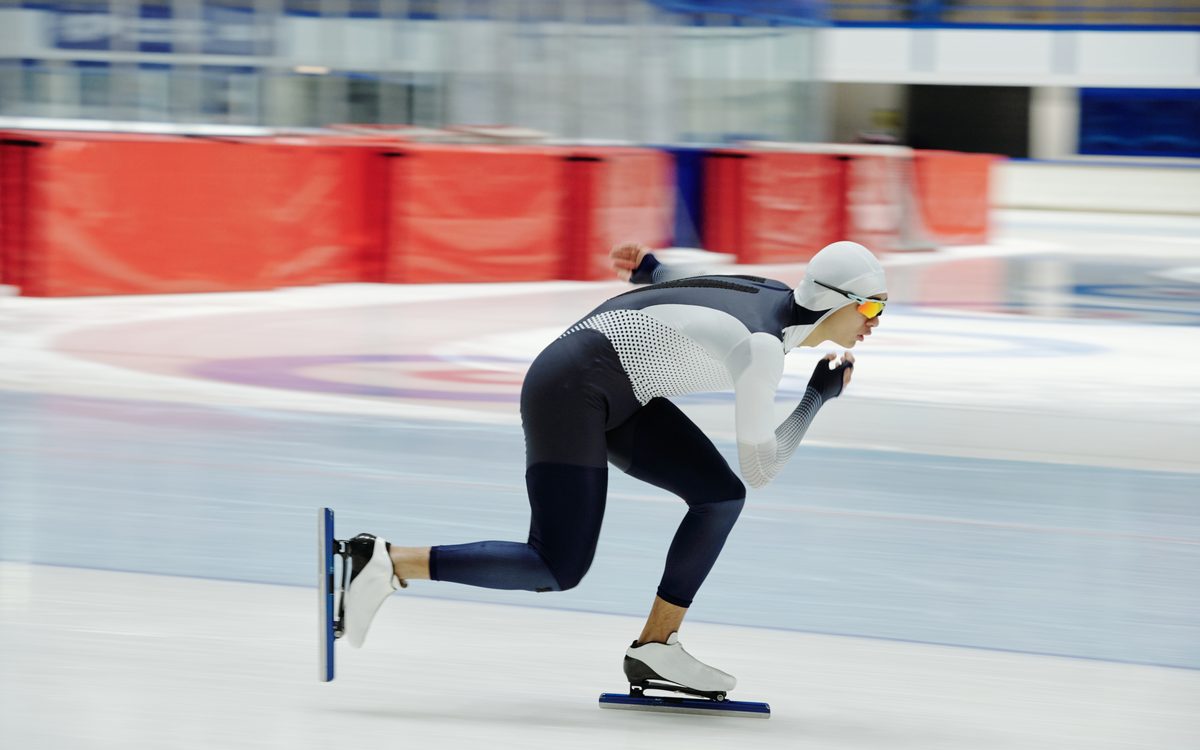
Long track is traditionally skated on clap skates, in which the blade partly separates from the boot (US Speedskating). The ISU rules allow a skate that lets the boot and blade move in translation and rotation, and forbid heating blades (ISU 2026 Speed Skating Sports Rules, Rule 224). In a 2000 study of ten elite skaters, clap skates raised skating velocity by about 5% compared with fixed blades (Houdijk et al., Med Sci Sports Exerc). That is a study of elite skaters, not a promise for a beginner.
For a beginner, the choice of skate is usually a club question. Ask the club before you buy, since many clubs lend skates and a coach can suggest what suits your level. Skates made for the sport include boots built of carbon composite or similar materials, usually heat-moldable, with the blade mounted on a separate plate. As one example, Bont lists a Long Track Jet Boot with a carbon composite and heat-moldable thermoplastic base in standard, narrow and wide widths and notes US blade mounting at 165 mm, and also lists the M3 long track clap ice blade with a spring clap mechanism and 58 Rockwell steel, not pre-sharpened. Those are maker descriptions, not independent test results.
Fit rules of thumb, from general skate-fitting practice:
- Fit the boot to your foot, standing and laced; ask a fitter to check heel hold and toe room.
- Heat-moldable boots can be adjusted by a shop; do not try it at home.
- Ask who mounts the blades and sharpens them, and whether the blade is pre-sharpened.
- Buy for now, not for growth.
Blade care
Blades are steel, and the edges need care. The general routine is to dry the blades after every session, cover them with a soft absorbent cover for storage (the Bont ice blade soaker is one example), and use hard guards only for walking and not for storage because they trap moisture. Sharpening is for a technician who knows speed skating blades; the M3 above is sold unsharpened, so a sharpening plan is part of the purchase. Look at the blades before each session for nicks, rust or loose parts. A damaged blade is a safety problem in a sport where blades can cut.
Race clothing and the rules
The ISU rules (Rule 224) say suits conform to the shape of the body, that shin guards and padded knee protection go inside the suit, and that helmet, neck protection and gloves or mitts, predominantly white, go outside. ISU events accept only ISU-approved helmets. For team races and the mass start, the ISU’s Communication 2636 requires a full-body suit with cut-resistant fabric, level 3 at the Olympics and all ISU events, covering the neck to below the chin, with a neck guard under the suit that a blade cannot slide beneath, cut-resistant ankle protection or socks, helmets to ASTM F1849, and gloves of at least cut level 3 based on EN 388. Blades should have closed tubes and rounded ends of at least 10 mm radius. The ISU states it cannot assure full protection in all conditions. For national events, US Speedskating’s long track rules follow the ISU communication for team races and say leather gloves count as cut resistant at the National Age Group Championships, so check your rulebook.
Neck guards and cut protection: standards versus claims
We could not verify a cut-resistant skinsuit or underwear with a stated level from a retailer we could fetch, so we show none. The Bauer NLP21 neck guard listing says it is cut resistant and comes in youth (10 to 14 in) and senior (13.5 to 17 in) neck sizes. The Shock Doctor neck guard listing says cut-resistant aramid fiber core and BNQ certified. Both are hockey products, and the listings do not show that they meet the ISU’s own labelling for your event. They can be a sensible training choice with a coach’s advice; for a race that requires certified protection, use gear that carries the label the rules ask for.
Helmets
ISU events require ISU-approved helmets in the pack events. A 2024 scoping review found two studies in which short track helmets performed poorly compared with helmets from other sports (Hendricks et al., Scand J Med Sci Sports). A 2014 test of speed skating helmets found they nearly eliminate catastrophic head injuries but did not remove concussion risk (Karton et al., Br J Sports Med). Replace a helmet that has taken a hard hit, per the maker’s instructions. See our injury prevention page.
Off-ice tools
A slide board copies the side push of skating. The SPRI Slide Board is listed at 71 x 20 in and 4 lb with booties and a bag. A 2026 study of 27 youth skaters (Zhang et al., PLoS One) found slide-board intervals improved aerobic and anaerobic measures over four weeks, which is why many programs use one. For recovery, a foam roller such as the TriggerPoint GRID 1.0 (13 x 5 in) is a common choice, but the evidence for foam rolling is limited; see the recovery page.
Long track speed skating gear FAQs
Do I need clap skates to start?
No. Many clubs lend skates, and US Speedskating suggests asking your club first.
Do I need a cut-resistant suit for long track?
For team events and the mass start under ISU Communication 2636, yes at ISU events, and other events follow their own rules. Ask your club or event organizer.
Is a hockey neck guard good enough for racing?
Only if your event’s rules accept it. A listing that says cut resistant does not prove it meets the ISU’s requirement.
How often should blades be checked?
Look at them before every session, and ask a technician about sharpening.
Is a slide board worth it?
It is a common off-ice tool, but not necessary. Ask your coach.
Sources
- ISU 2026 Speed Skating Sports Rules (Rule 224)
- ISU Communication No. 2636, Protection equipment in Speed Skating and Short Track (21 May 2024)
- US Speedskating Long Track Rules and Regulations 2025-26
- US Speedskating, Get Started
- Houdijk et al., clap skate, 2000
- Hendricks et al., scoping review 2024 and Karton et al., helmets 2014
- Zhang et al., slide-board training, PLoS One 2026
- Maker and seller pages: Bont M3 clap blade, Bont Long Track Jet Boots, Bont blade soaker, Bauer NLP21, Shock Doctor neck guard, SPRI Slide Board, TriggerPoint GRID 1.0
General information for education only, not medical advice. Product notes come from sellers and the rules, not from our own testing. See how we write and check our pages in our editorial policy.