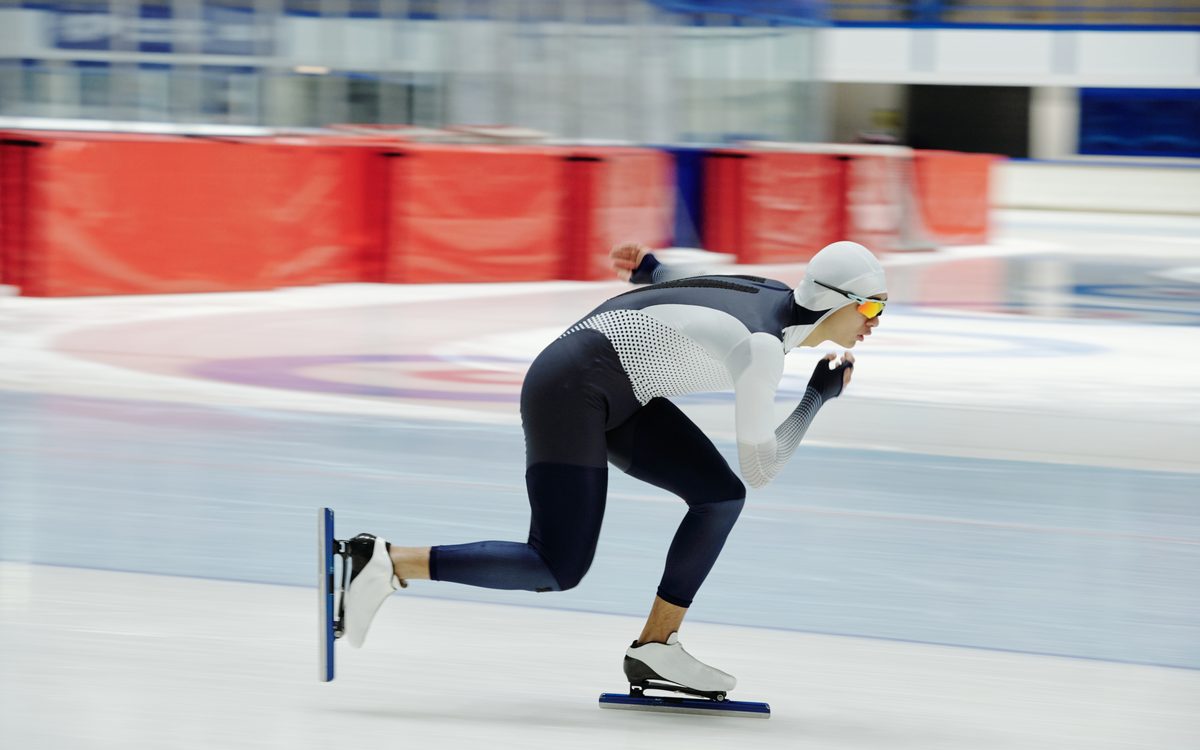
The last session of a hard week ends with 12 laps of easy skating, and a skater drives home with sore thighs and heavy eyelids. The evening choices matter as much as the workout: what to eat, how long to sleep, whether tomorrow is easy. Long track speed skating recovery is everything a skater does between sessions so that training load turns into fitness rather than fatigue or injury. This page covers sleep, load management, mobility, an honest look at popular recovery methods, and the difference between soreness and an injury. For training see our training page; for injuries see the injuries page; for fueling see nutrition.
Quick answer: Sleep, food and easier days do most of the work. A 2021 expert consensus on athlete sleep says elite athletes often sleep less than 7 hours and recommends an individual approach rather than one number. Of the recovery methods studied, massage had the strongest evidence for reducing soreness and fatigue in a 2018 meta-analysis, while evidence for many others is weaker. Soreness that fades in days is common; pain that stays in one spot or changes how you skate is a reason to see a professional.
Sleep
The CDC says teens aged 13 to 17 need 8 to 10 hours a day and adults 18 to 60 need 7 or more. A 2021 narrative review and expert consensus on sleep and the athlete (Walsh et al., Br J Sports Med) says elite athletes are particularly susceptible to sleep inadequacies, with habitual short sleep (under 7 hours a night) and poor sleep quality, and that habitually sleeping under 7 hours is linked with a higher risk of respiratory infection in the general population. It says travel, training and competition affect athlete sleep, that stress and anxiety do as well, and that a one-size-fits-all number such as 7 to 9 hours is unlikely to be ideal, so it recommends an individualized approach that considers the athlete’s perceived needs. Early ice times are a sport-specific issue: many clubs practice before school or work. General advice that follows is to keep a regular schedule, wind down without screens, and move a very early session later if you can, but these are general sleep-hygiene tips and not skating research.
Load management
Over 38 years, Olympic skaters’ total training hours were unrelated to their results, and their coaches shifted toward polarized training, much easy work and some very hard work (Orie et al., Int J Sports Physiol Perform, 2014). The practical reading is that hard days need easy days around them. A 2024 scoping review of ice speed skating linked training load to injuries in long track skaters (Hendricks et al., Scand J Med Sci Sports). General practice for skaters is a lighter week every few weeks, extra care after illness or travel, and telling a coach how you feel before the workout rather than after. We did not find a published rule for how much to cut back, so we do not give one. Our injury prevention page covers load increases.
Mobility and flexibility
Skaters spend hours in a crouch with the hips and knees bent and the trunk leaning forward. Coaches often use mobility work for the hips, ankles and upper back, and it can feel good. We did not find a study showing that stretching reduces injuries in speed skaters, so we call it general practice. A 2018 meta-analysis of recovery techniques (Dupuy et al., Front Physiol) found that the list of methods it searched, which included stretching, did not all change soreness; those that did were active recovery, massage, compression garments, water immersion, contrast water therapy and cryotherapy. A sensible approach is to keep mobility sessions short, comfortable and regular, and to stop at pain.
What the evidence says about recovery methods
Dupuy and colleagues pooled 99 studies on recovery after exercise. They found that active recovery, massage, compression garments, immersion, contrast water therapy and cryotherapy each gave a small to large reduction in delayed onset muscle soreness, while the other methods showed no change. Massage was the strongest for soreness and fatigue. Muscle damage and inflammation markers (creatine kinase, interleukin-6, C-reactive protein) fell by small to moderate amounts overall. Two cautions: soreness is not the same as performance, and the studies are mostly not in speed skaters. Foam rollers, massage guns and compression boots were not part of that search, and we make no claims for them. See our gear page if you are curious about foam rollers and slide boards. If you have a heart condition, are pregnant or have a similar health issue, ask a doctor before using cold plunges, saunas or electrical devices.
Soreness or injury?
Soreness usually spreads across a muscle, peaks a day or two after a hard session and eases with movement. Pain that is sharp, stays in one spot, shows up at rest, comes with swelling or numbness, or changes how you skate is different. Knee and back problems were prominent in the Dutch youth study (Hendricks et al., Br J Sports Med, 2024), so do not push through pain; see a sports medicine doctor, physical therapist or athletic trainer. This page does not diagnose.
Bones and the season
A small study of 12 elite speed skaters found that whole-body bone mineral content was 1.0% and 0.8% higher at pre-season and end of season than mid-season, which the authors thought reflects training-load changes across the year (Varley et al., Int J Sports Med, 2019). It is a small study, but it is a reminder to ask a professional about bone health if a skater has repeated injuries or low energy intake. See the nutrition page.
A simple recovery checklist (general practice)
- Eat a meal or snack soon after hard sessions.
- Drink to thirst and replace sweat.
- Plan a lighter day after hard days.
- Aim for the sleep range for your age and note how you feel.
- Tell your coach about pain early.
Long track speed skating recovery FAQs
Do ice baths help skaters recover?
Cold-water immersion reduced soreness in the 2018 meta-analysis, but it was not tested in speed skaters. Ask a doctor if you have any health condition.
How much sleep does a skater need?
The CDC range is 8 to 10 hours for ages 13 to 17 and 7 or more for adults. The 2021 consensus says needs are individual.
Is stretching enough for recovery?
Stretching did not show a soreness benefit in the 2018 meta-analysis. Mobility work is still a habit many coaches use.
Should I skate with sore legs?
Mild soreness often is fine for easy sessions, per general coaching practice. Sharp pain is not soreness.
Do massage guns work?
We did not find speed skating studies on them. Massage in general had the strongest evidence in the Dupuy review.
Sources
- Walsh et al., Sleep and the athlete: narrative review and 2021 expert consensus, Br J Sports Med
- CDC, About sleep
- Dupuy et al., post-exercise recovery techniques, Front Physiol 2018
- Orie et al., Int J Sports Physiol Perform 2014
- Hendricks et al., scoping review 2024 and Br J Sports Med 2024
- Varley et al., bone and body composition in elite speed skaters, Int J Sports Med 2019
General information for education only, not medical advice. It does not replace a visit with a doctor, physical therapist or athletic trainer. See how we write and check our pages in our editorial policy.