This article contains affiliate links: if you buy through them we may earn a commission, at no extra cost to you. Read our affiliate disclosure.
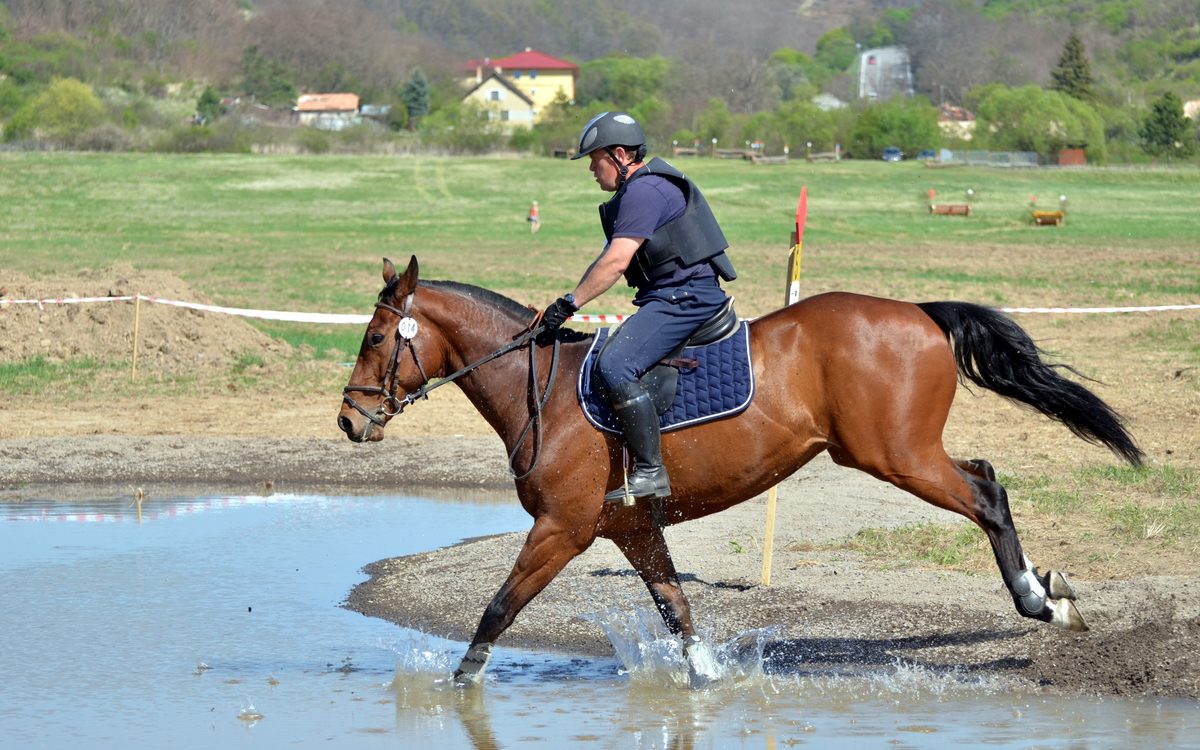
The night before cross-country, a rider lays everything out on the tack-room floor: helmet, vest, gloves, boots, the medical armband and a second pair of reins. Eventing gear has more safety rules than most disciplines because the middle phase is galloping over solid fences. The right eventing gear starts with what the rulebook and standards require, then fit, then comfort. This page explains what matters, how to inspect it and how to read a certification label versus a maker’s claim. Part of the eventing hub; the wider kit list is on the horseback riding gear page.
Quick answer: Start with a certified helmet that fits, a body protector for cross-country and warm-up, gloves for grip and boots with a distinct heel. Look for the certification printed on the item (ASTM F1163 with SEI for helmets; ASTM F1937 or SEI for vests) and treat maker marketing as claims. A helmet is built for one impact, and no gear prevents every injury. Have a qualified fitter check the fit, and follow USEF rules for competition.
Our picks
These are products that fit the rules above. We have not tested them. Certifications are as stated by the maker or the retailer listing; check the label on the item you receive and the current USEF rule before competing.

Troxel Spirit Riding Helmet
- ASTM/SEI certified (maker)
- DialFit adjustment, full coverage
- Removable washable liner
$73.94 at Amazon, as of Nov 17, 2026 02:07 UTC
Check price on Amazon
Ovation Deluxe Schooler Helmet
- ASTM F1163-15 and SEI (listing)
- Removable washable liner
- Sizes small to large

Tipperary Eventer Pro Body Protector Vest
- ASTM F1937-04 and SEI certified (maker)
- Extended back panel
- Made for eventing

SSG Digital Riding Gloves
- Digital grip palm
- Grips when wet (listing)
- Machine washable

Ariat Women's Heritage IV Zip Paddock Boot
- Full-grain leather (maker)
- Stabilizing shank (maker)
- Distinct heel
Helmets: standards and fit
USEF rules require properly fitting protective headgear for anyone mounted at licensed events, and jumping an obstacle without it or with the harness undone is a listed fault; the rider or parent is responsible for certification, fit and condition. The helmet standard is ASTM F1163, and certification is shown by the SEI mark. USEF has also accepted Snell-certified helmets in addition to ASTM/SEI since a rule change effective December 2023; read the current GR8 rules for the exact wording. The Troxel maker page explains that SEI uses ASTM F1163.
- Fit. A helmet should sit level, low on the forehead (about an inch above the eyebrows is the common guide), without rocking when you shake your head. The harness should be snug but not choking. Have a fitter check it, especially for children, whose heads and hair change.
- Inspect. Check the shell for cracks or dents, the liner for compression, and the harness for fraying. Do not use one that has been dropped hard or has had an impact.
- Replace. Troxel states that a helmet is built for one impact event and should be replaced after an accident or every five years. In a 2025 survey of 357 collegiate riders, 78% said they would not replace a helmet after every fall. Follow your maker.
- Type. That same 2025 survey found no difference between MIPS and non-MIPS helmets in head injury; the evidence on add-on technologies is still limited.
Body protectors and inflatable vests
- Rule. USEF rules require a body-protecting vest during warm-up and cross-country. The Federation recommends a vest meeting ASTM F1937 or certified by SEI.
- Inflatable vests. Allowed on cross-country only in addition to a body protector. An analysis of FEI fall reports found wearers over-represented among serious injuries; that does not prove cause and the evidence is still developing. Follow the maker’s instructions on cartridges and servicing.
- Fit. A vest should cover the torso without riding up when you bend or jump, and let you breathe and move. Many riders refit after weight or growth changes. Children need vests sized for them, not adult vests.
- Limits. A 2025 review says vests may protect the thorax but were not associated with fewer spinal cord injuries.
Boots, gloves and clothing
USEF rules say boots must have a distinguishable heel, which keeps a foot from sliding through a stirrup. Choose boots that grip the stirrup comfortably, and check the sole and stitching often. Gloves help with grip on wet reins; check the seams and replace them when the palms wear. Breeches and a snug, breathable shirt are practical, and a medical data armband or tag is required for riders at licensed events. Competition dress codes are in the rulebook for dressage and show jumping phases; check the current wording.
Tack and equipment that touches the horse
Saddle fit, girth, bridle and bit are central, but fit is horse-specific, so ask a qualified saddle fitter and your coach. Check girth straps, stirrup leathers and the bridle for wear before each event, and replace anything cracked or stretched. USEF rules list permitted and prohibited equipment, so read the current EV rules before the event.
A pre-ride inspection routine
- Helmet: shell, harness, buckle, date of manufacture.
- Vest: closures, straps and, for inflatables, the cartridge and the maker’s service date.
- Boots and stirrups: tread, heel, stitching, stirrup size.
- Tack: stitching on reins, girth, stirrup leathers and bridle; buckles secure.
- Medical armband or tag filled in and on.
This list is general practice, not a rule. After a fall, check the gear again before riding.
Standards versus claims
A standard is a test method written by an independent organization, such as ASTM, that a certifier like SEI checks a product against. A claim is what a maker or a retail listing says. In our cards, items marked “maker” or “listing” are claims we have not verified. Neither a standard nor a claim means a product will prevent a particular injury. For injury detail see eventing injuries and for risk reduction eventing injury prevention.
Eventing gear FAQs
What gear does eventing require?
USEF rules call for protective headgear when mounted at licensed events, a body-protecting vest during warm-up and cross-country, boots with a distinct heel and a medical data carrier. Check the current rules.
Which helmet standard should I look for?
ASTM F1163 with SEI certification is the common standard; USEF also accepts Snell since a rule change effective December 2023. Check the label and the current rules.
Can I wear only an inflatable vest on cross-country?
No. Under USEF rules an inflatable vest is allowed only in addition to a body protector on cross-country.
How often should I replace my helmet?
Troxel says after an accident or every five years. Follow your own helmet maker.
Does a fancier helmet protect better?
Certified helmets meet the same standard, and the one study we found comparing MIPS with non-MIPS helmets reported no difference in head injury. Fit and condition matter more than marketing.
Sources
- USEF Rules for Eventing
- USEF GR8, Conduct of Licensed Competitions
- USEF rule change GR801.2 (helmet certification)
- Troxel helmet certifications
- Helmet type and head injury in collegiate equestrians, 2025 (PubMed)
- CNS and thorax injury in equestrian sports, 2025 (PubMed)
- Air jacket analysis (PubMed)
- Amazon listings: Troxel Spirit
- Amazon listings: Ovation Deluxe Schooler
- Amazon listings: Tipperary Eventer Pro
- Amazon listings: SSG Digital Riding Glove
- Amazon listings: Ariat Heritage IV Zip Paddock
General information for education only, not medical advice. It does not replace a sports medicine doctor, physical therapist, athletic trainer or qualified coach. See our editorial policy for how we research and write.