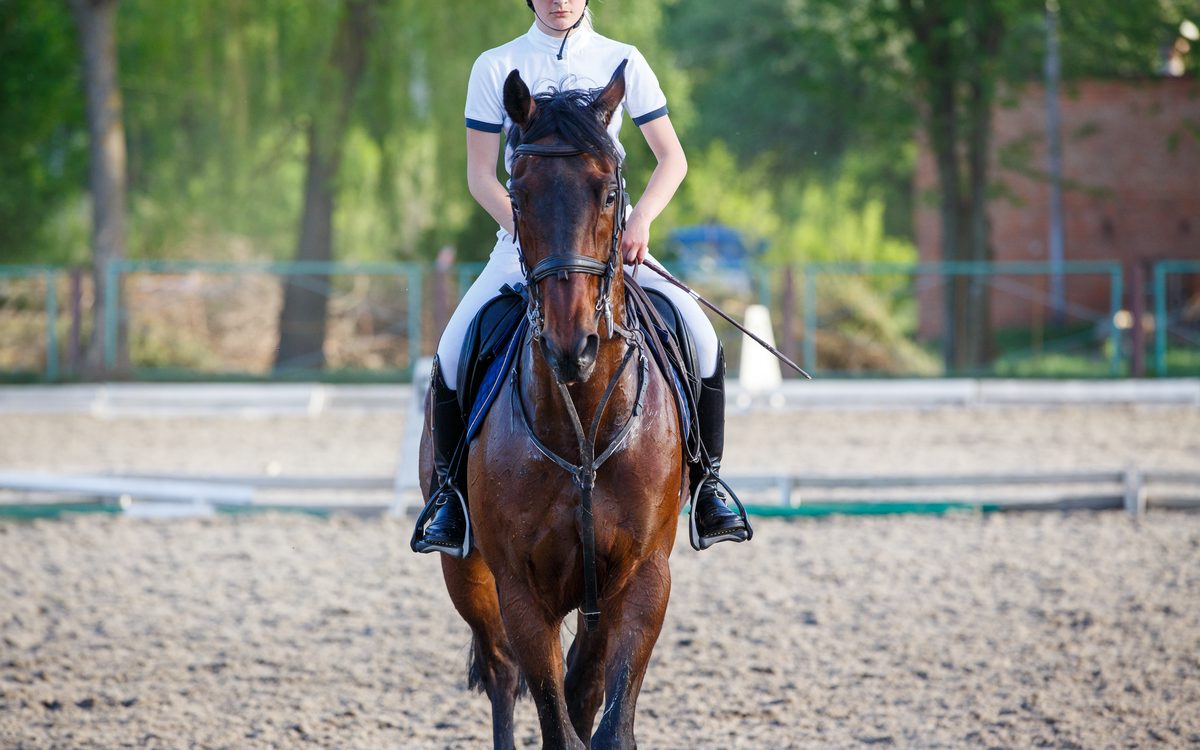
The ride ends the way most good rides do, with a loose rein and a long walk. Then, on the way back to the barn, a horse spins at a loose plastic bag and a rider hits the ground on her hip and shoulder. She stands up, says she is fine, and by evening cannot turn her head. Dressage injuries range from falls and kicks to slow-building back and hip pain from hours in the saddle. This page names the patterns researchers have found, with the numbers and who counted them, explains concussion in plain words, and lists general rehabilitation principles. It does not diagnose anything. If you are hurt, see a sports medicine doctor, physical therapist or athletic trainer. To lower your risk, read dressage injury prevention.
Quick answer: We found no injury rates for dressage alone, so the numbers here are for horse riding overall, plus a few dressage rider surveys on back pain. The main patterns are falls (head, spine, arm and chest injuries), kicks when handling horses, and back, hip and pelvic pain from riding. After any head impact, stop riding and see a health care provider. Do not return to riding on your own say-so, because a clinician decides.
What the numbers say
- Emergency visits. CDC authors (Thomas and colleagues, 2006) estimated about 102,904 emergency department visits a year for horse-related injuries in the U.S. from 2001 to 2003. Of patients, 66.1% were mounted (usually falling or thrown), and those not mounted were most often kicked. Head and neck injuries accounted for 23.2% of cases, and more than 11% of patients were admitted.
- How riders fall. A 2008 analysis of the national injury surveillance system (Loder) found falls caused 59% of cases and being thrown or bucked 22%; fractures were 28% and traumatic brain injury 12%.
- Children. A 2024 analysis (Loder and colleagues) of NEISS data from 2000 to 2023 found that in children with a fracture from equines, 80.0% were upper-limb injuries and falls caused 75.7%.
- The spine. A 2025 national study of spinal injuries (Loder and colleagues, 2000 to 2023) estimated 54,830 patients; the lumbar spine was involved in 49.1%, the thoracic in 24.4%, sacrum and tailbone in 15.5% and the cervical in 11.0%. About 51.1% were not discharged home from the emergency department, and cervical injuries had the highest admission rate (74.3%).
- Chest and head. A 2025 systematic review (Crawford and colleagues) found the thorax was the most commonly injured area in registry data and that helmets protect against skull fracture and traumatic brain injury. A 2016 study (Winkler and colleagues) of U.S. trauma centers found equestrian sports accounted for 45.2% of adult sports-related brain injuries in its categories.
Back, hip and pelvic pain
Pain that builds up is the other pattern. In a 2025 survey of 100 competitive dressage riders in South Africa (Landman and colleagues), 71% reported low back pain at the time of the survey and 56% over their lifetime, and riding gaits were associated with it. A 2024 Portuguese survey of 347 riders (Duarte and colleagues) found 61.7% had low back pain in the past 12 months, more often with higher weekly riding workload and daily stable duties. A 2025 survey of 384 male riders (Tan and colleagues) found 57% had pain or injury in the groin or pelvic area, with deep-seat saddles linked to more pain across disciplines and in dressage. These are self-reports, and they show an association, not a cause.
Falls, kicks and crush injuries
Pain after a fall deserves attention even when you can walk. A 2023 single-center report (Hoffmann and colleagues) of 95 horse-related injury patients said spinal and pelvic injuries are significantly related to falls and must be ruled out. A kick to the abdomen can injure organs without much bruising at first, so worsening pain after a kick needs urgent care. Penn State Extension and other extension sources say never to stand directly behind a horse and to wear hard-toed boots.
Concussion
A concussion is a brain injury from a bump, blow or jolt, and it can follow a fall even without a blow to the head. The CDC’s HEADS UP program gives a rule of recognize and remove: a rider with a possible concussion stops riding that day and sees a health care provider before going back. Signs include headache, dizziness, confusion, nausea and balance problems, and symptoms can show up hours or days later. Call emergency services for danger signs such as repeated vomiting, a headache that gets worse, drowsiness, slurred speech, weakness or numbness, or a seizure. A 2025 survey (Gould and colleagues) of 357 collegiate equestrians found concussion was the most reported head injury. Makers such as Troxel say to replace a helmet after an accident; see dressage gear.
Rehabilitation: general principles
A clinician sets the plan for your injury. These general principles come from consensus and small studies, and we do not give recovery times, because they vary with the injury and the person:
- Get a diagnosis first. Back pain, a swollen joint or numbness needs an exam before an exercise plan.
- Relative rest, not bed rest, for concussion. The 2022 Amsterdam consensus (Patricios and colleagues) suggests a short period of relative rest of 24 to 48 hours, followed by a stepwise return to activity guided by a provider.
- Rebuild the trunk and hips. A 2024 study of nine equestrians with chronic low back pain (Weeks and colleagues) found an eight-week exercise program improved pain, interference and riding function in all nine. It was very small and uncontrolled.
- Return in steps. A physical therapist or athletic trainer can plan walking, light schooling and full work, usually in that order. The decision to go back belongs to your clinician.
- Address the cause. Saddle fit, horse match, instruction and conditioning may need changes. See dressage recovery for rest and soreness.
When to see a professional
- Any head impact with symptoms, or any danger sign above.
- Neck pain, or numbness or tingling in arms or legs, after a fall. Do not move someone with a possible neck injury unless there is immediate danger.
- Back or hip pain that persists, wakes you at night or gets worse.
- Severe or worsening abdominal pain after a kick.
- Groin or pelvic pain, numbness or urinary changes with riding.
- A joint that is swollen, deformed or cannot bear weight.
Dressage injuries FAQs
What is the most common injury in dressage riders?
We found no dressage-only injury rates. Surveys of dressage riders point to low back pain; for horse riding overall, falls cause most emergency visits.
How do I know if it is a concussion?
You do not, by yourself. Headache, dizziness, confusion, nausea and balance problems after a fall mean stop riding and see a health care provider, as CDC HEADS UP advises.
Is back pain normal in riders?
It is common in surveys, but common does not mean you should ignore it. A clinician can look at your hips, pelvis and trunk.
How long until I can ride after an injury?
No universal time applies. Your clinician decides, based on the injury and your recovery.
Can I ride if I only have bruises?
Many riders do once they move freely, but pain, swelling or trouble moving needs a check. This is general guidance, so ask your clinician.
Sources
- Thomas KE et al. Non-fatal horse related injuries treated in emergency departments, 2001-2003, Br J Sports Med 2006; Loder RT. Demographics of equestrian-related injuries in the United States, J Trauma 2008
- Loder RT et al. Children with a fracture from equines, Children 2024; Loder RT et al. Spinal injuries from equestrian activity, J Clin Med 2025
- Crawford AE et al. CNS and thorax injury in equestrian sports, Sports Health 2025; Winkler EA et al. Adult sports-related traumatic brain injury, Neurosurg Focus 2016; Gould S et al. Equestrian helmet type and head injury, 2025
- Landman DM et al. Low back pain in competitive dressage riders, 2025; Duarte C et al. Low back pain in Portuguese riders, 2024; Tan J et al., groin and pelvis pain in male riders, J Equine Vet Sci 2025 (Europe PMC)
- Hoffmann MF et al. Horse-related injury patterns, J Orthop Surg Res 2023; Weeks RA et al. Exercise program for chronic low back pain in equestrians, 2024
- Patricios JS et al. Amsterdam 2022 consensus on concussion in sport, Br J Sports Med 2023; CDC HEADS UP, signs and symptoms and response
- Penn State Extension, Safe horse handling
General information for education only, not medical advice. It does not replace a visit with a doctor, physical therapist or athletic trainer. See how we write and check our pages in our editorial policy.