This article contains affiliate links: if you buy through them we may earn a commission, at no extra cost to you. Read our affiliate disclosure.
The ball comes out of the bag soft and a little dull, the sunscreen is already sticky on the net post, and someone is hunting for the pump with the missing needle. Beach volleyball gear is short on the list of what a player carries, but each item has a reason. A beach ball is larger and softer than an indoor ball, the court has no floor to protect your feet, and the sun does most of the damage. This page separates what the FIVB Official Beach Volleyball Rules 2025-2028 require from what makers say about their own products. Product notes come from the Amazon listings, not from our testing. For the rules themselves see Skills, Rules and Getting Started.
Quick answer: The FIVB rules require a ball 66 to 68 cm around, 260 to 280 g, at 0.175 to 0.225 kg per square cm of pressure, made of a material that does not absorb moisture. Players play barefoot unless the referee allows socks or shoes, and may wear a hat; the CDC advises broad-spectrum sunscreen with SPF 15 or higher, a brimmed hat and UV-blocking sunglasses. Most of the other items are personal choices. Claims on packaging, such as “official ball,” come from the maker, not from us.
The ball
The FIVB rules describe a spherical ball of leather, synthetic leather or similar flexible material that does not absorb moisture, in a light uniform color, 66 to 68 cm in circumference, 260 to 280 g, with inside pressure of 0.175 to 0.225 kg per square cm (171 to 221 mbar or hPa). All balls in a match must meet the same standards, and FIVB events use FIVB-approved balls. Our own conversion of the pressure range is about 2.5 to 3.2 psi; check it with a gauge rather than by squeezing. A beach ball is softer than an indoor ball and slightly larger; indoor and beach balls are not interchangeable at official events, and the rules for indoor volleyball are different.
Three listings are relevant. The Mikasa Beach Pro BV550C is described on its listing as the only beach volleyball officially used in FIVB events. The Wilson AVP OPTX is described as the official ball of the AVP. The Mikasa Beach Classic BV552C is described as inspired by official FIVB design, with 10 panels. Those descriptions are the sellers’ claims. Before you buy a ball for a league, ask the organizer which ball it uses, and check the circumference against the size above.
A pump with a gauge helps. One listing we recorded shows a gauge in bar and psi up to 20 psi with a release valve. A gauge with a range that wide may be coarse at about 3 psi, so check that it reads clearly at low pressure.
Net, posts and court
The rulebook sets a net 8.5 m long and 1 m wide, with 10 cm square mesh, and posts 2.55 m high placed 0.70 to 1.00 m outside the side lines (1 m at FIVB events). Posts must be rounded, smooth and padded. Court lines are 5 cm wide in a color that contrasts with the sand, and should be ribbons of a resistant material with any exposed anchors of a soft, flexible material. Net height is 2.43 m for men and 2.24 m for women, with lower heights for 16 and under (2.24 m), 14 and under (2.12 m) and 12 and under (2.00 m). Before a pickup game at a park, check that the net is taut, the posts are padded or at least free of sharp edges, and the anchors are not a trip hazard.
Clothing, feet and sun
- Clothing. The rules say a player’s equipment consists of shorts or a bathing suit; a jersey or tank top is optional unless tournament regulations specify one. A hat or head covering is allowed. At FIVB events, players on a team wear uniforms of the same color and style, and numbers 1 and 2 are required.
- Feet. Players must play barefoot unless the first referee authorizes socks or shoes. The rules allow the referee to authorize socks or shoes, which is why some players use sand socks on very hot sand. The American Academy of Orthopaedic Surgeons advises that athletic shoes fit with about half an inch of toe space and a held heel (AAOS OrthoInfo, Athletic Shoes), which matters for the walk to the court on pavement. Sand socks are not a substitute for a fitted shoe.
- Sun. The CDC recommends broad-spectrum sunscreen with SPF 15 or higher, reapplied at least every 2 hours and after sweating or toweling, plus shade, a brimmed hat and sunglasses that block UVA and UVB.
- Eyewear and pads. The rules allow glasses or lenses at the player’s own risk and compression pads worn for protection or support. Sports sunglasses that stay on during a dive are a personal choice; no standard in the rules covers them.
- Ankle support. The NATA position statement supports bracing or taping for athletes with a history of sprain; check whether the event allows it, and ask a clinician what fits.
Product notes
Below are listings we have recorded. The claims come from the listings, not from our testing.

Mikasa Beach Pro BV550C
- Listing: used in FIVB events
- Beach-specific ball
- Check size for your league
$79.08 at Amazon, as of Nov 17, 2026 02:07 UTC
Check price on Amazon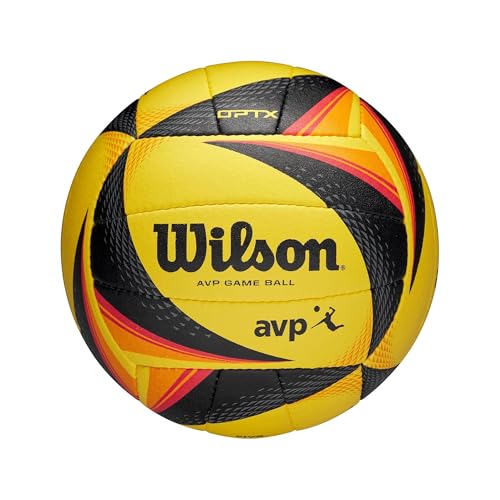
Wilson AVP OPTX Beach Volleyball
- Listing: official ball of the AVP
- Built for the beach
- Check the ball type for your league
$99.95 at Amazon, as of Nov 17, 2026 02:07 UTC
Check price on Amazon
Mikasa Beach Classic BV552C
- Listing: inspired by FIVB design
- 10 panels
- Beach ball
$24.99 at Amazon, as of Nov 17, 2026 02:07 UTC
Check price on Amazon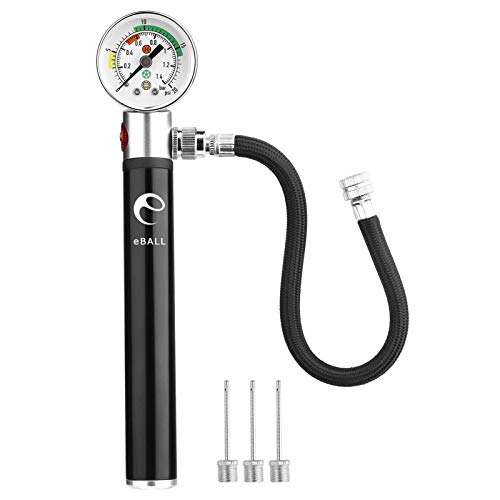
eBall Pump with Gauge
- Gauge in bar and psi
- Release valve
- Lists volleyball
$19.99 at Amazon, as of Nov 17, 2026 02:07 UTC
Check price on Amazon
ShocSox Sand Socks
- Listing: for beach volleyball and soccer
- Needs referee permission
$34.99 at Amazon, as of Nov 17, 2026 02:07 UTC
Check price on Amazon
Blue Lizard Sport Mineral SPF 50
- Zinc oxide and titanium dioxide
- SPF 50 lotion
- Reapply as directed
$8.97 at Amazon, as of Nov 17, 2026 02:07 UTC
Check price on AmazonNext: the beach volleyball hub, injury prevention, training and the volleyball hub for indoor gear.
Beach volleyball gear FAQs
What size ball is used in beach volleyball?
The FIVB rules specify 66 to 68 cm in circumference and 260 to 280 g, softer than an indoor ball. Local leagues may specify a particular ball, so ask the organizer.
Do beach volleyball players wear shoes?
By the FIVB rules, players are barefoot unless the first referee authorizes socks or shoes. Sand socks are sometimes allowed on hot sand.
What sunscreen should I use?
The CDC recommends broad-spectrum sunscreen with SPF 15 or higher, reapplied at least every 2 hours and after sweating or toweling, along with shade, a hat and sunglasses.
Is “official ball” on the label a standard?
Not necessarily. The FIVB rules set the specifications; labels such as “official ball of” come from the maker or a league sponsor. Check the specifications and ask your organizer.
Do I need an ankle brace or knee pads on sand?
Not by rule. The NATA position statement supports bracing or taping for athletes with a sprain history. Pads are allowed for protection or support; ask a clinician or coach what fits your situation.
Sources
- FIVB Official Beach Volleyball Rules 2025-2028 (PDF)
- CDC, Sun safety
- AAOS OrthoInfo, Athletic Shoes
- NATA position statement on ankle sprains (Kaminski 2013)
- Mikasa Beach Pro BV550C listing (B0CYRDJ4YW)
- Wilson AVP OPTX listing (B0812JPZFT)
- Mikasa Beach Classic BV552C listing (B0CYSJLJ16)
- eBall pump with gauge listing (B07MYF9QVV)
- ShocSox Sand Socks listing (B07S7FCLQ2)
- Blue Lizard Sport Mineral SPF 50 listing (B095RRCVQZ)
General information for education only, not medical advice. It does not replace a visit with a sports medicine doctor, physical therapist or athletic trainer. See how we write and check our pages in our editorial policy.