This article contains affiliate links: if you buy through them we may earn a commission, at no extra cost to you. Read our affiliate disclosure.
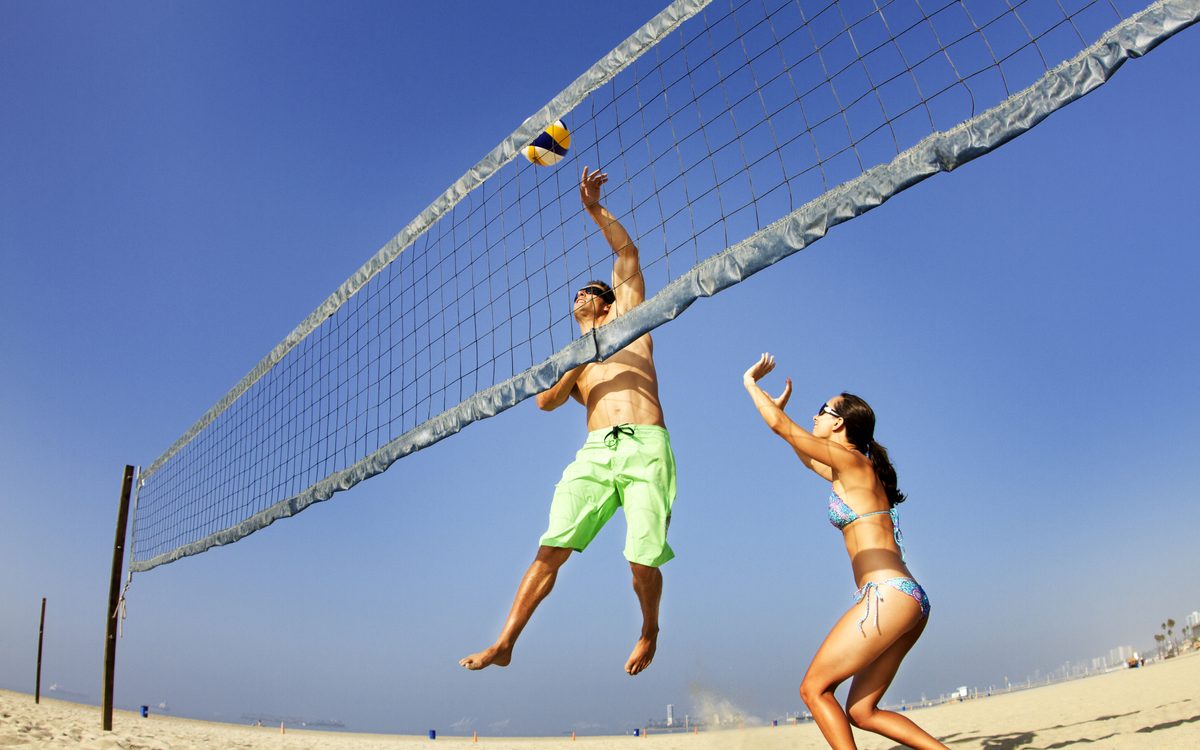
At the Paris 2024 Olympics, beach volleyball was played on a temporary sand court in the shadow of the Eiffel Tower, and Sweden’s David Åhman and Jonatan Hellvig won their country’s first Olympic beach volleyball gold. The sport made its Olympic debut in Atlanta in 1996, where Karch Kiraly and Kent Steffes of the United States won the first men’s gold. Beach volleyball (also called sand volleyball, or simply “beach”) is volleyball played on sand by teams of two, with no substitutes and nowhere to hide.
Beach Volleyball guides: what do you need?
New to beach volleyball? Start with the first card. Everything here is general education, not medical advice.
History & Origins of Beach Volleyball
Beach volleyball grew up on the sand of Southern California. Olympedia says the sport became popular there during the 1980s (Olympedia). It was played once at The World Games, in 1993, before it became an Olympic sport. Its Olympic debut came at Atlanta 1996, where a six-day tournament at Atlanta Beach drew 107,785 spectators, and it has been on the programme at every Games since (FIVB).
Since then the Olympic tournament has moved to famous settings: Bondi Beach in Sydney 2000, Horse Guards Parade in London 2012, Copacabana in Rio 2016, Shiokaze Park in Tokyo and the Eiffel Tower in Paris 2024. Los Angeles will stage beach volleyball at Alamitos Beach in 2028 (USA Volleyball). We do not give exact dates for the earliest informal games on the beach, because we have not confirmed them on an official page.
- 1980s: Beach volleyball becomes popular on Southern California beaches (Olympedia).
- 1993: Played once at The World Games (Olympedia).
- 1996: Olympic debut in Atlanta; first gold medallists are Karch Kiraly and Kent Steffes (USA) and Jackie Silva and Sandra Pires (Brazil) (FIVB).
- 2000: Olympic tournament at Bondi Beach, Sydney (FIVB).
- 2012: Olympic tournament at Horse Guards Parade, London (FIVB).
- 2016: Olympic tournament at Copacabana Beach, Rio (FIVB).
- 2024: Paris Games with the Eiffel Tower as backdrop (FIVB).
- 2028: Los Angeles Games planned at Alamitos Beach, Long Beach (USA Volleyball).
Recent Champions
This table covers the Olympic Games Paris 2024 only, not every championship. Source: Olympedia results pages for the men and women, opened 2026-11-13.
| Competition | Gold | Silver | Bronze |
|---|---|---|---|
| Olympics 2024, men | David Åhman / Jonatan Hellvig (SWE) | Nils Ehlers / Clemens Wickler (GER) | Anders Mol / Christian Sørum (NOR) |
| Olympics 2024, women | Duda Lisboa / Ana Patrícia Ramos (BRA) | Melissa Humana-Paredes / Brandie Wilkerson (CAN) | Nina Brunner / Tanja Hüberli (SUI) |
Official results and records
For world tour, World Championships and earlier Olympic results, use these official pages:
Legends of the Sport
Olympic champions from different eras, per FIVB and Olympedia. This is not a ranking.
- Karch Kiraly and Kent Steffes (USA): won the first men’s Olympic beach volleyball gold in 1996.
- Jackie Silva and Sandra Pires (Brazil): won the first women’s Olympic gold in 1996.
- Misty May-Treanor and Kerri Walsh Jennings (USA): won Olympic gold in 2004, 2008 and 2012; Walsh Jennings also won bronze in 2016 (Olympedia).
- Anders Mol and Christian Sørum (Norway): Olympic bronze medallists in Paris 2024 (Olympedia).
- David Åhman and Jonatan Hellvig (Sweden): 2024 Olympic champions.
- Duda Lisboa and Ana Patrícia Ramos (Brazil): 2024 Olympic champions.
How we keep this current: we re-check facts after each major championship and update this page. Spot an error? See our editorial policy.
This page covers how the two-player game differs from indoor volleyball, who plays it, what research says about knees, shoulders and sun, and the gear that makes sense on sand. It is general information, not medical advice.
Beach volleyball at a glance
| What it is | Volleyball on sand, two players per team, no substitutions. |
|---|---|
| How it is scored | Rally scoring: every rally gives a point. A set goes to 21 (win by two) and a match is best of three, with the deciding third set played to 15. |
| Court and net | 16 x 8 m court, sand at least 40 cm deep at FIVB events. Net 2.43 m for men and 2.24 m for women. |
| Levels | Park leagues, clubs, NCAA teams, pro tours, the Olympics. |
| Governing bodies | FIVB worldwide; USA Volleyball in the US; the NCAA for college. |
How beach volleyball works
The core idea is the same as indoor volleyball: send the ball over the net and make it land on the other side. According to the FIVB rulebook, a team gets three hits, and a block touch counts as one of them. The side that wins a rally scores a point; if the receiving team wins it, they also gain the serve, and the serving player must alternate each time that happens.
What makes the sand game its own sport is the small team. With only two players, both serve, pass, set, hit and block. There is no place to hide: each partner has to be able to do everything, blocking included. The court is 16 x 8 m, and teams switch sides every 7 points in the first two sets and every 5 in a third set, to even out sun, wind and glare. Each team can call one time-out per set, and at FIVB events an automatic technical time-out of 30 seconds happens when the combined score reaches 21 in sets one and two.
Players are barefoot unless the referee allows otherwise. The ball is 66 to 68 cm around, with lower pressure than an indoor ball. And per the rulebook, an attack hit with an open-handed finger action (a soft-fingered “dink”) is a fault. Nets are lower for young players: 2.24 m for 16 and under, 2.12 m for 14 and under, 2.00 m for 12 and under.
Who plays it, and at what level
Youth and recreational. Most players meet the sport at the park, at a beach club or at a summer camp, and many clubs and parks departments run leagues for adults. USA Volleyball is the national governing body recognized by the FIVB and the U.S. Olympic and Paralympic Committee; ask your local club or parks department about leagues near you.
College. Beach volleyball is a women’s NCAA sport, and the NCAA championship has been held in Gulf Shores, Alabama since 2016 with a 16-team field . The NCAA’s membership directory projects about 90 sponsoring schools for 2025-26.
Pro. In the US the AVP runs tournaments and the AVP League, which in 2026 has eight teams, each made up of a men’s pair and a women’s pair; its 2026 schedule included the Manhattan Beach Open on August 14 to 16. Internationally, the FIVB and Volleyball World run the world championships and the circuits that lead to the Olympics.
Olympic status
- Atlanta 1996: official Olympic debut. It was a demonstration event at Barcelona 1992 (Olympics.com). The FIVB counts eight Olympic editions from Atlanta 1996 through Paris 2024.
- Paris 2024: played in a temporary arena by the Eiffel Tower, with Sweden winning the men’s gold.
- Los Angeles 2028: USA Volleyball reports that the beach tournament is confirmed for Alamitos Beach in Long Beach (the indoor tournament is at an arena in Anaheim). The Games run July 14 to 30, 2028; check the official programme for the current Games for the beach volleyball schedule and format.
The volleyball sport at the Paralympic Games is sitting volleyball, a different game from the sand game.
Physical demands
Sand changes everything about moving. In a 2025 study of twelve national-level male players, the same group played three beach matches and one indoor match; the movement counts were mostly similar, but beach volleyball produced higher average and peak heart rates and more time at 90 to 100% of maximum heart rate, which the authors linked to the sand surface. In plain terms, the same rally is harder work in sand, and with only two players there are few breaks.
Health and safety for beach volleyball
This section is general information. If something hurts, see a sports medicine doctor, physical therapist or athletic trainer.
What gets hurt
The best-known study followed professional players at the 2001 FIVB World Championships. Among 178 of 188 players interviewed, acute injuries that cost time were 3.1 per 1,000 competition hours, and knee (30%), ankle (17%) and finger (17%) injuries made up more than half of them. Overuse problems, mostly low back pain (19%), knee pain (12%) and shoulder problems (10%), were an important source of lost performance. The authors concluded that the acute time-loss rate was considerably lower than in most other team sports. A 2026 case series of 175 injuries in 160 patients at one sports medicine practice found the knee was the most common location (42.3%), and the most common mechanism was a non-contact twisting knee event while chasing the ball (26.5%). It covers clinic patients only, so it cannot show how common these injuries are among all players.
A 2024 survey of 785 beach volleyball athletes in Greece also looked at skin injuries such as cuts, scrapes and blisters and found rates varied with daily training hours.
Sun and heat
You are outside for hours on bright sand. The CDC recommends broad-spectrum sunscreen with SPF 15 or higher, reapplied at least every 2 hours and after sweating or toweling, plus shade, a brimmed hat and sunglasses that block UVA and UVB. For heat, the NATA position statement recommends 7 to 14 days of gradual acclimatization and treats suspected exertional heat stroke as an emergency: cool first, transport second, call 911. The FIVB’s heat-stress program, covering 8,530 matches over 11 years, recorded 20 heat medical time-outs, with risk rising with ambient and black-globe temperature.
Ankles, head and the surface
- The court surface. The FIVB rulebook calls for sand that is fine, loosely compacted and free of stones and dangerous particles, at least 40 cm deep at FIVB events. At a park or beach, walk the court first and pick out glass, shells and debris before play.
- Ankle sprains. The NATA position statement on ankle sprains supports balance and neuromuscular training and, for people with a history of sprain, bracing or taping. Ask a clinician what fits your history.
- Concussion. Collisions with a partner or a hard-hit ball can cause concussions. The CDC’s HEADS UP guidance is to recognize the signs (headache, dizziness, confusion, trouble with balance), take the player out of play right away, and have a healthcare provider decide when they may return. Call 911 for danger signs such as repeated vomiting, seizure or worsening headache.
Training, recovery and nutrition pointers
Beach sessions are usually many short matches in a day, so plan fuel and fluids as for a tournament: a meal one to four hours before, snacks between matches, and sleep afterward (the CDC recommends at least 7 hours for adults, 8 to 10 for teens). Norwegian and Dutch volleyball trials of take-off and landing technique and balance-board training reported fewer ankle sprains among players with previous sprains; ask a coach or physical therapist what suits you. See the volleyball training, recovery and nutrition pages for the basics.
Gear for beach volleyball
- The ball. A beach ball is larger and softer than an indoor ball (66 to 68 cm around, lower pressure per the FIVB).
- Net and court lines. Park and portable nets should match the age and gender heights above. Check the net cord, posts and anchors before play.
- Sun and skin. Sunscreen, a brimmed hat or visor, UV-blocking sunglasses and sand socks if the sand is hot. Players are barefoot by rule unless the referee allows shoes.
Two balls from the listings, and a recovery shoe for afterward: the Mikasa Beach Pro BV550C, which its listing describes as the only beach volleyball officially used in FIVB events; the Wilson AVP OPTX, described by its listing as the official ball of the AVP; and the OOFOS OOahh Slide from our recovery shoes guide. Ball claims come from the listings, not from our testing. For more on gear in the indoor game, see the volleyball gear page.

Mikasa Beach Pro BV550C
- Listing: used in FIVB events
- Beach-specific ball
- Check size for your league
$79.08 at Amazon, as of Nov 17, 2026 02:07 UTC
Check price on Amazon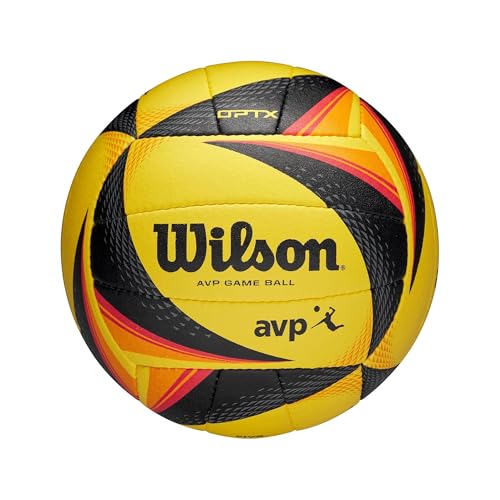
Wilson AVP OPTX Beach Volleyball
- Listing: official ball of the AVP
- Built for the beach
- Check the ball type for your league
$99.95 at Amazon, as of Nov 17, 2026 02:07 UTC
Check price on Amazon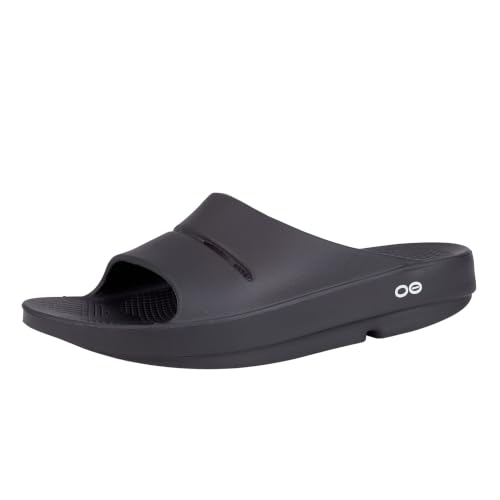
OOFOS OOahh Slide
- OOfoam slide
- APMA Seal of Acceptance
- Machine washable
$59.95 at Amazon, as of Nov 17, 2026 02:07 UTC
Check price on AmazonRelated sports and disciplines
- Volleyball: the indoor game, with rules, youth, injuries and training pages.
- Sitting volleyball: the Paralympic volleyball sport.
Beach volleyball FAQs
How many players are on a beach volleyball team?
Two. The FIVB rules say a team is exactly two players, and there are no substitutions during a match. Casual games sometimes use four-a-side or co-ed rules, but those are local choices.
How is a beach volleyball match scored?
Every rally scores a point. A set goes to 21 and must be won by two; a match is the best of three sets, and the deciding third set goes to 15, again with a two-point lead needed.
Is beach volleyball harder on the body than indoor volleyball?
It is different. Sand is softer on landings, but a small 2025 study found higher heart rates in beach matches than in indoor matches, and sun and heat add their own load. Injury research puts knees, ankles, fingers, low back and shoulders at the front, which is similar to indoor volleyball.
Is beach volleyball in the Olympics?
Yes. It became an official Olympic sport in Atlanta in 1996 and has been played at every Games since, through Paris 2024. USA Volleyball reports the LA28 beach tournament is confirmed for Long Beach; check the official programme for the current Games for dates and formats.
Sources
- FIVB Beach Volleyball Rules 2025-2028
- FIVB: 30 years as an Olympic sport
- USA Volleyball: LA28 venues
- Bahr and Reeser 2003 (PubMed)
- Trikha et al. 2026 (PubMed)
- Figueira et al. 2025 (PubMed)
- FIVB heat stress study 2021 (PubMed)
- NATA exertional heat illnesses (PubMed)
- NATA ankle sprains position statement
- CDC sun safety
- CDC HEADS UP
- NCAA sport sponsorship
Keep exploring: the volleyball guide, volleyball injuries, our ankle brace guide, the electrolyte powder guide for hot days, recovery tools, and every other sport on our sports hub.