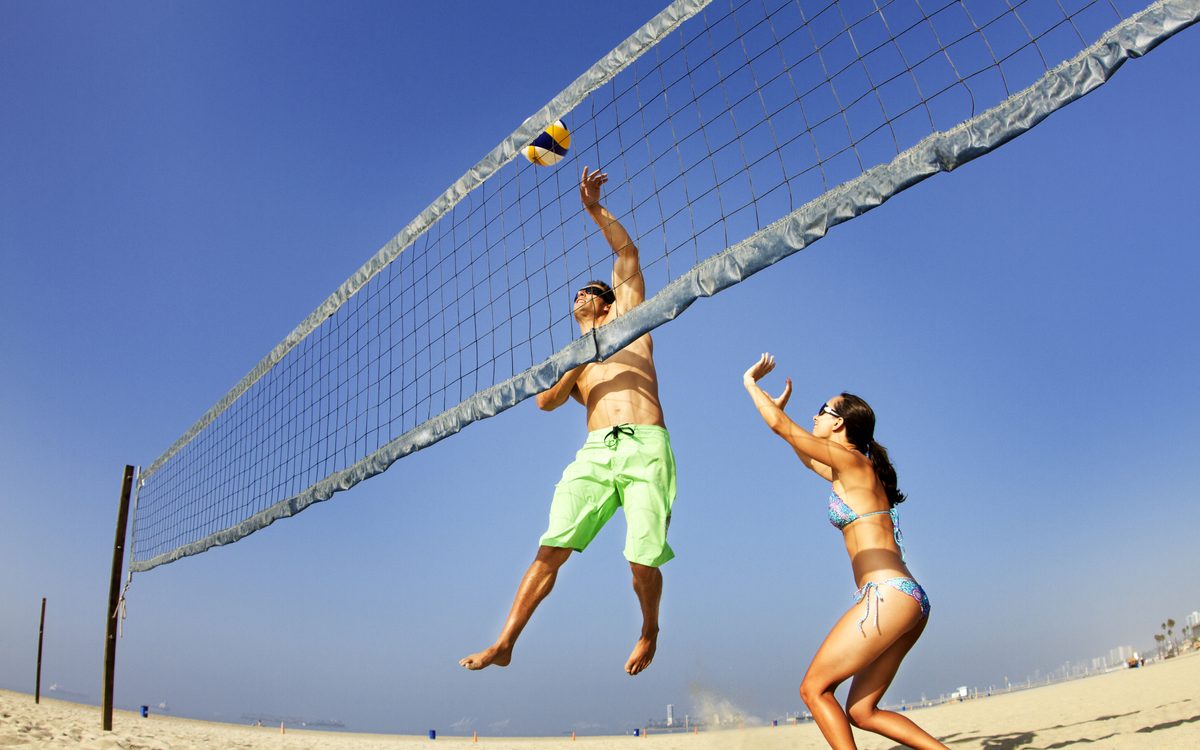
The first match is at nine, the second is hours later, and the third depends on who wins the bracket. In between, the pair sits under a tarp with a cooler, a bag of fruit and a decision about what to eat. Beach volleyball nutrition is fuel, fluid and, for some players, supplements, chosen for long hot days of short bursts of effort. This page summarizes what sports nutrition position statements and beach-specific studies say, and where the evidence is thin. It is general information, not personal dietary advice; a registered dietitian can build a plan for you. See also recovery and the beach volleyball hub.
Quick answer: Plan food and fluid around the match schedule: the ACSM, Academy of Nutrition and Dietetics and Dietitians of Canada joint position says a pre-exercise meal 1 to 4 hours before is a common recommendation, with fluids and snacks through the day. Beach players sweat heavily in the heat, and one study found a mean sweat rate of 1,440 ml per match. Low energy availability is a real risk in training, so eat enough. Supplements are optional; choose products that are third-party tested, check the doping rules, and talk to a doctor or dietitian first.
Fueling a tournament day
The American College of Sports Medicine joint position statement on nutrition and athletic performance (Thomas and colleagues, Med Sci Sports Exerc 2016) says athletes should eat enough to match energy needs, time carbohydrate and protein around training, and eat a pre-exercise meal 1 to 4 hours before. We did not find a beach-specific meal plan from a federation, so the rest is general practice: a familiar breakfast, then snacks that are easy to eat in the shade between matches, such as fruit, bread, rice cakes or a sandwich, with a proper meal after the last match. Nothing new on tournament day.
Beach volleyball matches are short but the day is long. Match times average 30 to 64 minutes in FIVB World Tour data (Palao and colleagues, J Hum Kinet 2012), and a day can include two or three matches. A 2021 study of 20 NCAA Division I women found competition load exceeded practice load once warm-ups were counted, and the authors called for careful management of fueling (Bozzini and colleagues).
Hydration in the heat
In a study of 47 male players over 50 matches at an average 33.6 degrees C and 56 percent humidity, mean sweat rate was 1,440 ml, fluid intake 731 ml and fluid balance minus 0.8 percent, and sweat rate rose with humidity (Zetou and colleagues, J Sci Med Sport 2008). Players drank about half of what they sweated, but the average match was only 42 minutes. The FIVB’s heat stress monitoring program recorded 20 heat-related medical time-outs in 8,530 matches over 11 years, at higher wet bulb globe temperature and humidity, and two of the affected players had had diarrhea or gastroenteritis in the preceding five days (Racinais and colleagues, Br J Sports Med 2021). The NATA position statement says heat stroke is an emergency: cool first, transport second, call 911. There are no weight classes in beach volleyball, so weight-class cutting cautions do not apply.
Energy availability and REDs
Relative Energy Deficiency in Sport (REDs) is the condition where too little energy intake for the energy spent affects health and performance. The 2023 IOC consensus statement (Mountjoy and colleagues, Br J Sports Med) covers it for all athletes. In a 2024 study of female collegiate beach players, mean energy availability stayed in the subclinical zone, the share with low energy availability was 30.8 percent in preseason and 62.5 percent at week 9, and carbohydrate intake was below the recommended range for power athletes at every timepoint (Willingham and colleagues, J Strength Cond Res). The abstract does not state the number of athletes. In two elite female players during a simulated two-match day, blood potassium fell by about 15 percent on average (Muniz-Santos and colleagues, Nutrients 2025). That is an exploratory finding in two people, not advice. Signs of REDs, such as constant fatigue, repeated injuries, missed periods or preoccupation with food, deserve a visit to a doctor or sports dietitian, and disordered eating is a health matter, not a training problem.
Supplements: what to know
Supplements are optional and cannot replace food. The IOC consensus statement on dietary supplements (Maughan and colleagues, Br J Sports Med 2018) says that few supplements are supported by good evidence for performance and that contamination with banned substances is a real risk. In a survey of 88 Italian beach volleyball players, 46.8 percent used protein, 39.2 percent vitamins B and C and 36.9 percent caffeine at least once a week (Amatori and colleagues, Sports 2020).
- Creatine. The ISSN position stand (Kreider and colleagues, 2017) covers safety and efficacy. In a 10-week trial of 32 female beach players, a creatine monohydrate gummy group improved countermovement jump height and change-of-direction speed compared with controls (Pereira and colleagues, J Funct Morphol Kinesiol 2026). One trial, one product form; talk to a doctor or dietitian first, especially for youth, and follow the label.
- Caffeine. The ISSN position stand on caffeine and exercise performance (Guest and colleagues, 2021) reviews the evidence. In 12 young male beach players, 3 mg per kg did not improve attack decision-making after mental fatigue (Costa and colleagues, BMC Sports Sci Med Rehabil 2025). Caffeine is not for everyone: sensitivity, sleep and heart conditions matter, so ask a doctor.
- Everything else. Protein powders and vitamins fill gaps only if the diet does. No supplement should be treated as safe because it is sold to athletes.
Look for third-party testing for sport, such as NSF Certified for Sport or Informed Sport, and say plainly when a product is not certified. Athletes subject to doping control should check the WADA Prohibited List and ask their federation or anti-doping organization. Nothing here is a dosing recommendation, and young players should not use supplements without a clinician’s advice.
Next: training, injury prevention and the volleyball hub.
Beach volleyball nutrition FAQs
What should I eat between beach volleyball matches?
Easy-to-digest carbohydrate with some fluid and a little salt from food is common practice: fruit, bread, rice cakes, a sandwich. The ACSM position statement supports a pre-exercise meal 1 to 4 hours before. Try foods in practice, not on tournament day.
How much should I drink in the heat?
There is no single number. One study found players sweat about 1,440 ml per match in hot conditions and drank about half. Drink regularly, use shade, and treat heat stroke as an emergency.
Is creatine safe for beach volleyball players?
The ISSN position stand reviews safety and efficacy, and one 2026 trial in female beach players found jump and agility gains. Check with a doctor or dietitian, follow the label, and avoid use in young players without advice.
Do I need protein powder?
Not if you eat enough protein from food. Powders are convenient, but choose third-party tested products and check with a dietitian.
What is REDs and should beach players worry about it?
Relative Energy Deficiency in Sport means too little energy for what the body spends. A 2024 study of female college beach players found many had low energy availability at some points in the season. If you notice constant fatigue, repeated injuries or missed periods, see a doctor or dietitian.
Sources
- Thomas et al., ACSM/AND/DC joint position statement on nutrition and athletic performance, 2016 (PMID 26891166)
- Palao et al., match duration, 2012 (PMID 23486703)
- Bozzini et al., NCAA D1 women, 2021 (PMID 33927118)
- Zetou et al., body weight changes and fluid intake, 2008 (PMID 17363327)
- Racinais et al., FIVB heat stress monitoring, 2021 (PMID 33046452)
- NATA position statement, exertional heat illnesses (PMID 26381473)
- Mountjoy et al., IOC consensus statement on REDs, 2023 (PMID 37752011)
- Willingham et al., energy availability in collegiate beach volleyball, 2024 (PMID 39454190)
- Muniz-Santos et al., Nutrients 2025 (PMID 40507193)
- Maughan et al., IOC consensus on dietary supplements, 2018 (PMID 29540367)
- Amatori et al., supplements used by beach volleyball athletes, 2020 (PMID 32168730)
- Kreider et al., ISSN position stand on creatine, 2017 (PMID 28615996)
- Pereira et al., creatine gummies in female beach volleyball athletes, 2026 (PMID 41900512)
- Guest et al., ISSN position stand on caffeine, 2021 (PMID 33388079)
- Costa et al., caffeine and attack decision-making, 2025 (PMID 40474216)
- WADA Prohibited List
- NSF Certified for Sport
- Informed Sport
General information for education only, not medical advice. It does not replace a visit with a sports medicine doctor, physical therapist or athletic trainer. See how we write and check our pages in our editorial policy.