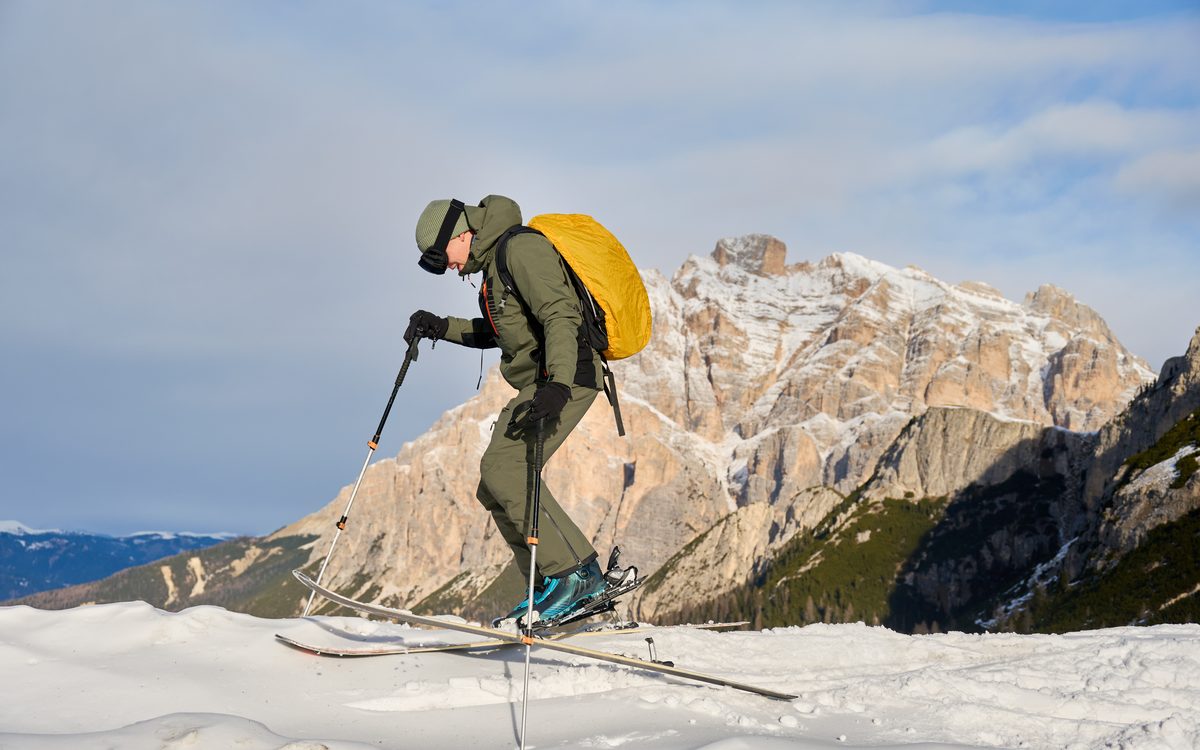
The car heater is on full, boots are off, and your calves are tight in a way that feels earned. A big skimo day, long climbs and a descent on tired legs, leaves most people sore, sleepy and hungry. Skimo recovery is what you do between sessions, sleep, easy movement, food, load management and sometimes recovery tools, to be ready for the next one. The evidence for many popular methods is modest, and we say so below. For the sport itself, see the ski mountaineering hub.
Quick answer: Sleep, enough food and a training week with easy days built in do most of the work. Tools such as massage, compression and cold water have small or mixed effects in studies, so treat them as extras. Muscle soreness that eases over a few days is normal; pain that is sharp, stays in one spot or changes how you move is a reason to see a sports medicine doctor, physical therapist or athletic trainer.
How hard a race hits the body
A 2026 study of nine experienced military ski mountaineers (Mrakic-Sposta and colleagues, Sports) measured saliva and urine before and right after a competition. It found large increases in oxidative and inflammatory markers, stress hormones, and rating-scale scores for tiredness, fatigue and pain. The authors describe an extremely high physiological burden. It is a small, preliminary study of nine people, so treat it as a sign that hard races are costly, not as a recovery guide.
Sleep
The American Academy of Sleep Medicine and the Sleep Research Society recommend adults get at least 7 hours a night, and the AASM pediatric consensus recommends 8 to 10 hours for teenagers aged 13 to 18. Early alpine starts shorten sleep, so protect the night before and the night after. At altitude, the CDC Yellow Book notes periodic breathing is nearly universal above about 2,700 m (9,000 ft) and sleep is altered, with frequent awakenings. Mild exercise and avoiding alcohol the first 48 hours are the CDC suggestions for adjusting. If you have sleep apnea or heart or lung disease, ask a physician before sleeping at altitude.
Load management
Easy days are part of the plan. Many coaches build a hard-easy pattern and an easier week every few weeks, which is common practice, not a published skimo rule. The AAP advises young athletes to take one to two days off a week (Brenner, 2016). If you wake with a high resting heart rate, heavy legs and low mood for several days, pull back and consider checking with a clinician. Our training page has the weekly shape, and the HRV for athletes guide explains recovery scores.
Mobility and flexibility
Skimo asks for ankle and hip range for efficient striding, and a lot of time in a forward-flexed position. Gentle stretching or mobility work after sessions feels good to many athletes. The evidence that a cool-down speeds recovery is weak: a 2018 review in Sports Medicine (Van Hooren and Peake) found small or no effects on most recovery markers. Do it if you like it. Keep stretches comfortable, not painful.
What the evidence says about recovery methods
- Massage. A 2018 meta-analysis (Dupuy and colleagues, Frontiers in Physiology; 99 studies) found massage the most effective of the methods reviewed for delayed-onset muscle soreness and perceived fatigue.
- Compression garments. A 2017 meta-analysis (Brown and colleagues) found small benefits, largest for strength recovery.
- Cold-water immersion. A 2016 review (Machado and colleagues) found cold water at 10 to 15 C for 10 to 15 minutes was slightly better than passive rest for soreness. A 2015 study in The Journal of Physiology (Roberts and colleagues) found regular cold-water immersion after strength training reduced strength and muscle gains, so it may not suit every phase of training.
- Foam rollers and massage guns. Popular and pleasant; we did not find skimo studies, and the evidence is limited. Avoid pressing on an injured area.
Our recovery tools guide compares products. Cold plunges and hot tubs are not for everyone, so ask a doctor first if you have a heart condition.
Soreness versus injury
Delayed soreness peaks a day or two after unusual effort and fades. Warning signs of something else include sharp pain, pain at rest or at night, swelling, a joint that feels unstable, numbness, or a sore on the foot that is not healing. See the injuries page and a professional. After a trip to the mountains, also consider altitude: headache and nausea are not normal soreness.
Eating after a big day
The ACSM, Academy of Nutrition and Dietetics and Dietitians of Canada joint position (2016) suggests 15 to 25 g of protein (about 0.25 to 0.3 g per kg of body mass) after exercise and says rapid carbohydrate refuelling matters mainly when there is less than 8 hours until the next session. See our nutrition page.
At the 2026 Winter Olympics, a study of Team USA medical use (Vincent and colleagues, BMJ Open Sport & Exercise Medicine) found athletes with no injury or illness still used clinics for maintenance, recovery and mental-performance services, and most encounters were maintenance or massage. Recovery support is a normal part of elite sport. It does not mean you need a clinic to improve.
Frequently asked questions
How long should I rest after a hard race?
There is no universal answer. Easy movement and a lighter next day are common; how long depends on you. A coach can help you plan.
Do massage guns work?
Massage has the strongest evidence among common methods for soreness, but we did not find skimo-specific studies of massage guns. They are an optional extra.
Is an ice bath good after skimo?
Cold water slightly reduced soreness in one review, but regular use after strength training reduced strength gains in another study. Consider timing and ask a doctor if you have a heart condition.
How much sleep do I need?
At least 7 hours for adults per AASM and SRS, and 8 to 10 hours for 13- to 18-year-olds per the AASM pediatric consensus.
Is muscle soreness normal?
Yes, usually. Sharp pain, pain in one spot or a change in how you move should be checked by a professional.
Sources
- Mrakic-Sposta et al., responses to a ski mountaineering competition (2026)
- Vincent et al., medical resource use by Team USA at Milano Cortina 2026
- Van Hooren and Peake, cool-down review, Sports Med 2018
- Dupuy et al., recovery methods meta-analysis, Front Physiol 2018
- Brown et al., compression garments, Sports Med 2017
- Machado et al., cold-water immersion, Sports Med 2016
- Roberts et al., cold-water immersion and training adaptation, J Physiol 2015
- AAP, Brenner, sports specialization and intensive training (2016)
- ACSM, Academy of Nutrition and Dietetics and Dietitians of Canada: nutrition and athletic performance (2016)
- CDC Yellow Book: high-altitude travel and altitude illness
- AASM and SRS consensus on adult sleep duration
- AASM pediatric sleep duration consensus
General information for education only, not medical advice. It does not replace a visit with a doctor, physical therapist or athletic trainer, and it is not avalanche training. See how we write and check our pages in our editorial policy.