This article contains affiliate links: if you buy through them we may earn a commission, at no extra cost to you. Read our affiliate disclosure.
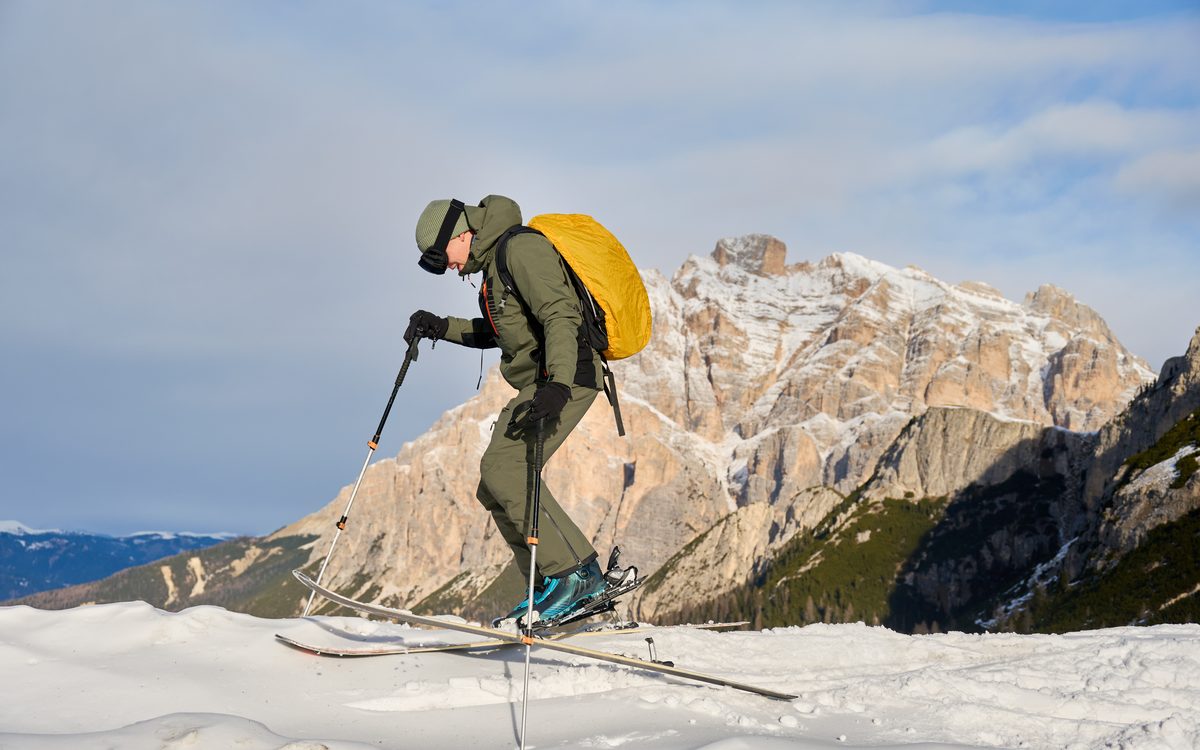
The night before a first skimo race, the living room floor looks like a gear shop exploded: skins, a pack, a beacon with fresh batteries, boots, a helmet, a spare layer. Skimo gear is its own specialist category: light touring-style skis, bindings and boots, climbing skins, poles, crampons, and the safety kit of beacon, shovel and probe. This page explains what matters, how to check fit, how to tell standards from maker claims, and the everyday items around the edges. See the ski mountaineering hub for the sport overview.
Quick answer: Start with what the race requires, since race directors set the gear list. NBC Olympics lists disqualification for a missing or battery-less avalanche beacon, a helmet not worn correctly, missing ski brakes, or non-compliant skis, bindings or boots. Fit matters most for boots, because the 2026 skimo survey found skin lesions from stiff carbon boots were the main overuse problem. Specialist race skis, boots and bindings are beyond what we review here; the cards below are safety and comfort items.
What the rules require
The ISMF Rules and Guidelines (2026/27 edition is on its Sport Rules page) are the authority for ISMF events, and USA Skimo says it enforces the ISMF compulsory equipment list at its sanctioned events. We could not read the equipment tables ourselves. Search summaries of USA Skimo’s equipment guide say the Race category requires a helmet meeting a skiing standard (EN 1077) or a climbing standard (UIAA 106 or EN 12492) and a beacon that transmits on 457 kHz with three search antennas. Local events vary, and a beginner event we found did not require a beacon, shovel or probe. Treat the race director’s list as the answer.
Skis, bindings and boots
- Fit boots first. A qualified boot fitter can check length, volume and pressure points. Break boots in on short outings before a race. See our injury prevention page.
- Brakes and bindings. NBC Olympics lists missing ski brakes as a disqualification offence. Have bindings checked by a shop, as the AAOS advises skiers to have boots and bindings adjusted by a shop to the proper standards.
- Skins. Skins that stick out of a suit or pack cost 10 seconds at the Olympics. Keep them clean and the glue protected; this is general practice.
- Crampons and poles. Required where the course includes a booting section, per NBC Olympics.
Helmets
Skimo racing helmets are lightweight, and event rules decide which certification counts, so confirm before buying. An alpine ski helmet certified to ASTM F2040 and EN 1077 (as the maker says for the Smith Mission below) suits resort and uphill days, but it is not a race-legal helmet recommendation. Fit it snug with the strap done up, replace it after a significant impact, and treat features such as MIPS as maker claims rather than verified injury-risk claims.
Avalanche safety gear
Avalanche.org’s steps are get the forecast, get the gear and get the training. A beacon, shovel and probe are the usual minimum for backcountry travel, but a beacon is only one piece, and practice and training matter as much as the device. Learn to use it in a formal avalanche course, practice with your partners and check batteries. Racing on controlled courses is different from touring outside them.
Clothing, hydration and comfort
Climbing makes you hot and the descent chills you, so thin layers you can shed work better than one thick jacket. The 2026 thermoregulation study (Dünnwald and colleagues) found skin temperature dropped, especially on the hands and feet, so spare gloves are a smart addition. A hydration pack with an insulated tube helps keep water from freezing, and a snug merino or synthetic base layer and ski socks complete the basics. Our general skiing gear page covers more.

Smith Mission MIPS Helmet
- ASTM F2040 + EN 1077 (maker)
- MIPS liner, dial fit
- Not a race-legal recommendation

BCA Tracker4 Avalanche Transceiver
- Signal suppression, Big Picture mode (maker)
- Harness and batteries included
- Beacon only: shovel, probe and training needed

Compeed Advanced Blister Care Pads (Sports)
- Hydrocolloid cushions
- Stays on for several days (maker)
- Hands and feet
$17.86 at Amazon, as of Nov 17, 2026 02:07 UTC
Check price on Amazon
CamelBak Zoid Snow Hydration Pack
- 70 oz Crux reservoir
- Insulated tube in shoulder strap
- Made for snow sports
$74.25 at Amazon, as of Nov 17, 2026 02:07 UTC
Check price on Amazon
Smartwool Classic Thermal Merino Base Layer Crew
- 100% merino wool
- Midweight
- Flatlock seams
$93.75 at Amazon, as of Nov 17, 2026 02:07 UTC
Check price on Amazon
Darn Tough Solstice OTC Lightweight Ski Sock
- Over the calf, lightweight
- Knit in Vermont
- Brand lifetime guarantee
The CamelBak Zoid is made for snow sports; check that it carries your shovel and probe, or fits under your race kit, and that the pack rules at your event allow it. A hydration pack is not a substitute for the required gear.
Standards versus maker claims
Standards are test specifications a product is certified to, such as EN 1077 or ASTM F2040 for ski helmets. Maker claims are statements on a listing, such as MIPS, “lifetime guarantee” or weights. We label which is which on every card above. We have not tested any of these products, and we do not recommend race-specific skis, boots or bindings. Our nutrition page and recovery page cover the rest of an athlete’s kit bag.
Inspect before every outing
- Beacon batteries and test mode with your partners.
- Helmet shell, straps and fit.
- Bindings, brakes and boot buckles.
- Skins, crampons and pole baskets.
- Layers, spare gloves and food.
Frequently asked questions
What gear do I need for my first race?
Check the race directors’ list. USA Skimo’s guidance lists a helmet, beacon, shovel, probe, skins and a small pack as typical items, though some events require less.
Can I race in an alpine ski helmet?
It depends on the event. Race rules cite specific helmet standards, so check them. The helmet shown here is certified to alpine standards per the maker but is not a race-legal recommendation.
Is a beacon enough for avalanche safety?
No. A beacon helps only in a rescue, and avalanche.org’s steps are forecast, gear and training. Take a formal course.
How do I prevent blisters from stiff boots?
Fit and break-in help most. Many athletes also tape or cover hot spots early. See a clinician for broken skin that looks infected.
Do I need special race skis to start?
No. USA Skimo suggests renting demo gear or starting with backcountry gear you already own.
Sources
- NBC Olympics: official rules for Olympic ski mountaineering
- ISMF: Sport Rules
- USA Skimo: mandatory gear
- USA Skimo: what to expect in your first skimo race
- Avalanche.org: avalanche education
- AAOS OrthoInfo: Skiing Injury Prevention
- ASTM F2040: standard specification for helmets used for recreational snow sports
- Schöffl et al., Ski Mountaineering as a Competitive Sport (2026)
- Dünnwald et al., thermoregulation of elite ski mountaineers (2026)
General information for education only, not medical advice. It does not replace a visit with a doctor, physical therapist or athletic trainer, and it is not avalanche training. See how we write and check our pages in our editorial policy.