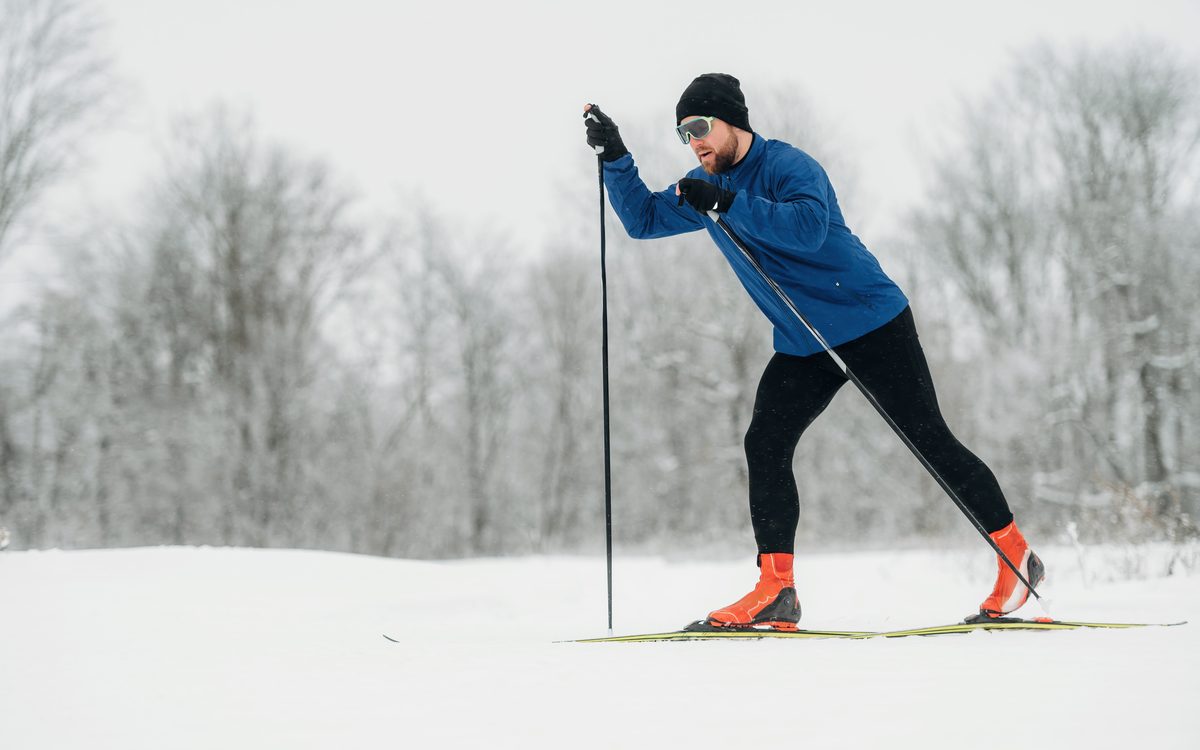
The landing looks fine for half a second, then a ski catches and the jumper tumbles down the outrun. Most athletes slide to a stop and stand up. Some do not. Nordic combined injuries are the sprains, fractures, head injuries and overuse problems that happen in the jump, in the cross-country race or in the training between them. Good injury numbers for this sport are scarce, so this page borrows carefully from nearby research and says so.
Quick answer: The best recent numbers say the knee is the most common injury site in Nordic ski athletes, that hip pain is common in jumpers, and that concussions, though few, were all in ski jumping at one world championships. Treat a head injury as serious, and see a sports medicine doctor, physical therapist or athletic trainer for any injury that does not settle. This page cannot diagnose or clear anyone to return.
General information, not medical advice. For ways to lower risk, see our injury prevention page.
Injury numbers from the 2023 Nordic World Championships
The most useful recent study (Kastner and colleagues, BMJ Open Sport and Exercise Medicine, 2025) tracked the 596 registered athletes at the 54th FIS Nordic World Ski Championships in Planica, covering cross-country skiing, Nordic combined and ski jumping. Medical teams reported 24 injuries, an incidence of 4.0 per 100 athletes (95% confidence interval 2.5 to 5.6). The lower limb was the most common location at 58.3%, and every second lower-limb injury was at the knee. Joint sprains or ligament tears and contusions each made up 25.0% of injuries. There were also 15 illnesses (2.5 per 100 athletes), 73.3% of them infections. The study did not give a separate Nordic combined figure in the abstract, and national medical teams covered 58.2% of the athletes, so treat the totals as approximate.
Head injuries: concussion
At that championship, three concussions were reported, 12.5% of the injuries, and all of them occurred in ski jumping (Kastner and colleagues). The authors say special attention should be given to concussions in ski jumping. The CDC’s HEADS UP guidance for a suspected concussion is to remove the athlete from play right away and keep them out until a healthcare provider decides they can return. Do not try to judge severity yourself. Danger signs need emergency care; the CDC lists them on its signs and symptoms page. Return to sport is a medical decision.
Knees and crash landings
In elite women ski jumpers followed over three World Cup seasons (Stenseth and colleagues, 2022), the knee was the most common injury site (33% of injuries), crash landings caused 70% of injury events and 78% of severe injuries involved the knee. That is a ski jumping study of women, not Nordic combined athletes, but combined athletes jump too. Oronowicz and colleagues (2024) looked at 18 elite ski jumpers (11 men, 7 women) who tore an anterior cruciate ligament. All the men and four of the women returned to competition. Average time to return was 14.6 months for men and 13.5 for women, and only about 60% reached their previous competitive level. These are averages for elite athletes, from media and FIS databases, not a guide to anyone’s own timeline.
Hips
Nordic ski athletes are described as being at increased risk of hip pain from femoroacetabular impingement (an extra-bone shape at the hip joint that can pinch). In a 2024 study of 24 elite athletes (13 ski jumpers and 11 Nordic combined), ski jumpers reported worse hip symptoms and function than the combined athletes, even though exams and X-rays showed no significant difference (Vasavada and colleagues). A 2025 survey of 22 athletes linked hip pain to knee and ankle symptoms, and the authors suggested hip strength and conditioning. If hip or groin pain limits you, see a doctor; do not self-diagnose.
Dental and other injuries
In a Swiss survey of 368 ski jumpers and 97 Nordic combined athletes (Stillhard and colleagues, 2015), 62.5% of the jumpers and 56.5% of the combined athletes reported a past injury, with injuries to the limbs, torso and spine, head, lips, teeth and nose. Adults had more dental injuries (12.7%) than juniors (6.1%). The authors suggested mouthguards and tooth rescue boxes. An older US retrospective study from the Lake Placid jumps (Wright and colleagues, 1986) found contusions the most frequent injury among 47 injured jumpers, with 11 having fractures. These are old and small, but they show the range.
The race half
Cross-country skiing has its own overuse and fall injuries and, in cold weather, frostbite and airway problems. We cover them on our cross-country skiing injuries page. Finnish cross-country skiers with asthma missed more competitions during respiratory infections (Mäki-Heikkilä and colleagues, 2023), and many athletes trained or competed while ill, which is worth discussing with a doctor.
Rehabilitation: general principles
We did not find a Nordic combined rehabilitation guideline. These principles are general and come with no promise: have a clinician assess the injury, follow a plan from a physical therapist or sports medicine doctor rather than a calendar, restore motion, then strength, then the specific skills (landing, then jumping, then race pace), and return only when the clinician agrees. Talk through pain, fear of landing and the loss of a season with your team; if the mood stays low, see a professional (see our mental training page).
When to see a professional
Go for a head injury, a deformed limb, inability to bear weight, numbness, a joint that gives way, pain at night or at rest, or swelling that does not settle. For emergencies, call your local emergency number.
Frequently asked questions
What is the most common Nordic combined injury?
We found no dedicated Nordic combined statistics. At the 2023 Nordic World Championships the lower limbs were most often injured, and half of those were knees (Kastner and colleagues).
How common are concussions?
Rare but important. Three concussions were reported at the 2023 championships, all in ski jumping. Remove an athlete with a suspected concussion and see a healthcare provider.
How long does an ACL injury take to heal?
There is no universal time. A study of elite ski jumpers reported average returns to competition of about 13.5 to 14.6 months, and only about 60% reached their previous level. A clinician sets each plan.
Why are hips a problem for jumpers?
The studies describe higher rates of hip pain and impingement in Nordic ski athletes, and the causes are not settled. Authors suggest hip strength work; ask a physical therapist.
When can I jump again after an injury?
Only when a healthcare provider clears you. We cannot give return-to-play advice.
Sources
- Kastner et al. 2025, injuries and illnesses at Planica 2023
- Stenseth et al. 2022, women ski jumping injuries
- Oronowicz et al. 2024, ACL injuries in elite ski jumping
- Vasavada et al. 2024, hip pain in ski jumping vs Nordic combined
- Vasavada et al. 2025, hip, knee and ankle outcomes
- Stillhard et al. 2015, injuries in ski jumping and Nordic combined
- Wright et al. 1986, injury patterns in Nordic ski jumpers
- Mäki-Heikkilä et al. 2023, respiratory infections in cross-country skiers
- CDC HEADS UP: response to a suspected concussion
- CDC HEADS UP: signs and symptoms
General information for education only, not medical advice. It does not replace a sports medicine doctor, physical therapist, athletic trainer, dietitian or qualified coach who knows you. See our editorial policy for how we write and source our pages.
Keep exploring: the Nordic combined hub, the skiing hub, ski jumping and every sport on our sports hub.