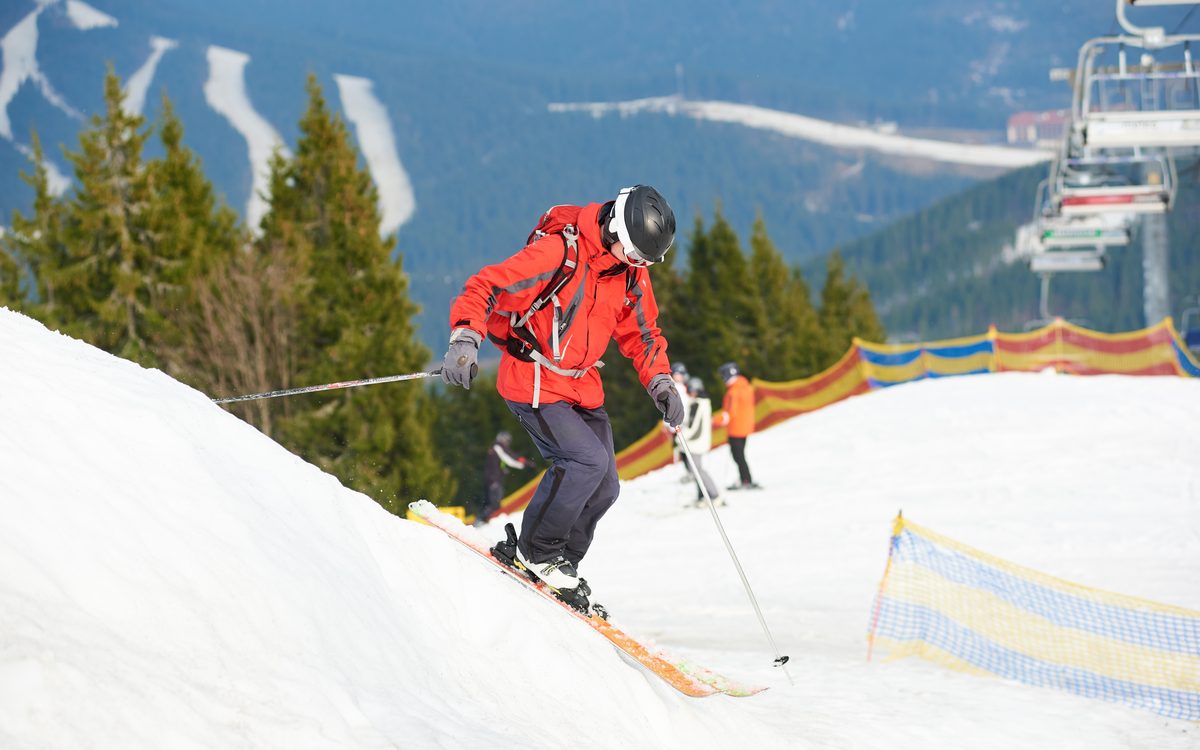
Eight in the morning on a small hill, and the first racer of the day is bouncing in the start house, bib on over a puffy jacket, while a volunteer on the course gives a thumbs up. The starter counts down, the gate opens, and a nine-year-old skis a line between pairs of poles that she walked and studied an hour ago. Alpine ski racing is skiing against the clock down a marked course. This page is the how-it-works and how-to-start guide: the basic rules, the skills a racer builds first, the levels, and where to find a program. For events, medals and history, see the alpine skiing hub.
Quick answer: In alpine racing the fastest total time wins, and in the gated events missing a gate disqualifies you (IPC rules text). Downhill and super-G are one run; slalom and giant slalom are two runs, added together. Beginners learn to ski well first, then join a ski club or resort race program with qualified coaches, and kids move up through age classes set by the national federation. Check the current FIS and U.S. Ski & Snowboard rulebooks before relying on any detail here.
General information, not medical advice. Safety is covered on our alpine skiing injury prevention page.
The rules in plain language
The Paralympic Committee’s description of alpine skiing, which follows the same format as the Olympic events, is the clearest short statement of how a race works. The racer starts from a gate, passes between pairs of poles called gates, and crosses the finish line. The result is the time. In every gated event, missing a gate means disqualification, the rule the IPC spells out for downhill, slalom and the others.
- Speed events (downhill, super-G): one run on a long course. The first run is the only run, so there is no second chance on the same day.
- Technical events (slalom, giant slalom): two runs on different courses, usually the same day, with the times added. The IPC notes giant slalom has fewer, more widely spaced gates than slalom, and the number of gates depends on the course’s vertical drop.
- Team combined (Olympics, 2026): two teammates add their times, one from a speed run and one from a slalom run (Wikipedia, secondary; see the hub for the Olympic detail).
- Equipment rules: NBC’s equipment explainer lists minimum ski lengths and turn radii by event, with longer skis in the faster events. Those figures are summarised there, so read the FIS rule text before you buy race skis.
There is no judging and no style score. The clock decides.
The basic skills, in the order most programs teach them
The sources for this section are general coaching practice, not a federation rulebook, so treat it as common sense a coach will refine. Most clubs build the same ladder.
- Balance and stance. An athletic, centred stance with hands in front, before any gates.
- Edging and carving. Turning by tilting the skis onto their edges so the ski cuts a clean arc, rather than skidding sideways. A skidded turn loses speed; a carved turn keeps it.
- Pressure control. Pushing into the outside ski through the turn and easing off at the end of it. Pressure on that ski is also the thing racers lose when they slip, a pattern discussed on our injuries page.
- Line and rhythm. Choosing the path around each gate, a skill practised first with a few gates on gentle snow, then with more.
- Speed events later. Tucking, flats and jumps in downhill and super-G come after solid technical skills in most youth programs.
Levels: from kids’ club to the World Cup
The route is the same for most racers. At the start there is a ski school or resort program, then a club team, then regional races, then national and international ones. Some details from the sources:
- Youth classes. U.S. Ski & Snowboard groups young racers by age: U10, U12, U14, U16 and older, with ages set by how old a racer is on December 31 of the season, according to regional division documents. The exact birth years change every season, so ask your division for the current table.
- Membership. According to a U.S. Ski & Snowboard sport description, the older competitor tier is required to buy a FIS license, and U12 and U14 racers sit on the national ranking list. Racing results use points systems where a lower number is a better ranking.
- High school. The National Federation of State High School Associations counted 9,411 alpine skiers in 12 states in 2024-25, led by Minnesota.
- College. The NCAA runs a skiing championship with slalom and giant slalom as the alpine events, and USCSA, founded in 1974, lists more than 250 alpine teams.
- International. FIS governs the sport worldwide. FIS also oversees para alpine skiing, which it has run since July 2022 (IPC).
How a beginner starts
- Learn to ski first. The American Academy of Pediatrics advises children to ski with qualified instruction, wear a helmet and have bindings checked at least once a year. Racing is built on ordinary skiing.
- Ask the resort about a race program. Many mountains run weekend or after-school race teams for ages from about the early school years. Ask the minimum age and ability they expect, which varies.
- Find a club. A club registered with U.S. Ski & Snowboard can enter you in sanctioned races. Start at usskiandsnowboard.org and look for the alpine section and your regional division.
- Get the gear fitted. A ski shop sets bindings, and a bootfitter handles boots (AAOS). Our gear page covers what to check.
- Try a fun race first. Local clubs often run low-key dual slalom or NASTAR-style events. Confirm what a given club offers; formats vary.
Adults can ask their local mountain about adult race leagues; USCSA is the college club route.
Para alpine skiing: classes and how to get in
The IPC says para alpine athletes compete in three groups: sitting, standing and vision impaired. A system called factored timing adjusts the times so skiers with different impairments can be ranked against each other. Equipment is adapted: single skis, sit-skis, monoskis and outriggers, and vision-impaired skiers race with a sighted guide who gives voice cues. The guide must stay within a set distance (fewer than three gates in slalom, fewer than two in the other events), or the pair is disqualified. Para alpine debuted at the 1976 Paralympics in Ornskoldsvik. Classification is handled through the sport’s governing body, so contact an adaptive ski program or your national federation for the route. Our alpine skiing hub is the related standard-sport page.
Where to read the official rules
The authoritative text is the FIS International Competition Rules for Alpine Skiing, kept in the FIS document library at fis-ski.com, with U.S. rules and division procedures on the U.S. Ski & Snowboard site. For the Paralympic description of events, see paralympic.org. The rulebook always wins over our summary.
Next: our training page.
Frequently asked questions
What is the difference between slalom and giant slalom?
The IPC describes both as two runs on different courses with the times added. Slalom has a short course with many gates and quick, tight turns; giant slalom has a longer course with fewer and more widely spaced gates.
What happens if a racer misses a gate?
In all gated events, missing a gate means disqualification (IPC rules text).
How old do you have to be to race?
Youth programs and U.S. Ski & Snowboard age classes start with U10 and younger, with ages based on the racer’s age on December 31 of the season. Individual clubs and resorts set their own minimums, so ask them.
Do you need your own race skis to start?
Not at first. Most beginner programs run on regular skis that fit, with a ski shop setting the bindings. Race skis come later, and FIS sets minimum lengths and turn radii by event, so read the rules first.
Can people with disabilities race?
Yes. Para alpine skiing has sitting, standing and vision-impaired classes, with adaptive equipment and factored timing. Start with an adaptive ski program or the national federation.
Sources
- IPC: Alpine skiing
- NBC Olympics: Alpine skiing equipment
- FIS: Facts and figures
- U.S. Ski & Snowboard (membership and sport descriptions)
- AAP HealthyChildren: Winter safety
- AAOS OrthoInfo: Skiing injury prevention
- NFHS 2024-25 participation survey
- NCAA: Skiing
- USCSA: About
- Wikipedia: Alpine skiing at the 2026 Winter Olympics (secondary)
General information for education only, not medical advice. It does not replace a visit with a doctor, physical therapist or athletic trainer. See how we write and check our pages in our editorial policy.