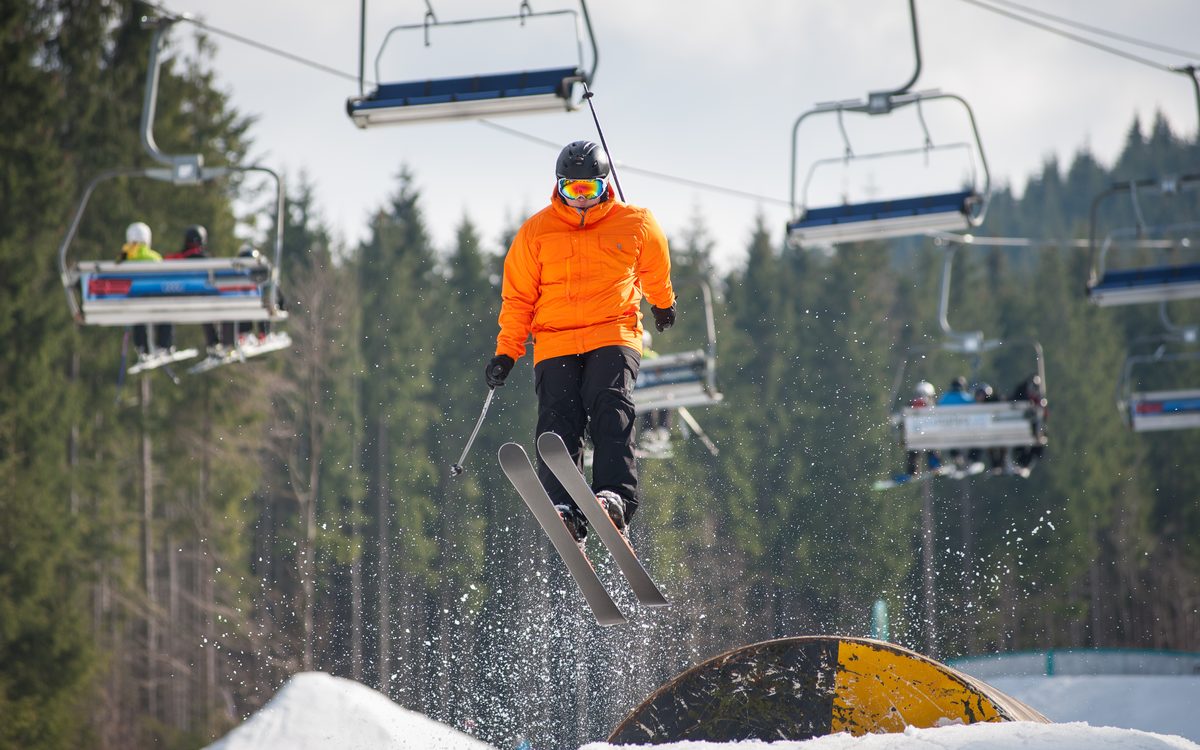
Dry-land season, a gym at 6 a.m., a trampoline hall that smells like chalk, and a coach saying the same thing for the fifth time: legs first, then trunk, then the trick. Freestyle skiing is built from short, explosive efforts and thousands of repetitions, so freestyle skiing training mixes strength, power, endurance and a lot of skill work. This page explains what the sport asks of the body, what published research says, and what a sensible week can look like. Rules and scoring are on our rules and getting started page.
Quick answer: A 2026 review groups freestyle skiing with the gravity and technical snow sports, which lean on neuromuscular power and technical precision, and says freestyle data are limited. A sensible plan mixes strength and power work, some aerobic base, skill practice on snow or in safe training setups, and rest. Weekly layouts below are general coaching practice, not a prescription. See a sports medicine doctor, physical therapist or athletic trainer before big changes, especially after injury.
What the sport asks of the body
Zoppirolli and colleagues’ 2026 narrative review of Olympic snow sports puts freestyle skiing among the gravity and technical disciplines, along with alpine skiing, snowboarding and ski jumping. They describe these as emphasizing neuromuscular power and technical precision, and they call data on freestyle skiing limited. They also note that research on energy availability and on women’s physiology in these sports is thin. So much of what follows is borrowed from related sports or from coaching practice, and we label it that way.
In plain terms, each event stresses something a little different:
- Moguls: repeated leg absorption and extension for about half a minute (FIS describes elite runs of roughly 25 to 30 seconds), plus control in the air.
- Aerials: a sprint down the in-run, a powerful take-off and body control through flips and twists. A 2024 study of 29 elite aerials athletes built a fitness model whose measures included lean body mass, relative maximum anaerobic power, 1RM back squat, overhead squat on balance pads, a 30-metre sprint and a 12-minute run (Yao and Niu, Scientific Reports). It is one small study, not a universal target.
- Ski cross: a race effort of repeated heats with jumps, so power and the ability to repeat efforts both count (general description; no freestyle-specific data cited).
- Halfpipe, slopestyle, big air: short bursts, landings from height and a high number of attempts, with the injury data in our injuries guide showing why landing skill matters.
Strength and power
The following is general strength-and-conditioning practice rather than freestyle-specific research. Most programs build lower-body strength (squats, lunges, hinges), single-leg stability and trunk control, then add jumping and landing work such as box jumps and medicine ball throws. Landing mechanics (soft knees, hips back, equal weight on both feet) are practised on the floor first. Young athletes should lift with a qualified coach; the American Academy of Pediatrics notes that youth need regular rest days, and in its overuse and burnout report suggests at least one to two days off per week from organized sport.
Aerobic base
The Zoppirolli review separates endurance-dominant snow sports from the gravity and technical group, so a big aerobic engine is not the main performance driver in freestyle events. Even so, a base of easy aerobic work helps repeat efforts across long training days and recover between them, and ski cross heats and long practice days ask for it. Easy cycling or running one or two days a week is a common general choice (coaching practice).
On-snow and safe-setting skill work
Skill is the biggest piece. FIS describes off-season aerials training on water ramps into aerated pools and on trampolines with harnesses, which let athletes repeat flips and twists with less landing impact. Moguls and park skiers do volume on snow, with video to review turns and take-offs. A shared point from a 2025 interview study (Bonell Monsonís and colleagues, 13 stakeholders in alpine, snowboard and freestyle) is that health is a premise for performance: coaches, athletes and medical staff use testing and monitoring to set goals and adjust training together.
A weekly shape
This is a general example for a teen or adult club athlete in the training season, not a plan for your body. Coaches adjust it for age, level and event.
| Day | Main focus |
|---|---|
| Monday | Strength: legs, trunk, upper back; short easy aerobic block |
| Tuesday | Skill session on snow or in a safe training setup |
| Wednesday | Easy aerobic work, mobility, or rest |
| Thursday | Power and landing work, then skill session |
| Friday | Skill session or competition travel |
| Saturday | Competition or longer on-snow day |
| Sunday | Full rest |
Rest is part of the plan. The recovery consensus statement (Kellmann and colleagues, 2018) says an adequate balance between stress and recovery is essential for continuous high-level performance, and that under-recovery can lead to injuries and illness. See our recovery and mobility page.
Periodisation in plain words
General coaching practice: the year is split into phases. In the off-season (spring and summer), the focus is building strength, power and general fitness and, for aerialists, water-ramp and trampoline skills. In pre-season, training gets more specific and heavier days are matched with lighter ones. In season, volume drops so the athlete arrives at competitions fresh, and gym work shrinks to a short maintenance dose. A short transition after the season keeps the athlete from burning out. FIS’s 2025 consensus statement on warm-up and cool-down (Spörri and colleagues) says systematic warm-up and cool-down are effective in many sports, but that evidence in snow sports is widely lacking, and that aerials and moguls were under-represented on its panel.
Testing and tracking
Testing, such as jump height, sprint time or a squat, can show change over months if done under the same conditions. Single results should not decide who is “good”. Training logs with soreness, sleep and mood notes are cheap and useful. If a number keeps getting worse, talk to a coach or clinician, not a gadget.
Fuel and recovery
Training only works if the body is fed and rested. See the nutrition and athlete health page and the injury prevention page.
Freestyle skiing training FAQs
How often should a freestyle skier lift weights?
There is no freestyle-specific standard. Many programs use two or three strength sessions a week in the off-season and a lighter dose in season (general coaching practice). Young athletes should lift under a qualified coach.
Do freestyle skiers need to run a lot?
The 2026 Zoppirolli review puts freestyle in the group driven by power and technique, not endurance. A modest aerobic base is still common, and a 12-minute run was one measure in a 2024 aerials fitness model.
How do aerialists train flips without snow?
FIS describes training on trampolines with harnesses and on water ramps into aerated pools, using competition-style kickers.
What is periodisation?
Planning the year in phases, such as general build, specific preparation, competition and a short transition, so hard and easy weeks alternate.
Should kids specialize early?
The AAP’s overuse and burnout guidance for young athletes advises 1 to 2 days off a week from organized sport. Ask your coach and pediatrician how to balance training and rest.
Sources
- Zoppirolli et al. 2026, Olympic Snow Sports: Current Insights and Future Directions (Scand J Med Sci Sports)
- Yao and Niu 2024, physical fitness model of freestyle aerials athletes (Sci Rep)
- Bonell Monsonís et al. 2025, stakeholders’ perceptions on testing and training (Sports Med)
- Spörri et al. 2025, FIS consensus statement on warm-up and cool-down
- Kellmann et al. 2018, Recovery and Performance in Sport: Consensus Statement
- Brenner, AAP 2016, Overuse injuries, overtraining and burnout in young athletes
- FIS, Aerials 101
- FIS, Moguls 101
General information for education only, not medical advice. It cannot replace a sports medicine doctor, physical therapist or athletic trainer who knows you. Read how we work in our editorial policy.