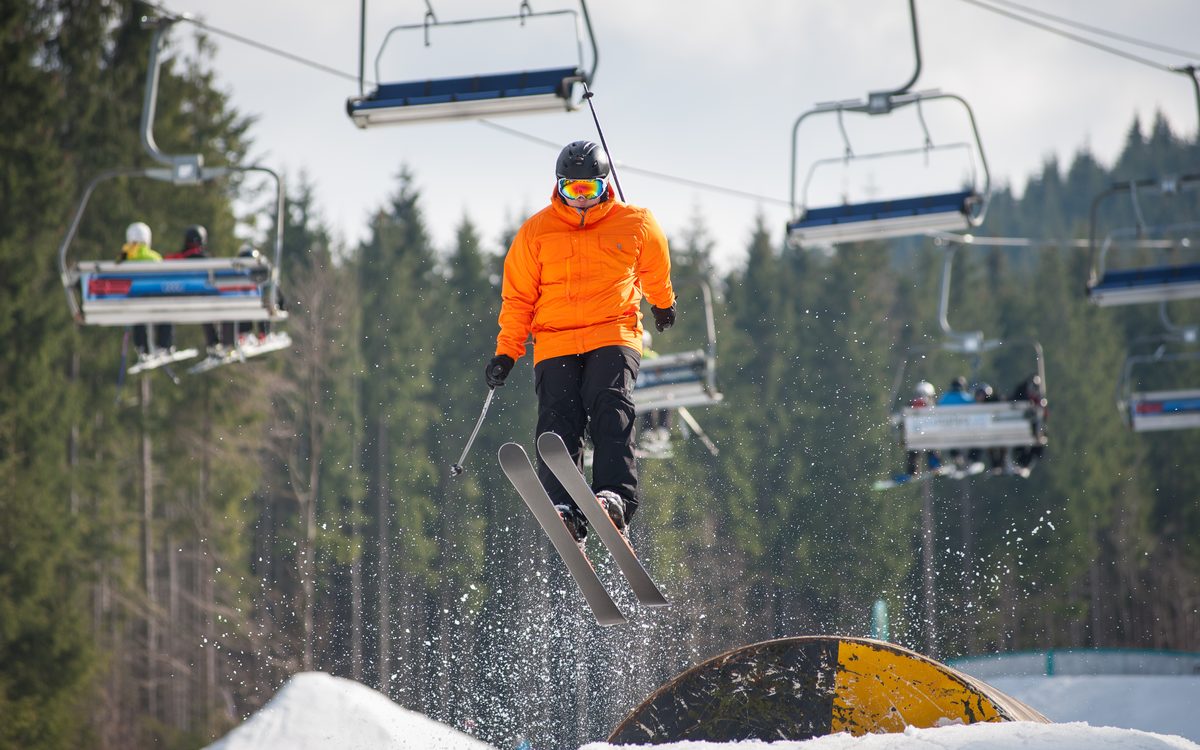
Cold lift lines and a long morning: breakfast gets skipped, the water bottle stays in the bag, and by early afternoon legs that felt fine at nine are heavy and a landing comes up short. Freestyle skiing nutrition is mostly about not letting that happen: enough fuel for long training days, fluids in the cold and at altitude, and sensible choices about the supplements that surround sport. This page covers food, fluids, low energy availability and supplements, in the plain terms the major sports medicine bodies use. For the sport’s basics see the freestyle skiing hub.
Quick answer: Eat enough across the day, with carbohydrate for training and protein spread through meals; drink on cold and high-altitude days even if you do not feel thirsty; and watch for signs of under-eating. Supplements are a small part of nutrition, carry contamination and anti-doping risks, and are best chosen with a doctor or sports dietitian, preferring third-party-tested products. See a sports dietitian or doctor for personal advice.
Fuel for training days
The 2016 joint position of the Academy of Nutrition and Dietetics, Dietitians of Canada and the American College of Sports Medicine (ACSM) gives general daily carbohydrate ranges by activity level: 3 to 5 grams per kilogram of body weight for light activity, 5 to 7 for moderate (about one hour a day) and 6 to 10 for high (one to three hours a day). It suggests 1.2 to 2.0 grams of protein per kilogram a day for athletes, and 30 to 60 grams of carbohydrate an hour for stop-and-start exercise lasting one to two and a half hours. A ski day is a long, stop-and-start session, so snacks on the mountain have a place. These are ranges for adults; an athlete’s own needs depend on size, age, sex, event and season, which is why a sports dietitian is worth seeing.
General practice, not a freestyle study: a breakfast with carbohydrate and some protein before lacing up, easy-to-eat snacks in a pocket (bars, fruit, bread), and a real meal within a couple of hours after. We found no freestyle-specific research on food for moguls, aerials, ski cross or park skiing, and the 2026 Zoppirolli review says research on energy availability in snow sports is still underdeveloped.
Fluids in cold and at altitude
Cold weather dulls thirst, and winter clothing hides sweat. The National Athletic Trainers’ Association (NATA) fluid replacement statement (McDermott and colleagues, 2017) says athletes should aim to not lose or gain body mass over a session; for most that means drinking steadily rather than all at once. The CDC Yellow Book describes loss of appetite as a symptom of acute mountain sickness and advises against alcohol in the first 48 hours at altitude. Keep a bottle or insulated hydration pack with you, and eat even if you are not hungry. Hot drinks count.
Low energy availability and RED-S
The International Olympic Committee (IOC) consensus statements describe Relative Energy Deficiency in Sport (REDs) as a syndrome of impaired physiological and psychological functioning caused by low energy availability, meaning too little energy left for the body after training. The 2023 IOC update covers the health and performance effects. Some researchers argue the evidence is more nuanced and that the label is over-applied (Jeukendrup and colleagues, 2024), so the model is best used as a reason to ask questions, not a diagnosis you make yourself. Warning signs commonly listed by sports medicine groups include persistent fatigue, frequent illness or injury, missed periods, mood changes, and preoccupation with food or weight. Freestyle skiing has no weight classes, but judged sports can bring appearance and weight pressure; if training and eating feel stressful, see a sports medicine doctor or sports dietitian. In the US, the 988 Suicide & Crisis Lifeline is available for any emotional crisis.
Iron, vitamin D and other nutrients
The ACSM/AND/DC position notes that female athletes have higher iron requirements and that low energy intake affects iron status. UEFA’s expert group on nutrition (Collins and colleagues, 2021) says routine iron supplementation can do more harm than good, so iron and vitamin D should be tested and managed by a doctor, not guessed. Ski seasons also bring less daylight and more indoor time for some athletes; ask your doctor whether a blood test makes sense.
Supplements: the sensible approach
The IOC consensus statement on dietary supplements (Maughan and colleagues, 2018) says nutrition usually makes a small but valuable contribution to performance in elite athletes, and dietary supplements make a minor one. It also warns that some supplements carry health and anti-doping risks. The key points, drawn from the IOC statement, the UEFA expert group and our site rules:
- Food first. Meals, fluids and sleep do more than any powder.
- Third-party testing. Where an athlete competes in tested events, look for products certified by programs such as NSF Certified for Sport or Informed Sport. No certification removes all risk.
- Contamination is real. A review for the UEFA expert group found about 15% of 634 supplements in 13 countries had undeclared prohormones (Collins and colleagues, as cited in our sibling pages).
- Anti-doping is strict liability. Anti-doping rules generally hold athletes responsible for what is in their body. Competitive athletes should check products against their anti-doping organization’s lists.
- Caffeine and creatine. They have the strongest evidence among common supplements in the UEFA statement, but caffeine is not for everyone (sensitivity, heart conditions, pregnancy). Talk to a doctor first.
- Young athletes. The AAP says energy drinks have no place in children’s and adolescents’ diets and advises against creatine under 18.
We do not give doses; follow the label and your doctor or dietitian. Our recovery page covers post-session eating and the injury prevention page covers fatigue and risk.
Freestyle skiing nutrition FAQs
What should I eat before a ski day?
A breakfast with carbohydrate and some protein, eaten a couple of hours before training, is a common general approach. Individual needs vary, so ask a sports dietitian.
How much should freestyle skiers drink?
There is no freestyle-specific number. NATA says to aim not to lose or gain body mass over a session; drink steadily, including on cold and high-altitude days.
What is RED-S?
Relative Energy Deficiency in Sport: health and performance problems linked to low energy availability, described by the IOC. It is diagnosed by clinicians, not by self-checking.
Do freestyle skiers need supplements?
Most do not need them. The IOC says supplements make a minor contribution. If you use them, pick third-party-tested products and tell your doctor.
Are energy drinks okay for teens?
The AAP says energy drinks have no place in the diets of children and adolescents.
Sources
- Thomas et al. 2016, ACSM, AND and DC joint position: nutrition and athletic performance
- McDermott et al. 2017, NATA position statement: fluid replacement
- CDC Yellow Book, high-altitude travel
- IOC consensus statement on REDs (2023)
- Jeukendrup et al. 2024, Does REDs syndrome exist?
- Maughan et al. 2018, IOC consensus statement: dietary supplements and the high-performance athlete
- Collins et al. 2021, UEFA expert group statement on nutrition
- Zoppirolli et al. 2026, Olympic snow sports review
- 988 Suicide & Crisis Lifeline
General information for education only, not medical advice. It cannot replace a sports medicine doctor, physical therapist or athletic trainer who knows you. Read how we work in our editorial policy.