This article contains affiliate links: if you buy through them we may earn a commission, at no extra cost to you. Read our affiliate disclosure.
It is Saturday at the track. One rider is lining up at the gate in a helmet with a chin bar and a peak, and a friend rolls into the skatepark next door in a rounded helmet with nothing in front of the face. Both are on BMX bikes, and a new rider asks the obvious question: which one do I buy?
The short answer: the two shapes are built for different habits, and the rulebook of the place you ride can decide it for you. Some riders choose a chin-bar helmet with a peak and others a rounded helmet with nothing in front of the face. We could not open the USA BMX rules, so we cannot tell you what a track requires: ask your track before you buy. This guide compares eight helmets using their Amazon listing text, plus the CPSC bicycle helmet page we did open. We tested nothing, and there are no prices or ratings.
Our top picks

Fly Racing Rayce (Black, Large)
- Full-face design, poly-alloy shell with EPS liner
- Listing: tested to ASTM F1952-15 (Downhill), CPSC 1203 and CE EN1078
- Approx. 930 g in size M (listing)
- Removable washable liner and cheek pads; adjustable visor
$139.95 at Amazon, as of Nov 22, 2026 12:07 UTC
Check price on Amazon
Troy Lee Designs Stage (MD/LG, MIPS)
- Approx. 690 g (listing)
- MIPS rotational system with EPP and EPS foam layers
- 25 intake and exhaust ports
- Reinforced chin bar with break-away visor screws

Bell Sanction 2 (Red, Medium)
- 14 vents (listing)
- Visor without a traditional centre post and screw
- Ventilated DH Air padding
- Removable cheek pads
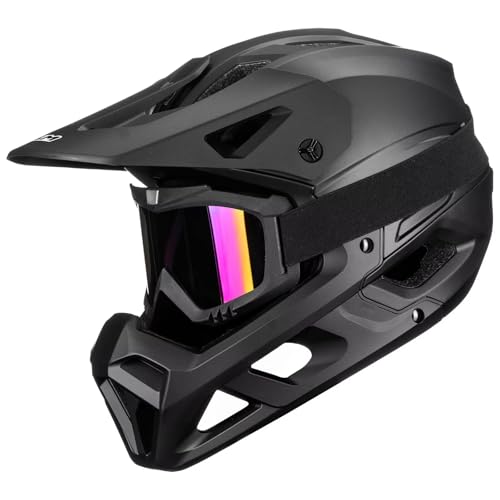
ILM HT58 full-face (adult, adjustable dial)
- Listing: tested to ASTM F1447 and CPSC standards
- Adjustable size dial and buckle
- EPP-reinforced chin bar
- Includes goggles; removable washable liner
$87.99 at Amazon, as of Nov 22, 2026 12:07 UTC
Check price on Amazon
Natuway kids full-face (2-in-1 chin guard)
- Listing: CPSC 16 CFR 1203 and CE
- Adjusts 20.25 to 22.05 in, about ages 3 to 12 (listing)
- About 14 oz full helmet, about 10 oz without chin guard (listing)
- Polycarbonate shell, EPS foam, in-mold
$54.05 at Amazon, as of Nov 22, 2026 12:07 UTC
Check price on Amazon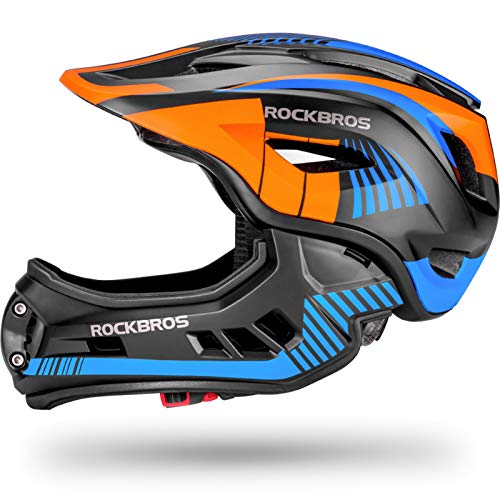
ROCKBROS kids full-face (detachable chin guard)
- Small: 18.90-20.47 in; Medium: 21.26-22.83 in (listing)
- Detachable chin guard (full-face or open-face)
- Rear adjustment dial and adjustable chin straps
- PC shell with EPS liner
$65.44 at Amazon, as of Nov 22, 2026 12:07 UTC
Check price on Amazon
Bell Servo (adult BMX, Matte Black)
- Listing: complies with the CPSC bicycle helmet standard (age 5 and older)
- Fits most heads of 58-61 cm (listing)
- Removable, washable cheek pads
- Neck roll and full-coverage interior padding

Triple Eight Sweatsaver (multi-sport)
- Listing: CPSC, ASTM F1447 and ASTM F1492 (skateboarding and trick roller skating)
- Four sizes from 51 to 63 cm (listing)
- Two sets of Sweatsaver pads for fit
- EPS foam with dual-density foam
$38.49 at Amazon, as of Nov 22, 2026 12:07 UTC
Check price on AmazonThe picks compared
| Product | Style | Fit information | Standards named | What the listing says |
|---|---|---|---|---|
| Fly Racing Rayce | Full-face | Size M weight 930 g; sizes sold separately | ASTM F1952-15, CPSC 1203, EN1078 | Poly-alloy shell, washable liner, adjustable visor |
| Troy Lee Designs Stage | Full-face | MD/LG; about 690 g | Not named in listing | MIPS, EPP and EPS, 25 ports |
| Bell Sanction 2 | Style not stated in listing | Medium | Not named in listing | 14 vents, removable cheek pads |
| ILM HT58 | Full-face | Size adjuster dial | ASTM F1447, CPSC | Goggles included, EPP chin bar |
| Natuway kids | Full-face with detachable guard | 20.25-22.05 in | CPSC 16 CFR 1203, CE | Two-in-one chin guard, about 14 oz full |
| ROCKBROS kids | Full-face with detachable guard | S 18.90-20.47 in; M 21.26-22.83 in | Not named in listing | Rear dial, measuring advice |
| Bell Servo | Not stated in listing | 58-61 cm, ages 14+ | CPSC | Neck roll, washable cheek pads |
| Triple Eight Sweatsaver | Not stated in listing | 51-63 cm in four sizes | CPSC, ASTM F1447, F1492 | Two pad sets, EPS foam |
The picks in detail
1. Fly Racing Rayce (Black, Large): full-face with named bicycle and downhill standards
Of the full-face helmets in this group, this listing is the most specific about the standards it names, and it lists three. It also has the plainest fit description: D-ring strap and an adjustable visor with aluminum hardware. Sizes are sold as separate listings, so check the size on the page you click.
What the Amazon listing says
- Full-face design with a poly-alloy shell and EPS liner
- Tested to ASTM F1952-15 (Downhill), CPSC 1203 and CE EN1078, per the listing
- Approx. 930 g (size M); TFV airflow system with multiple ports
- Removable, washable liner with cheek pads
- D-ring strap closure and adjustable visor with aluminum hardware
What the research says: The CPSC page we opened describes the bicycle helmet standard (16 CFR 1203) and lists its tests, which the listing says this helmet meets. We could not open ASTM's F1952 page (access refused), so we cannot say what that standard requires.
- Strengths: Names three standards in the listing text; Removable, washable liner and cheek pads; Adjustable visor for different riding styles
- Limitations: The listing weight is for size M only; Youth, small and large sizes are separate listings, so check the one you are on; A D-ring strap takes a moment longer to fasten than a quick-release buckle
- Suits: Teen and adult racers or park riders who want a full-face helmet whose listing names its standards.
- Look elsewhere if: Riders who want an open-face helmet, or who need a model that adjusts across several head sizes.
2. Troy Lee Designs Stage (MD/LG, MIPS): lightest listed full-face, with mips and a break-away visor
It lists the lowest weight of the full-face helmets here and describes a layered foam and rotational system. The listing does not name a standard, so that is the question to settle before buying.
What the Amazon listing says
- Approx. 690 g full-face construction
- MIPS rotational impact system with EPP (low speed) and EPS (high speed) foam layers
- 25 intake and exhaust ports
- Polyacrylite-injected chin bar with EXO-Skeleton reinforcement and break-away visor screws
- Designed by Troy Lee Designs
What the research says: The CPSC page we opened says helmets marketed for bicycling must meet its standard, but this listing does not state that this model does, so check the maker's page or the label inside the helmet. We found no source we could open to test the MIPS wording.
- Strengths: Lowest listed weight among the full-face picks; MIPS and two foam layers, as the listing describes them; 25 ports for airflow
- Limitations: The listing text we have does not name a standard; The listing says MD/LG: confirm the head measurement against the maker chart; Impact wording in the listing is the maker's description, not a result we can verify
- Suits: Adult riders who value low weight and want a rotational system in a full-face helmet.
- Look elsewhere if: Anyone who needs a listing that names CPSC or an ASTM standard in the text, or a child rider.
3. Bell Sanction 2 (Red, Medium): stated focus on fit, airflow and value with 14 vents
The listing sets out three design goals (fit, breathability, value) and backs them with specifics: vent count, padding type and a visor design. It is the one to look at if airflow worries you.
What the Amazon listing says
- Visor design without a centre post and screw, for flexibility and airflow
- Three design goals: fit, breathability, value
- Ventilated DH Air padding
- Removable cheek pads
- 14 vents
What the research says: No standard is named in the listing text, and we could not open a Bell page to check, so look for the certification label on the helmet itself. The CPSC page says labels must state compliance with the standard.
- Strengths: 14 vents stated; Removable cheek pads for washing; Visor design described in detail
- Limitations: The listing text does not name a standard; Does not say how it closes or how much it weighs; 'Performs and fits like a much more expensive helmet' is the maker's wording
- Suits: Riders who want a ventilated full-face helmet and will check the label for standards.
- Look elsewhere if: Buyers who need a listing that states the standard or the weight.
4. ILM HT58 full-face (adult, adjustable dial): adjustable size dial, goggles included
It adds a size adjuster, which helps when your head sits between two sizes, and includes goggles in the box. The listing names ASTM F1447 and CPSC, with the caveat below.
What the Amazon listing says
- Full-face coverage with extended chin bar, adjustable visor and goggles
- Tested to ASTM F1447 and CPSC standards, per the listing
- EPS foam shell with EPP-reinforced chin bar
- Adjustable buckle and size adjuster
- Removable washable liner and multiple air vents
What the research says: Reading the CPSC page alongside the listing: the standard we opened covers helmets marketed to bicycle riders, so the CPSC mention is relevant; we did not verify the helmet's test records.
- Strengths: Size adjuster plus adjustable buckle; Goggles included; Standards named in the listing
- Limitations: ASTM F1447 is named in the listing, but we could not open ASTM to see what it covers; The listing gives no head measurements for the size range; Goggles add little if you already own a pair
- Suits: Adult riders who want an adjustable fit and goggles in the same purchase.
- Look elsewhere if: Riders who already have goggles or want a listing with a stated weight.
5. Natuway kids full-face (2-in-1 chin guard): detachable chin guard for children, with stated size range
It states a head range in inches and a CPSC reference, and the chin guard detaches so a child can ride open-face when the track or park allows it. Children's gear should be sized from the maker's range, which this listing gives.
What the Amazon listing says
- Polycarbonate shell with EPS foam and in-mold construction
- Meets CPSC 16 CFR 1203 and CE, per the listing
- Adjusts 20.25 to 22.05 in; about 3 to 12 years
- About 14 oz full, 10 oz half
- One-click switch between full and half helmet
What the research says: The CPSC page we opened lists a vision requirement of 105 degrees per side and strap and fit instructions, but we cannot confirm this helmet meets them. Match the head measurement, not the age.
- Strengths: Head range stated in inches; Detachable chin guard; Weight stated for both configurations
- Limitations: The listing gives an age span, but head measurement should lead; A detachable guard is another part to check before each ride; It does not say whether a track accepts a detachable chin bar
- Suits: Younger riders who need a stated head range and may ride both open and full-face.
- Look elsewhere if: Older teens and adults, and racers whose track requires a fixed chin bar.
6. ROCKBROS kids full-face (detachable chin guard): youth with two head-size ranges and measuring advice
The listing gives two head ranges and tells you where to measure (above the eyebrows and ears) and to choose by head size, not age. It is the most useful fit explanation among the kids' listings.
What the Amazon listing says
- Small 18.90-20.47 in; Medium 21.26-22.83 in; measure above eyebrows and ears
- Detachable face guard for full-face or open-face use
- Rear dial and adjustable chin straps
- PC shell and EPS liner
- Removable pads for care
What the research says: No standard is named in this listing, so check the label inside the helmet. The CPSC page says the helmet must carry a compliance label and fit instructions.
- Strengths: Clear measuring instructions in the listing; Rear dial and chin strap adjustment; Detachable guard
- Limitations: The listing does not name a standard; Two sizes leave a gap between 20.47 and 21.26 in; Instructions say to check the guard is secure before riding
- Suits: Children whose head measurement falls inside one of the two stated ranges.
- Look elsewhere if: Parents who want the standard named in the listing, or riders between the two sizes.
7. Bell Servo (adult BMX, Matte Black): bmx-named adult helmet with stated cpsc compliance and 58-61 cm range
A plainly BMX-named helmet whose listing states CPSC compliance and one head range, and tells you to measure your head. It is the contrast case to the full-face helmets. The listing does not say whether there is a chin bar, so look at the photos.
What the Amazon listing says
- Recommended for ages 14 plus; fits most heads of 58-61 cm
- Always take a head measurement
- Plush full-coverage interior padding
- Removable, washable cheek pads and a neck roll
- Complies with the U.S. CPSC Safety Standard for Bicycle Helmets for Persons Age 5 and Older
What the research says: The CPSC standard on the page we opened is the same one the listing names. It states the standard's tests, such as a peak acceleration limit and a strap retention test, but not how a particular model performs.
- Strengths: CPSC compliance stated; Head range stated (58-61 cm); Washable cheek pads
- Limitations: The listing does not say whether it has a chin bar; One head range only; Recommended for ages 14 and up, per the listing
- Suits: Adult riders with a head in the stated range who want a CPSC-labelled BMX helmet.
- Look elsewhere if: Younger riders, or anyone whose track requires a full-face helmet.
8. Triple Eight Sweatsaver (multi-sport): skate-and-bmx style, with astm f1492 named
It has the widest size spread in this guide (51-63 cm in four sizes), and the listing names a standard for skateboarding and trick skating as well as for bicycles. It suits riders who move between BMX and skate.
What the Amazon listing says
- EPS foam, dual-density soft foam and moisture-wicking Sweatsaver fabric
- Two sets of pads for fit
- Measure the head with a soft tape or string
- XS/S 51-54 cm, S/M 53-57 cm, L/XL 57-60 cm, XL/XXL 60-63 cm
- Triple-certified: CPSC, ASTM F1447 and ASTM F1492, per the listing
What the research says: The CPSC page we opened says helmets marketed exclusively for skateboarding are exempt, while helmets that a reasonable consumer might use for bicycling are covered, which fits the CPSC mention. We could not open ASTM's F1492 page.
- Strengths: Four sizes with centimetre ranges; Two pad sets to fine-tune fit; Three standards named in the listing
- Limitations: Listing says pads fit very snug when new, so allow a break-in; The listing does not say it has a chin bar; Does not state the weight
- Suits: Freestyle riders who also skate and want one helmet with a size spread.
- Look elsewhere if: Racers who need a full-face helmet for the gate.
Accessories (separate from the main picks)
- Riding goggles: Full-face helmets with a peak are usually worn with goggles. The ILM HT58 listing includes a pair, so check whether you need to buy one separately.
- Helmet bag or soft cloth: Keeps the shell and visor from scratching in a kit bag. A plain soft bag is enough.
Full-face or open-face: how to decide
The difference is simple. A full-face helmet has a chin bar that wraps around the lower face. An open-face helmet leaves the face open and covers the head only. We cannot tell you which one is safer in a crash: we did not test anything, and we found no source we could open that compares the two. What we can do is lay out the practical differences and the rules to check.
- Racing: several listings here are full-face helmets with a peak, and the Rayce listing mentions race days. Whether your track requires one is a track rule, which we could not open (the USA BMX rule pages we tried were not available), so ask your track.
- Freestyle, park and street: some riders prefer an open-face helmet for the lighter feel and airflow, and others choose full-face. We found no source to say which is typical; it is a personal and rule-based decision.
- Young riders: a detachable chin guard (Natuway, ROCKBROS) lets one helmet do both jobs, but check that your track accepts it.
Whichever you choose, the helmet must fit, and it should carry a label. The rest of this guide shows how to check both.
Which helmet for racing, which for freestyle
Racing at a track
Look first at the track’s own rules, then at the helmet. Among our picks, the full-face listings are the Fly Racing Rayce, Troy Lee Designs Stage, Bell Sanction 2 and ILM HT58, with the youth Natuway and ROCKBROS. The Rayce listing mentions race days and names the most standards. Do not assume any of them is accepted at your gate: we could not verify that.
Freestyle, park and street
The Bell Servo and Triple Eight Sweatsaver are described as BMX or multi-sport helmets, and the Sweatsaver lists a skateboarding standard (ASTM F1492). Neither listing states a chin bar, so look at the pictures before buying.
Riding both
If you race on weekends and ride the park the rest of the week, you can own two helmets or one convertible youth model. For adults, that could mean one full-face and one lighter helmet; check the rules for each place you ride.
This split is our reading of the listings, not a rule. Your track, park or event organiser has the final say.
Standards: what the labels and listings mean
Helmet listings are full of standards. Here is what we could verify and what we could not.
- CPSC (16 CFR 1203): the US federal bicycle helmet standard. The CPSC page we opened says it covers helmets marketed to protect bicycle riders, including helmets with wider uses where a reasonable consumer could conclude cycling is an intended use. Helmets marketed only for skateboarding, in-line skating, baseball or roller hockey are exempt. It sets tests including vision (at least 105 degrees each side), strap retention, a peak acceleration limit of 300 g, and a ban on certain projections. It also requires fit instructions, a model number, warnings and a compliance label.
- ASTM F1952, F1447, F1492: named in listings (F1952 for downhill, F1447 for recreational bicycling and roller skating, F1492 for skateboarding and trick roller skating). We could not open ASTM’s pages (access refused), so we only report how the listings describe them.
- FMVSS 218 and DOT: named on many dirt-bike helmet listings in our candidate data. This is a motorcycle helmet standard, and we opened no page about it. We left those helmets out of the picks because we could not confirm how they apply to bicycle use.
A listing is not a test result. Look inside the helmet for the label, and read the maker’s own page.
Fit and sizing: how to measure a head
Fit matters more than style. Several listings in this guide say the same thing: measure, and choose by head size, not age.
- Use a soft tape measure or a piece of string.
- Wrap it around the widest part of the head: above the eyebrows and ears, as the ROCKBROS listing says.
- Read the length in centimetres or inches and compare with the maker’s range for that exact helmet.
- Put the helmet on, tighten the dial or pads, and fasten the strap.
- Check that it sits level, feels snug and does not press uncomfortably. The ROCKBROS listing says this too.
Ranges differ between makers. For example, the Bell Servo listing says it fits most heads of 58-61 cm, the Triple Eight Sweatsaver covers 51-63 cm across four sizes, and the Natuway kids helmet adjusts from 20.25 to 22.05 in. The Triple Eight listing also says its pads fit very snug when new and break in over a couple of hours.
If you are between sizes, the ILM HT58 size adjuster or the Triple Eight pad sets may help, but this is only what the listings describe. The CPSC page says a compliant helmet must come with fit and wearing instructions, so read them.
Children and young riders
For a child, buy the size that fits the head today. The brief rule is the same across sports: do not buy a larger helmet to grow into. A helmet that is loose can shift in a fall, and the CPSC page lists positional stability as one of its tests.
- Use the head measurement: the ROCKBROS listing gives two ranges and says to choose by head circumference rather than age alone. The Natuway listing gives 20.25 to 22.05 in and an age span of about 3 to 12, but the age span is only a guide.
- Adjustability is not a licence to buy big: the Natuway and ROCKBROS listings mention adjusting straps and dials for fine-tuning within the stated range.
- Youth sizes of adult models: the Fly Racing Rayce is also listed in a Youth Large (a separate listing), so look there rather than choosing an adult small.
- Track and age rules: we could not open USA BMX’s rules, so ask the track or club about junior requirements.
Check the chin guard each time on the detachable models: the ROCKBROS listing says to follow the attachment instructions and make sure the guard is secure before riding.
Essential and optional features
- Essential: a size that fits your head (by measurement), a closed and adjustable strap, and a label that names the standard the helmet meets.
- Useful: removable, washable liner and cheek pads (listed on nearly every helmet here), ventilation, and an adjustable visor.
- Optional: MIPS (Troy Lee Designs Stage), a size dial (ILM HT58), a detachable chin guard (Natuway, ROCKBROS), a break-away visor (Stage), included goggles (HT58) and colour.
Weight is a comfort feature, not a safety one. The Stage lists about 690 g and the Rayce about 930 g in size M, but those are the makers’ figures and we weighed nothing. A rider with a sore neck after long sessions may care; a child who rides for twenty minutes may not.
Extra features are only worth it if you will use them. A beginner who buys the longest feature list is paying for settings they have not needed yet. Keep in mind that every item here is what a listing states, not something we tested.
Common mistakes when buying a BMX helmet
- Buying by age. Heads vary, even within an age range. Measure.
- Choosing the wrong size listing. The Fly Racing Rayce appears as many separate listings by size and colour. Check size on the page you click.
- Trusting a standard name without looking at the label. A listing can name a standard; the label inside the helmet is what to check, and the CPSC page says it must state compliance.
- Buying a helmet for another sport. Many dirt-bike listings mention BMX, but they cite a motorcycle standard. Check your track’s rule before choosing one.
- Assuming a chin bar equals total protection. The CPSC page requires warnings about the limits of impact protection. A helmet reduces risk; it does not remove it.
- Buying big for a child. A loose helmet can move. Use the current head size.
- Using harsh cleaners. The CPSC page says labels must carry a warning about harmful cleaners, so follow the maker’s cleaning advice.
The habit to keep: measure the head, read the label, ask the track.
By age and level, without the price tag
Young children (balance bike to first pedal bike)
A helmet that states a head range in inches or centimetres, an adjustable fit and a CPSC reference, such as the Natuway listing. A full chin guard is optional at this age unless a track or park requires it.
Juniors and teens
Check which of the youth listings match the head measurement. The Rayce has youth sizes, the ROCKBROS Medium reaches 22.83 in, and the Triple Eight starts at 51 cm. Teens close to adult size can look at the adult listings, such as the Bell Servo (listed for ages 14 and over).
Adult recreational riders
Open-face or full-face is a preference, unless a park sets a rule. A multi-sport helmet with a stated standard and a good size range is a reasonable start.
Racers
Follow your track’s rules first. After that, compare weight, ventilation and fit among the full-face options.
Level matters less than how often and how hard you ride. Frequent riders are the ones who benefit most from features such as washable liners and good airflow.
Rules and what we could not verify
We opened one official page on 2026-11-13: the CPSC bicycle helmet page. It describes the federal bicycle helmet standard, its tests, its labelling requirements and the exemption for helmets sold only for skateboarding and similar sports.
We could not open the following, so we state nothing from them:
- USA BMX rules: the pages we tried returned not found or had no helmet text. We cannot say what helmet a race requires. Ask your track or read the current rulebook.
- ASTM F1952, F1447 and F1492 pages: access was refused. We only report how listings describe them.
- Maker pages and size charts: not opened.
- DOT/FMVSS 218 information: not opened.
Where to check: your track or club officials, the event organiser, the maker’s size chart and the label inside the helmet. Rules change from season to season, so check the current ones.
Care, cleaning, storage and when to replace
We did not open a maker care page, so the following is practical guidance. Follow the maker’s own instructions where they exist.
- Cleaning: the listings say the liners and cheek pads are removable and washable. The CPSC page says helmets must carry a warning about harmful cleaners, so use mild soap and water and avoid strong solvents unless the maker says otherwise.
- Strap and hardware: check the strap, buckle or D-ring, visor screws and chin guard fixings before rides.
- Storage: keep it out of a hot car and away from chemicals, and use a soft bag.
- After a crash: the CPSC page says required warnings include damage after an impact. Treat a helmet that has taken a hit as one to check with the maker, or replace.
- Replacing: replace it when the shell cracks, the foam is dented or crushed, the straps fray, the fit no longer holds, or the child outgrows it. We found no maker lifespan in the sources we opened.
A helmet is only useful if it fits and is in good condition on the day.
Myths and facts
- Myth: a full-face helmet makes you safe. Fact: the CPSC page requires warnings about the limits of impact protection. No listing here promises otherwise, and we did not test.
- Myth: any helmet that says BMX is a bicycle helmet. Fact: some listings name a motorcycle standard instead. Look for the standard on the label.
- Myth: a helmet with more standards is always better. Fact: the number named tells you what the listing says, not how the helmet performs.
- Myth: lighter is always better. Fact: weight is a comfort detail. Fit and condition come first.
- Myth: kids can grow into a bigger helmet. Fact: use today’s head size and the maker’s range.
- Myth: you must own a full-face helmet to ride BMX. Fact: that depends on where you ride, and we could not open a rule that says so.
One-minute checklist
- Where will you ride: a race track, park, street or all three?
- Have you asked your track or park about helmet rules?
- What is your head measurement, taken above the eyebrows and ears?
- Does the listing give a size range that includes it?
- Does the listing name a standard, and does the label inside agree?
- Do you want a chin bar, a detachable one or none?
- Do you need goggles or a visor?
- For a child: today’s head size, not a growth size.
If you can answer these eight, the table above narrows eight helmets to one or two.
Glossary
- Full-face: a helmet with a chin bar covering the lower face.
- Open-face: a helmet with no chin bar.
- Visor or peak: the brim at the front, adjustable on several of these helmets.
- EPS and EPP: foam types named in listings, the energy-absorbing layer under the shell.
- MIPS: a rotational impact system named in the Stage listing; we did not verify how it works.
- CPSC: the US Consumer Product Safety Commission, which sets the bicycle helmet standard.
- D-ring: a strap closure named on the Rayce listing.
- Cheek pads: padding at the sides of the face, removable on most picks.
- Gate: the start in BMX racing.
What to buy first and what can wait
- A helmet that fits. This comes before anything else. Follow the measuring steps above.
- Gloves and knee protection. Many riders add these early. See our knee pads guide for options that suit dirt riding.
- Goggles. Needed with most peaked full-face helmets unless included.
- The bike. If you do not have one yet, see our BMX bikes guide.
- Extras. MIPS, a lighter shell or a dial are for after you know your riding style.
Browse the BMX gear page for more, and the bike helmets guide if you also ride on the road. If you are working on your recovery after hard sessions, our ankle brace guide is a starting point, and ask a clinician about anything that does not settle.
How we chose these picks
This is a research-based comparison, not a hands-on test. Picks were chosen from a candidate list of Amazon listings found by searches for BMX full-face, race, youth and kids’ full-face helmets. We chose helmets that are full-face or BMX-named and are not motorcycle-standard dirt-bike helmets, so the comparison is like for like; the DOT/FMVSS-218 dirt-bike helmets in the candidate data were left out because we opened no page confirming how that standard applies to bicycles. Product facts come only from the Amazon listing text for each ASIN. We opened the CPSC bicycle helmet page on 2026-11-13 and use it for the federal standard. We tried the USA BMX rules, the ASTM F1952 and F1492 pages and the CPSC safety education page, and they were unavailable, so we state nothing from them. We did not test any helmet and do not use ratings, reviews or sales rankings. Selection is for fit to the rider, not commission. No prices are quoted because they change.
Sources
- CPSC: Bicycle Helmets business guidance (16 CFR 1203) (checked 2026-11-13)
- USA BMX home page (opened; no helmet rules stated) (checked 2026-11-13)
- Amazon product listing (ASIN B0D7DYNQQD) (checked 2026-11-13)
- Amazon product listing (ASIN B0845RPGRH) (checked 2026-11-13)
- Amazon product listing (ASIN B0GFX749DB) (checked 2026-11-13)
- Amazon product listing (ASIN B0FRFYR1WB) (checked 2026-11-13)
- Amazon product listing (ASIN B08RYSY7YR) (checked 2026-11-13)
- Amazon product listing (ASIN B088NPWFZJ) (checked 2026-11-13)
- Amazon product listing (ASIN B00FQT4U9C) (checked 2026-11-13)
- Amazon product listing (ASIN B077VYDVDY) (checked 2026-11-13)
Frequently asked questions
Do I need a full-face helmet for BMX?
It depends on where you ride. We could not open the USA BMX rules, so we cannot say what a track requires. Ask your track or park before buying.
Is a full-face helmet better than open-face?
We did not test and found no source we could open comparing them. A full-face helmet covers the lower face and an open-face helmet does not; choose by your rules, your riding and fit.
What size BMX helmet should I buy?
Measure around the head above the eyebrows and ears and compare with the maker's range for that helmet. Listings here use ranges such as 58-61 cm (Bell Servo) or 20.25-22.05 in (Natuway).
Can I use a motocross or dirt bike helmet for BMX?
Many dirt-bike listings mention BMX but cite a motorcycle standard. We could not verify how a track treats them, so check your track's rule first.
Can my child use an adjustable helmet to grow into?
Buy for the head today and follow the maker's range. Adjustment is for fine-tuning within the size, not for buying large.
How long does a BMX helmet last?
We found no maker lifespan in the sources we opened. Replace it when the shell or foam is damaged, the straps fray, the fit changes or after an impact the maker says to replace it for.
What does CPSC mean on a helmet?
It is the US Consumer Product Safety Commission's bicycle helmet standard. The CPSC page we opened lists tests such as vision, strap retention and impact, and requires a compliance label.
Should I replace a helmet after a crash?
The CPSC page says labels must include a warning about damage after an impact. Contact the maker or replace it if you are unsure.
Can I wash my helmet?
Most listings here say the liner and cheek pads are removable and washable. The CPSC page notes a warning about harmful cleaners, so follow the maker's instructions.
Does a detachable chin guard count as full-face?
We could not verify how a track treats one. The Natuway and ROCKBROS listings describe both configurations, so ask your track first.
Are goggles included?
The ILM HT58 listing says goggles are included. The others we picked do not mention them, so check each listing.
Does MIPS make a helmet safer?
The Troy Lee Designs listing describes MIPS as a rotational impact system. We found no source we opened to evaluate that, so we make no claim.