This article contains affiliate links: if you buy through them we may earn a commission, at no extra cost to you. Learn more.
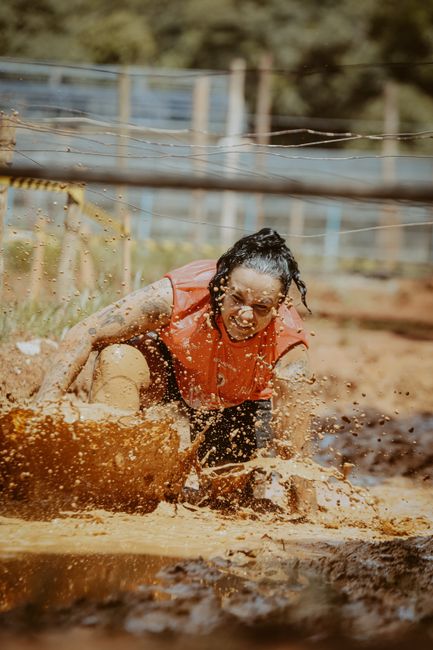
A Saturday morning on a ski hill in the off-season. A few hundred people in headbands bounce in the start corral, someone yells “Aroo!”, and the wave charges uphill toward the first wall. An hour later the same people are crawling under barbed wire in cold mud, hanging from monkey bars with wet hands, and dropping into burpees beside a spear-throw that didn’t stick. At the finish there are medals, bananas, mud to the eyebrows and a lot of grinning. That’s obstacle course racing (OCR): trail running with walls, carries, crawls and grip tests built in.

Obstacle Course Racing, page by page
- Rules: how the game works at every level
- Leagues & associations: pro, college, high school and youth
- Youth & high school: ages, safety and recruiting, for players and parents
- Injuries & sports health: prevention, concussion, when to see a pro
- Training & conditioning: before: off-season to in-season
- Game day: during: fueling, hydration, heat
- Recovery: after: games, tournaments, sleep
- Nutrition & supplements: what to eat, tested supplements
- Best wearables: trackers and watches for the sport
- Gear: the complete equipment list
Buying guide · Our Obstacle Course Racing buying guide compares the gear we'd pick, with prices and sizing:
This page is OCR for everyone who races it, from a first Spartan Sprint or Tough Mudder 5K to the elite heats and the world championships, plus kids’ races and the new obstacle discipline in Olympic modern pentathlon. Sports health runs through all of it: what injuries are common, how to handle mud, heat and cold water, when to see a professional, and how to approach Spartan race training so you show up with strong legs, lungs and grip. Then recovery and the gear that matters.
Obstacle course racing at a glance
| What it is | A running race on trails, hills or stadiums with man-made and natural obstacles: walls, rope climbs, monkey bars, carries, crawls, mud and water. |
|---|---|
| Popular formats | Spartan Sprint (5K, 20 obstacles), Super (10K, 25), Beast (21K, 30) and Ultra (50K, 60); Tough Mudder 5K (12+ obstacles) and 15K (20+); short sprint and ninja-style courses of 70–100 meters. |
| Penalties | Spartan Open racers do 30 burpees for a failed obstacle (15 at stadium races); Elite and Age Group racers run a penalty loop instead. At Tough Mudder’s standard events, obstacles are optional. |
| Who runs it | Race brands (Spartan, which also owns Tough Mudder in the US, and others), the independent OCR World Championships, and UIPM, the modern pentathlon federation, which took over World Obstacle (FISO) in 2026. In the US: USA Obstacle Course Racing. |
| Minimum ages | Kids’ races from age 4. Adult Spartan Sprint and Super Open heats from 14; Tough Mudder 5K from 14 with parental permission. |
| Main demands | Running endurance on rough terrain, grip and upper-body strength, carrying, climbing and the ability to keep going wet, muddy and tired. |
| Most common injuries | Cuts and scrapes, plus sprains, strains and other musculoskeletal injuries; upper-limb injuries are common in surveys of racers. |
How obstacle course racing works
Most races start in waves, or heats: groups of racers sent off a few minutes apart. Spartan has three categories: Elite (the earliest starts, official referees and prize money), Age Group (competitive racing with podiums by age) and Open (everyone else, including first-timers and teams). You run the marked course, take on each obstacle and, if you fail one, pay a penalty before moving on. Competitive racers must get through it all on their own: no outside help on obstacles and no food or drink from anyone except the official aid stations.
Spartan’s rules split obstacles into two kinds. Mandatory obstacles must be completed, and failing one can mean disqualification. Pass/fail obstacles can be failed with a penalty: 30 burpees for Open racers (15 at Stadion races held in ballparks), or a penalty loop for Elite and Age Group racers. Every obstacle must at least be attempted, and a Spartan burpee means chest to the ground, back to a full stand, then a jump with hands above the ears. The full detail, including what happens if you skip burpees, is on our OCR rules page.
Tough Mudder works differently. Its standard 5K and 15K events are team-spirited challenges rather than races, and you can go around any obstacle you aren’t comfortable with, with no penalty. Its endurance events are different again: Tough Mudder Infinity is a multi-lap, 8-hour competitive event, and World’s Toughest Mudder lasts 24 hours. Gym-based fitness races such as HYROX, with running between stations like sled pushes and wall balls, are close cousins; we cover them in our CrossFit and functional fitness guide.
Obstacle course racing at every level
Kids
Spartan Kids races are for ages 4 to 14: about 1 km for ages 4–6 and 1.5 km for ages 7–9 (parents may run along on both), and 3 km for ages 9–14, in a non-competitive or competitive version where parents aren’t allowed on course. The competitive 3 km has podiums for 9–11 and 12–14. Kids by Spartan races at Tough Mudder events use similar 1, 1.5 and 3 km courses. More for parents on our youth OCR page.
Teens, college and the military
Teens can join adult races in their Open heats from 14 at Spartan Sprints and Supers and at Tough Mudder 5Ks, and the OCR World Championships has a 13–17 age group. There is no NCAA obstacle racing; at college it’s mostly student-run clubs that train together and race Spartan events. The sport’s roots are military: the obstacle run in military pentathlon, run by the International Military Sports Council (CISM), is a 500-meter course with 20 standardized obstacles.
Elite, international and Olympic
Elite racers chase Spartan’s national series, championships and world championship, and the independent OCR World Championships, held since 2014, which has drawn more than 5,000 athletes from 70 nations. In 2026 it moved to Ivory’s Rock in Queensland, Australia, with 80-meter, 3K, 15K and team relay races. On the federation side, World Obstacle (FISO), founded in 2014, voted in March 2026 to dissolve and join UIPM, the modern pentathlon federation, which became the sport’s sole world governing body on August 10, 2026. The big Olympic news: at Los Angeles 2028, modern pentathlon replaces horse riding with a head-to-head obstacle race inspired by Ninja Warrior. Details on our OCR leagues and associations page.
Adults and first-timers
Most racers are adults in Open heats, running with friends, work teams or a gym crew. Spartan says there’s no maximum age. A 5K race such as a Spartan Sprint or a Tough Mudder 5K is the usual first step; the Spartan Trifecta (a Sprint, Super and Beast in one calendar year) is a popular goal for year two.
Sports health for obstacle course racers
OCR asks for a lot at once: running on rough ground, climbing, hanging, carrying and getting wet and cold. Most injuries are minor, but not all. The American Medical Society for Sports Medicine (AMSSM) notes that about 90% of sports injuries are non-surgical. This section is general information, not medical advice.
The most common OCR injuries
- Cuts, scrapes and musculoskeletal injuries: a study of medical records from 33 obstacle races in Canada (2015–2017, 73,366 participants) found an injury rate of 2.4%. Cuts and musculoskeletal injuries were the most common, and 93.9% were treated on site; about 1% of the injured needed an ambulance to hospital.
- Upper-limb injuries: in a 2023 survey of 201 Spanish racers, 28.4% reported an injury and the arms and hands were hit most often. Injuries were linked with racing more often, with less time between races and with obstacle-specific training.
- Limb injuries in general: 27.4% of 153 Polish racers reported a race-related arm or leg injury, with risk linked to more weekly obstacle and interval training and more races per year.
- Falls and head knocks: walls, rigs and slippery descents mean falls happen. Any blow to the head deserves a concussion check (below).
The pattern in those studies is a familiar one: injuries pile up when people race and train hard without enough recovery in between. Build up gradually and take easy weeks. Our OCR injuries page goes deeper.
Mud, water and germs
Mud can carry germs. A Dutch study of 2,646 obstacle-run participants found that swallowing mud was linked with stomach and gut infections, and rinsing off in a shared hot tub with skin infections. Outbreaks have been traced to mud courses, including a norovirus outbreak at a French race in 2015 and an E. coli O157 outbreak in England in 2018, where sheep had grazed on the course. The researchers’ advice is simple: keep mud out of your mouth, wash your hands before you eat, shower properly afterward, cover cuts, and don’t race if you’ve had vomiting or diarrhea in the days before.
Concussion: recognize and remove
The CDC’s HEADS UP program lists signs to watch for after a knock to the head or body: looking dazed or confused, being slow to react, headache, dizziness or balance problems, sensitivity to light or noise, trouble concentrating. If you see them, the racer stops for the day and gets checked by a healthcare provider before returning. Call 911 for danger signs such as seizures, passing out with growing drowsiness, a worsening headache or one pupil larger than the other. Tell course medics or volunteers; there’s no penalty worth racing on with a head injury.
Heat, cold and hydration
Summer races can be hot, and ice-water or deep-water obstacles can chill you fast. The National Athletic Trainers’ Association (NATA) recommends getting used to the heat over 7–14 days. Drink at the water stations (Tough Mudder courses have them, with snacks such as bananas and energy bars), and on longer races carry your own fluids; see our electrolyte powder guide. If you can’t swim, or have a heart condition or another medical concern, skip deep-water and electric-shock obstacles where that’s allowed, and ask your doctor before you sign up. Call for help for confusion, collapse or uncontrollable shivering.
When to see a doctor, physical therapist or athletic trainer
See a professional for pain that doesn’t settle, a joint that’s swollen, unstable or can’t take weight, a deep or dirty cut, a wound that turns red, hot or swollen, or a stomach bug that won’t clear up after a muddy race. A sports medicine physician handles most injuries without surgery; a physical therapist guides rehab; athletic trainers are licensed or regulated health care professionals in all 50 states. On race day, start with the medical tent.
Spartan race training: getting ready for OCR
Spartan’s own rules expect racers to be “trained adequately” for the event they enter. Good OCR training covers four things:
- Run, mostly on trails and hills. The running is most of the race. Build mileage gradually, add hill repeats, and practice running on rough ground. Our running guide covers the basics.
- Grip and pulling strength. Dead hangs, pull-ups, farmer’s carries and towel hangs for monkey bars, rigs and ropes. Learn a rope climb with a foot lock from a coach.
- Carries and legs. Sandbag or bucket carries, lunges and step-ups for the carries and climbs; burpees, because Open racers will likely do some.
- Practice wet and tired. Train grip with wet hands and after a hard run, the way it will feel on course.
Two cautions from the research: the surveys above linked more obstacle-specific and interval training, and more races with less time between them, with more injuries. So add volume slowly, keep at least one easy week every few weeks, and don’t race every weekend. Many racers track training load and sleep with a wearable; see Whoop vs Oura vs Garmin. For the full plan, read our OCR training page; for race morning, the race day page.
Recovery after an obstacle race
Shower off the mud (not in a shared hot tub), clean any cuts, then eat and drink. The American College of Sports Medicine’s nutrition position stand puts carbohydrate and protein at the center of recovery meals, and sleep is the base of everything: the CDC recommends 7 or more hours for adults and 8–10 for teens. Expect sore forearms and shoulders as well as legs after your first race.
Comfort tools help many racers feel better in the days after: a foam roller or massage gun for calves, quads and forearms (not on fresh bruises, cuts or swelling), compression boots after a Beast or Ultra, and soft recovery shoes once the wet trail shoes come off. They’re about comfort, not treatment. More on our OCR recovery page and in our recovery tools guide.
Gear for obstacle course racing
- Trail shoes with grip and drainage: deep lugs for mud and an upper that sheds water. Road shoes slide around.
- Clothes that drain: fitted synthetic layers; cotton holds water and mud.
- Gloves (optional): Spartan’s rules allow gloves and athletic tape; some racers like them for ropes and carries, others prefer bare hands on rigs.
- Compression socks or sleeves: many racers wear tall socks to protect shins from rope burn and scrapes.
- Hydration: a vest for Beasts and longer races. Note what’s banned in Spartan races: trekking poles, headphones, metal studs and non-liquid chalk.
Three picks for a first race: the INOV8 Mudtalon, a fell and trail shoe with 8 mm studs for mud and a tough ballistic nylon upper (about $86 in October 2026); MudGear gloves, fingerless gloves made for obstacle racing with a semi-sticky palm and knuckle guards (about $39); and the OOFOS OOahh Slide from our recovery shoes guide, for after you hose off. The full list, including hydration vests and grip trainers, is on our OCR gear page.
INOV8 Mudtalon Trail Running Shoe
- 8 mm STICKYGRIP studs
- Ballistic nylon upper
- Precision and Wide fits
MudGear Obstacle Race Gloves
- Fingerless, semi-sticky palm
- Rubber knuckle guards
- Built-in wrist wraps
OOFOS OOahh Slide
- OOfoam slide
- APMA Seal of Acceptance
- Machine washable
Obstacle course racing FAQs
How long is a Spartan race?
Spartan lists the Sprint at 5K with 20 obstacles, the Super at 10K with 25, the Beast at 21K with 30 and the Ultra at 50K with 60. Stadion races are 5K with 20 obstacles in ballparks and stadiums. Exact distances vary a little by venue.
What happens if you fail an obstacle?
In Spartan Open heats you do 30 burpees (15 at Stadion races) in the burpee zone. Elite and Age Group racers run a penalty loop instead. Failing a mandatory obstacle can mean disqualification. At standard Tough Mudder events you can simply go around an obstacle.
How should a beginner train for a Spartan race?
Pick a Sprint far enough out to build up gradually. Run several times a week with hills and trails, and add strength sessions with pull-ups or hangs, carries, lunges and burpees. Increase slowly, keep easy weeks, and if you’re new to exercise or have a health condition, check with your doctor first.
Is obstacle course racing in the Olympics?
Partly. At Los Angeles 2028, modern pentathlon will include a head-to-head obstacle race, replacing horse riding. Under UIPM’s rules it’s a 70-meter course with eight ninja-style obstacles. Classic trail OCR like Spartan races isn’t an Olympic event.
How old do you have to be to run a Spartan race or Tough Mudder?
Spartan: 14 for Sprint and Super Open heats, 16 for their competitive heats and for Beast Open heats, 18 for competitive Beasts and Ultras. Tough Mudder: 14 for the 5K and 16 for the 15K, with parental permission and an adult chaperone on course for under-18s. Kids’ races start at 4.
Can you get sick from a mud run?
It’s uncommon, but outbreaks have been traced to mud courses. Avoid swallowing mud, wash your hands before eating, shower properly afterward, cover cuts, and stay home if you’ve had a stomach bug. See a doctor if symptoms are severe or don’t go away.
Obstacle racing rewards the people who train patiently, respect the mud and the cold, and listen to their bodies. Keep exploring: our rules, gear and youth pages, running hydration vests for longer races, our running and CrossFit guides, and every other sport on our sports hub.