This article contains affiliate links: if you buy through them we may earn a commission, at no extra cost to you. Learn more.
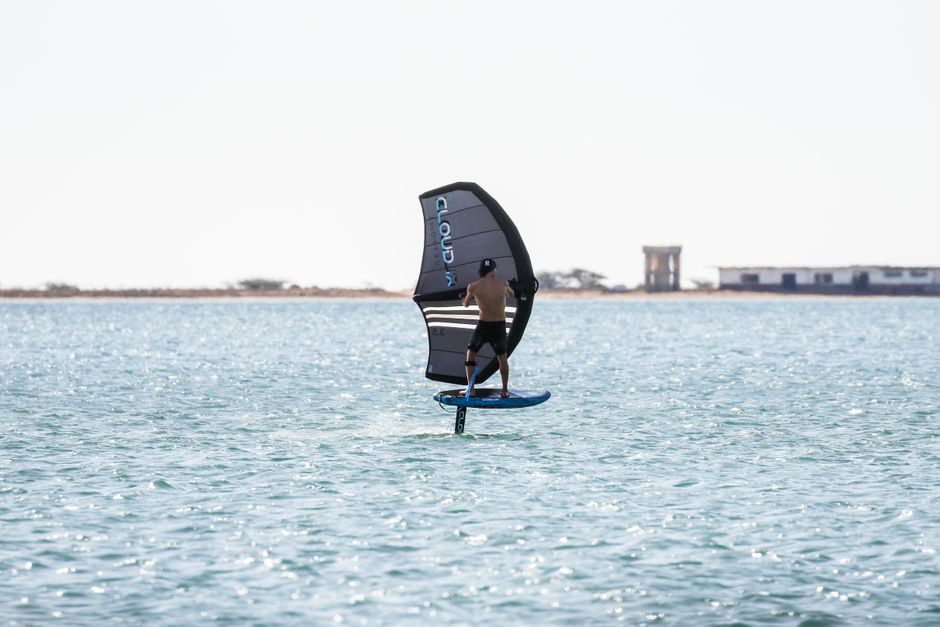
A light sea breeze fills in on a Wednesday evening, and a rider walks into knee-deep water with an inflatable wing in one hand and a small board under the other arm. A few pumps of the wing, a hop to the feet, and the board lifts silently out of the water and glides over the chop as if it were glass. Down the beach, a 13-year-old is landing her first jibe at a summer camp, and somewhere in the Canary Islands the world’s best are throwing spins off a wave at a GWA World Cup. Wing foiling (also called wingfoiling or wing surfing) is one of the fastest-growing wind sports on the water, and it’s easy to see why.
Wing Foiling, page by page
- Rules: how the game works at every level
- Leagues & associations: pro, college, high school and youth
- Youth & high school: ages, safety and recruiting, for players and parents
- Injuries & sports health: prevention, concussion, when to see a pro
- Training & conditioning: before: off-season to in-season
- Game day: during: fueling, hydration, heat
- Recovery: after: games, tournaments, sleep
- Nutrition & supplements: what to eat, tested supplements
- Best wearables: trackers and watches for the sport
- Gear: the complete equipment list
Buying guide · Our Wing Foiling buying guide compares the gear we'd pick, with prices and sizing:
This guide covers how wing foiling works, what it looks like at every level from first lesson to the world tour, and, most of all, how to stay healthy doing it. Wing foiling safety runs through everything: the injuries riders really get (most come from their own foil and board), helmets and impact vests, concussion, cold water and sun, and when to see a professional. Then training, session day, recovery and the gear you need. If you kite, windsurf or paddle too, see our kitesurfing, windsurfing and stand-up paddleboarding sections.
Wing foiling at a glance
| What it is | You hold an inflatable wing in your hands (no lines, no mast foot) and ride a board fitted with a hydrofoil, a mast with underwater wings that lifts the board out of the water once you have speed. |
|---|---|
| Ways to ride | Freeride on lakes and the sea, riding swell and waves, jumps and freestyle tricks, and racing (slalom and course racing). |
| Pro competition | The GWA Wingfoil World Tour (Surf-Freestyle, FreeFly-Slalom, Wave and Big Air, all recognized by World Sailing) and IWSA wingfoil racing (Formula Wing). |
| In the US | The U.S. Wingfoil Championship, held with US Sailing on San Francisco Bay; its third edition ran July 31 to August 2, 2026. |
| Olympics | Not an Olympic sport as of 2026. World Sailing chose wingfoil as the invited event of the 2027 World Sailing Championships. |
| Lessons | IKO’s wing foil course has a minimum age of 12 and a minimum swimming level. Schools also train under IWO, RYA and other programs. |
| Most common injuries | Bruises, sprains, cuts and scrapes to the feet, lower legs and knees, mostly from your own foil and board; about 5.7 injuries per 1,000 hours in a survey of 415 riders. |
How wing foiling works
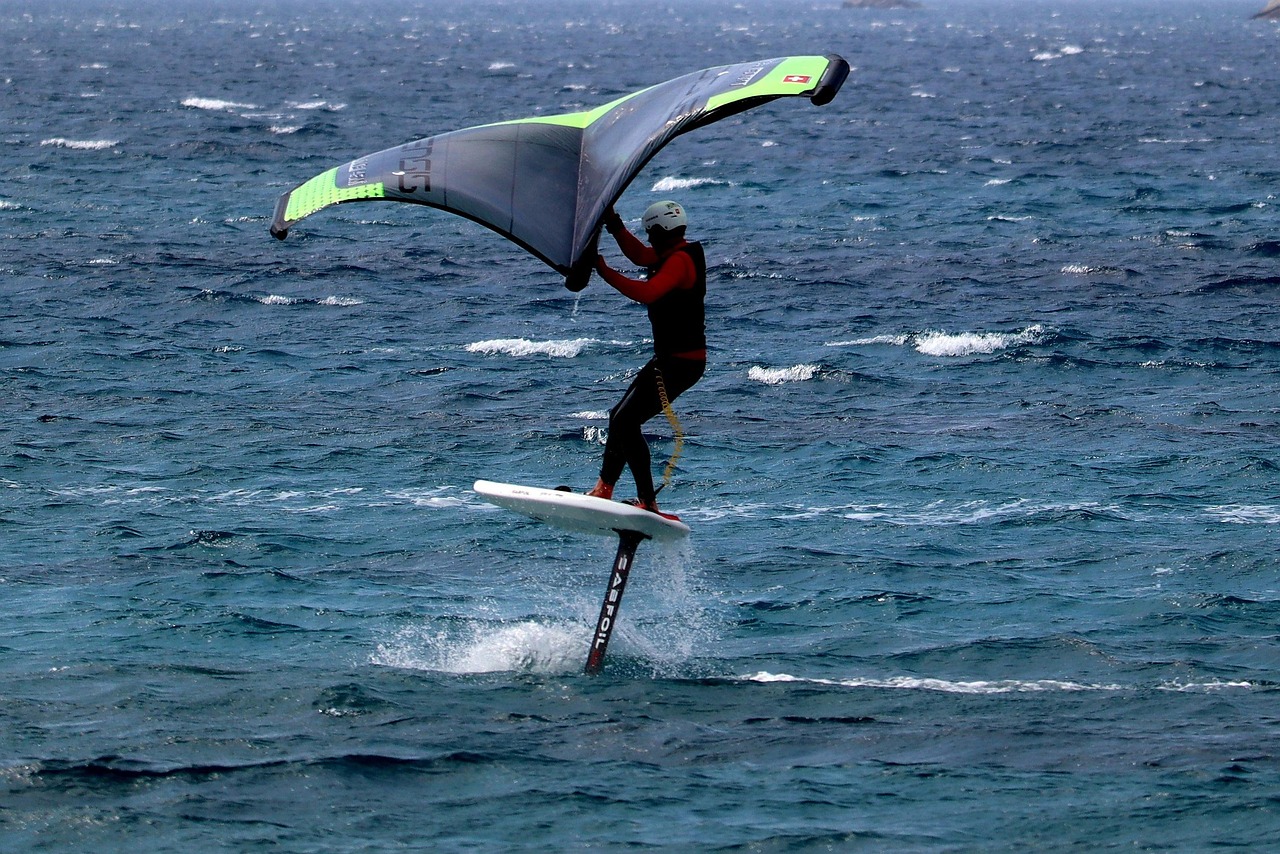
A wing foiler stands on a board with a hydrofoil underneath: a mast with a front wing and a smaller rear wing (the stabilizer) at the bottom, joined by a fuselage. In your hands is the wing, an inflatable leading edge and strut with a fabric canopy, held by handles on the strut. Pull the wing in toward you and it fills with wind; let it go and it depowers and floats. A leash links the wing to your wrist or waist, so it never blows away.
Riders start on their knees on a big, floaty board, then stand, pump the wing for speed and, once they’re fast enough, the foil lifts the board clear of the water. From then on it’s quiet, smooth and fast, and the foil keeps working in light wind, chop and small swell. Experienced riders turn the wing loose (or “park” it overhead) to surf open-ocean swell on the foil alone, and hook a short harness line to the wing to rest their arms on long runs.
The idea isn’t new. A 2023 medical study notes that the first wing prototypes were built from windsurfing sails in the 1980s, but it was the move to inflatable wings, borrowed from kitesurfing, plus modern hydrofoils that made the sport take off. US Sailing puts wide production at 2019. The same study’s riders were almost all crossovers: 71% had windsurfed, 55% had done stand-up paddling, 52% had kited and 49% had surfed.
Why people love it (and why it’s easier to start than kiting)
- Simple gear: a wing, a board and a foil. No lines to tangle and no mast foot. US Sailing describes the setup as quick enough to have fun after work.
- Let go to stop: drop the wing and its power is gone. That’s a real safety difference from a kite, which keeps pulling until you release it.
- Light wind and small spots: the foil works in lighter wind than most boards, on lakes, bays and the sea.
- A long road ahead: once you can ride, there’s swell riding, jumps, freestyle and racing to learn.
Wing foiling at every level
Kids and first lessons
The International Kiteboarding Organization (IKO), which also certifies wing instructors, sets a minimum age of 12 for its wing foil course, plus a minimum swimming level. Younger children can be taught, but only by an instructor who has done IKO’s online course on teaching children. IKO’s course covers setup, handling the wing on the beach, getting in and out of the water, self-rescue, right-of-way rules, riding on your knees and standing, pumping onto the foil, riding upwind and downwind, foot changes, jibes, tacks and catching swell. Many kids also start on a stand-up paddleboard or a small wing on a big board, off the foil. Our youth page answers parents’ questions.
Teen and youth competition
The GWA runs youth divisions for U14, U16 and U19, set by birth year. Its main World Tour has a minimum age of 14 in the year of competition. The 2024 GWA Youth Wingfoil World Championships in La Palma, Canary Islands, crowned boys and girls in all three age groups in both Surf-Freestyle and FreeFly-Slalom. IWSA also crowns Formula Wing youth world champions. In the US, local and regional regattas and the U.S. Wingfoil Championship are the place to start racing.
College
Wing foiling isn’t a college varsity sport in the US. College sailing, run by the Inter-Collegiate Sailing Association, races mostly dinghies, so student wingers ride through clubs, local races and summer events.
The pro tours
The GWA Wingfoil World Tour planned a record ten events on four continents for 2026: eight Surf-Freestyle stops, three FreeFly-Slalom events and one Wave event, from Abu Dhabi and France to the Canary Islands and Brazil. In Surf-Freestyle, riders battle in heats of two or three and judges score their tricks; in FreeFly-Slalom, up to 12 riders race a multi-leg course of jibes, tacks and sections where they pump or surf the foil without using the wing. The International Wing Sports Association (IWSA) runs wingfoil racing as a World Sailing special event, including the Formula Wing class, and World Sailing has also recognized the X-15 one-design wingfoil class. Our leagues and associations page has the full map.
The Olympic outlook
Wing foiling is not on the Olympic program for LA28, where the board events are Formula Kite and the iQFOiL windsurfer. But it’s moving fast inside World Sailing: wingfoil was confirmed as the invited event for the 2027 World Sailing Championships in Fortaleza and Gdynia, after men’s and women’s formats were tested at a test event in Gdynia in July 2026.
Adult and recreational riders
Most wing foilers never race, and many start well into adulthood. In the 2023 survey of 415 wing foilers, the average age was 43.5, with riders from 9 to 78. Only about 15% had taken a course; 85% taught themselves or learned with a friend. That’s changing as schools spread, and it’s worth bucking the trend: a few hours with an instructor saves a lot of bruises.
Sports health for wing foilers
Wing foiling is gentler than many board sports in one way (you can always let go of the wing), but the foil adds speed and a hard, sharp wing under the board. This section is general information, not medical advice. If you’re hurt, see a professional.
What the research shows
- Injury rate: the first study of wingfoiling injuries (Gangl and colleagues, 2023, 415 riders) found about 5.7 injuries per 1,000 hours, similar to windsurfing and kitesurfing.
- Your own gear is the hazard: the most common cause was contact with your own equipment: the foil or mast (26%), the board (20%) and the wing (7%). Not a single injury came from hitting another rider.
- Fatigue matters: riders blamed 77.5% of injuries on riding errors from fatigue, and 55% of injuries happened in the second hour on the water.
- Where: bruises, sprains, cuts and scrapes, mostly to the feet, lower legs and knees. Serious injuries were rare and mostly to the ribs.
- Experience helps: injury rates fell as experience grew; experts were hurt less than beginners and intermediates.
- Overuse: 42% had recurring aches without a single injury, mostly in the shoulder, upper arm and elbow, and the thigh and knee.
Wing foiling safety basics
- Take lessons and learn self-rescue and right-of-way before you ride alone.
- Wear a helmet and an impact vest. Helmets are mandatory and impact vests recommended in GWA racing, and most riders in the study already wore both. Impact vests are not life jackets.
- Protect your feet: the study’s authors recommend cut-resistant neoprene boots, whatever the water temperature.
- Fall away from the foil, ideally flat and to the side, and cover your head if you fall near it.
- Keep your distance from swimmers and surfers, and leave plenty of room downwind of other riders.
- Take breaks before you’re tired, and never ride offshore wind alone.
Our rules and safety page explains right of way, and our wing foiling injuries page goes deeper.
Concussion: recognize and remove
A crash at speed, a hit from your own board or foil, or a hard landing from a jump can cause a concussion. The CDC’s HEADS UP program lists signs to watch for: looking dazed or confused, being slow to react, headache, dizziness or balance problems, sensitivity to light or noise, and trouble concentrating. Stop riding for the day, don’t go back out until a healthcare provider clears you, and call 911 for danger signs such as seizures, passing out, a headache that gets worse or one pupil larger than the other. A rider who seems confused on the water needs help getting back to shore.
Cold water and sun
Windy days feel colder on the water. The National Weather Service advises dressing for the water temperature, not the air, and the US Coast Guard warns that cold shock hits in the first minute and that cold water can weaken your arms and legs within about 10 minutes. A wetsuit of the right thickness and a plan to get back to shore matter most. Then the sun: the American Academy of Dermatology recommends a broad-spectrum, water-resistant sunscreen of SPF 30 or higher, reapplied every two hours and after swimming or sweating.
When to see a doctor, physical therapist or athletic trainer
See a professional for a deep cut (foil cuts can need stitches), a knee or ankle that gave way or swelled, rib or chest pain after a crash, a shoulder that slipped or keeps aching, or any concussion signs. A sports medicine physician manages most sports injuries without surgery, a physical therapist guides the rehab and return to riding, and an athletic trainer works with athletes on prevention and care.
Training and conditioning
Wing foiling asks for strong legs and ankles to balance on the foil, shoulders and a back that can hold the wing for an hour, grip and forearms, and a core to tie it together. Because shoulder and knee overuse aches are so common, a little off-water strength and mobility work goes a long way, and so does riding with a harness line once you’re ready, which takes the wing’s weight off your arms. Our wing foiling training page lays out a plan, and our resistance bands guide helps with shoulder work at home.
Session day: eat a familiar, carbohydrate-based meal a few hours before, bring water and a snack, and drink between runs. Wind and sun dry you out faster than you notice, so many riders carry an electrolyte drink. See our session day page, and our nutrition and supplements page for what to eat.
Recovery after a big session
After two hours of pumping and carving, your shoulders, forearms and legs let you know. Recovery starts with sleep: the CDC, citing the American Academy of Sleep Medicine, recommends 8 to 10 hours for teens and 7 or more for adults. Then food and fluids, a warm shower and some easy mobility. Many riders roll out with a foam roller or a massage gun and slip into soft recovery shoes after a day in neoprene boots. These are for comfort, not treatment. Our recovery page has a full routine, and our best wearables page covers watches that track your sessions.
Gear for wing foiling
You need a wing, a foil board, a foil and a leash, plus a helmet, an impact vest and a wetsuit for your water. Start big: a beginner board with plenty of volume and a large, slow front wing make the first flights far easier, and most riders learn on school gear before buying. The Slingshot SlingWing V3 (about $349 in the 3-meter size sold on Amazon, a size that suits lighter riders, teens and windy days) comes with a backpack, wrist leash and patch kit and has pigtails for a harness line. The Slingshot UltraFly (about $1,099 for 105 liters; also 120 and 140) is an inflatable foil board that packs for travel, with a pump included; the foil is sold separately. For protection, the Pro-Tec Ace Water helmet (about $66) meets the CE EN 1385 water-sports helmet standard, and the Ride Engine Defender HF impact vest (about $164) is made for all kinds of foiling, including wing; the maker states it is not a life vest. Our full gear guide covers board volume by weight, foils, leashes, harnesses and wetsuits.
Prices change often. The prices above are what we saw at the maker or a major retailer in October 2026; check the current price before you buy.
Slingshot SlingWing V3
- 3 m inflatable wing
- Backpack, wrist leash, patch kit
- Harness line pigtails
Slingshot UltraFly Wing Foil Board
- Inflatable, 105/120/140 L
- High-pressure pump included
- Foil sold separately
Pro-Tec Ace Water Helmet
- CE EN 1385 water-sports standard
- 15 vents for drainage
- Sizes XS to XL
Ride Engine Defender HF Impact Vest
- Made for kite, wing, windsurf and surf foiling
- Impact shells in high-risk areas
- Not a life vest
OOFOS OOahh Slide
- OOfoam slide
- APMA Seal of Acceptance
- Machine washable
For more after the session, browse Recovery & Regeneration and Training & Performance.
Wing foiling FAQs
Is wing foiling hard to learn?
It takes patience. Most people need several sessions to get up on the foil, and a big board, a large foil and steady, moderate wind make it much easier. Lessons speed things up; IKO estimates about an hour per skill in its wing foil course, depending on the student and conditions. Riders who already windsurf, kite, surf or paddle usually progress faster.
Is wing foiling dangerous?
It carries real risk, but most injuries are minor. A survey of 415 riders found about 5.7 injuries per 1,000 hours, similar to windsurfing and kitesurfing, mostly bruises, sprains and cuts to the lower legs and feet from the rider’s own foil and board. A helmet, impact vest, boots, breaks before you’re tired and good spacing from others lower the risk.
Is wing foiling easier than kitesurfing?
Many people find the gear simpler and the risks easier to manage, because you can drop the wing to stop its power and there are no long lines. The foil is the hard part. Kiting gets you riding on a board sooner, but needs lessons before you go out alone. Our kitesurfing section covers that sport.
How much wind do you need to wing foil?
It depends on your weight, your wing size and your board and foil. Bigger wings and larger, slower foils work in lighter wind. Beginner sizing charts from retailers assume moderate wind, and an instructor will match the gear to your local conditions.
Is wing foiling in the Olympics?
No, not as of 2026; the LA28 board events are Formula Kite and the iQFOiL windsurfer. World Sailing did choose wingfoil as the invited event for the 2027 World Sailing Championships.
Do I need a helmet and impact vest for wing foiling?
They’re strongly recommended, and helmets are mandatory in GWA racing. In the 2023 study, most riders who used protective gear wore a helmet (91%) and many an impact vest (71%). The study couldn’t prove they cut head and chest injuries, but its authors still endorse them because they don’t get in the way. Remember that an impact vest is not a life jacket.
Wing foiling gives back what you put in: a few frustrating first sessions, then that silent first flight you’ll remember for years. Learn properly, look after your body and give others room. Next: rules and safety, wing foiling for kids, gear, or our windsurfing and surfing sections.