This article contains affiliate links: if you buy through them we may earn a commission, at no extra cost to you. Read our affiliate disclosure.
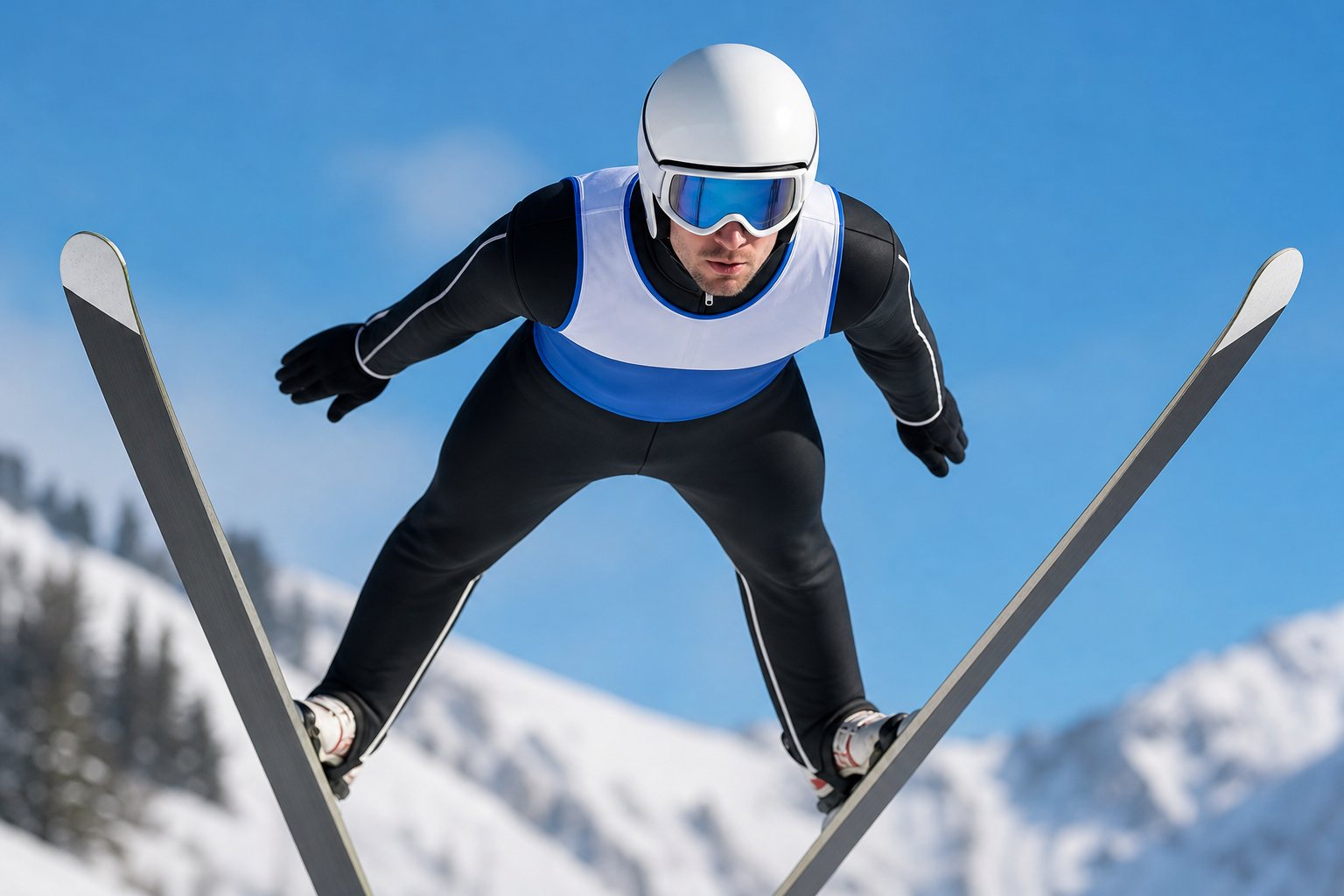
Monday, February 16, 2026, in the Italian Alps: snow is falling hard, the wind is gusting, and the first-ever Olympic men’s super team ski jumping final is cut short. Austria’s Jan Hoerl and Stephan Embacher take gold on the strength of the earlier round, with Poland silver and Norway bronze. Earlier in the Games, Norway’s Anna Odine Strom had won the first Olympic women’s large hill title, with teammate Eirin Maria Kvandal second. Ski jumping is the sport of skiing down a ramp, launching into the air and trying to fly as far as possible while landing with style.
Ski Jumping guides: what do you need?
New to ski jumping? Start with the first card. Everything here is general education, not medical advice.
History & Origins
Ski jumping is one of the oldest Winter Olympic sports. It has been contested at the Games since the very first Winter Olympics in Chamonix in 1924 (Olympedia). For most of its Olympic history it was a men’s sport with three events: the normal hill, the large hill and the team event on the large hill. Women’s ski jumping made its Olympic debut at Sochi 2014, with a normal hill event, and a mixed team event on the normal hill followed at Beijing 2022 (Olympedia).
The program changed again at Milano Cortina 2026. The first Olympic women’s large hill event was held, and the men’s team event became a “super team” contest in which two jumpers per nation jump in three rounds instead of four jumpers in two (Olympedia). We have not documented the earliest origins of jumping on skis from an official source, so we do not give an origin story here.
- 1924: ski jumping is on the program of the first Olympic Winter Games, Chamonix (Olympedia).
- 2014: women’s ski jumping debuts at the Olympics, Sochi (Olympedia).
- 2022: mixed team normal hill event debuts, Beijing (Olympedia).
- 2026: first Olympic women’s large hill event and first men’s super team event, Milano Cortina (Olympedia).
Legends of the Sport
Influential ski jumpers across eras, in no order of rank. Medal counts are Olympic medals as listed by Olympedia.
- Matti Nykänen (Finland): four Olympic golds and one silver, the only ski jumper with five Olympic medals.
- Simon Ammann (Switzerland): four Olympic gold medals.
- Jens Weißflog (East Germany / Germany): three Olympic golds and one silver.
- Thomas Morgenstern (Austria): three Olympic golds and one silver.
- Kamil Stoch (Poland): three Olympic golds and one bronze.
- Birger Ruud (Norway): two Olympic golds and one silver, from the early decades of the Games.
- Anna Odine Strøm (Norway): won the women’s normal hill and the first women’s large hill at Milano Cortina 2026.
- Domen Prevc (Slovenia): won the men’s large hill at Milano Cortina 2026; his sister Nika Prevc won silver in the women’s normal hill and bronze in the large hill.
Official results and records
For current results and records, go to the official sources. We list them here instead of copying tables that change.
- Olympedia: ski jumping at Milano Cortina 2026, all six events
- Olympedia: ski jumping, all Olympic Games
- Olympics.com: Milano Cortina 2026
How we keep this current: we re-check facts after each major championship and update this page. Spot an error? See our editorial policy.
This page covers scoring, hills, the unusual equipment rules, who jumps, and the injuries researchers have measured. It is a niche sport, so we say plainly where information is thin.
Ski jumping at a glance
| What it is | Jumping off a ramp (the in-run), flying and landing on a hill, judged on distance and style. |
|---|---|
| How it is scored | Distance points plus style points from five judges (highest and lowest dropped), with adjustments for start gate and wind. Individual events add the scores from two jumps. |
| Hill types | Normal hill, large hill and, outside the Olympics, flying hills; smaller hills for kids. |
| Who jumps | Kids’ club programs from about age 4 at some clubs, juniors, national teams, World Cup and Olympic athletes. Women and men. |
| Governing bodies | FIS worldwide; USA Ski Jumping and U.S. Ski & Snowboard in the US. |
| Season | Winter on snow. Club programs and the World Cup run through the winter months. |
How ski jumping works
A jump has four phases: the in-run (crouching down the ramp), the take-off, the flight and the landing. Jumpers fly in a V shape pioneered by Sweden’s Jan Boklov in the mid-1980s (secondary source) and usually land in the telemark position, one foot ahead of the other.
Scoring in plain words
Each hill has a K-point, a target distance. On normal and large hills, landing on the K-point is worth 60 points, and each extra or missing metre adds or subtracts points (about 1.8 per metre on a large hill). Five judges each give up to 20 style points for flight, landing and balance; the highest and lowest are dropped and the middle three are added. Since 2009 the score is adjusted for the starting gate (starting higher costs points, lower earns them) and wind (a tailwind adds points and a headwind subtracts them), so jumpers in different conditions can be compared (Wikipedia, as a secondary source for these numbers).
Hills and events
Hills are classed by size from small and medium through normal and large to ski-flying hills. Olympic individual events use the normal and large hills. In 2026 the men’s normal hill was won by Germany’s Philipp Raimund, Slovenia won the mixed team normal hill contest, and the new men’s super team event was held on the large hill. We could not confirm the total number of ski jumping events at the 2026 Games from an official source, so see olympics.com for the full list.
The equipment rules
Ski jumping regulates the athlete’s body and gear closely. According to NBC Olympics’ equipment guide, skis may be at most 145% of the jumper’s height, based on a minimum body mass index (BMI) of 21; lighter jumpers must use shorter skis. Suits are spongy microfiber, 4 to 6 mm thick, and must match the body’s shape within a 2 cm tolerance. Bindings may sit no more than 57% of the ski’s length from the front. Helmets have been mandatory since the 1980s. The BMI rule was introduced after problems with underweight jumpers; FIS adopted it in 2004, according to a sports-science record (check FIS for the current specifications).
Who jumps, and at what level
Kids’ programs start small. Steamboat Springs Winter Sports Club in Colorado, which describes itself as one of the largest jumping and Nordic combined programs in North America, has athletes from age 4 to 18, beginning on a “bump jump” and moving up through age bands such as U10, U12, U14 and U16. USA Ski Jumping says it oversees youth development across 30-plus clubs and more than 700 young athletes (club-reported figures; USA Nordic is a separate organization).
NCAA skiing championship events are alpine and cross-country, so ski jumping is not an NCAA championship sport; college jumpers are rare and usually compete in club or national-team settings (we did not find a college program list). Above the junior level are the FIS Continental Cup and World Cup, and the World Championships; FIS counts ski jumping among its six Olympic disciplines.
Olympic and Paralympic status
- Milano Cortina 2026 (confirmed by NBC Olympics and AP coverage): ski jumping events for men and women, including the first Olympic women’s large hill and the first men’s super team event.
- History (secondary source): men’s large hill since the first Winter Games in 1924; normal hill added in 1964; men’s team in 1988; women’s normal hill debuted in 2014; a mixed team event appeared in 2022.
- Paralympics: ski jumping is not on the Paralympic program (FIS lists its Paralympic disciplines as para alpine, para cross-country and para snowboard).
- 2030 (French Alps): IOC news on the 2030 program dropped Nordic combined, but the sources we found did not say what ski jumping events will be held. Check the official programme for the current Games.
What ski jumping asks of the body
A 2026 review of Olympic snow sports places ski jumping among the “gravity and technical” disciplines, where neuromuscular power and precise technique matter most, and notes that data on ski jumping are limited. In plain terms: explosive leg power at take-off, balance and body control in flight, and a landing that absorbs force. A small 2025 survey of 22 elite jumping and Nordic combined athletes found a high rate of hip pain and suggested hip strength and conditioning.
Health and safety for ski jumpers
This is general information, not medical advice. Ski jumping should be learned in a club with qualified coaches on appropriate hills; if you are hurt, see a sports medicine doctor, physical therapist or athletic trainer.
What injuries look like
The clearest data are from women’s World Cup jumping. A cohort study of three seasons (2017-18 to 2019-20; 205 athlete-seasons) recorded 54 injuries, 26.3 per 100 athletes per season. Most were acute (83%) and happened on the jump hill (78%). The knee was the most common location (33%), crash landings caused 70% of injury events, and one third of the injuries were severe, of which 78% involved the knee. Nearly half of the acute events happened in snowy, windy or cloudy conditions or during telemark landings. At the 2023 Nordic World Ski Championships in Planica, which covered cross-country, Nordic combined and ski jumping together, researchers recorded 4.0 injuries per 100 athletes, mostly in the lower limbs, and half of the lower-limb injuries involved the knee.
Safety habits
- Match the hill to the jumper. In the women’s study, most jumps that ended in injury were shorter than the hill size. Jump on hills your coach clears for you, and treat wind and visibility as real decisions.
- Wear the right helmet and protective gear. A full helmet is mandatory in competition; clubs set rules for beginners. Ask your club which helmet it requires; a regular ski helmet may not meet its rules.
- Know concussion signs. The CDC’s HEADS UP program lists headache, dizziness, confusion and balance problems. Remove anyone with a suspected concussion from jumping; a healthcare provider decides when to return. Call 911 for danger signs such as repeated vomiting, a seizure, or one pupil larger than the other.
- Take weight seriously. If food, weight or fatigue worry you, talk to a doctor or dietitian.
Training, recovery and nutrition pointers
Ski jumping training is led by club and national-team coaches, and the 2025 hip study above suggests hip strength and conditioning deserve attention. Jumpers wait at the top of the hill in the cold, so warm layers matter between jumps. For general skiing guidance see our ski training, ski recovery and nutrition and supplements pages. The CDC recommends at least 7 hours of sleep for adults and 8 to 10 for teens.
Gear that matters for ski jumping
Ski jumping gear is specialized and mostly bought through your club or a specialist shop: very long skis, a jumping suit, a jumping helmet, high-backed boots and a binding that releases in a fall (NBC Olympics). We cannot point you to a sport-specific product page we have verified, so ask your club’s coach before buying anything. The cards below are for the cold wait at the top and for sore legs, not for the jump itself.

HotHands Hand Warmers, 40 pairs
- Air-activated
- Up to 10 hours of heat
- 40 pairs
$25.60 at Amazon, as of Nov 17, 2026 01:07 UTC
Check price on Amazon
TriggerPoint GRID 1.0 Foam Roller
- 13 in multi-density
- Hollow core
- Pairs with a mobility routine
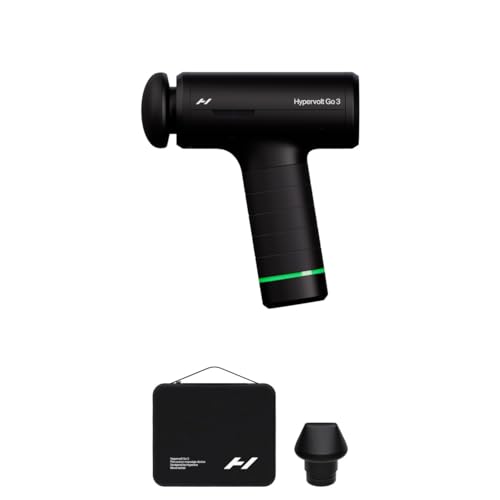
Hypervolt Go 3
- 1.6 lb
- 5 speeds
- Up to 4 hr battery
$149.00 at Amazon, as of Nov 17, 2026 01:07 UTC
Check price on AmazonRelated sports and disciplines
Parent: skiing. Siblings: Nordic combined (which starts with a ski jump), alpine skiing, freestyle skiing and ski mountaineering. For the endurance side: cross-country skiing. For another sport of flight and landing: diving.
Ski jumping FAQs
How is a ski jump scored?
Distance points (60 for landing on the K-point on normal and large hills, plus or minus for each metre) plus style points from five judges (highest and lowest dropped), adjusted for start gate and wind. Individual events add two jumps.
Can women ski jump at the Olympics?
Yes. Women’s ski jumping debuted in 2014 on the normal hill (secondary source), and in 2026 the women’s large hill was added, won by Norway’s Anna Odine Strom.
How young can kids start ski jumping?
It depends on the club. Steamboat Springs Winter Sports Club says its entry program begins at age 4 on small “bump jumps”. Contact a USA Ski Jumping club for local ages and rules.
Is ski jumping dangerous?
Injuries happen, mostly from crash landings, and the knee is the most often injured area in elite data. Coaching, appropriate hills and weather judgment are the main protections; nothing removes the risk completely.
Sources
- Stenseth et al., injuries in elite women’s ski jumping (2022)
- Kastner et al., injuries at the Nordic World Ski Championships 2023
- Vasavada et al., hip, knee and ankle outcomes in elite Nordic jumping athletes (2025)
- Zoppirolli et al., Olympic snow sports review (2026)
- NBC Olympics: Ski jumping equipment
- NBC Olympics: Austria wins the first Olympic men’s super team
Keep exploring: the skiing hub, skiing injuries, our recovery tools guide, the massage guns guide, and every sport on our sports hub.